






In the late 1960s, at the height of the Vietnam War, the Vietnamese government was facing a serious crisis. It was losing more soldiers to malaria than to the war itself. Chloroquine, the antimalarial drug used for decades, had lost its effectiveness because Plasmodium falciparum, the malaria parasite, had become resistant to it. Desperate for a solution, Vietnam appealed to China for assistance. The Chinese government thus launched Project 523, a national effort to screen for new antimalarial compounds that could combat this parasite.
As part of Project 523, hundreds of scientists from across China were brought together to search for a new drug. They screened thousands of substances including synthetic compounds, minerals, and extracts from traditional medicinal plants in the hope of finding something that might work. During this massive effort, one detail kept resurfacing in the old medical texts that researchers consulted: repeated references to a plant called ‘Qinghao’ (Artemisia annua). However, while extracts from this plant did show some ability to mitigate malaria symptoms, the results were weak and inconsistent. And yet, there was the fact that qinghao appeared again and again in traditional remedies.
The breakthrough
The breakthrough came when a researcher named Tu Youyou, a pharmaceutical chemist at the Academy of Traditional Chinese Medicine in Beijing, was asked to lead the team studying herbal remedies. Tu didn’t have a PhD or a medical degree, which was unusual for a scientist leading such an important project, but she had deep training in both modern pharmacology and classical Chinese medicine.
While reviewing the medical texts, she came across a prescription in an ancient, 1630-year-old Chinese text titled ‘Zhouhou Beiji Fang’ (‘Emergency Prescriptions Kept Up One’s Sleeve’): “Take a handful of qinghao, soak it in water, wring out the juice and drink it.” This was striking because most traditional extraction methods relied on boiling herbs. Tu realised that if ancient physicians specifically used cold water, it might be because heat destroyed the plant’s active ingredient. This could also explain why earlier hot-water extracts had had such inconsistent results.
Acting on this insight, she switched to a low-temperature extraction process using a cold organic solvent, ether. For the first time, the team obtained a clear, highly active extract containing the compound that would later be named artemisinin.
Artemisinin showed astonishing results in laboratory tests and early clinical use. It cleared malaria parasites from the blood with unprecedented speed, often within a day. It was far more potent than existing drugs and worked even against the chloroquine-resistant strains that were devastating Vietnam.
Rising tide
For several years, however, China kept the discovery largely secret because Project 523 was a military programme. It was only in 1981, at a World Health Organisation meeting in Beijing, that Chinese scientists finally presented their data to the international community. Once other researchers confirmed its effectiveness, the compound, later refined into modern artemisinin-based combination therapies, became the cornerstone of global antimalarial efforts, and Tu Youyou etched her name into the annals of history by becoming the first Chinese woman to be awarded the medicine Nobel Prize in 2015.
However, in the late 2000s, the world began to notice the same problem with artemisinin that Vietnam had once faced with chloroquine. After years of repeated and widespread use, especially in regions where malaria transmission was relatively low, frequent use of the drug had allowed resistant parasites to develop, and the first signs of treatment failure began to appear.
Around 2007-2010, clinicians in western Cambodia noticed that patients treated with artemisinin-based therapies were no longer clearing their parasites by the third day of treatment. Soon, medical workers were documenting similar cases across Thailand, Laos, Vietnam, and Myanmar. Scientists eventually traced this decline in responsiveness to specific genetic mutations in the parasite, most commonly in a gene called kelch13. Artemisinin normally works by generating reactive molecules inside the parasite’s cells that damage essential proteins, but kelch13 mutations allowed the parasite to temporarily enter a kind of slow-growing survival mode, buying time until the short-lived artemisinin component had gone.

Fortunately, the countries affected responded rapidly: they intensified surveillance, changed treatment policies when drug combinations began to fail, strengthened community-level diagnosis and treatment, and launched targeted malaria elimination campaigns. While these coordinated efforts didn’t eliminate artemisinin resistance, they did succeed in containing its spread and preventing the crisis from escalating further or spreading globally. As a result, artemisinin-based combination therapies have remained effective in most regions, buying the world valuable time to respond to resistance emerging elsewhere.
Tu Youyou.
| Photo Credit:
AFP
Gene mutations
Now, however, a new study published in the journal eLife has documented the rise of artemisinin resistance in Africa, showing early warning signs strikingly similar to what Southeast Asia experienced 10-15 years ago. In this large analysis, researchers compiled the kelch13 gene sequences from a total of 1.1 lakh malaria parasite samples from 73 countries and across 43 years from various databases. To identify geographic spread patterns, the team classified these countries into 13 population groups: South America, West Africa, Central Africa, North Africa, Northeast Africa, East Africa, Southern Africa, Western Asia, Eastern South Asia, Far-Eastern South Asia, Western Southeast Asia, Eastern Southeast Asia, and Oceania. The group then analysed genetic information, treatment outcomes across time and geographic locations to identify which regions in the world were beginning to show the mutations linked to artemisinin resistance and how these mutations were spreading.
Based on this analysis, the researchers discovered that kelch13 mutations associated with resistance to artemisinin were heavily concentrated in Southeast Asia, where the prevalence was in fact very high: 52% of samples in Eastern Southeast Asia and 35% in Western Southeast Asia carried a kelch13 mutation of concern. Equally, the study also identified rising frequencies of artemisinin resistance mutations in Northeast Africa, where around 10% of samples had a kelch13 mutation, particularly in Rwanda, Uganda, Tanzania, Eritrea, Sudan, and Ethiopia. The other regions on the other hand had very low levels of resistance markers: around 2% in West and Central Africa, 1% in Southern Africa, and typically below 1% in most other areas, including South America, Western Asia, and South Asia.
In addition to the well-known markers of artemisinin resistance, the team identified 492 unique mutations in kelch13 that could potentially influence artemisinin resistance.
The researchers also examined how this resistance was appearing and spreading across different parts of the world, especially Africa. They observed that several kelch13 mutations which were previously seen only in Southeast Asia were emerging independently in East Africa, including in Rwanda, Uganda, Tanzania, Eritrea, Sudan, and Ethiopia. These mutations hadn’t been ‘imported’ from Asia but rather seemed to be arising on their own.
Drop in samples
This is concerning because it means any place with heavy artemisinin use and favourable conditions — such as a lack of adherence, using a single drug, small number of circulating strains, and/or weak surveillance — could become a new hotspot for resistance. The paper also noted that in some of these regions, the frequency of resistance markers was gradually increasing. However, the authors added that since most other parts of Africa still showed very low levels of resistance, there might be a window of time to act before the problem becomes widespread.
Using this data, the paper also explained how the spread of drug resistance followed evolutionary principles. Artemisinin-resistant parasites survive longer during treatment, which increases their chances of being transmitted to mosquitoes and then to new people. Once these resistant strains start to dominate in the environment, the effects become harder to reverse, as seen before with chloroquine.

Importantly, while a dataset of this size allowed the researchers to spot clear trends in how artemisinin-resistance mutations were spreading, it also revealed important gaps and biases. The COVID-19 pandemic and the subsequent reduction in malaria funding caused the number of malaria samples to drop sharply after 2019. Notably, there were no Southeast Asian samples after 2019, even though this region has historically been the epicentre of resistance. And in samples from Africa and Southeast Asia, some countries and years were far better represented than others.
Further, because different laboratories used different genetic testing methods, some of which are less sensitive, certain rare mutations could have been missed. These limitations mean that while the dataset is large enough to reveal meaningful patterns, the findings need to be interpreted with caution.
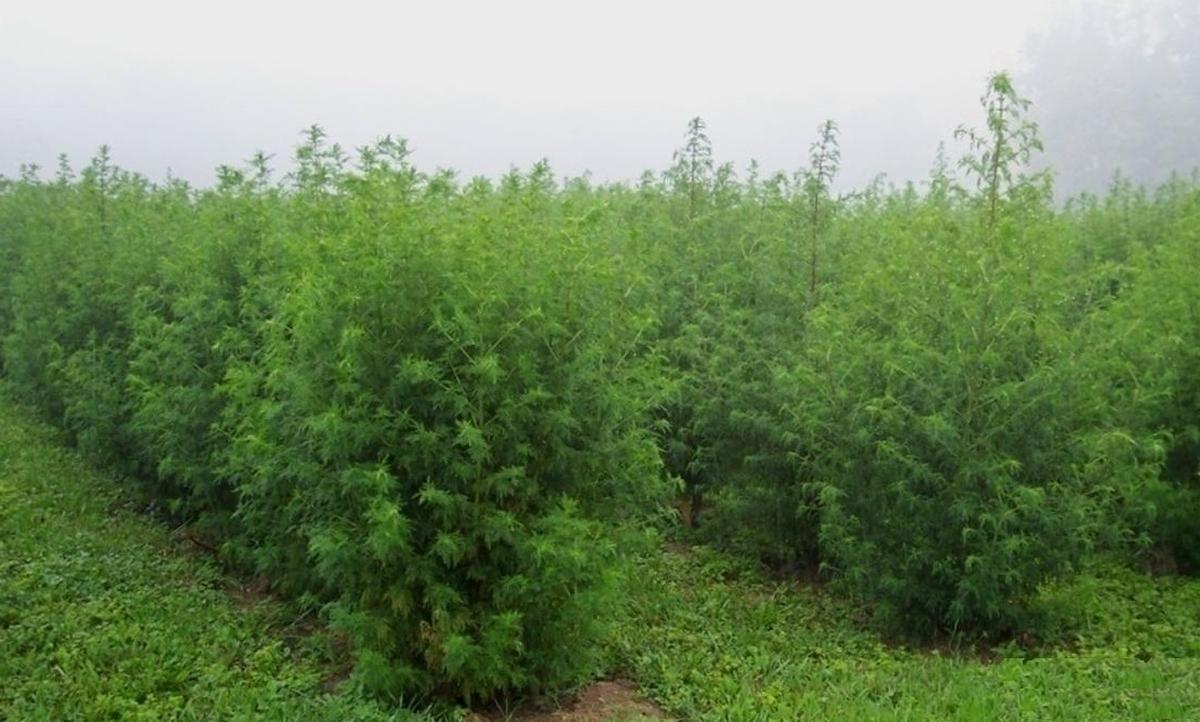
An Artemisia annua crop in West Virginia, the USA, in 2005.
| Photo Credit:
Jorge Ferreira
A critical period
That said, based on their findings, the researchers have outlined several urgent priorities for the future. They include improving genetic surveillance across Africa, rapidly sharing data, monitoring for resistance to partner drugs, and preparing for changes in treatment policy if certain mutations become more common. The team also called for more investment in malaria control, since strong surveillance and timely interventions depend on sustained funding.
The paper adds its voice to a growing consensus in the malaria research community that Africa is entering a critical period where decisive action could still prevent the kind of large-scale resistance crisis previously seen in Southeast Asia. Earlier this year, in a Science Advances article, another research group also warned that the early patterns now appearing across East Africa closely mirror the rise of artemisinin resistance in Southeast Asia more than a decade ago. And they have argued that without timely intervention, particularly introducing more diverse classes of drugs into the treatment regimen, these resistant strains could spread and threaten the effectiveness of artemisinin-based therapies — the world’s current anti-malaria backbone.
The collective consensus? There is a need for urgent coordinated action. That is, countries need to diversify drug use, improve surveillance, and be able to change treatment strategies in an agile way. Otherwise the crisis of resistance could become unmanageable.
The story of artemisinin’s discovery is the stuff of legend: a piece of ancient wisdom that rescued the world from the chloroquine crisis. But if that story teaches us anything, it is how quickly complacency can erode progress. Today, the world stands at a similar crossroads with artemisinin, and this time it would be foolish to hope for another miracle and not act.
Arun Panchapakesan is an assistant professor at the Y.R. Gaitonde Centre for AIDS Research and Education, Chennai.