


How does the human mind process climate change? Is the apathy reflected in people’s disengagement from inequality, disruption, and social change?
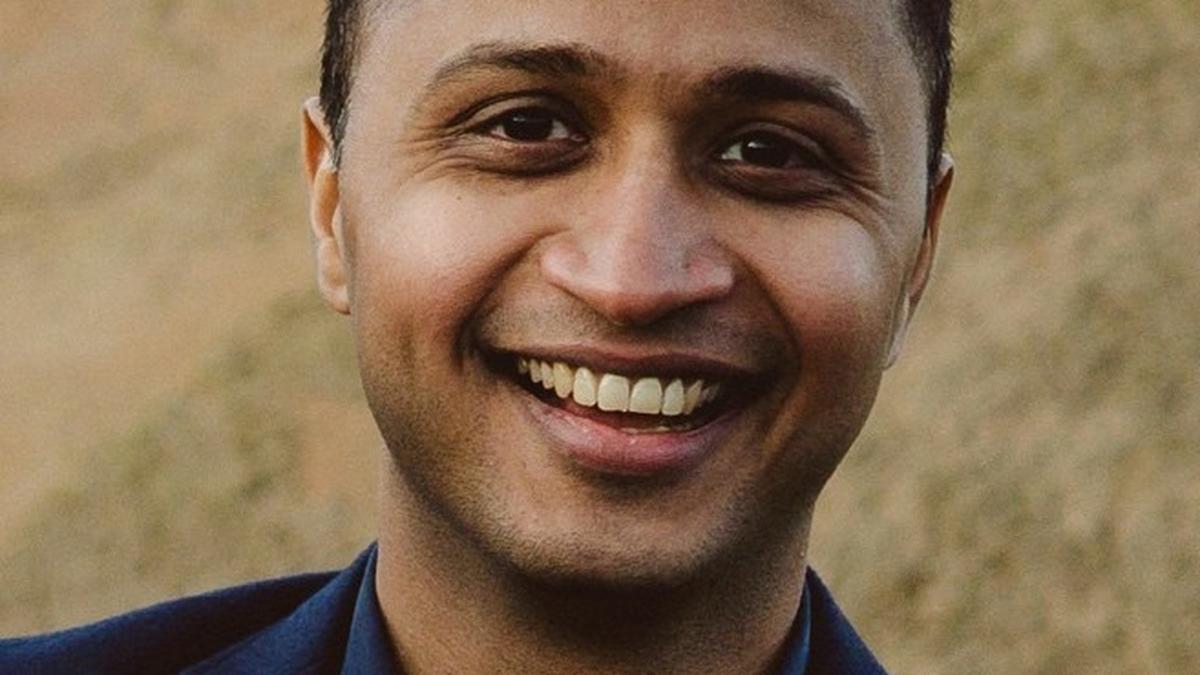
Midway through his PhD, Rachit Dubey, now an assistant professor at the department of communication, University of California in Los Angeles (UCLA), “shifted away from traditional cognitive science topics to tackle broader, interdisciplinary challenges around adaptation and climate change,” he wrote in a recent paper in Science.
Now, Dr. Dubey continues to pursue the basic science of adaptation through interdisciplinary methods, including behavioural experiments, formal models, and insights from neuroscience, psychology, computer science, and public policy. As he put it, his “goal is to help build that bridge between disciplines and to better understand how human minds (and societies) adapt to change”.
Recently Dr. Dubey spoke to The Hindu about how extraordinary circumstances start feeling ordinary. Excerpts from an interview follow:
You have said crises such as pandemics and climate change have begun to be normalised. Could you elaborate?
Normalisation happens when our minds recalibrate to new conditions so quickly that extraordinary circumstances start feeling ordinary. This is a prominent problem when it comes to climate change. What would have been considered absolutely abnormal in the 1990s for example are three major wildfires per year (in California) or extreme air pollution (in Delhi); these are completely normal to someone growing up today.
In our narrow window of cognition, with our limited memories and attention spans, climate change produces slow, gradual changes punctuated by occasional disasters. This creates a fundamental mismatch: the last 50-100 years are unprecedented in terms of carbon emissions and rate of warming, but our subjective experience makes it feel incremental. We are essentially sleepwalking into disaster because our emotional and attentional systems keep updating what counts as “normal.”
Do we overestimate humans’ ability to adapt to climate change?
Absolutely. We fundamentally confuse two different types of adaptation, physical and psychological, and the confusion has important consequences.
Climate scientists and advocates long held an optimistic belief that once impacts became undeniable, people and governments would act. This overestimated our collective response capacity while underestimating our psychological tendency to normalise. Physically, there are hard limits: we cannot survive certain temperature extremes, sea-level rise will displace thousands of people, and ecosystem collapse threatens food security.
But the more insidious problem is that we adapt psychologically too well. As disasters escalate, they’re also being forgotten and recalibrated as the new baseline.Our minds essentially gaslight us into thinking climate change isn’t a big deal. Even though science tells us we are on track for catastrophic 2.5-3°C warming by century’s end, in the back of our minds we think “maybe it’s going to be fine.”
This psychological adaptability, normally a cognitive strength, becomes a liability when facing irreversible, accelerating global changes.
When and why does adaptation backfire?
Adaptation backfires when we face problems that are unprecedented in scale and speed, but unfold gradually within our narrow perceptual window. I want to note that our minds can adjust very well to sudden changes: a harsh winter, a bad harvest, temporary hardship.
But this same mechanism fails catastrophically with problems such as climate change, rising inequality, or gun violence. These issues are escalating very quickly over 10-30 year timescales, but within our limited attention spans and memories, they feel gradual. We might worry about them now and then, but they don’t command the daily, urgent attention they deserve.
The adaptation becomes maladaptive because we lose the emotional signal that should drive action. Each year becomes the “new normal,” and we recalibrate our reference points faster than is optimal for recognising danger and maintaining motivation.
Could you explain the ‘boiling frog’ phenomenon in the context of climate change?
(Author’s note: The ‘boiling frog’ metaphor describes a frog staying in water that is being slowly heated. The frog fails to notice the danger until it dies. It is used to illustrate how people can ignore gradual harms or the erosion of norms, although the story itself is not biologically accurate.)
The boiling frog metaphor captures a critical barrier to climate action: gradual threats fail to trigger alarm because we adapt to incremental changes. It’s an analogy that talks about the proverbial frog when placed in slowly heating water won’t jump out, whereas one placed in already-hot water will. For climate change, this means that in our daily experience, warming happens very slowly, and as a result it fails to trigger sufficient urgency.
Why do you say binary data is psychologically more salient?
Binary data represents information in two discrete states — yes or no, frozen or unfrozen, present or absent — rather than on a continuous numerical scale. Instead of showing abstract temperature increases (continuous data), we might show whether a lake froze each winter (binary data).
We found this format significantly amplifies perceived change because it creates clear “before and after” moments that capture people’s attention. When a lake stops freezing after 50 consecutive years of freezing, our minds perceive a sudden, categorical shift, that is something fundamental has changed, even though the underlying temperature change was seemingly gradual.
Essentially, binary indicators help people understand that within a certain time window, there has been a sudden change, making them take more notice. This matters quite a lot for climate communication: binary indicators like species disappearances, ice shelf collapses, or lake freeze patterns may be far more effective than abstract temperature statistics for conveying urgency.
Tell us more about the laboratory you created this year at UCLA.
I launched the Computational Cognitive Policy Lab at UCLA in July 2025 to bridge cognitive science, computational modelling, and real-world policy challenges. The lab investigates how our minds and societies think about long-term problems, particularly how human cognition both helps and hinders our response to existential threats like climate change.
We use tools from machine learning, AI, and Bayesian statistics alongside large-scale behavioural experiments to understand when adaptation becomes maladaptive.
Currently, we are exploring how normalisation extends beyond climate to other domains: for instance, whether the “boiling frog” effect applies to AI dependency, where we may be offloading agency to AI systems gradually without noticing how quickly we are becoming dependent.
We are also investigating how definitions of “normal” shift across generations and cultures. Beyond basic research, we are excited about translating findings into practice and are working with climate communicators on better visualisation tools and exploring how to design climate policies that people are more motivated to support.