



Skip to content
  • Facebook
  • X
  • Linkedin
  • WhatsApp
  • Associate Journalism
  • About Us
  • Privacy Policy
  • 033-46046046
  • editor@artifex.news
Artifex.News

Artifex.News

Stay Connected. Stay Informed.

  • Breaking News
  • World
  • Nation
  • Sports
  • Business
  • Science
  • Entertainment
  • Lifestyle
  • Toggle search form
  • Harleen Deol’s Ton Fuels 115-Run Win Over West Indies As India Clinch ODI Series
    Harleen Deol’s Ton Fuels 115-Run Win Over West Indies As India Clinch ODI Series Sports
  • Man Who Hanged Nazi War Criminal Adolf Eichmann Dies
    Man Who Hanged Nazi War Criminal Adolf Eichmann Dies World
  • Access Denied Sports
  • Israeli strikes kill 17 Palestinians in Gaza, hospital in northern Gaza ordered to evacuate World
  • Access Denied
    Access Denied Nation
  • RBI action on Paytm Payments Bank has drawn fintechs’ attention to compliance of laws: Chandrasekhar
    RBI action on Paytm Payments Bank has drawn fintechs’ attention to compliance of laws: Chandrasekhar Business
  • Kim Jong Un Leads Test Of New Missile That Can Hit US Bases
    Kim Jong Un Leads Test Of New Missile That Can Hit US Bases World
  • Indian man fighting alongside Russian military surrenders to Ukrainian forces
    Indian man fighting alongside Russian military surrenders to Ukrainian forces World
Roundworms do inherit info on threats to avoid, but with a catch

Roundworms do inherit info on threats to avoid, but with a catch

Posted on November 17, 2025 By admin


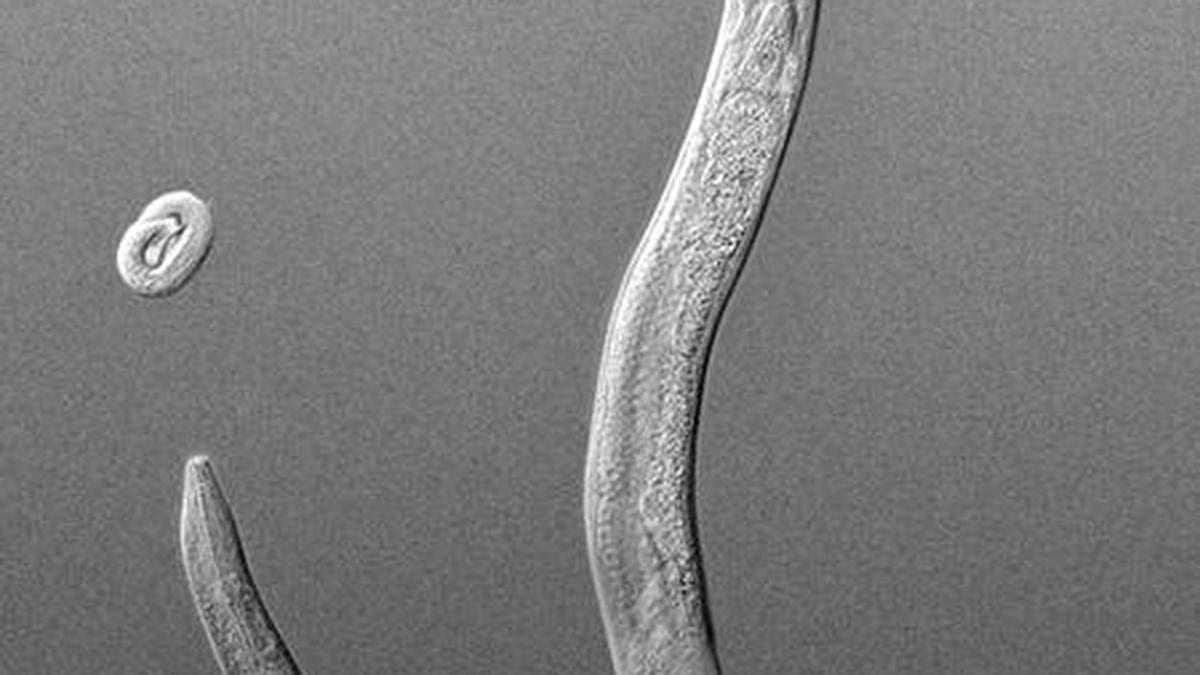
An image of Caenorhabditis elegans worms.
| Photo Credit: Megha Rai/Special arrangement

Animals often meet the same threats across generations. A central question in biology is whether experience with a threat can be passed from parents to offspring in a way that changes the latter’s behaviour.

In the roundworm Caenorhabditis elegans, one such experience is learning to avoid a dangerous bacterium called Pseudomonas aeruginosa strain PA14. Previous work has suggested that worms exposed to PA14 can produce descendants that also avoid this bacterium, even though those descendants have never encountered it. Other researchers, however, reported that this inherited avoidance didn’t reliably persist beyond the first generation, casting doubt on the phenomenon.

A new study by researchers from Illinois State University in the US was designed to address this disagreement with an independent replication study. Working in a different laboratory, they closely followed the previous study’s protocol and focused on whether learned avoidance could still be detected in the second generation, where previous results began to diverge.

The authors used a standard choice assay. The worms were placed on a plate where one spot contained their usual lab food, a harmless Escherichia coli strain called OP50, and another spot contained the pathogenic PA14. A compound called sodium azide was added to each spot to paralyse worms as soon as they arrived, so their first choice could be recorded. Worms were first ‘trained’ by spending 24 hours on PA14 or OP50, and then their preference, and that of their offspring and the offspring’s offspring raised only on OP50, was tested in the assay.

Naïve worms that had never seen PA14 showed the expected initial attraction to the pathogen over OP50. After training on PA14, however, parental worms strongly avoided PA14 in the choice assay. Crucially, their descendants, which had never themselves encountered PA14, also shifted to avoiding the pathogen compared to control worms whose ancestors had only seen OP50. The inherited effect weakened with each generation but remained statistically significant in the second generation descendants when the assay was run in tightly controlled conditions.

The findings were published in eLife on November 11. A companion article by Canada’s Michael G. DeGroote Institute for Infectious Disease Research associate professor Lesley MacNeil, who wasn’t involved in the studies, placed the findings in a broader debate about “transgenerational epigenetic inheritance”. Dr. MacNeil contrasted the old and new study with a third set of studies that often didn’t detect either the initial attraction to PA14 or its inherited avoidance when using a different method that immobilised worms by cooling the plate instead of using azide. This alternative method could have allowed the worms to contact PA14 during the assay and learn on the spot, blurring the difference between naïve and previously trained lineages.

Taken together, the first two papers (i.e. old and new) strengthen the case that signals from microbes, including small RNAs produced by PA14, can leave heritable marks that shape how C. elegans descendants respond to future threats. At the same time, comparing their findings with the third line of inquiry underlines that claims about such inheritance must rest on protocols that others can reproduce and scrutinise.

Published – November 17, 2025 01:38 pm IST



Source link

Science

Post navigation

Previous Post: Access Denied
Next Post: Access Denied

Related Posts

  • Can blood tests for cancer save more lives? | Explained
    Can blood tests for cancer save more lives? | Explained Science
  • Science for all newsletterScientists discover a binary star system near Milky Way’s supermassive black hole 
    Science for all newsletterScientists discover a binary star system near Milky Way’s supermassive black hole  Science
  • Study traces Turkey quake to interrupted ‘chat’ between fault lines
    Study traces Turkey quake to interrupted ‘chat’ between fault lines Science
  • Infosys Science Foundation announces prize winners for 2024
    Infosys Science Foundation announces prize winners for 2024 Science
  • NASA-ISRO mission to launch NISAR satellite on July 30, confirms ISRO chairman
    NASA-ISRO mission to launch NISAR satellite on July 30, confirms ISRO chairman Science
  • The world of sugar 
    The world of sugar  Science

More Related Articles

Aditya-L1 successfully undergoes second earth-bound manoeuvre: ISRO Aditya-L1 successfully undergoes second earth-bound manoeuvre: ISRO Science
Morocco fossils reveal astounding diversity of marine life just before the asteroid hit Morocco fossils reveal astounding diversity of marine life just before the asteroid hit Science
IIT Bombay researchers develop GPS-free control scheme for autonomous drone swarms Science
Could groundbreaking CAR-T cancer therapy trigger more cancer? Could groundbreaking CAR-T cancer therapy trigger more cancer? Science
Dyson sphere: an energy devourer Dyson sphere: an energy devourer Science
Since every King Cobra looks the same, you need microchips Since every King Cobra looks the same, you need microchips Science
SiteLock

Archives

  • November 2025
  • October 2025
  • September 2025
  • August 2025
  • July 2025
  • June 2025
  • May 2025
  • April 2025
  • March 2025
  • February 2025
  • January 2025
  • December 2024
  • November 2024
  • October 2024
  • September 2024
  • August 2024
  • July 2024
  • June 2024
  • May 2024
  • April 2024
  • March 2024
  • February 2024
  • January 2024
  • December 2023
  • November 2023
  • October 2023
  • September 2023
  • August 2023
  • July 2023
  • June 2023
  • May 2023
  • April 2023
  • March 2023
  • February 2023
  • January 2023
  • December 2022
  • November 2022
  • October 2022
  • September 2022
  • August 2022
  • July 2022
  • June 2022
  • May 2022

Categories

  • Business
  • Nation
  • Science
  • Sports
  • World

Recent Posts

  • Access Denied
  • Oil India trims production guidance, expects 3.55 MMT crude oil production in current year
  • Access Denied
  • Access Denied
  • Access Denied

Recent Comments

  1. dfb{{98991*97996}}xca on UP Teacher Who Asked Students To Slap Muslim Classmate
  2. "dfbzzzzzzzzbbbccccdddeeexca".replace("z","o") on UP Teacher Who Asked Students To Slap Muslim Classmate
  3. 1}}"}}'}}1%>"%>'%> on UP Teacher Who Asked Students To Slap Muslim Classmate
  4. bfg6520<s1﹥s2ʺs3ʹhjl6520 on UP Teacher Who Asked Students To Slap Muslim Classmate
  5. pHqghUme9356321 on UP Teacher Who Asked Students To Slap Muslim Classmate
  • Taliban have waged a systematic assault on freedom in Afghanistan: U.N. human rights chief
    Taliban have waged a systematic assault on freedom in Afghanistan: U.N. human rights chief World
  • New Zealand Woman, 33, Dies Of Health Condition After She Was Told By Doctors That She Was Faking Her Illness
    New Zealand Woman, 33, Dies Of Health Condition After She Was Told By Doctors That She Was Faking Her Illness World
  • IT stocks tumble on U.S. H-1B visa fee hike concerns
    IT stocks tumble on U.S. H-1B visa fee hike concerns Business
  • Access Denied
    Access Denied Nation
  • Food price rise likely to have escalated in May
    Food price rise likely to have escalated in May Business
  • Mali junta arrests former Prime Minister Choguel Kokalla Maiga
    Mali junta arrests former Prime Minister Choguel Kokalla Maiga World
  • “Bought Second-Hand WagonR…”: Ajinkya Rahane Opens Up Family’s Financial Struggles
    “Bought Second-Hand WagonR…”: Ajinkya Rahane Opens Up Family’s Financial Struggles Sports
  • Access Denied
    Access Denied Nation

Editor-in-Chief:
Mohammad Ariff,
MSW, MAJMC, BSW, DTL, CTS, CNM, CCR, CAL, RSL, ASOC.
editor@artifex.news

Associate Editors:
1. Zenellis R. Tuba,
zenelis@artifex.news
2. Haris Daniyel
daniyel@artifex.news

Photograher:
Rohan Das
rohan@artifex.news

Artifex.News offers Online Paid Internships to college students from India and Abroad. Interns will get a PRESS CARD and other online offers.
Send your CV (Subjectline: Paid Internship) to internship@artifex.news

Links:
Associate Journalism
About Us
Privacy Policy

News Links:
Breaking News
World
Nation
Sports
Business
Entertainment
Lifestyle

Registered Office:
72/A, Elliot Road, Kolkata - 700016
Tel: 033-22277777, 033-22172217
Email: office@artifex.news

Editorial Office / News Desk:
No. 13, Mezzanine Floor, Esplanade Metro Rail Station,
12 J. L. Nehru Road, Kolkata - 700069.
(Entry from Gate No. 5)
Tel: 033-46011099, 033-46046046
Email: editor@artifex.news

Copyright © 2023 Artifex.News Newsportal designed by Artifex Infotech.