




Were you able to read this without yawning?
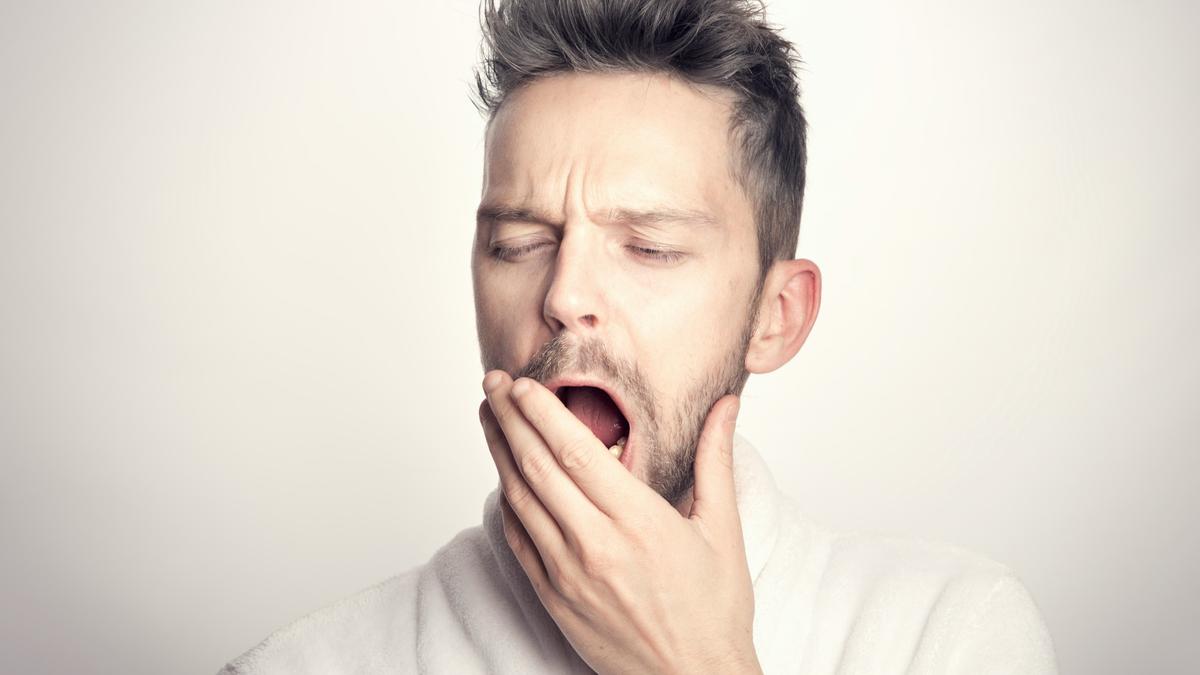
| Photo Credit: Sander Sammy/Unsplash
A: Yawning may spread because our brains are tuned to mirror others. When we see or hear a yawn, circuits involved in social mirroring and empathy may prime the throat and face muscles to mirror it. This may have helped groups of humans synchronise arousal and stay alert together.
Another idea is thermoregulation. Yawning may briefly boost blood- and air-flow through the sinuses, helping cool the brain. If one member shows signs of overheating or fatigue, others may copy the behaviour to stabilise attention. The susceptibility to yawning rises with social closeness and tiredness and drops when the room is cool or you’re already highly alert.
If social mirroring is key, people who pay less attention to others’ faces or are intensely task-focused often yawn less, including very young children and some autistic individuals. The effect is more pronounced when a person’s gaze shifts to others’ faces. But if the act of cooling the brain matters more, people in cooler environments, those breathing through the nose or those keeping the jaw busy (by talking or chewing) may suppress the urge better.
Were you able to read this without yawning?
Published – November 13, 2025 06:00 am IST