

Skip to content
  • Facebook
  • X
  • Linkedin
  • WhatsApp
  • YouTube
  • Associate Journalism
  • About Us
  • Privacy Policy
  • 033-46046046
  • editor@artifex.news
Artifex.News

Artifex.News

Stay Connected. Stay Informed.

  • Breaking News
  • World
  • Nation
  • Sports
  • Business
  • Science
  • Entertainment
  • Lifestyle
  • Toggle search form
  • How Meryl Streep Cut A Car-Size Hole Through Her Fence To Escape The Los Angeles Wildfires
    How Meryl Streep Cut A Car-Size Hole Through Her Fence To Escape The Los Angeles Wildfires World
  • Parthiv Patel gets dual responsibility with Gujarat Titans: batting and assistant coach
    Parthiv Patel gets dual responsibility with Gujarat Titans: batting and assistant coach Sports
  • Access Denied Sports
  • Vivo V70 Elite, Vivo V70 Launch Date In India, Key Specs Confirmed Business
  • Access Denied Sports
  • Access Denied
    Access Denied Nation
  • Clinical New Zealand Thump Pakistan To Win Tri-Nations Final
    Clinical New Zealand Thump Pakistan To Win Tri-Nations Final Sports
  • Access Denied Sports
Microbial link between arsenic in soil, lower rice yield uncovered

Microbial link between arsenic in soil, lower rice yield uncovered

Posted on October 18, 2025 By admin


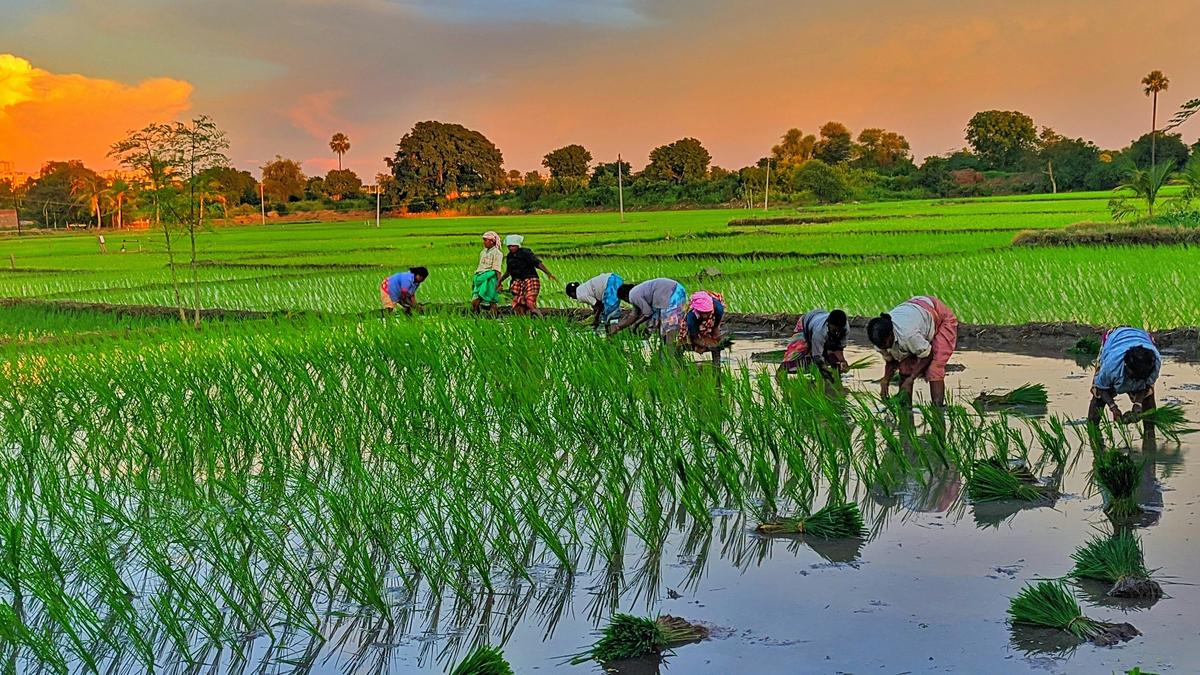
Research published in Proceedings of the National Academy of Sciences recently has warned that the type of microbes in rice paddies can determine whether arsenic, a notorious carcinogen and plant toxin, builds up in rice grains and triggers drastic crop losses.

The study has identified an important balance between arsenic-methylating bacteria, which convert inorganic arsenic into the toxic organic forms, versus demethylating archaea, which can undo this process. Where the methylating bacteria dominate, rice plants absorb the compound dimethylarsinic acid (DMA) and its more toxic derivative, dimethylated monothioarsenate (DMMTA). These compounds pose health risks to humans as well as induce straighthead disease. 

“Straighthead needs to be considered as a physiological disorder rather than a disease in the absence of any infectious agent,” rice pathologist Sridhar Ranganathan, who wasn’t involved in the study, said.

“The symptoms are erect panicles with unfilled grains, often remaining green. Due to empty grains affecting the weight of the panicles, the-ear bearing tillers don’t droop down and remain green and upright, as can be seen with unaffected healthy plants bearing normally filled matured grains in which the plants droop down showing symptoms of initiation of senescence of the leaves and the grains.”

While long dismissed as a local agronomic issue, straighthead disease is now recognised as a global threat. In parts of the US and China, farmers have reported significant outbreaks, often in newly established or rotated paddies. West Bengal in India and Bangladesh have also previously reported straighthead disease.

The condition can result in up to 70% yield losses in severely affected areas. It occurs even when the total arsenic level in the soil is relatively low because the real problem is arsenic speciation, i.e. the chemical form arsenic takes in the soil and plant. The new study has found that the microbial communities that dominate in the paddies determine this speciation.

The research team, led by Peng Wang at Nanjing Agricultural University in China, analysed rice paddies of different ages in China, unearthing a surprising pattern. Soils younger than 700 years were dominated by arsenic-methylating bacteria, so the rice grown there accumulated more DMA and DMMTA and the fields were more prone to straighthead disease outbreaks. Soils older than 700 years had more demethylating archaea, which broke down DMA and reduced the compounds’ buildup.

The researchers combined these field data with controlled soil incubation tests, genetic analyses, and a global survey of 801 paddy soil microbiomes. Eventually, they identified 11 methylating microbes and six demethylating archaea whose abundance could accurately predict arsenic risk.

In the paper, the team also reported that newly cultivated paddy regions like the US, southern Europe, and northeast China showed high ratios of methylating to demethylating microbes, rendering them particularly vulnerable to straighthead outbreaks. Ancient rice-growing regions in South and Southeast Asia had stronger demethylating communities instead. When the ratio of methylating to demethylating microbes exceeded 1.5, the risk of straighthead disease was found to rise sharply.

India is the world’s second-largest producer and consumer of rice. While much of the country’s rice farming occurs in old, legacy paddies with relatively balanced microbial communities, several States — particularly in East and South India — have had new or reclaimed paddy fields established in the last few decades. These fields may be at greater risk, per the new study.

Arsenic contamination in groundwater already poses a severe challenge in West Bengal, Bihar, and Assam, compounding the potential hazard.

Experts said the research also intersects with climate change. Higher temperatures and altered flooding regimes are expected to increase the soils’ arsenic content (whether from natural sources or anthropogenic), and could tip the microbial balance towards the more harmful varieties. For a country where rice contributes nearly 40% of the population’s caloric intake, the crop’s safety and productivity are crucial.

Dr. Ranganathan said that even if the crop can’t be saved in a single cropping season, agronomic interventions can mitigate risks. According to the research paper, draining the rice fields midseason can ‘suppress’ the methylating microbes by reintroducing oxygen into the soils. Silicon fertilisation has also been known to reduce rice plants’ arsenic uptake. He also said crop rotation strategies can be adjusted to avoid destabilising microbial communities.

At the policy level, the findings highlight the need to monitor arsenic speciation, and not just total arsenic levels, as part of food safety regulations. Current standards, including those of the UN Food and Agriculture Organisation’s ‘Codex Alimentarius’, focus on inorganic arsenic, leaving gaps around methylated species like DMMTA.

Ashmita Gupta is a science writer.

Published – October 18, 2025 09:06 pm IST



Source link

Science

Post navigation

Previous Post: Access Denied
Next Post: Access Denied

Related Posts

  • Realisation about fragility of earth common among astronauts upon return: Rakesh Sharma
    Realisation about fragility of earth common among astronauts upon return: Rakesh Sharma Science
  • How the Widal test is clouding India’s sense of its typhoid problem | Explained
    How the Widal test is clouding India’s sense of its typhoid problem | Explained Science
  • IIT Roorkee uses bacterial enzymes to degrade plasticizers
    IIT Roorkee uses bacterial enzymes to degrade plasticizers Science
  • NASA astronaut Sunita Williams retires
    NASA astronaut Sunita Williams retires Science
  • Leprosy spread between red squirrels and people in medieval England: study
    Leprosy spread between red squirrels and people in medieval England: study Science
  • Science and tech awards to get Padma-style makeover into Rashtriya Vigyan Puraskar
    Science and tech awards to get Padma-style makeover into Rashtriya Vigyan Puraskar Science

More Related Articles

India to convey its plans to build a new research station in Antarctica at ATCM India to convey its plans to build a new research station in Antarctica at ATCM Science
Why India needs political change to retain women in STEM Why India needs political change to retain women in STEM Science
Shining a light on the life of C.V. Raman Shining a light on the life of C.V. Raman Science
How the World Health Organization could fight future pandemics How the World Health Organization could fight future pandemics Science
Sci-Five | The Hindu Science Quiz: On Astronomical Instruments Sci-Five | The Hindu Science Quiz: On Astronomical Instruments Science
Large Hadron Collider discovers a new particle Large Hadron Collider discovers a new particle Science
SiteLock

Archives

  • May 2026
  • April 2026
  • March 2026
  • February 2026
  • January 2026
  • December 2025
  • November 2025
  • October 2025
  • September 2025
  • August 2025
  • July 2025
  • June 2025
  • May 2025
  • April 2025
  • March 2025
  • February 2025
  • January 2025
  • December 2024
  • November 2024
  • October 2024
  • September 2024
  • August 2024
  • July 2024
  • June 2024
  • May 2024
  • April 2024
  • March 2024
  • February 2024
  • January 2024
  • December 2023
  • November 2023
  • October 2023
  • September 2023
  • August 2023
  • July 2023
  • June 2023
  • May 2023
  • April 2023
  • March 2023
  • February 2023
  • January 2023
  • December 2022
  • November 2022
  • October 2022
  • September 2022
  • August 2022
  • July 2022
  • June 2022
  • May 2022

Categories

  • Business
  • Nation
  • Science
  • Sports
  • World

Recent Posts

  • Learn from Sri Lanka’s experience on impact of fertilizer supply chains: experts
  • Sewage pollution of Cooum, groundwater depletion raise alarm
  • Device with low-grade explosives found inside private hospital in Pune; ATS joins probe
  • Punjab Kings seeks turnaround against Mumbai Indians
  • Around 83% of candidates lost their deposit in Tamil Nadu polls, says ECI

Recent Comments

  1. RichardClage on UP Teacher Who Asked Students To Slap Muslim Classmate
  2. JeffryFok on UP Teacher Who Asked Students To Slap Muslim Classmate
  3. DerrickSef on UP Teacher Who Asked Students To Slap Muslim Classmate
  4. Leonardren on UP Teacher Who Asked Students To Slap Muslim Classmate
  5. NathanQuins on UP Teacher Who Asked Students To Slap Muslim Classmate
  • “No Place In Team If…”: Ex-Pakistan Captain’s Fires Ultimatum To Babar Azam, Mohammad Rizwan
    “No Place In Team If…”: Ex-Pakistan Captain’s Fires Ultimatum To Babar Azam, Mohammad Rizwan Sports
  • Vinesh Phogat Should Be Sent To Rajya Sabha, Says Bhupinder Hooda
    Vinesh Phogat Should Be Sent To Rajya Sabha, Says Bhupinder Hooda Sports
  • Access Denied Sports
  • After 180 years, clues reveal how general anaesthesia works in the brain
    After 180 years, clues reveal how general anaesthesia works in the brain Science
  • Morning Digest | AFSPA extended in four districts of Assam; CBI arrests four for abduction, killing of two Meitei students, and more 
    Morning Digest | AFSPA extended in four districts of Assam; CBI arrests four for abduction, killing of two Meitei students, and more  World
  • Real Madrid Beat Las Palmas But Girona Move Top Of La Liga
    Real Madrid Beat Las Palmas But Girona Move Top Of La Liga Sports
  • Access Denied Sports
  • Lionel Messi To Kick Off New Club World Cup, Neymar To Face Real Madrid
    Lionel Messi To Kick Off New Club World Cup, Neymar To Face Real Madrid Sports

Editor-in-Chief:
Mohammad Ariff,
MSW, MAJMC, BSW, DTL, CTS, CNM, CCR, CAL, RSL, ASOC.
editor@artifex.news

Associate Editors:
1. Zenellis R. Tuba,
zenelis@artifex.news
2. Haris Daniyel
daniyel@artifex.news

Photograher:
Rohan Das
rohan@artifex.news

Artifex.News offers Online Paid Internships to college students from India and Abroad. Interns will get a PRESS CARD and other online offers.
Send your CV (Subjectline: Paid Internship) to internship@artifex.news

Links:
Associate Journalism
About Us
Privacy Policy

News Links:
Breaking News
World
Nation
Sports
Business
Entertainment
Lifestyle

Registered Office:
72/A, Elliot Road, Kolkata - 700016
Tel: 033-22277777, 033-22172217
Email: office@artifex.news

Editorial Office / News Desk:
No. 13, Mezzanine Floor, Esplanade Metro Rail Station,
12 J. L. Nehru Road, Kolkata - 700069.
(Entry from Gate No. 5)
Tel: 033-46011099, 033-46046046
Email: editor@artifex.news

Copyright © 2023 Artifex.News Newsportal designed by Artifex Infotech.