




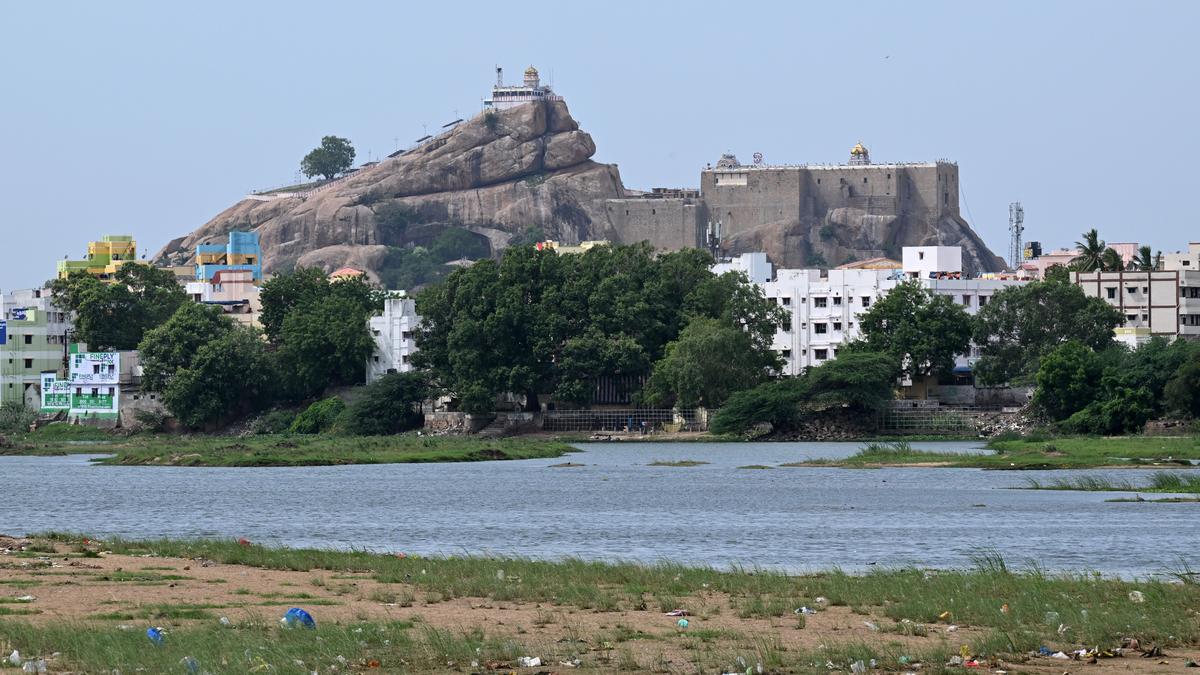
Heavy metals are polluting the Cauvery river and its fish, researchers from Tamil Nadu have reported. They have also cautioned against consuming “regular” or “excessive” amounts of fish from here.
The study was conducted by a team at Bharathidasan University in Tiruchirappalli and was published in the journal Environmental Earth Sciences in August.
Scientists from the university studied the spatial distribution of and ecological risks due to heavy metals in sediments from 18 sites along the river and fish from 10 sites, from August 2023 to February 2024. They focused their analysis on chromium, cadmium, copper, lead and zinc.
They found that the accumulation of heavy metals in fish tissues varied significantly across species, with several exceeding the threshold values for non-carcinogenic (non-cancer-causing) and carcinogenic health risks, especially for cadmium and lead, they found.
Human v. natural sources
Rajaram Rajendran in the marine science department at Bharathidasan University and one of the authors of the report said his team’s study holds significant ecological, environmental, and public health relevance because it provides a comprehensive assessment of heavy metal contamination in the Cauvery river basin.
“It highlights the pressing impacts of urbanisation, industrial effluents, and agricultural runoff on sediment and freshwater fish quality,” he said.
The team also found what it described as a notable variation in metal concentrations across the various sites.
“The detection of cadmium and lead as primary contaminants of concern, with levels exceeding threshold limits in some fish species, underscores the potential risks to both ecosystem health and human consumers,” Dr. Rajendran said.
The scientists used several pollution indices, each index being a number that evaluates the pollution levels of soils and sediments, calculated using the concentration of specific elements relative to their background levels.
They included Igeo, or the geoaccumulation index, to determine heavy metal pollution in sediments; contamination factor; the contamination degree; the pollution load index; and the potential ecological risk.
Dr. Rajendran said that by integrating Igeo and the potential ecological risk indices with multivariate statistical analyses, the study was able to “effectively” distinguish between anthropogenic, or human origin, and natural sources vis-à-vis heavy metals.
“This approach provides valuable insights into the dynamics of metal bioaccumulation and pollution pathways in a tropical river system under rapid industrial and urban development,” Dr. Rajendran said.
The study “provides valuable, updated insight into the scale and risks of heavy metal pollution in freshwater fish populations of the Cauvery river,” Nikita Gupta, a researcher at the Vellore Institute of Technology, who along with her colleague, School of Biosciences and Technology assistant professor Sathiavelu Arunachalam, has studied heavy metal pollution in tilapia fish in the Cauvery.
She added that the new paper highlighted the presence as well as the distribution of key toxic metals in multiple local fish species — “a critical concern given the river’s importance for drinking water, fisheries, and agriculture in Southern India.”

Fish consumption
The findings have direct implications for public health: while occasional fishconsumption may not pose immediate threats, prolonged exposure could lead to cumulative non-carcinogenic and carcinogenic risks, particularly from cadmium and lead.
The risk depends on both the amount consumed, the frequency of intake, and the age of the individual, Dr. Rajendran said.
“Based on various risk assessment indices from this study, consuming fish twice a week, with a portion size of 250 g per serving, is considered safe,” he estimated.
Earlier, Ms. Gupta and Dr. Arunachalam had estimated the health risk posed by heavy metals in tilapia fish using atomic absorption spectroscopy. In November 2024, they reported in Frontiers Public Health that the hazard quotient for cadmium, cobalt, lead, and chromium in the fish’s liver, cobalt and chromium in the gills, and the cobalt in muscle “showed a significant health risk from the combined effects of these metals”.
The potential health risk to humans is mainly due to exposure to cadmium and chromium, they added.
Like the new study, the duo advised moderate fish consumption to limit the bioaccumulation of heavy metals in the body.
“Our study is among the first to provide a thorough, multi-organ and multi-metal health risk assessment for tilapia consumers in the Cauvery basin, delivering actionable data for consumers, regulators, and health authorities,” Ms. Gupta said.
The new study took these findings further.
“In our publication, we focused on one fish species whose samples we could acquire,” Ms. Gupta said. “However, in this new publication, we learn that the same phenomenon of heavy metal accumulation in fish is observed in multiple regional fish species. This broadens the claim that indeed the heavy metal pollution in the Cauvery is a fact.”
“Evidence that some metals, particularly cadmium and lead, pose carcinogenic and non-carcinogenic risks, including through biomagnification up the food chain,” she added. “This result agrees with the findings of our study.”
Using US Environment Protection Agency guidelines, the Vellore Institute of Technology researchers found that the target hazard quotient for several metals exceeded 1, which is the threshold for concern, in the liver, gills, and sometimes even muscles, “indicating real human health risks from regular exposure,” Ms. Gupta said.
Scientific basis
Dr. Rajendran said his study “exposes gaps in current environmental managementpractices and emphasises the need for continuous monitoring of sediments, water, and aquatic organisms, stricter pollution control and regulatory enforcement, policy interventions to manage industrial emissions and unsustainable land-use practices, and enhanced public awareness to mitigate health risks.”

There is an urgent call for systematic, longitudinal monitoring of riverine contamination and more stringent regulation of effluent discharge into the Cauvery, Ms. Gupta added.
The new study is especially significant for providing a contemporary, region-specific health-risk assessment and thus a much-needed scientific basis for local authorities to design regulatory and public health interventions, she added.
Industrial effluents, particularly from textile and electroplating units operating near Erode stretch, are major contributors to the region’s heavy metal contamination. Other important sources include agricultural runoff, mainly from fertilizers and pesticides, and untreated urban wastewater.
There is some natural contribution, even if at lower levels, due to the presence of mineralised zones upstream of the river; they are important sources of iron in particular. “However, the elevated and variable levels of cadmium, chromium, and lead are highly indicative of human-driven contamination,” Ms. Gupta said.
There have been similar reports from other rivers in Tamil Nadu. Researchers from the SRM Institute of Science and Technology in Kattankulathur, for example, studied heavy metal contamination on surface waters in the Noyyal river basin in western Tamil Nadu and reported that industrial activity was an important contributor of contaminants.
T.V. Padma is a science journalist in New Delhi.