

Skip to content
  • Facebook
  • X
  • Linkedin
  • WhatsApp
  • Associate Journalism
  • About Us
  • Privacy Policy
  • 033-46046046
  • editor@artifex.news
Artifex.News

Artifex.News

Stay Connected. Stay Informed.

  • Breaking News
  • World
  • Nation
  • Sports
  • Business
  • Science
  • Entertainment
  • Lifestyle
  • Toggle search form
  • “This Is Not Badminton Or Tennis…”: Kapil Dev’s Brutal Response On Jasprit Bumrah’s Injury
    “This Is Not Badminton Or Tennis…”: Kapil Dev’s Brutal Response On Jasprit Bumrah’s Injury Sports
  • Priest Dies By Suicide After Goddess Kali Does Not “Appear” Before Him
    Priest Dies By Suicide After Goddess Kali Does Not “Appear” Before Him Nation
  • US Denies Its Role In Bangladesh Crisis
    US Denies Its Role In Bangladesh Crisis World
  • Romania And Slovakia Reach Last 16 At Euro 2024 After Tense Draw
    Romania And Slovakia Reach Last 16 At Euro 2024 After Tense Draw Sports
  • Anand Mahindra Remembers Ratan Tata
    Anand Mahindra Remembers Ratan Tata Nation
  • Access Denied
    Access Denied Nation
  • “Lagaan Ki Team”: Five Bangladesh Players Run To Save Boundary vs SL, Internet Can’t Stop Trolling. Watch
    “Lagaan Ki Team”: Five Bangladesh Players Run To Save Boundary vs SL, Internet Can’t Stop Trolling. Watch Sports
  • Shubman Gill Sent Back To India Due To ‘Disciplinary Issue’? India Coach Reveals Truth
    Shubman Gill Sent Back To India Due To ‘Disciplinary Issue’? India Coach Reveals Truth Sports
‘Global South scientists can tip red tape by thinking, working together’

‘Global South scientists can tip red tape by thinking, working together’

Posted on October 7, 2025 By admin


Bureaucratic red tape, limited funding, and expensive equipment often conspire to make scientific research in the Global South an uphill task. Yet researchers continue to find creative ways to keep going.

At a plenary lecture during the Student Conference on Conservation Science in Bengaluru in September, Sammy Wambua, a conservation genomics scientist from Pwani University in Kenya, outlined how scientists in resource-constrained settings improvise and collaborate around bureaucratic and other hurdles.

The meeting, hosted by the Indian Institute of Science, brought together early-career scientists from India and some other countries. In his talk, ‘Navigating Conservation Genomics in East Africa: A Personal Journey, Practical Lessons, and a Vision for Equitable Science’, Dr. Wambua sketched out the obstacles that researchers in Kenya face and offered lessons that might resonate in India, where young scientists contend with comparable challenges.

A kind of ‘jugaad’

Among other points, he said that the most daunting barriers aren’t scientific but bureaucratic. Multiple overlapping policies, opaque approval processes, and inhibitory oral directives often leave researchers stranded and their experiments often at dead-ends.

“When you run into hindrances with anything bureaucratic and try to get an explanation, you don’t get a satisfactory one,” he said. “It tells you immediately that the bureaucrats are not guided by anything that is written.”

The Indian experience echoes this. Wildlife biologists often wait months for permits to enter protected areas, with no updates from the forest department. Conservationist Tarsh Thekaekara, who attended Dr. Wambua’s lecture, recalled how one of his permits to work with elephants was delayed for eight months until he sat in the forest department office for four days. Such experiences are part of what he called ‘jugaad’ — the quintessentially Indian habit of developing quick fixes to navigate inefficiencies.

Even when laws formally allow exceptions, such as buying certain enzymes from a single source because only one supplier exists, oral directives can override them. In India, procurement rules often impose rigid ‘lowest price’ norms even for highly specific reagents, rendering it difficult for labs to procure niche materials. Earlier this year, in fact, the Union Ministry of Finance eased some of these constraints by raising the direct purchase limit from ₹1 lakh to ₹2 lakh and allowing vice-chancellors to approve tenders of up to ₹200 crore.

Ideally, Dr. Wambua said, government offices should function like service counters that communicate application status clearly and proactively. Researchers in both Kenya and India instead face long silences until they make time and follow up.

Collaborations as bridges

He also argued that collaboration could provide another way around such hurdles. For example, international projects typically require memoranda of understanding (MoUs) that are approved by the respective governments — but which often languish in ministries for years. Instead, he said, he and his colleagues use provisional ‘Frameworks of Collaboration’ that allow them to begin work while formal MoUs are still being processed.

“We apply for the MoUs to be approved, and in the meantime we can get started,” he said, emphasising that the approach is legal and pragmatic.

Funding shortfalls are the other major obstacle. Dr. Wambua described how his students’ applications for postgraduate scholarships were repeatedly rejected. But partnerships with conservation organisations sometimes yielded both science and support. He recalled proposing coral genotyping projects with the condition that the budget be raised to cover students’ fees and stipends, in effect linking building capacity to research outcomes.

In India as well, many funding delays have threatened the sustenance of both students and research projects. Reports from Centrally funded universities have admitted arrears in disbursing fellowships. Typically, the Ministry approves scholars’ claims but forces them to wait for months to receive their stipends, pushing them to take on teaching work and sometimes even personal loans.

Collaborative arrangements such as agreements between Indian and foreign labs (e.g. to split research work) are often the only way to bridge the gap in the end.

Dr. Wambua also highlighted how rapidly evolving technology makes expensive investments more risky. For instance, buying a DNA sequencing machine might cost tens of lakhs of rupees — only for the model to become obsolete within months. Instead, he said, scientists can ship samples abroad at minimal cost to be processed using state-of-the-art facilities.

“It helps to have friends in labs in different countries,” he said.

“We cannot stop working because there is no money. If you have a PhD, the least you can do is think.”

‘Find ways to work together’
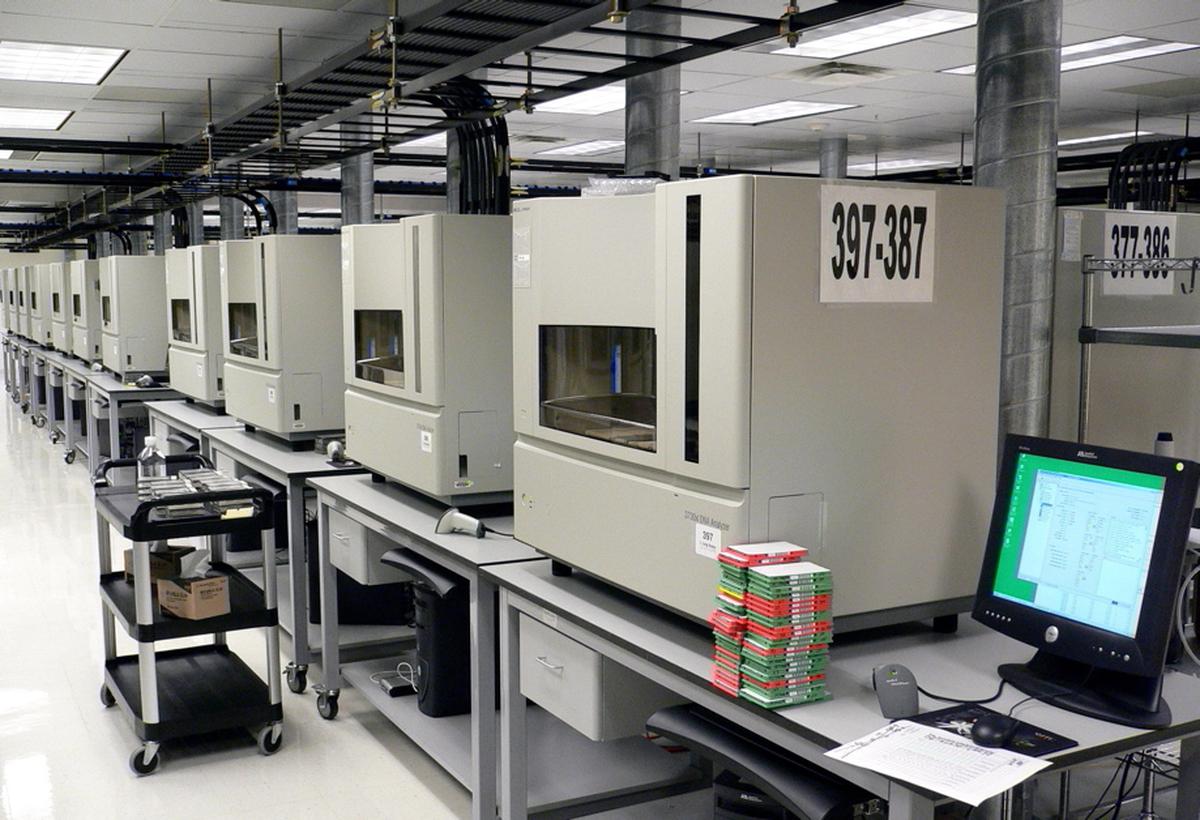
A row of DNA sequencing machines. According to accounts from researchers in government-funded institutions, Indian public universities often face protracted procurement cycles, sometimes exceeding six months.

A row of DNA sequencing machines. According to accounts from researchers in government-funded institutions, Indian public universities often face protracted procurement cycles, sometimes exceeding six months.
| Photo Credit:
Steve Jurvetson (CC BY)

According to accounts from researchers in government-funded institutions, Indian public universities often face protracted procurement cycles, sometimes exceeding six months. Delayed delivery and/or non-compatibility issues further erode value and, within that timeframe, the DNA sequencer may have been rendered unnecessary or irrelevant.

Underlying Dr. Wambua’s overarching message was a call for more South-South collaborations. Countries in Africa and Asia face similar constraints and stand to gain by pooling resources and aligning research priorities rather than labouring alone, often to ineffectual ends.

“We should be more intentional in seeing our strengths and finding ways to work together,” he said, urging scientists to reimagine collaboration beyond the traditional North-South model.

One particular indicator of this is India’s record of publications in the agricultural sciences. One recent analysis by Central University of Tamil Nadu and Banaras Hindu University researchers underscored how much international collaboration shapes visibility. In 2014-2023, scientists were found to have coauthored almost 2,100 papers with institutions in the US, eliciting more than 33,000 citations. Ultimately, the analysis showed, collaborations with more institutions were also more impactful.

For young researchers in India listening in Bengaluru, the parallels would have been unmistakable. Bureaucratic delays, outdated procurement rules, and chronic underfunding are all hallmarks of doing science in India. However, Dr. Wambua’s account also carried a note of optimism and that creativity and solidarity can keep science alive even in the toughest environments.

Rishika Pardikar is a freelance environment reporter.

Published – October 07, 2025 05:30 am IST



Source link

Science

Post navigation

Previous Post: Access Denied
Next Post: Hamas and Israel open talks in Egypt under Trump’s Gaza peace plan

Related Posts

  • The Science Quiz | Is there alien life in the Solar System?
    The Science Quiz | Is there alien life in the Solar System? Science
  • Panel suggests booster shot of BCG vaccine to fight TB
    Panel suggests booster shot of BCG vaccine to fight TB Science
  • 2023 Nobel Prize in Physics: Seeing electrons through brief pulses of light | Explained
    2023 Nobel Prize in Physics: Seeing electrons through brief pulses of light | Explained Science
  • What makes the brain the most complicated object in the universe
    What makes the brain the most complicated object in the universe Science
  • Africa dramatically dried out 5,500 years ago
    Africa dramatically dried out 5,500 years ago Science
  • Chandrayaan-3 | Pragyan rover rolled out, traverses 8 metres
    Chandrayaan-3 | Pragyan rover rolled out, traverses 8 metres Science

More Related Articles

Solar Electric Vehicle Championship from March 27-31 in Manipal Solar Electric Vehicle Championship from March 27-31 in Manipal Science
Why are earthquakes frequent in Afghanistan? | Explained Why are earthquakes frequent in Afghanistan? | Explained Science
Polluting shipwrecks are a ticking time-bomb at the bottom of our oceans Polluting shipwrecks are a ticking time-bomb at the bottom of our oceans Science
Pyramids were built along a ‘lost’ branch of the Nile, study finds Pyramids were built along a ‘lost’ branch of the Nile, study finds Science
‘Underwhelming Indian genomics research, and gatekeeping’ ‘Underwhelming Indian genomics research, and gatekeeping’ Science
Scientists propose warming up Mars using heat-trapping ‘glitter’ Scientists propose warming up Mars using heat-trapping ‘glitter’ Science
SiteLock

Archives

  • October 2025
  • September 2025
  • August 2025
  • July 2025
  • June 2025
  • May 2025
  • April 2025
  • March 2025
  • February 2025
  • January 2025
  • December 2024
  • November 2024
  • October 2024
  • September 2024
  • August 2024
  • July 2024
  • June 2024
  • May 2024
  • April 2024
  • March 2024
  • February 2024
  • January 2024
  • December 2023
  • November 2023
  • October 2023
  • September 2023
  • August 2023
  • July 2023
  • June 2023
  • May 2023
  • April 2023
  • March 2023
  • February 2023
  • January 2023
  • December 2022
  • November 2022
  • October 2022
  • September 2022
  • August 2022
  • July 2022
  • June 2022
  • May 2022

Categories

  • Business
  • Nation
  • Science
  • Sports
  • World

Recent Posts

  • Access Denied
  • Access Denied
  • Hamas and Israel open talks in Egypt under Trump’s Gaza peace plan
  • ‘Global South scientists can tip red tape by thinking, working together’
  • Access Denied

Recent Comments

  1. dfb{{98991*97996}}xca on UP Teacher Who Asked Students To Slap Muslim Classmate
  2. "dfbzzzzzzzzbbbccccdddeeexca".replace("z","o") on UP Teacher Who Asked Students To Slap Muslim Classmate
  3. 1}}"}}'}}1%>"%>'%> on UP Teacher Who Asked Students To Slap Muslim Classmate
  4. bfg6520<s1﹥s2ʺs3ʹhjl6520 on UP Teacher Who Asked Students To Slap Muslim Classmate
  5. pHqghUme9356321 on UP Teacher Who Asked Students To Slap Muslim Classmate
  • Pawan Kalyan, Actor Prakash Raj Face Off Over Tirupati Laddoo Row Again
    Pawan Kalyan, Actor Prakash Raj Face Off Over Tirupati Laddoo Row Again Nation
  • 3 Soldiers Killed, 4 Injured As Truck Falls Into Gorge In Arunachal
    3 Soldiers Killed, 4 Injured As Truck Falls Into Gorge In Arunachal Nation
  • Woman, Daughter Killed In Road Accident In UP’s Siddharthnagar: Cops
    Woman, Daughter Killed In Road Accident In UP’s Siddharthnagar: Cops Nation
  • Need To Neutralise Religious Conversions Through Allurement: Vice President
    Need To Neutralise Religious Conversions Through Allurement: Vice President Nation
  • Uttar Pradesh Chief Minister Yogi Adityanath Declares Dolphin As State Aquatic Animal
    Uttar Pradesh Chief Minister Yogi Adityanath Declares Dolphin As State Aquatic Animal Nation
  • How do hummingbirds drink nectar at frenetic speed?
    How do hummingbirds drink nectar at frenetic speed? Science
  • RBI says no systemic worries, action on Paytm due to “persisted non-compliance”
    RBI says no systemic worries, action on Paytm due to “persisted non-compliance” Business
  • Assam Cops Keep Hundreds Of Stolen Mobiles, Laptops On Display.
    Assam Cops Keep Hundreds Of Stolen Mobiles, Laptops On Display. Nation

Editor-in-Chief:
Mohammad Ariff,
MSW, MAJMC, BSW, DTL, CTS, CNM, CCR, CAL, RSL, ASOC.
editor@artifex.news

Associate Editors:
1. Zenellis R. Tuba,
zenelis@artifex.news
2. Haris Daniyel
daniyel@artifex.news

Photograher:
Rohan Das
rohan@artifex.news

Artifex.News offers Online Paid Internships to college students from India and Abroad. Interns will get a PRESS CARD and other online offers.
Send your CV (Subjectline: Paid Internship) to internship@artifex.news

Links:
Associate Journalism
About Us
Privacy Policy

News Links:
Breaking News
World
Nation
Sports
Business
Entertainment
Lifestyle

Registered Office:
72/A, Elliot Road, Kolkata - 700016
Tel: 033-22277777, 033-22172217
Email: office@artifex.news

Editorial Office / News Desk:
No. 13, Mezzanine Floor, Esplanade Metro Rail Station,
12 J. L. Nehru Road, Kolkata - 700069.
(Entry from Gate No. 5)
Tel: 033-46011099, 033-46046046
Email: editor@artifex.news

Copyright © 2023 Artifex.News Newsportal designed by Artifex Infotech.