


Skip to content
  • Facebook
  • X
  • Linkedin
  • WhatsApp
  • YouTube
  • Associate Journalism
  • About Us
  • Privacy Policy
  • 033-46046046
  • editor@artifex.news
Artifex.News

Artifex.News

Stay Connected. Stay Informed.

  • Breaking News
  • World
  • Nation
  • Sports
  • Business
  • Science
  • Entertainment
  • Lifestyle
  • Toggle search form
  • November 2025 auto retail sales rise 2.14% YoY as sales momentum continues
    November 2025 auto retail sales rise 2.14% YoY as sales momentum continues Business
  • Access Denied Sports
  • “Don’t Smile While Speaking To Them”: Virat Kohli’s Fiery Command To Mohammed Siraj. Watch
    “Don’t Smile While Speaking To Them”: Virat Kohli’s Fiery Command To Mohammed Siraj. Watch Sports
  • U.S. government shutdown reaches its 40th day as senators work through crucial weekend
    U.S. government shutdown reaches its 40th day as senators work through crucial weekend World
  • Access Denied
    Access Denied Nation
  • Tigress that killed 11 persons over three years caged in Maharashtra
    Tigress that killed 11 persons over three years caged in Maharashtra Nation
  • India Calls For “Immediate Release” Of All Israeli Hostages Taken On October 7
    India Calls For “Immediate Release” Of All Israeli Hostages Taken On October 7 Nation
  • Union Budget 2025: When and where to watch Finance Minister Nirmala Sitharaman’s presentation?
    Union Budget 2025: When and where to watch Finance Minister Nirmala Sitharaman’s presentation? Business
As the lights stay on, birds are staying up past their bedtime

As the lights stay on, birds are staying up past their bedtime

Posted on September 16, 2025 By admin


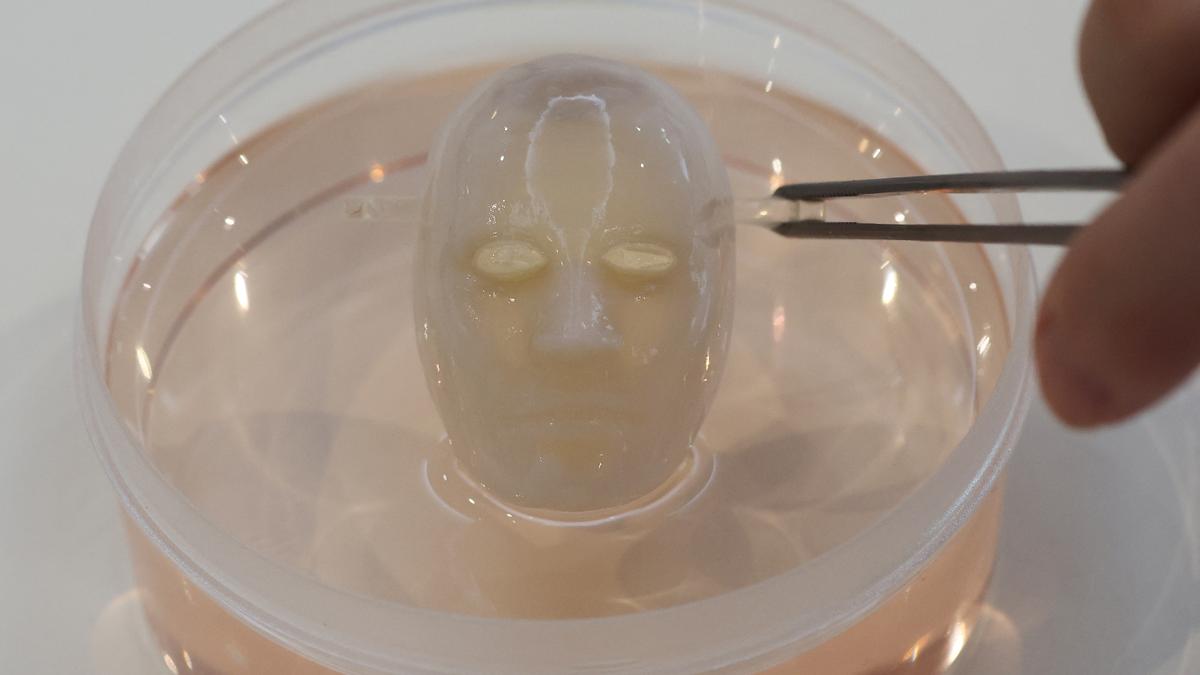
These days, an inky, sightless night is a rare sight in much of the world. From the harsh glare of streetlamps that make us squint to the gaudy flicker of neon billboards that force sunglass shields, artificial light is blurring the line between day and night.

This has meant birds stay active for almost an hour longer after sundown in brightly lit areas, according to a global study of 583 species and more than 60 million bird vocalisations, drawn from 181 million raw detections.

“I know how I feel when I lose an hour of sleep,” said Brent Pease, the lead author of the study. Dr. Pease is an assistant professor at the School of Forestry and Horticulture at Southern Illinois University Carbondale in the US. “This can’t be a great situation. But the picture is complex.”

Scientists warn this shift disrupts birds’ natural rhythms, altering migration, feeding, and breeding. This in turn unsettles food chains and ecosystems.

For Dr. Pease, this project began as a teaching idea to introduce students to birds via their songs. He set up a simple sound recorder and a small computer to capture bird calls. That’s when he noticed a prompt asking if he wanted to link to a platform where volunteers shared bird sounds identified using artificial intelligence (AI).

“I couldn’t believe what I was seeing,” Dr. Pease said. “There were thousands of sound recorders, all across the globe.”

He likened the discovery of this source to an earlier revolution in wildlife science: trail cameras. Motion- and heat-triggered cameras transformed mammal studies, revealing behaviours once invisible to researchers, from leopards prowling at night to deer grazing at dawn.

BirdWeather, a volunteer-powered acoustic network analysed with an AI model called BirdNET, has done something similar for birds by automatically logging and identifying their songs across continents.

Twilight chorus

“Light pollution in particular has been interesting to me,” said Neil Gilbert, a co-author of the study and a postdoctoral researcher at the Department of Biology, Oklahoma State University in the US. “I’ve thought a lot about how animals are responding to stressors and especially behaviour timing.”

Dr. Pease looped in Gilbert to study how artificial light at night affected bird behaviour. They tapped into this worldwide system of microphones and sensors placed by volunteers in backyards and forests that built a real-time map of bird activity.

The scientists focused on two daily markers: the first song at sunrise and the last at sunset. They also looked at eye size, nest type, migration patterns, and habitats to understand which species were most vulnerable. Then they compared recordings from brightly lit areas with those from darker places.

Dr. Pease and Gilbert thus found that light pollution was stretching the hours for which birds remained active.

By combining millions of recordings from hundreds of species — most from the U.S., Europe, and Australia, with fewer from the Global South — they found that artificial light was nudging birds to stay awake longer by nearly an hour.

“We were pretty surprised by the size of the effect,” Gilbert said. “Fifty minutes as an average across species was quite a bit more than what we were expecting.”

Not all birds were reacting to artificial light to the same degree, however.

Those with large, watchful eyes shifted the most, singing 35 minutes earlier at dawn and 56 minutes later at dusk in bright areas. Small-eyed species barely stirred from their routine. Open-nesters exposed to the sky felt the glow more than cavity nesters sheltered in tree holes. Migratory birds were also more unsettled than stay-at-home species. The changes were sharpest in the breeding season.

Some species were active two hours longer, others by just a few minutes. But the signal was consistent: where nights were brighter, days stretched unnaturally longer.

“If they’re spending an extra hour of time … they’re going to need more additional caloric intake for all this extra activity that they’re doing,” Dr. Pease said. “But this additional extra hour of activity can also result in an increased foraging time and potentially even increased reproductive output.

‘Darkness disrupted’

Anusha Shankar at the Tata Institute of Fundamental Research, Hyderabad, is an integrative biologist who combines insights from across biology to study organisms. She explained why this study matters.

“Every organism that we know of on earth, every animal, even many plants, and phytoplankton — they all have some sort of sense of time,” Dr. Shankar said. “And a lot of that comes from light cues.”

Artificial light breaks these natural cycles. For instance, across Indian cities, birds are dying after colliding with brightly lit glass facades, turning shiny office buildings into deadly traps.

“So if you disrupt these ancient rhythms, everything gets messed up,” she said.

These mismatches can be devastating for migratory birds. Birds time their movements to food sources that also depend on seasonal light cues. If plants flower earlier or insects hatch later, journeys that evolved over time may suddenly become perilous.

Filmmaker Sriram Murali supports keeping the night dark for people, animals, and stars. Through his research and films on fireflies, Murali has campaigned to raise awareness of light pollution. He calls these beetles the “flagship species of the night”. Fireflies use flashes of bioluminescent light to attract mates.

In southern Indian forests and villages, their hypnotic synchronised twinkling can be seen for a brief spell in May and June, just after sunset. On peak nights, entire groves shimmer with their green-gold pulses, like fairy lights strung across the trees. But artificial lighting hacks this communication, making it harder for them to survive.

“We know that exposure to lighting affects the circadian rhythm,” said Mr. Murali of our bodies’ natural clock that controls sleep and wakefulness. “Doctors know it and we are careful about it for our own children. So then the question is, how do we teach people empathy and bring about change?”

A simple switch

Whether stretching a bird’s day is a blessing or a burden is still uncertain. More time to feed and to mate may help; less time to rest may hurt.

The good news is that unlike many other human pressures, light pollution is reversible. Streetlamps can be shielded, billboards dimmed, and lights switched off when not needed.

Dr. Pease pointed out that unlike climate change or habitat destruction, reducing light pollution doesn’t require massive investments or decades of restoration.

“If light pollution turns out to be a negative thing for bird populations, we can do a behaviour change across the globe to turn out the lights and make the night dark again,” Dr. Pease said. “We’re just a light switch away here.”

anupama.c@thehindu.co.in


Source link

Science

Post navigation

Previous Post: Access Denied
Next Post: Access Denied

Related Posts

  • Why does water appear white in a waterfall?
    Why does water appear white in a waterfall? Science
  • Jane Goodall: the scientist who gave chimps names, not numbers
    Jane Goodall: the scientist who gave chimps names, not numbers Science
  • Plastic treaty talks conclude in Ottawa with little progress
    Plastic treaty talks conclude in Ottawa with little progress Science
  • Kenyan farmers use bees, sesame to keep marauding elephants away
    Kenyan farmers use bees, sesame to keep marauding elephants away Science
  • Google Meet outage hits users in India
    Google Meet outage hits users in India Science
  • Scientists obtain first 3D images from inside Mexican volcano
    Scientists obtain first 3D images from inside Mexican volcano Science

More Related Articles

Sunita and Barry will be on the ISS longer than expected. What next? Sunita and Barry will be on the ISS longer than expected. What next? Science
Science quiz: When physics steps outside its comfort zones Science quiz: When physics steps outside its comfort zones Science
‘Outstanding work’: IIT-M team makes mineral nanoparticles with water ‘Outstanding work’: IIT-M team makes mineral nanoparticles with water Science
The Uncut Diamond: Book explores the life of pioneering physicist and meteorologist Anna Mani The Uncut Diamond: Book explores the life of pioneering physicist and meteorologist Anna Mani Science
Study traces Turkey quake to interrupted ‘chat’ between fault lines Study traces Turkey quake to interrupted ‘chat’ between fault lines Science
Sci-Five: The Hindu Science Quiz: On Bioluminescence Sci-Five: The Hindu Science Quiz: On Bioluminescence Science
SiteLock

Archives

  • May 2026
  • April 2026
  • March 2026
  • February 2026
  • January 2026
  • December 2025
  • November 2025
  • October 2025
  • September 2025
  • August 2025
  • July 2025
  • June 2025
  • May 2025
  • April 2025
  • March 2025
  • February 2025
  • January 2025
  • December 2024
  • November 2024
  • October 2024
  • September 2024
  • August 2024
  • July 2024
  • June 2024
  • May 2024
  • April 2024
  • March 2024
  • February 2024
  • January 2024
  • December 2023
  • November 2023
  • October 2023
  • September 2023
  • August 2023
  • July 2023
  • June 2023
  • May 2023
  • April 2023
  • March 2023
  • February 2023
  • January 2023
  • December 2022
  • November 2022
  • October 2022
  • September 2022
  • August 2022
  • July 2022
  • June 2022
  • May 2022

Categories

  • Business
  • Nation
  • Science
  • Sports
  • World

Recent Posts

  • Vijay govt. says it needs time to ‘restructure’ Magalir Urimai Thogai programme; funds to be disbursed soon
  • Wholesale price inflation rises to 8.3% in April on sharp spike in fuel, power, crude
  • Ten new MLCs sworn in at Maharashtra Vidhan Bhavan
  • Frederic Soyez replaces Sreejesh as junior men’s hockey team coach
  • Mamata appears before Calcutta High Court to argue Bengal post-poll violence case

Recent Comments

  1. RafaelNar on UP Teacher Who Asked Students To Slap Muslim Classmate
  2. CarlosExorb on UP Teacher Who Asked Students To Slap Muslim Classmate
  3. Robertfloup on UP Teacher Who Asked Students To Slap Muslim Classmate
  4. Davidcag on UP Teacher Who Asked Students To Slap Muslim Classmate
  5. OrvalMaync on UP Teacher Who Asked Students To Slap Muslim Classmate
  • Convincing wins for Uganda’s Cheptegei and Ethiopia’s Degitu
    Convincing wins for Uganda’s Cheptegei and Ethiopia’s Degitu Sports
  • Unemployed Engineer Dies By Suicide In Noida
    Unemployed Engineer Dies By Suicide In Noida Nation
  • Rohit Sharma Shatters Massive World Record, Dethrones Pakistan’s Babar Azam From T20I Summit
    Rohit Sharma Shatters Massive World Record, Dethrones Pakistan’s Babar Azam From T20I Summit Sports
  • Why Indian Cricket Would Always Be Indebted To Ratan Tata
    Why Indian Cricket Would Always Be Indebted To Ratan Tata Sports
  • Suryakumar Yadav’s “Little Correction Mate” Comment For An X User Is Viral
    Suryakumar Yadav’s “Little Correction Mate” Comment For An X User Is Viral Sports
  • Access Denied Sports
  • British PM Rishi Sunak Ahead Of India Visit
    British PM Rishi Sunak Ahead Of India Visit World
  • Sri Lanka vs New Zealand Live Streaming, 1st ODI: When And Where To Watch Live Telecast
    Sri Lanka vs New Zealand Live Streaming, 1st ODI: When And Where To Watch Live Telecast Sports

Editor-in-Chief:
Mohammad Ariff,
MSW, MAJMC, BSW, DTL, CTS, CNM, CCR, CAL, RSL, ASOC.
editor@artifex.news

Associate Editors:
1. Zenellis R. Tuba,
zenelis@artifex.news
2. Haris Daniyel
daniyel@artifex.news

Photograher:
Rohan Das
rohan@artifex.news

Artifex.News offers Online Paid Internships to college students from India and Abroad. Interns will get a PRESS CARD and other online offers.
Send your CV (Subjectline: Paid Internship) to internship@artifex.news

Links:
Associate Journalism
About Us
Privacy Policy

News Links:
Breaking News
World
Nation
Sports
Business
Entertainment
Lifestyle

Registered Office:
72/A, Elliot Road, Kolkata - 700016
Tel: 033-22277777, 033-22172217
Email: office@artifex.news

Editorial Office / News Desk:
No. 13, Mezzanine Floor, Esplanade Metro Rail Station,
12 J. L. Nehru Road, Kolkata - 700069.
(Entry from Gate No. 5)
Tel: 033-46011099, 033-46046046
Email: editor@artifex.news

Copyright © 2023 Artifex.News Newsportal designed by Artifex Infotech.