




Skip to content
  • Facebook
  • X
  • Linkedin
  • WhatsApp
  • YouTube
  • Associate Journalism
  • About Us
  • Privacy Policy
  • 033-46046046
  • editor@artifex.news
Artifex.News

Artifex.News

Stay Connected. Stay Informed.

  • Breaking News
  • World
  • Nation
  • Sports
  • Business
  • Science
  • Entertainment
  • Lifestyle
  • Toggle search form
  • Awami League mobilises against Yunus government
    Awami League mobilises against Yunus government World
  • Goa Chief Minister Pramod Sawant’s “Work From Beach” Pitch To Attract Tourists
    Goa Chief Minister Pramod Sawant’s “Work From Beach” Pitch To Attract Tourists Nation
  • Access Denied Business
  • Sri Lanka Reveal Likely T20 World Cup Selection Plan
    Sri Lanka Reveal Likely T20 World Cup Selection Plan Sports
  • Airlines Suspend Flights As Middle East Tensions Rise
    Airlines Suspend Flights As Middle East Tensions Rise World
  • Access Denied
    Access Denied Nation
  • A Week After Raids, Businessman And Wife Found Hanging At Their Home In Madhya Pradesh
    A Week After Raids, Businessman And Wife Found Hanging At Their Home In Madhya Pradesh Nation
  • “When I Go Away From IPL…”: RCB Star Will Jacks’ Brilliant Tribute To ‘Legend’ Virat Kohli
    “When I Go Away From IPL…”: RCB Star Will Jacks’ Brilliant Tribute To ‘Legend’ Virat Kohli Sports
Harnessing AI to generate patterns of antibiotic resistance in real time

Harnessing AI to generate patterns of antibiotic resistance in real time

Posted on February 20, 2025 By admin


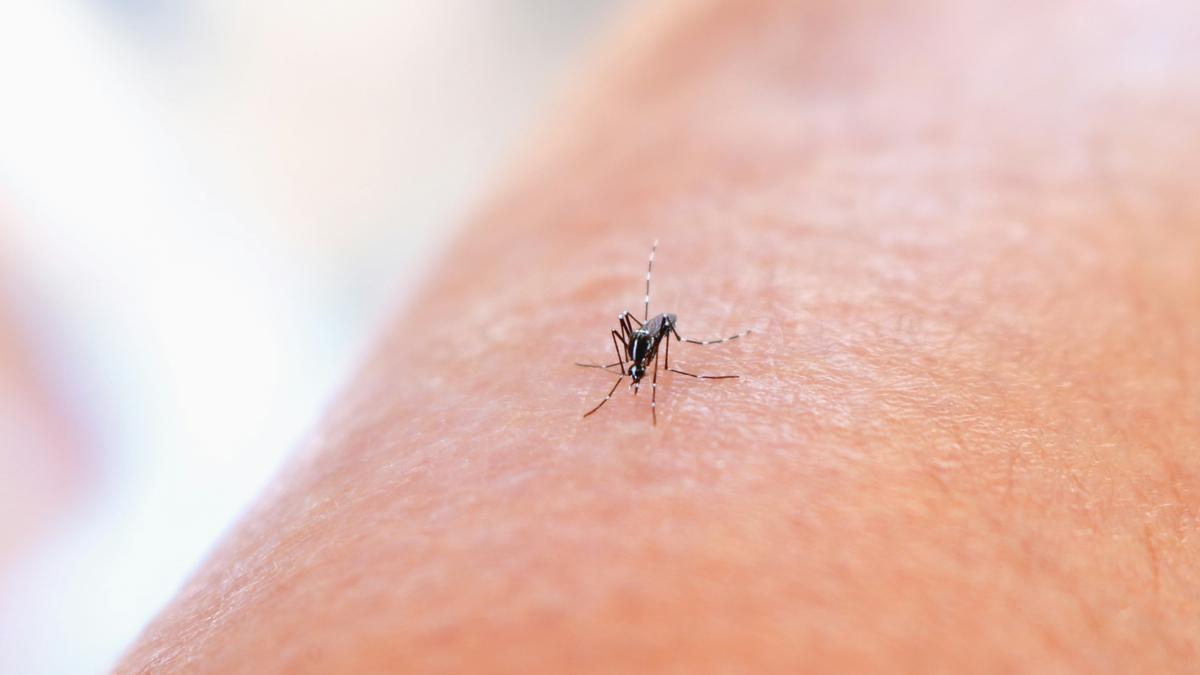
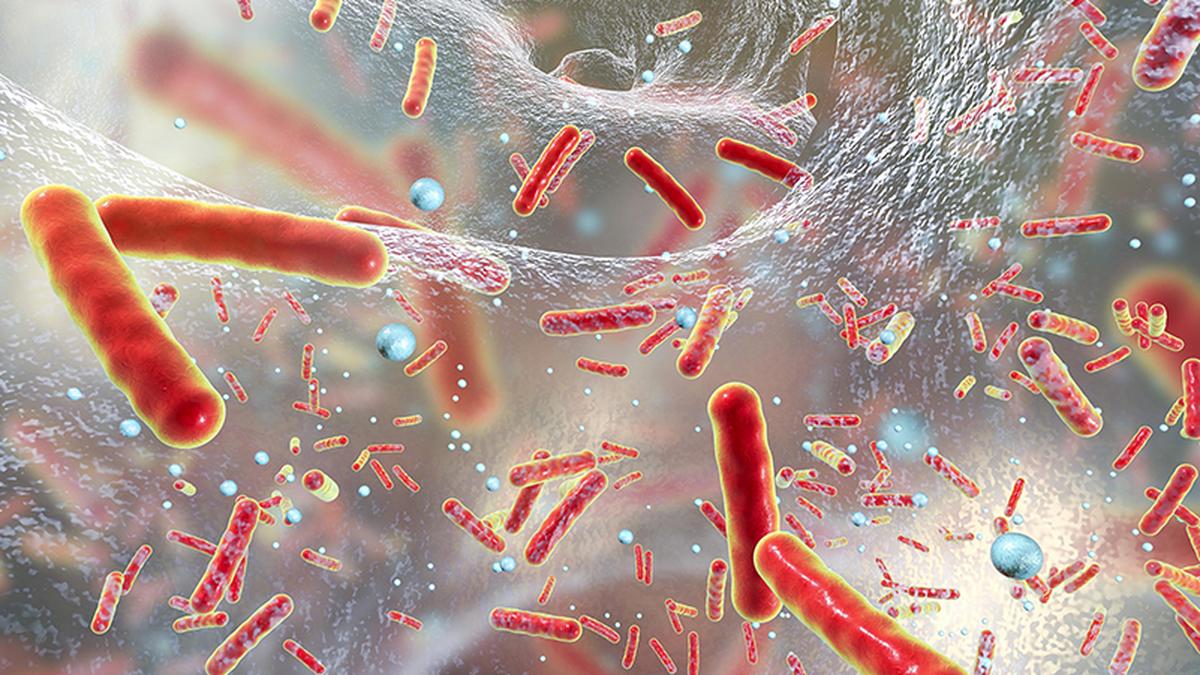
Photograph used for representational purposes only
| Photo Credit: Getty Images/iStockphoto

A team of researchers from IIIT- Delhi have come up with AI-powered data integration and predictive analytics tools, to understand the patterns of antibiotic resistance in real time, enabling various agencies to act on them speedily.  

As part of a collaboration between Indraprastha Institute of Information Technology-Delhi, CHRI-PATH, Tata 1mg, and Indian Council of Medical Research scientists, the AI-driven tool AMRSense has been deployed to use routine data that is generated in hospitals to generate accurate and early insights on antimicrobial resistance counched in the global level, national level and hospital level. 

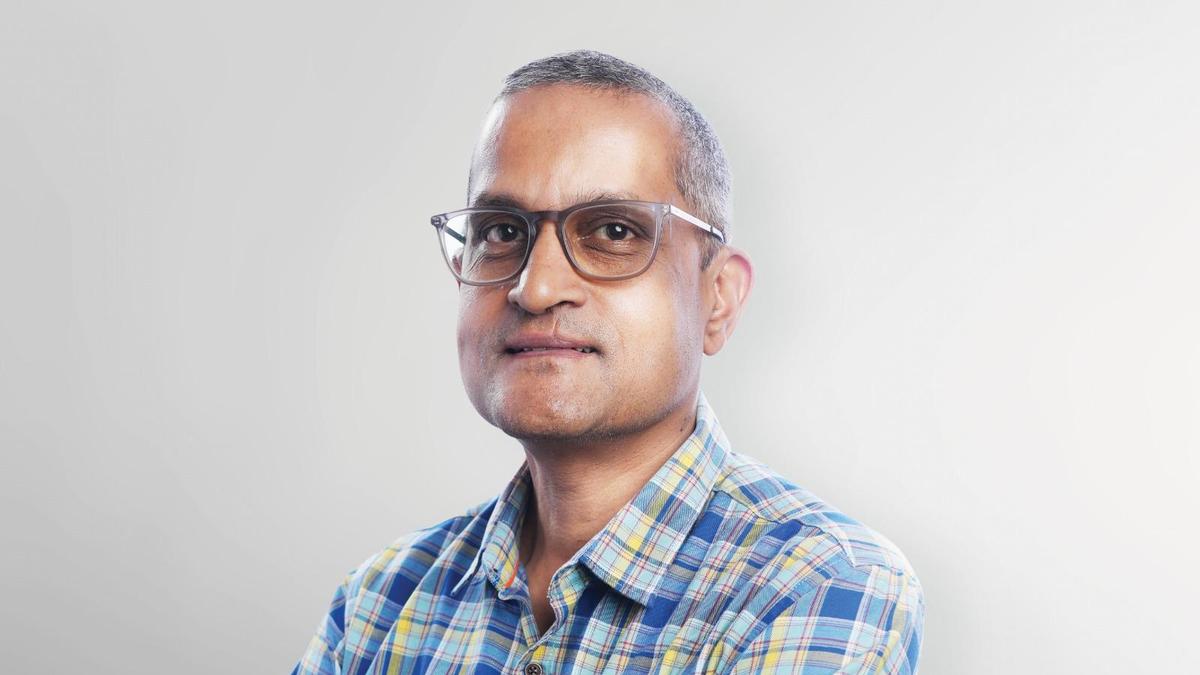
In a paper,‘Emerging trends in antimicrobial resistance in bloodstream infections: multicentric longitudinal study in India’, published in The Lancet Regional Health – Southeast Asia, authors, Jasmine Kaur, Harpreet Singh, and Tavpritesh Sethi show results from analysing six-year data from 21 tertiary care centers in the Indian Council of Medical Research’s AMR surveillance network retrospectively, establishing relationships between antibiotic pairs and the directional influence of resistance in community and hospital-acquired infections.  

“There is a shared mechanism of resistance between antibiotics, we already know. Usually to do that, people use genomics, but that’s an expensive proposition,” explains Dr. Sethi. “We have proposed a way, which is inexpensive, because it uses these routine data sets from hospitals. We show that by using routine data effectively, we can discern relationships between different antibiotics pairs and the direction AMR is taking – whether it is rising or not. Say, for instance, if resistance to one specific antibiotic is going up, some months down the line, it is quite likely that resistance to an antibiotic pair might also shoot up. With these connections, we generated actionable pieces of evidence.” 

Dr. Sethi adds: “We have tried to go beyond the traditional way of looking at AI – asking how can it enable better decision-making for a given patient in a clinical setting or a public health setting. We think AI can also be used to understand AMR stewardship and surveillance aspects, from the hospital level, upwards. Hospitals already routinely send out patient isolates, for example, blood, sputum, urine, pus, etc., for culture sensitivity testing in order to make informed decisions on treatment courses. We are saying that these reports can be used to construct AI-based pipelines and methods that can lead to AI-driven or AI-enhanced antimicrobial stewardship.” 

The AMROrbit Scorecard that the team developed also won an award at the 2024 AMR Surveillance Data Challenge. Can we use these scorecards to make it more timely? Dr. Sethi explains: “It plots the orbit of resistance, say of every hospital or department, alongside a global median of resistance and a global rate of change. So around those global values, how well does a department, a hospital, or a certain country fare? That is what the scorecard will be able to provide real time data for.”  

The ideal quadrant for any hospital or country to be in is where there is low baseline resistance and low rate of change as well, explains Jasmine Kaur, of IIIT-D, and lead author of the paper. Orbits spiral in or out, but the AI tool can offer information facilitating timely interventions that can bring it to a desirable range of resistance.  

How accurate and reliable are these AI models? “In our paper, we have shown that our models did capture the trends as observed in the period we collected data for. However, unless we have future data, we can’t really say, like, for example COVID- 19 upended things, right? The only evidence we have currently is that globally it seems that our models are capturing the increasing rate of resistance in various studies.” 

Clinicians can make informed decisions based on the visual image that OMROrbit provides them using the data generated by the hospital, explains Ms. Kaur. It has been proven that it can augment ongoing surveillance at various levels. Various kinds of comparisons can be done using the tool, she adds. For instance, if it is a chain of hospitals, then the tool can be used to compare AMR rates between different departments, cities and centres across the country. “The only possible limitation would be in circumstances and settings that do not have consistent, granular surveillance data. Then the AI model will not make sense. This could occur in countries where surveillance data is not digitally accessible.,” she adds. 

“We know there are other environmental factors such as anibiotics being used as growth factors in the poultry industry or leachates in the soil, that can also lead to AMR. The ideal would be, if at the public health level, we should be able to use the data we have from the hospitals, matching it with antibiotic sales, and community-level data, and study the environmental factors too. We hope to do that soon, Dr. Sethi explains. 


Published – February 21, 2025 05:00 am IST



Source link

Science Tags:AMR india research, antimicrobial resistance AMR, using AI for AMR crisis

Post navigation

Previous Post: Putin Is The “Dictator”, Says Top EU Diplomat After Trump’s Attack On Zelenksy
Next Post: Moon Or Mars? NASA’s Future At A Crossroads Under Trump 2.0

Related Posts

  • CDFD scientist elected as Fellow of Indian Academy of Sciences
    CDFD scientist elected as Fellow of Indian Academy of Sciences Science
  • What happens to your muscles when you stop working out?
    What happens to your muscles when you stop working out? Science
  • 37th Kerala Science Congress to begin in Thrissur on Saturday 
    37th Kerala Science Congress to begin in Thrissur on Saturday  Science
  • Singapore to launch space agency in response to global investment surge
    Singapore to launch space agency in response to global investment surge Science
  • Science Quiz | The obscure mathematics of string theory
    Science Quiz | The obscure mathematics of string theory Science
  • Clearest black hole merger signal yet allows probe of Hawking’s law
    Clearest black hole merger signal yet allows probe of Hawking’s law Science

More Related Articles

ISRO working on 40-storey-tall rocket to place 75-tonne payload in space: Narayanan ISRO working on 40-storey-tall rocket to place 75-tonne payload in space: Narayanan Science
Nobel Prize-winning physicist Tsung-Dao Lee dies at age 97 Nobel Prize-winning physicist Tsung-Dao Lee dies at age 97 Science
Govt. reveals more info about ‘One Nation, One Subscription’ | Explained Govt. reveals more info about ‘One Nation, One Subscription’ | Explained Science
Artemis astronauts splash down into Pacific Ocean Artemis astronauts splash down into Pacific Ocean Science
Chandrayaan-2 makes first ever observation of Sun’s impact on Moon, says ISRO Chandrayaan-2 makes first ever observation of Sun’s impact on Moon, says ISRO Science
Geographers uncover why some rivers stay single while others split Geographers uncover why some rivers stay single while others split Science
SiteLock

Archives

  • May 2026
  • April 2026
  • March 2026
  • February 2026
  • January 2026
  • December 2025
  • November 2025
  • October 2025
  • September 2025
  • August 2025
  • July 2025
  • June 2025
  • May 2025
  • April 2025
  • March 2025
  • February 2025
  • January 2025
  • December 2024
  • November 2024
  • October 2024
  • September 2024
  • August 2024
  • July 2024
  • June 2024
  • May 2024
  • April 2024
  • March 2024
  • February 2024
  • January 2024
  • December 2023
  • November 2023
  • October 2023
  • September 2023
  • August 2023
  • July 2023
  • June 2023
  • May 2023
  • April 2023
  • March 2023
  • February 2023
  • January 2023
  • December 2022
  • November 2022
  • October 2022
  • September 2022
  • August 2022
  • July 2022
  • June 2022
  • May 2022

Categories

  • Business
  • Nation
  • Science
  • Sports
  • World

Recent Posts

  • China, U.S. should be ‘partners not rivals’, says Xi Jinping after meeting Donald Trump
  • Iran working on Hormuz ‘protocol’ to cover ‘costs’, says Deputy Foreign Minister Gharibabadi
  • Zydus Lifesciences arm to acquire U.S. oncology firm Assertio for $166 million
  • Israel-Iran war LIVE: Iran working on Hormuz ‘protocol’ to cover ‘costs’, says Dy FM Gharibabadi
  • Russia to fulfil all agreements on energy supply to India: FM Lavrov

Recent Comments

  1. Jeffreyroure on UP Teacher Who Asked Students To Slap Muslim Classmate
  2. Stevemonge on UP Teacher Who Asked Students To Slap Muslim Classmate
  3. RichardClage on UP Teacher Who Asked Students To Slap Muslim Classmate
  4. StevenLek on UP Teacher Who Asked Students To Slap Muslim Classmate
  5. Leonardren on UP Teacher Who Asked Students To Slap Muslim Classmate
  • Access Denied
    Access Denied Nation
  • Delhi Basement Deaths Spark Massive Students’ Protest, AAP-BJP Blame Game
    Delhi Basement Deaths Spark Massive Students’ Protest, AAP-BJP Blame Game Nation
  • World Bank Downgrades East Asia’s Growth Forecast Due To Slowdown In China: Report
    World Bank Downgrades East Asia’s Growth Forecast Due To Slowdown In China: Report World
  • PM Modi To Address Meri Maati Mera Desh Culmination Event Tomorrow
    PM Modi To Address Meri Maati Mera Desh Culmination Event Tomorrow Nation
  • Access Denied World
  • Wegovy, other weight-loss drugs, scrutinised over reports of suicidal thoughts
    Wegovy, other weight-loss drugs, scrutinised over reports of suicidal thoughts World
  • Sri Lanka save their best for last, beat Netherlands by 83 runs
    Sri Lanka save their best for last, beat Netherlands by 83 runs Sports
  • La Liga: Barcelona Beat Real Sociedad To Move Second
    La Liga: Barcelona Beat Real Sociedad To Move Second Sports

Editor-in-Chief:
Mohammad Ariff,
MSW, MAJMC, BSW, DTL, CTS, CNM, CCR, CAL, RSL, ASOC.
editor@artifex.news

Associate Editors:
1. Zenellis R. Tuba,
zenelis@artifex.news
2. Haris Daniyel
daniyel@artifex.news

Photograher:
Rohan Das
rohan@artifex.news

Artifex.News offers Online Paid Internships to college students from India and Abroad. Interns will get a PRESS CARD and other online offers.
Send your CV (Subjectline: Paid Internship) to internship@artifex.news

Links:
Associate Journalism
About Us
Privacy Policy

News Links:
Breaking News
World
Nation
Sports
Business
Entertainment
Lifestyle

Registered Office:
72/A, Elliot Road, Kolkata - 700016
Tel: 033-22277777, 033-22172217
Email: office@artifex.news

Editorial Office / News Desk:
No. 13, Mezzanine Floor, Esplanade Metro Rail Station,
12 J. L. Nehru Road, Kolkata - 700069.
(Entry from Gate No. 5)
Tel: 033-46011099, 033-46046046
Email: editor@artifex.news

Copyright © 2023 Artifex.News Newsportal designed by Artifex Infotech.