








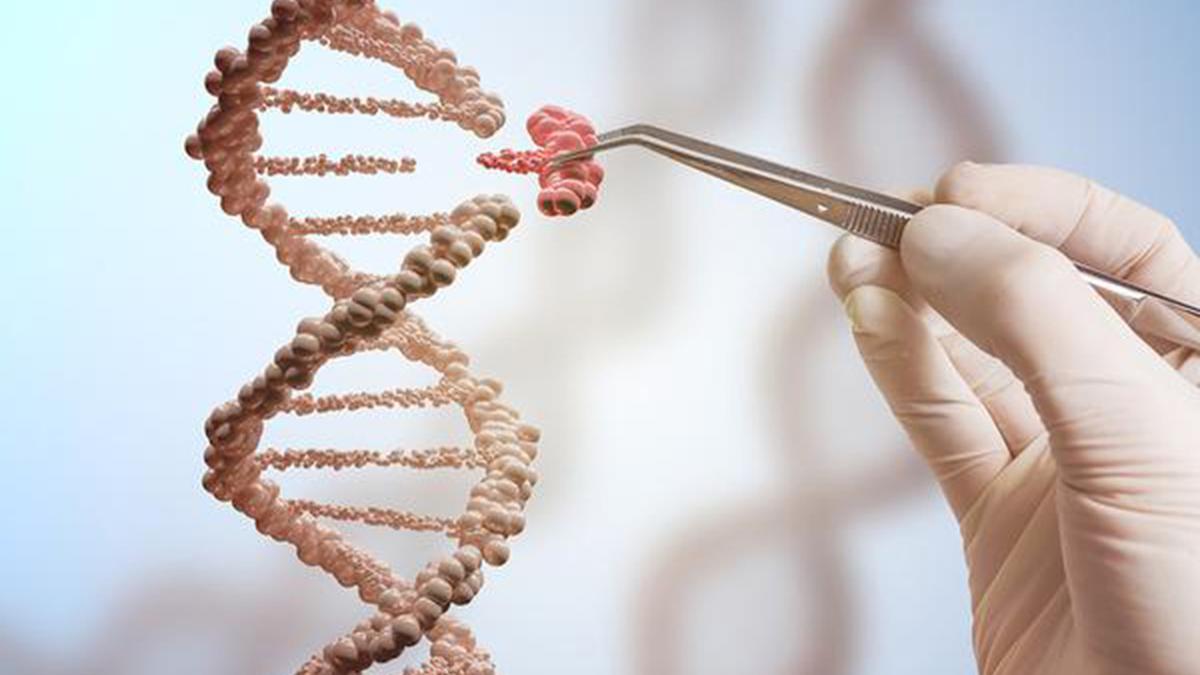
The alikeness of identical twins can be startling. They are alike because all their genes are alike. Genes are those segments of the genome where, if changes occur, the characteristics of an organism change. Non-identical twins vary in 50% of their genes and are much less alike. Thus, genes define our individuality in many ways.
In December 2024, two research groups addressed how new genes are created. The University of Nevada, Reno, group reported its findings in Molecular Biology and Evolution and the other, from the Max Planck Institute for Evolutionary Biology Plön, Germany, reported in Genome Biology and Evolution.
The 24 molecules
A group of 24 molecules of DNA gives identity to our 24 chromosomes. These are the chromosomes numbered 1 to 22 and the sex chromosomes X and Y. Our cells contain two sets of the genome: one derived from the mother’s egg and the other from the father’s sperm. Eggs and sperm receive only one chromosome of each pair. When they fuse and form the zygote, the latter has two sets again. The zygote then multiplies to form a baby.
The cells in human bodies possess two copies of chromosomes 1-22. Biological females have two X chromosomes whereas biological males have an X chromosome and a Y chromosome.
Identical twins arise from a single zygote while non-identical twins from two zygotes produced simultaneously.
Each DNA molecule has two strands held together by bonds between compounds on the strands, called base pairs. Our genome contains 3.2 billion base-pairs. A gene is typically a few-thousand base-pair-long segment of a DNA.
When a gene is ‘expressed’, it means a cell will transcribe the underlying base pair sequence to a molecule called a messenger RNA (mRNA), and read the mRNA like a recipe to make a protein.
In the human genome, there are 20,000 protein-coding genes and 20,000 genes that cells use to create RNA that influences the expression of other genes. There are also some genes, called promoters and enhancers, which tell the cell when and where other genes are copied into mRNA.
Two compounds involved in forming the base pairs are cytosine and thymine. Sometimes the cytosine molecules bind to a methyl ion and are said to be methylated. A methylated cytosine molecule is likelier than an unmethylated one to mutate and become a thymine molecule.
Duplications create new genes
In 1970, Japanese-American biologist Susumu Ohno proposed that the main source of new genes is gene duplication. When the body’s genome has two copies of the same gene, one copy can continue to provide the original function while the other is free to mutate and acquire new functions.
Ohno’s proposal was simple but had one flaw: it didn’t explain how the organism’s cells would deal with producing twice the quantity of the same proteins as a result. Protein over-expression can lead to debilitating conditions. The University of Nevada, Reno, researchers addressed this problem.
Humans and mice last shared a common ancestor 75 million years ago. The researchers compared genes duplicated in human or mouse genomes, those duplicated in both, and those not duplicated in either.
They found the promoters of duplicated genes had more methylated DNA than the promoters of genes that hadn’t been duplicated. Increased methylation would have prevented the cells from manufacturing twice as many proteins, minimising the ill effects of duplication, and allowing the duplicate gene to survive long enough to acquire new functions.
The researchers reported that the higher rate of methylation also elevated the rate of mutation.
Random sequences to incipient genes
The Max Planck Institute group inserted exogenous DNA into a population of cells derived from a human. (Exogenous means the DNA came from sources separate from the cells.) The researchers were careful to insert the DNA at a specific site in the genome, and allowed the cells to make proteins with them.
The exogenous DNA had a chunk that consisted of a random sequence of base-pairs — which means the proteins the cells made with it would be random as well.
The researchers put together a collection of cells of 3,708 types and nurtured them for 20 days. At regular intervals they checked the relative abundance of different cell types.
After 20 days, the team found that 53% of cell types had become less abundant, 8% more abundant, and 40% didn’t swing either way. That is, more often than not, random DNA sequences affected cell growth and thus became relevant for evolution to act upon.
In yet other words: the random DNA inserts behaved like incipient genes.

Keeping v. chucking a gene
For a genome to retain a gene, it must have some use or the genome allows it to mutate. But establishing a gene’s usefulness is challenging.
Consider blood groups. Individuals can have one of four groups — A, B, AB or O — depending on which variants of the ABO gene they’ve inherited. If a person receives A and A or A and O, they have the A blood type. If they have B and B or B and O, they have the B blood type. If they have A and B or O and O, then they have the AB or the O blood types, respectively.
In sum, every individual lacks either one or two of the variants, which means no variant is really essential. The O variant also encodes a protein with no known function and whose amino-acid sequence is markedly different from those encoded by A and B.
Primates and humans took different branches on the tree of evolution millions of years ago but share blood types — which is to say evolution both found a way and saw fit to retain all three variants in so many species for a very long amount of time.
Scientists don’t yet have a simple answer to why evolution has done this, but they aren’t complaining.
D.P. Kasbekar is a retired scientist.
Published – January 13, 2025 05:30 am IST