

Skip to content
  • Facebook
  • X
  • Linkedin
  • WhatsApp
  • Associate Journalism
  • About Us
  • Privacy Policy
  • 033-46046046
  • editor@artifex.news
Artifex.News

Artifex.News

Stay Connected. Stay Informed.

  • Breaking News
  • World
  • Nation
  • Sports
  • Business
  • Science
  • Entertainment
  • Lifestyle
  • Toggle search form
  • Budget 2024 — long on intent, short on details Business
  • Scientists are grasping at straws while trying to protect infant corals from hungry fish Science
  • Labour Heads For Landslide Win In UK, Rishi Sunak Far Behind: Early Trends World
  • Rahul Gandhi, Priyanka To Visit Landslide-Hit Wayanad On Thursday: Report Nation
  • Sanju Samson Was Set To Play T20 World Cup 2024 Final, Then Rohit Sharma Told Him This Sports
  • Iran President, Saudi Crown Prince Mohammad bin Salman Discuss Israel-Palestine Conflict World
  • India Abstains From UN Vote On Israel Which Didn’t Mention Hamas Attack Nation
  • Morning Digest | New Parliament to host session from September 19; Army jawan abducted and murdered in Manipur, and more World

Can science’s peer-review system guarantee academic rigour?

Posted on December 5, 2024 By admin


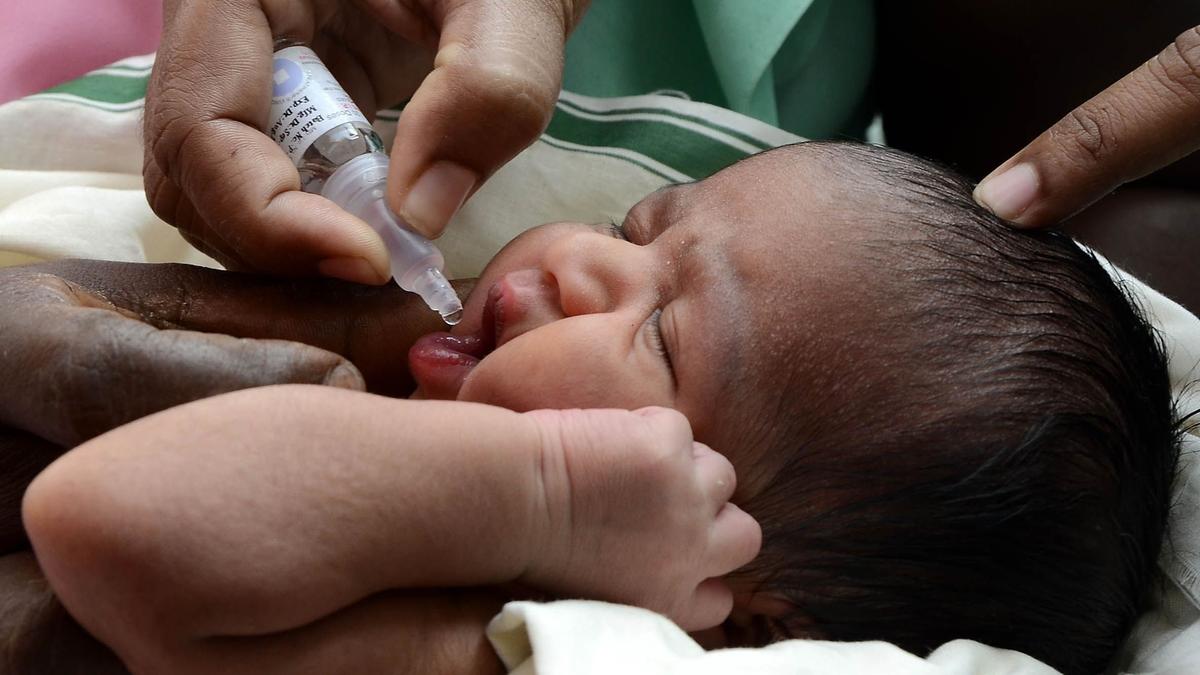
Reviewers, who often remain anonymous, go unrewarded and unrecognised, even though their work is an essential part of research communication. 
| Photo Credit: The Hindu

Peer review is a central feature of academic work. It’s the process through which research ends up published in an academic journal: independent experts scrutinise the work of another researcher in order to recommend if it should be accepted by a publisher and if and how it should be improved.

Peer review is often assumed to guarantee quality, but it doesn’t always work well in practice. Every academic has their own peer-review horror stories, ranging from years-long delays to multiple tedious rounds of revisions. The cycle continues until the article is accepted somewhere or until the author gives up.

On the other side, the work of reviewing is voluntary and also invisible. Reviewers, who often remain anonymous, go unrewarded and unrecognised, even though their work is an essential part of research communication. Journal editors find recruiting peer reviewers is increasingly difficult.

And we know peer review, however much it is lauded, often does not work. It is sometimes biased, and too often allows errors, or even scholarly fraud, to creep through.

Clearly the peer-review system is broken. It is slow, inefficient and burdensome, and the incentives to carry out a review are low.

Publish first

In recent years, alternative ways to scrutinise research have emerged which attempt to fix some of the problems with the peer-review system. One of these is the “publish, review, curate” model.

This reverses the traditional review-then-publish model. An article is first published online, then peer reviewed. While this approach is too new to understand how it compares with traditional publishing, there is optimism about its promise, suggesting that increased transparency in the review process would speed scientific progress.

We have set up a platform using the publish, review, curate model for the field of metaresearch – research about the research system itself. Our aims are both to innovate peer review in our field and to study this innovation as a metaresearch experiment of sorts. This initiative will help us to understand how we can improve peer review in ways that we hope will have implications for other fields of research.

The platform, called MetaROR (MetaResearch Open Review), has just been launched. It is a partnership between an academic society, the Association for Interdisciplinary Meta-Research and Open Science, and a non-profit metaresearch accelerator, the Research on Research Institute.

In the case of MetaROR, authors first publish their work on a preprint server. Preprints are versions of research papers made available by their authors before peer review as a way of accelerating the dissemination of research. Preprinting has been common in a few academic disciplines for decades, but increased in others during the pandemic as a way of getting science into the public domain faster. MetaROR, in effect, builds a peer-review service on top of preprint servers.

Authors submit their work to MetaROR by providing MetaROR with a link to their preprinted article. A managing editor then recruits peer reviewers who are experts on the article’s object of study, its research methods, or both. Reviewers with competing interests are excluded whenever possible, and disclosure of competing interests is mandatory.

Peer review is conducted openly, with the reviews made available online. This makes the work of reviewers visible, reflecting the fact that review reports are contributions to scholarly communication in their own right.

We hope that reviewers will increasingly see their role as engaging in a scholarly conversation in which they are a recognised participant, although MetaROR still allows reviewers to choose whether to be named or not. Our hope is that most reviewers will find it beneficial to sign their reviews and that this will significantly reduce the problem of anonymous dismissive or otherwise bad-faith reviews.

Since articles submitted to MetaROR are already publicly available, peer review can focus on engaging with an article with a view to improving it. Peer review becomes a constructive process, rather than one that valorises gatekeeping.

Evidence suggests preprints and final articles actually differ surprisingly little, but improvements can often be made. The publish, review, curate model helps authors engage with reviewers.

Following the review process, authors are left to decide whether to revise their article and how. In the MetaROR model, authors can also choose to submit their article to a journal. To offer authors a streamlined experience, MetaROR is collaborating with several journals who commit to using MetaROR reviews in their own review process.

Like other publish, review, curate platforms, MetaROR is an experiment. We will need to evaluate it to understand its successes and failures. We hope others will too, so we can learn how best to organise the dissemination and evaluation of scientific research – without, we hope, too many peer-review horror stories.

This article is republished from The Conversation under a Creative Commons license. Read the original article here.

Published – December 05, 2024 04:03 pm IST


Source link

Science Tags:science, science news, Scientific peer-review system, Scientific study

Post navigation

Previous Post: Hand-held ‘electric labs’ can rapidly identify pathogens
Next Post: United States Senators introduce Bill to reunite immigrant families, raise per-country, family-based immigration cap

Related Posts

  • WHO’s database on polio cases hides more than it reveals Science
  • A Coimbatore team is back from their first visit to Hanle Dark Sky Reserve in Ladakh Science
  • Is the shallow pool in Paris really slowing Olympic swimmers down? Science
  • IIA finds new way to probe deeper into the sun’s secrets Science
  • Haemoglobin isn’t used only in blood, scientists find in major discovery Science
  • The Science Quiz | Today is the 30th death anniversary of Karl Popper Science

More Related Articles

Boeing counts down again to its first astronaut launch on a long-delayed test flight for NASA Science
Blood tests allow 30-year estimates of women’s cardio risks: study Science
Managing our resources with AI Science
India space strategy: harness data, tiny satellites to capture market beyond SpaceX Science
Why planes don’t fly over the Tibetan Plateau Science
Global rise in the incidence of IBD a cause for concern, say experts Science
SiteLock

Archives

  • December 2024
  • November 2024
  • October 2024
  • September 2024
  • August 2024
  • July 2024
  • June 2024
  • May 2024
  • April 2024
  • March 2024
  • February 2024
  • January 2024
  • December 2023
  • November 2023
  • October 2023
  • September 2023
  • August 2023
  • July 2023
  • June 2023
  • May 2023
  • April 2023
  • March 2023
  • February 2023
  • January 2023
  • December 2022
  • November 2022
  • October 2022
  • September 2022
  • August 2022
  • July 2022
  • June 2022
  • May 2022

Categories

  • Business
  • Nation
  • Science
  • Sports
  • World

Recent Posts

  • Snakebites, Natural Disasters Claimed 10,300 Lives in Odisha In 3 Years: Minister
  • “Power Vacuum At BCCI”: Inside Details Revealed By Report After Jay Shah Moves To ICC
  • US H-1B Visa Quota Full For 2025. What Applicants Should Do Now
  • France’s Macron seeks new PM after no-confidence defeat
  • Champions Trophy Hybrid Model ‘Finalised’, Says Report. But India Will Have To Pay Heavy Price For ICC’s Decision

Recent Comments

  1. dfb{{98991*97996}}xca on UP Teacher Who Asked Students To Slap Muslim Classmate
  2. "dfbzzzzzzzzbbbccccdddeeexca".replace("z","o") on UP Teacher Who Asked Students To Slap Muslim Classmate
  3. 1}}"}}'}}1%>"%>'%> on UP Teacher Who Asked Students To Slap Muslim Classmate
  4. bfg6520<s1﹥s2ʺs3ʹhjl6520 on UP Teacher Who Asked Students To Slap Muslim Classmate
  5. pHqghUme9356321 on UP Teacher Who Asked Students To Slap Muslim Classmate
  • Nobel Prize in Physiology or Medicine 2024: What is the research that won the prize? | Explained  Science
  • Hardik Pandya Fumes As Delhi Capitals Batters Take Jasprit Bumrah And Co To The Cleaners – Watch Sports
  • Chase Against Pakistan Gave Us Belief: Afghanistan Captain Hashmatullah Shahidi Sports
  • First Holi Celebrations At Ayodhya’s Grand Ram Temple. See Pics Nation
  • Sons Of 6 Former Chief Ministers Contesting Andhra Pradesh Assembly Elections Nation
  • Scientists test Fukushima fish after nuclear plant water release Science
  • Keir Starmer’s Labour Party Candidate With Roots In UP Wins UK General Elections World
  • Bihar Teacher Accused Of Causing Eye Injury To Student For Skipping Homework Nation

Editor-in-Chief:
Mohammad Ariff,
MSW, MAJMC, BSW, DTL, CTS, CNM, CCR, CAL, RSL, ASOC.
editor@artifex.news

Associate Editors:
1. Zenellis R. Tuba,
zenelis@artifex.news
2. Haris Daniyel
daniyel@artifex.news

Photograher:
Rohan Das
rohan@artifex.news

Artifex.News offers Online Paid Internships to college students from India and Abroad. Interns will get a PRESS CARD and other online offers.
Send your CV (Subjectline: Paid Internship) to internship@artifex.news

Links:
Associate Journalism
About Us
Privacy Policy

News Links:
Breaking News
World
Nation
Sports
Business
Entertainment
Lifestyle

Registered Office:
72/A, Elliot Road, Kolkata - 700016
Tel: 033-22277777, 033-22172217
Email: office@artifex.news

Editorial Office / News Desk:
No. 13, Mezzanine Floor, Esplanade Metro Rail Station,
12 J. L. Nehru Road, Kolkata - 700069.
(Entry from Gate No. 5)
Tel: 033-46011099, 033-46046046
Email: editor@artifex.news

Copyright © 2023 Artifex.News Newsportal designed by Artifex Infotech.