




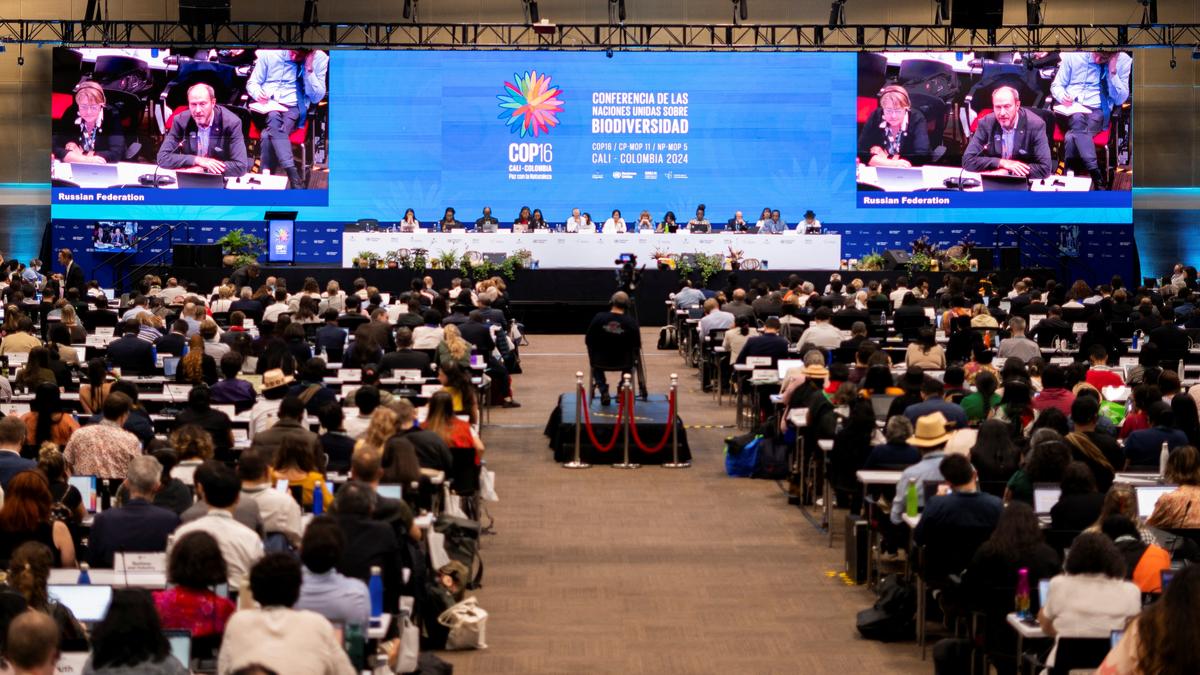
The 16th meeting of the Conference of the Parties (COP16) to the U.N. Convention on Biological Diversity recently concluded in Cali, Colombia. Representatives from U.N. countries tried to negotiate measures to halt and reverse biodiversity loss by 2030, which threatens both human well-being and the stability of human societies. A key sticking point was who’d pay for implementing these measures and how much.
A highlight of COP16 was the engagement of Indigenous people and local communities — but otherwise it raised a big red flag: it revealed countries are not on track to meet the ‘30×30’ target, which calls for the world to protect 30% of the world’s land and oceans by 2030.
How much of a setback is this?
The highs of COP16
Inclusive decision-making:Negotiators reached a landmark agreement to establish a permanent body made up of Indigenous people and members of local communities and agreed this body’s inputs would have to be included in decisions about biodiversity conservation. The move is intended to protect traditional knowledge systems and strengthen their representation and participation in policymaking.
At COP16, negotiators also recognised the role of people of African descent in conserving nature and made sure to include them in biodiversity initiatives and help integrate their traditional knowledge and conservation practices into global efforts.
Biodiversity funding: COP16 established a framework called the “Cali Fund”. It obligates major corporations — particularly in the pharmaceutical and biotechnology sectors — to share the financial benefits they derive from using genetic resources with the communities that nurture those resources. Companies have to contribute 0.1% of their revenue or 1% of their profits from products developed using genetic information to the fund. This figure could potentially exceed $1 billion a year and should help support biodiversity conservation projects and benefit local communities.
Half of the money from this fund will be allocated to Indigenous communities, to help conservation efforts and to acknowledge their contributions to biodiversity. Contributions to the fund are voluntary but it is a critical step towards more equitable benefit-sharing in the realm of biodiversity, especially considering the challenges surrounding global financing for biodiversity initiatives.
Biodiversity defence: COP16 also proposed guidelines to manage invasive alien species, a direct driver of biodiversity loss, by developing new databases, improving cross-border trade regulations, and enhancing coordination with e-commerce platforms. This decision emphasises the need for technical support, capacity building, and international cooperation across developing countries.
Momentum for blue: Negotiators also agreed to a new and upgraded process to identify ‘Ecologically or Biologically Significant Marine Areas’ (EBSAs), which are critical and vulnerable parts of the ocean. This process has faced various political and legal hurdles since its inception in 2008; COP16 revived it by agreeing on mechanisms to update existing ESBAs and identify new ones.
‘One Health’:The Global Action Plan on Biodiversity and Health established at COP16 underscores the need for a holistic ‘One Health’ approach, which calls for a collective focus on ecosystem, animal, and human health. By addressing the common drivers of biodiversity loss and poor health, such as deforestation and climate change, the plan aims to prevent zoonotic diseases, reduce non-communicable diseases, and promote sustainable ecosystems. It also encourages partnerships among health professionals, conservationists, and policymakers to develop tools and measures to track the progress of biodiversity plus health initiatives.

Innovating with caution:Redesigning organisms or creating new biological systems (synthetic biology) was an important topic of discussion at COP16. Applications — including bioengineered species for ecosystem restoration or sustainable materials to reduce resource strain — are promising because they can address environmental challenges. However, researchers have raised concerns over the risks involved and the unintended ecological effects of introducing synthetic organisms that could disrupt ecosystems affecting natural species.
Countries’ representatives also discussed regulatory frameworks to manage these risks and ensure a balance between innovation and conservation.
The lows of COP16
Among the unresolved issues at the meeting, financial commitments and lack of a monitoring framework are at the forefront.
Uphill battle for finance:A big bone of contention was the mobilisation of financial resources to meet the Kunming-Montreal Global Biodiversity Framework (GBF) target of $700 billion a year for biodiversity conservation by 2030, including $30 billion from developed to developing countries. But pledges at the conference totalled only $163 million.
Disagreements over the governance and distribution of funds led to an impasse, with discussions on financial mechanisms being suspended without resolution. This was because developing nations advocated for a dedicated global nature fund for conservation whereas wealthy nations blocked the proposal due to concerns over fund structure and the idea that existing frameworks were enough to meet financial needs.
Monitoring and implementation: Implementing the GBF was another key issue at COP16 but progress was limited. Only 44 of the 196 countries submitted an updated National Biodiversity Strategies and Action Plan (NBSAP) review framework for evaluating their progress through a ‘global stocktake’. Many countries have still not submitted their NBSAPs. The lack of a mandatory enforcement framework could weaken the goal.
India at COP16
India unveiled its updated NBSAP at COP16, outlining a roadmap for biodiversity conservation efforts aligned with the GBF. The updated plan aims to halt and reverse biodiversity loss by 2030 and achieve harmonious coexistence with nature by 2050 through a “Whole-of-Government” and “Whole-of-Society” approach.
India is challenged with balancing conservation with economic growth. So the updated NBSAP outlines 23 national biodiversity targets and emphasises a transformative approach to biodiversity conservation and ecosystem restoration. In particular it focuses on inter-agency cooperation, financial solutions, and involving community members in restoring degraded ecosystems, protecting wetlands, and sustainably managing marine and coastal areas.
Looking ahead
Establishing inclusive decision-making bodies and frameworks for benefit-sharing shows progress. But without adequate financial commitments and robust monitoring mechanisms, reaching the 2030 targets will be difficult.

While nations reflect on the outcomes of COP16, it is clear that conserving biodiversity is crucial for environmental health, socio-economic resilience, and climate stability. For nations like India, where biodiversity is deeply tied to cultural heritage and economic stability, the stakes are particularly high.
Governments must set ambitious targets and take steps to translate these into actionable, measurable, and time-bound goals. Transparency in reporting and shared knowledge systems are vital for tracking progress and addressing gaps. As the world looks forward to COP17 in Armenia next year, collaborative action and cross-border efforts could make or break our ability to beat the triple planetary crises of pollution, climate change, and biodiversity loss.
Aparna Sundaresan is a senior analyst and Indu K Murthy leads the Climate, Environment and Sustainability sector, both at the Center for Study of Science, Technology and Policy (CSTEP), a research-based think tank.
Published – November 11, 2024 08:47 am IST