



Skip to content
  • Facebook
  • X
  • Linkedin
  • WhatsApp
  • Associate Journalism
  • About Us
  • Privacy Policy
  • 033-46046046
  • editor@artifex.news
Artifex.News

Artifex.News

Stay Connected. Stay Informed.

  • Breaking News
  • World
  • Nation
  • Sports
  • Business
  • Science
  • Entertainment
  • Lifestyle
  • Toggle search form
  • Brazil Block On Elon Musk’s X Comes Into Effect World
  • Inzamam-ul-Haq Rips Into Shaheen Afridi Despite Bowler Scoring 34-ball 55 In PSL Sports
  • This particle’s wobble could help spot cracks in the laws of physics Science
  • On Camera, Alleged Trump Shooter Lays On Stomach With Rifle On Roof World
  • “2024 Version Of Javed Miandad”: Sarfaraz Khan Given Unique Praise By Sanjay Manjrekar During 1st Test Sports
  • Teen Dies By Suicide By Jumping Into River From Bridge In UP Nation
  • Coach JP Duminy Is Required To Field For South Africa vs Ireland, Makes Epic One-Handed Save. Watch Sports
  • NCBS to collaborate with various organisations on forest research and conservation Science

WHO’s database on polio cases hides more than it reveals

Posted on November 2, 2024 By admin


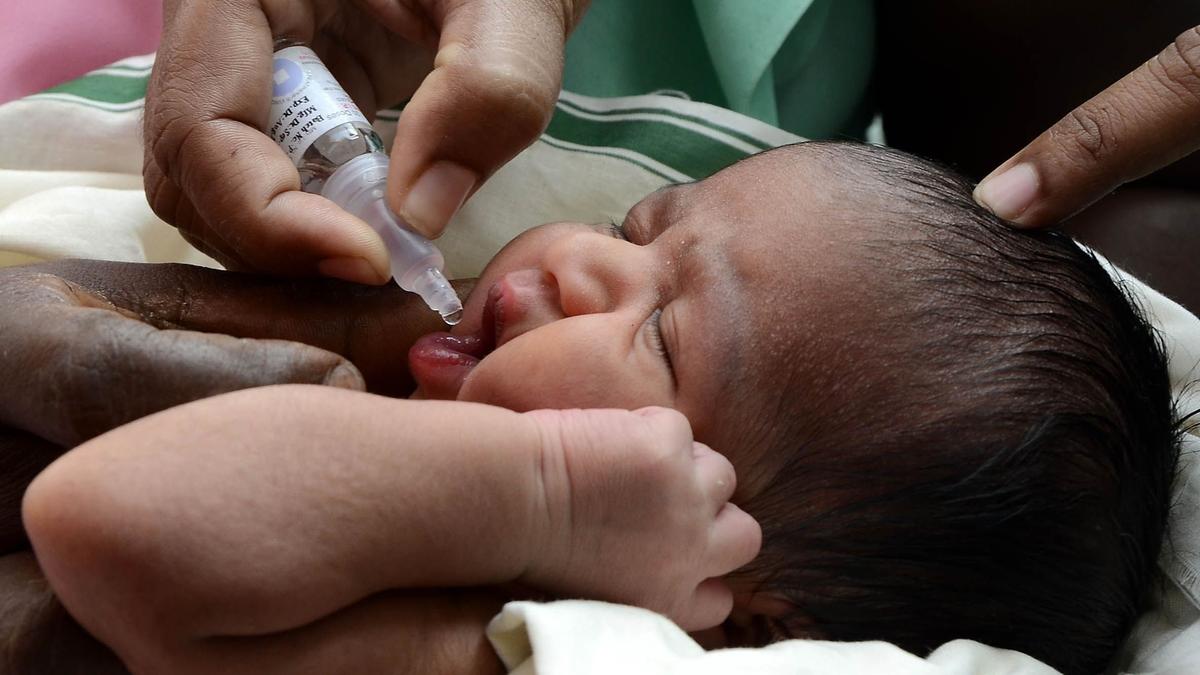
The WHO registry on polio — wild poliovirus and vaccine-derived poliovirus — is at best sketchy
| Photo Credit: VELANKANNI RAJ B

On June 17, 2022, WHO published a report of a VDPV type-1 case that was detected from an environmental sewage sample in Kolkata on April 25, 2022. The report said that genetic sequencing “established that it was not related to any of the previously identified VDPV1 viruses and was likely to be iVDPV (excreted from an immune-deficient individual)”. But nearly three months after the results of the Meghalaya polio case was shared with the WHO on August 12, and more than one-a-half-months after the follow-up results confirmed that the immunological profile of the child was normal and that there was no evidence that the virus was circulating in the community, WHO is yet to publish the details.

If the failure or delay by WHO in publishing the case details is puzzling, it has now come to light that besides not reporting vaccine-associated paralytic polio (VAPP) cases, the WHO registry does not report all categories of vaccine-derived poliovirus (VDPV) cases either. WHO classifies VDPV cases into: 1) circulating vaccine-derived polioviruses (cVDPVs), 2) immune-deficiency associated VDPV (iVDPV), and 3) ambiguous vaccine-derived polioviruses (aVDPVs). However, besides wild poliovirus cases, the WHO registry has data of only the circulating VDPV cases and not the cases that belong to the other two categories — iVDPV and aVDPV. In fact, the registry does not even list the other two VDPV categories, namely the iVDPV and ambiguous VDPV. Even in the case of the circulating VDPV cases, the WHO registry does not classify the cases based on poliovirus serotypes — type-1, type-2 or type-3. 

Like the WHO registry, the registry maintained by the Global Polio Eradication Initiative (GPEI), which is a public-private partnership led by national governments with six partners, including the WHO, also has data on only the circulating VDPVs and not the other two VDPV categories — immune-deficiency associated VDPV and ambiguous VDPV.

In the case of the wild poliovirus, the GPEI registry has data of confirmed human cases and environmental samples. In the case of the circulating VDPV cases too, in addition to circulating VDPV cases, the GPEI registry has data of environmental samples and other human sources that include contacts, healthy and community samples. Also, the GPEI database classifies the circulating VDPV cases as type-1, type-2 and type-3. However, while the WHO registry provides data of circulating VDPV cases globally and individual countries starting from 2000, the GPEI database has data of circulating VDPV cases and environmental samples of individual countries only for the last four years — 2021 to 2024. In the case of the wild poliovirus cases, the GEPI database has data only for the last seven years — 2018 to 2024.

As per a 2017 paper published in the journal Vaccine, the GPEI maintains a registry of iVDPV cases. However, the data of iVDPV cases in the GPEI registry is not made publicly available. Instead, the GPEI periodically publishes a list of iVDPV cases in the World Epidemiological Record (WER) and the U.S. CDC’s Morbidity and Mortality Weekly Report (MMWR). The last time GPEI shared the data of iVDPV cases was in July 2020 when 16 new iVDPV cases were reported from five countries — Argentina, Egypt, Iran, Philippines, and Tunisia — between July 2018 and December 2019. 

If GPEI has the data of all iVDPV cases, the WHO too should have the same data as all the WHO-accredited polio laboratories, which confirm both wild poliovirus and VDPV cases and classifies the VDPV cases into one of the three categories, report the results directly to the WHO. This raises important questions about WHO’s intent and its unwillingness to be transparent by sharing the data of immune-deficiency associated VDPV (iVDPV), and ambiguous VDPV cases on a real-time basis.

Unlike in the case of the inactivated polio vaccine (IPV), the oral polio vaccine (OPV) can sometimes cause polio. Instead of protecting the vaccinated children, OPV can sometimes cause polio —vaccine-associated paralytic poliomyelitis (VAPP) — in children who are vaccinated. This occurs when the live, weakened poliovirus used in OPV turns virulent within the body of the recently vaccinated child and causes polio. The live, weakened poliovirus used in OPV can also sometimes turn neurovirulent and cause polio in children who are not fully protected, and in children who are not immunocompetent. In the case of iVDPV, poliovirus can continue to replicate in an immunodeficient child and the iVDPV strain can be excreted for several months to years. In one case, an immunodeficient child was found excreting type-2 VDPV for 28 years.

“The risks posed by iVDPV strains and the prevalence of such cases globally are unknown so their relevance in the context of the GPEI endgame is not easy to assess,” says the 2015 PLOS Pathogens paper. WHO is well aware that iVDPV cases serve as potential reservoirs for neurovirulent VDPV strains and can pose a significant threat to the eradication campaign. This precisely is the reason why WHO does not share the data on iVDPV cases. 

Published – November 02, 2024 09:30 pm IST



Source link

Science

Post navigation

Previous Post: Verification Patrolling Has Started In Ladakh’s Demchok, Depsang: Centre
Next Post: Odisha Medical College Expels 5 MBBS Students From Hostel For Ragging Juniors

Related Posts

  • This week’s Sci-Five quiz is on famous mathematicians. Science
  • How will AlphaFold 3 change life sciences research? Science
  • Indian forest activist Alok Shukla awarded the Goldman Environmental Prize Science
  • Chandrayaan-3 takes another crucial step closer to moon Science
  • Concurrent heatwaves, sea level rises pose a threat to coastlines Science
  • What science is finding about the Shroud of Turin and the controversy around it Science

More Related Articles

New rocket, plus moon and Venus missions, herald new beginnings Science
Is Russia testing a new anti-satellite weapon? | Explained Science
The Nobel Prize has been awarded to women 62 times. Katalin Karikó becomes the 13th to win in Medicine Science
The Science Quiz | The Turkey-Syria earthquakes Science
Scientists trace powerful radio signal to most distant galaxy yet Science
Did ‘puppy dog eyes’ expression evolve exclusively in dogs due to domestication? Science
SiteLock

Archives

  • November 2024
  • October 2024
  • September 2024
  • August 2024
  • July 2024
  • June 2024
  • May 2024
  • April 2024
  • March 2024
  • February 2024
  • January 2024
  • December 2023
  • November 2023
  • October 2023
  • September 2023
  • August 2023
  • July 2023
  • June 2023
  • May 2023
  • April 2023
  • March 2023
  • February 2023
  • January 2023
  • December 2022
  • November 2022
  • October 2022
  • September 2022
  • August 2022
  • July 2022
  • June 2022
  • May 2022

Categories

  • Business
  • Nation
  • Science
  • Sports
  • World

Recent Posts

  • Constellation seeks data centres at power plants despite regulatory setback
  • Student killed in lightning strike in Kerala
  • With Kylian Mbappe Gone, Misfiring PSG Are Under Pressure In Champions League
  • Lazio Eye Italy’s Top Four After Seeing Off Nine-Man Cagliari
  • Meta struggles to curb hate speech before US vote: researchers

Recent Comments

  1. dfb{{98991*97996}}xca on UP Teacher Who Asked Students To Slap Muslim Classmate
  2. "dfbzzzzzzzzbbbccccdddeeexca".replace("z","o") on UP Teacher Who Asked Students To Slap Muslim Classmate
  3. 1}}"}}'}}1%>"%>'%> on UP Teacher Who Asked Students To Slap Muslim Classmate
  4. bfg6520<s1﹥s2ʺs3ʹhjl6520 on UP Teacher Who Asked Students To Slap Muslim Classmate
  5. pHqghUme9356321 on UP Teacher Who Asked Students To Slap Muslim Classmate
  • India vs Australia Live Score Ball by Ball, India vs Australia, 2023 Live Cricket Score Of Today's Match on NDTV Sports Sports
  • Boxing: Nishant Dev, Jaismine Lamboria Sail Into Quarters; Heartbreak For Deepak Bhoria Sports
  • Zara Removes “Sexually Suggestive” Children’s T-Shirt After Complaints World
  • Israel’s Netanyahu Meets Elon Musk In US, Urges To Fight Anti-Semitism World
  • 13-Year-Old Boy Found Dead At Maharashtra Hostel, Cops Suspect Suicide Nation
  • Vietnam to free nearly 3,800 prisoners in amnesty World
  • “Gautam Gambhir Asked Me Not To…”: India’s 156.7kmph Star Mayank Yadav Reveals Coach’s Big Message Sports
  • Kannada Actor Nagabhushan SS Arrested For Allegedly Killing Woman Walking On Footpath Nation

Editor-in-Chief:
Mohammad Ariff,
MSW, MAJMC, BSW, DTL, CTS, CNM, CCR, CAL, RSL, ASOC.
editor@artifex.news

Associate Editors:
1. Zenellis R. Tuba,
zenelis@artifex.news
2. Haris Daniyel
daniyel@artifex.news

Photograher:
Rohan Das
rohan@artifex.news

Artifex.News offers Online Paid Internships to college students from India and Abroad. Interns will get a PRESS CARD and other online offers.
Send your CV (Subjectline: Paid Internship) to internship@artifex.news

Links:
Associate Journalism
About Us
Privacy Policy

News Links:
Breaking News
World
Nation
Sports
Business
Entertainment
Lifestyle

Registered Office:
72/A, Elliot Road, Kolkata - 700016
Tel: 033-22277777, 033-22172217
Email: office@artifex.news

Editorial Office / News Desk:
No. 13, Mezzanine Floor, Esplanade Metro Rail Station,
12 J. L. Nehru Road, Kolkata - 700069.
(Entry from Gate No. 5)
Tel: 033-46011099, 033-46046046
Email: editor@artifex.news

Copyright © 2023 Artifex.News Newsportal designed by Artifex Infotech.