
Skip to content
  • Facebook
  • X
  • Linkedin
  • WhatsApp
  • YouTube
  • Associate Journalism
  • About Us
  • Privacy Policy
  • 033-46046046
  • editor@artifex.news
Artifex.News

Artifex.News

Stay Connected. Stay Informed.

  • Breaking News
  • World
  • Nation
  • Sports
  • Business
  • Science
  • Entertainment
  • Lifestyle
  • Toggle search form
  • If A Firecracker Goes Off in Bengal, CBI, NSG Come To Probe
    If A Firecracker Goes Off in Bengal, CBI, NSG Come To Probe Nation
  • On Comparisons With Rohit Sharma, Virat Kohli, Yashasvi Jaiswal’s Honest Response
    On Comparisons With Rohit Sharma, Virat Kohli, Yashasvi Jaiswal’s Honest Response Sports
  • “He Will Probably Slap Me…”: Manu Bhaker On Father-Figure Jaspal Rana. Coach Responds
    “He Will Probably Slap Me…”: Manu Bhaker On Father-Figure Jaspal Rana. Coach Responds Sports
  • Taiwan reports surge in Chinese air force activity after carrier passes by
    Taiwan reports surge in Chinese air force activity after carrier passes by World
  • PM Modi flags off Maruti Suzuki’s 1st electric vehicle e-Vitara
    PM Modi flags off Maruti Suzuki’s 1st electric vehicle e-Vitara Business
  • PM’s Shoutout For Anurag Thakur Amid Row Over House Speech
    PM’s Shoutout For Anurag Thakur Amid Row Over House Speech Nation
  • Sudan army breaks siege on key southern city Kadugli: army sources
    Sudan army breaks siege on key southern city Kadugli: army sources World
  • Gautam Gambhir Set To Become Next India Head Coach? Report Makes Massive Claim
    Gautam Gambhir Set To Become Next India Head Coach? Report Makes Massive Claim Sports
Stoneflies change colour in response to deforestation, suggesting humans can alter evolution

Stoneflies change colour in response to deforestation, suggesting humans can alter evolution

Posted on October 30, 2024 By admin


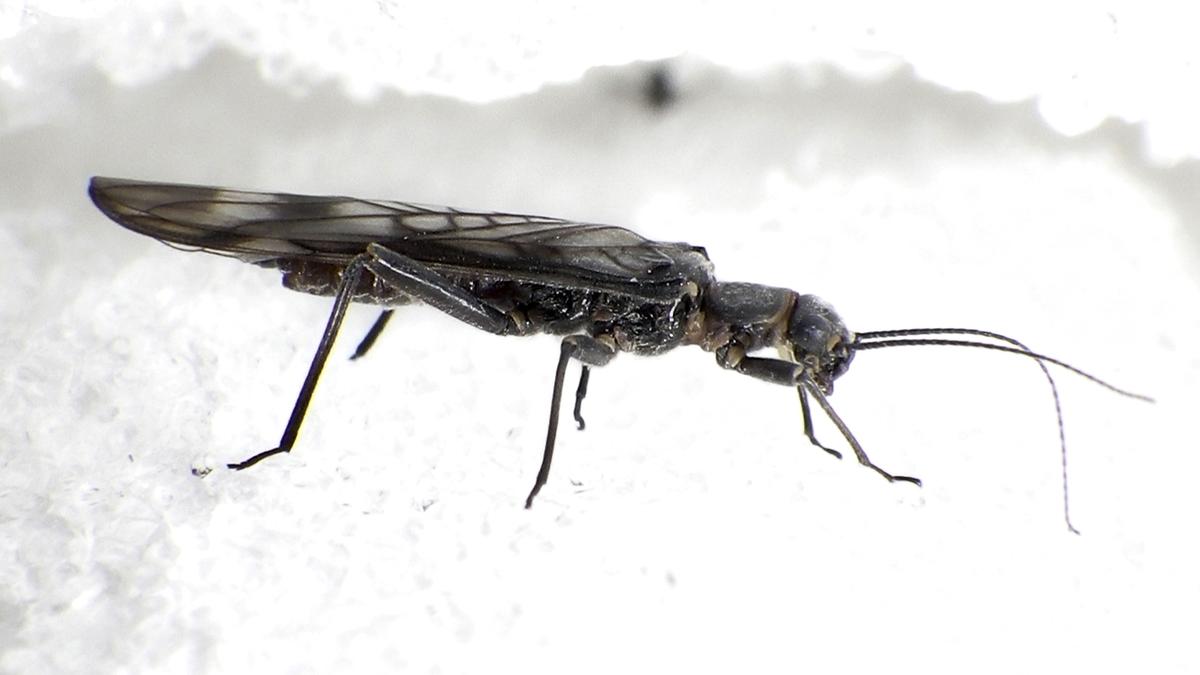
Scientists are worried we might also be altering the evolutionary trajectories of the species that live alongside us, perhaps even including some irreversible shifts.
| Photo Credit: AP

As we continue to change the planet, scientists are worried we might also be altering the evolutionary trajectories of the species that live alongside us, perhaps even including some irreversible shifts.

Certainly, the evidence for change is everywhere. As the planet warms, species’ ranges are shifting and their life cycles are changing. As we harvest the largest fish in the ocean, the species affected are now maturing at smaller sizes.

But are these shifts we observe in wild populations underpinned by genetic changes (mutations in the DNA) or are they simply flexible responses to environmental change? If the changes are genetic, how are they happening?

So far, researchers have observed fewer clear-cut examples of human-induced evolution in the wild than one might imagine. But our new study may provide a new “textbook” case of human-driven evolution in wild insects.

Our findings are centred on an intriguing case of “mimicry” from New Zealand, in which a harmless insect has evolved to mimic the warning colours of a highly toxic species.

Forest removal drives colour shift

Convincingly demonstrating “evolution in action” involves finding the agents of natural selection (environmental factors driving the change) and discovering the genetic mechanism.

Until now, the peppered moth was the “classic” example of human-driven evolution. Dark-coloured specimens of the moth suddenly appeared during the 19th century. It was a likely response to industrial pollution which meant light-coloured individuals were no longer blending in to the increasingly sooty British environment. Despite its broad appeal, some aspects of even this famous case have been criticised as unclear and anecdotal.

We worked on stoneflies and the impact of deforestation.

The black stonefly Austroperla lives in forests. It produces cyanide to deter potential predators, and to advertise its toxicity this species has high-contrast black, white and yellow markings, reminiscent of wasp colouration.

The non-toxic Zelandoperla stonefly has evolved astonishingly similar warning colouration, apparently to trick predators (forest birds) into assuming that it, too, is toxic. The intricate and unique ecological interactions between these insects and their predators have apparently evolved together over millions of years.

Where do humans come into this story? Aotearoa New Zealand was the last major landmass to be colonised by people. In many places the human impacts on its ecosystems have been devastating.

In addition to species extinctions, New Zealand has lost much of its original native forest cover in just a few centuries. This deforestation has wiped out countless populations of forest birds, along with the poisonous, forest-dependent Austroperla.

Our study reveals this widespread deforestation has also proven a game changer for the stonefly “mimic”. As its predators and the poisonous species it mimics have vanished from many regions, there is no longer much point in displaying warning colouration.

In an astonishing about-turn, Zelandoperla populations from deforested habitats have quickly lost their spectacular “mimic” colouration. It turns out that the production of this intricate colouration was costly, and when no longer essential, evolution rapidly removed it – in a case of “use it or lose it”.

Genetic change

In our study, we compared insect populations across several parts of the South Island. We found a remarkably consistent picture. The removal of forest has driven similar colour shifts across different deforested regions.

The finding that evolutionary change can be “predictable” offers hope that scientists can use evolutionary theory to predict future biodiversity shifts.

How do we know birds have played a key role in this rapid colour change? By placing stonefly models of different colours in a variety of habitats, we were able to demonstrate that birds only avoid attacking stoneflies with the “warning” colouration when they are in forests.

Another challenge was to show that this colour change represents evolution at the DNA level rather than a flexible response to environmental change. We looked at genetic variation across the Zelandoperla genome and found that just a single gene – ebony – is almost completely responsible for this colour evolution.

Our study also reveals the pace of evolutionary change. By comparing regions deforested soon after human arrival (for example Central Otago, which was deforested around 600 to 700 years ago) with those cleared much more recently (Otago Peninsula, 150 years ago), we show that evolution has proceeded steadily yet inexorably over this human timeframe.

On the positive side, the finding that at least some of our native species can adapt in the face of rapid environmental change suggests ongoing resilience of our native biodiversity. However, our results also highlight how quickly the intricate interactions that have evolved among native species over millennia can be lost from disturbed ecosystems.

These new findings raise tantalising questions about the potential to reverse the negative impacts of deforestation on our native biodiversity. In particular, our increasing focus on reforestation and ecological restoration provides hope for restoring the complex ecosystems we have inherited.

This article is republished from The Conversation under a Creative Commons license. Read the original article here.

Published – October 30, 2024 03:41 pm IST



Source link

Science Tags:animal science, evolution of animals, evolution of animals altered by humans, science news, stoneflies change colour

Post navigation

Previous Post: Spanish authorities report at least 51 dead from devastating flash floods
Next Post: “Huge Difference”: Ex-Australia Skipper On Mohammed Shami’s Absence From Upcoming Border-Gavaskar Trophy

Related Posts

  • Making sense of DHRUV64 indigenous microprocessor | Explained
    Making sense of DHRUV64 indigenous microprocessor | Explained Science
  • Infosys Science Foundation announces prize winners for 2024
    Infosys Science Foundation announces prize winners for 2024 Science
  • Game-changer virus developed by Kerala Forest Research Institute can help save teak plantations
    Game-changer virus developed by Kerala Forest Research Institute can help save teak plantations Science
  • What would it take to turn Mars into a life-friendly planet like the earth?
    What would it take to turn Mars into a life-friendly planet like the earth? Science
  • Mendelian genetics, Darwinian evolution closely linked with chemistry, says expert
    Mendelian genetics, Darwinian evolution closely linked with chemistry, says expert Science
  • Earth’s magnetic flips can last 70,000 years, new study finds
    Earth’s magnetic flips can last 70,000 years, new study finds Science

More Related Articles

inStem’s fabric offers protection from pesticides inStem’s fabric offers protection from pesticides Science
ISRO invites proposals from Indian scientists to analyse data from Aditya-L1 mission ISRO invites proposals from Indian scientists to analyse data from Aditya-L1 mission Science
Artemis II breaks Apollo 13’s distance record with daring moon flyby that included a solar eclipse Artemis II breaks Apollo 13’s distance record with daring moon flyby that included a solar eclipse Science
Satellite data show India’s major deltas sinking due to human activity Satellite data show India’s major deltas sinking due to human activity Science
Scientists reveal secrets of Earth’s magnificent desert star dunes Scientists reveal secrets of Earth’s magnificent desert star dunes Science
Galactic tides: Pushing and pulling the heavens Galactic tides: Pushing and pulling the heavens Science
SiteLock

Archives

  • May 2026
  • April 2026
  • March 2026
  • February 2026
  • January 2026
  • December 2025
  • November 2025
  • October 2025
  • September 2025
  • August 2025
  • July 2025
  • June 2025
  • May 2025
  • April 2025
  • March 2025
  • February 2025
  • January 2025
  • December 2024
  • November 2024
  • October 2024
  • September 2024
  • August 2024
  • July 2024
  • June 2024
  • May 2024
  • April 2024
  • March 2024
  • February 2024
  • January 2024
  • December 2023
  • November 2023
  • October 2023
  • September 2023
  • August 2023
  • July 2023
  • June 2023
  • May 2023
  • April 2023
  • March 2023
  • February 2023
  • January 2023
  • December 2022
  • November 2022
  • October 2022
  • September 2022
  • August 2022
  • July 2022
  • June 2022
  • May 2022

Categories

  • Business
  • Nation
  • Science
  • Sports
  • World

Recent Posts

  • Nicobarese oppose proposal for three wildlife sanctuaries
  • Visakhapatnam Collector calls for inter-departmental synergy to boost investments
  • Kohli’s masterful knock powers Royal Challengers to the top
  • Senior IPS officer Asra Garg posted IGP Intelligence
  • Vijay Narayan earns rare distinction of being Advocate General under two different governments

Recent Comments

  1. StevenLek on UP Teacher Who Asked Students To Slap Muslim Classmate
  2. Leonardren on UP Teacher Who Asked Students To Slap Muslim Classmate
  3. NathanQuins on UP Teacher Who Asked Students To Slap Muslim Classmate
  4. Davidgof on UP Teacher Who Asked Students To Slap Muslim Classmate
  5. NathanJobre on UP Teacher Who Asked Students To Slap Muslim Classmate
  • Access Denied Business
  • “Want To Have Fun”: Carlos Alcaraz Aims Gold Ahead Of Olympics 2024 Tennis Final
    “Want To Have Fun”: Carlos Alcaraz Aims Gold Ahead Of Olympics 2024 Tennis Final Sports
  • UK Declares Russia’s Mercenary Group Wagner A “Terrorist Organisation”
    UK Declares Russia’s Mercenary Group Wagner A “Terrorist Organisation” World
  • Pune Cops Probe, Grill 3 Generations Of Accused’s Family
    Pune Cops Probe, Grill 3 Generations Of Accused’s Family Nation
  • Sri Lanka to end visa extensions granted to war-hit Russian and Ukrainian tourists
    Sri Lanka to end visa extensions granted to war-hit Russian and Ukrainian tourists World
  • Access Denied
    Access Denied Nation
  • ‘Buy Oil And Gas From US, Or Else…’: Donald Trump Threatens Europe
    ‘Buy Oil And Gas From US, Or Else…’: Donald Trump Threatens Europe World
  • RIL to lead lift in capex spend to -50 billion over 1-2 years: Moody’s
    RIL to lead lift in capex spend to $45-50 billion over 1-2 years: Moody’s Business

Editor-in-Chief:
Mohammad Ariff,
MSW, MAJMC, BSW, DTL, CTS, CNM, CCR, CAL, RSL, ASOC.
editor@artifex.news

Associate Editors:
1. Zenellis R. Tuba,
zenelis@artifex.news
2. Haris Daniyel
daniyel@artifex.news

Photograher:
Rohan Das
rohan@artifex.news

Artifex.News offers Online Paid Internships to college students from India and Abroad. Interns will get a PRESS CARD and other online offers.
Send your CV (Subjectline: Paid Internship) to internship@artifex.news

Links:
Associate Journalism
About Us
Privacy Policy

News Links:
Breaking News
World
Nation
Sports
Business
Entertainment
Lifestyle

Registered Office:
72/A, Elliot Road, Kolkata - 700016
Tel: 033-22277777, 033-22172217
Email: office@artifex.news

Editorial Office / News Desk:
No. 13, Mezzanine Floor, Esplanade Metro Rail Station,
12 J. L. Nehru Road, Kolkata - 700069.
(Entry from Gate No. 5)
Tel: 033-46011099, 033-46046046
Email: editor@artifex.news

Copyright © 2023 Artifex.News Newsportal designed by Artifex Infotech.