

Skip to content
  • Facebook
  • X
  • Linkedin
  • WhatsApp
  • YouTube
  • Associate Journalism
  • About Us
  • Privacy Policy
  • 033-46046046
  • editor@artifex.news
Artifex.News

Artifex.News

Stay Connected. Stay Informed.

  • Breaking News
  • World
  • Nation
  • Sports
  • Business
  • Science
  • Entertainment
  • Lifestyle
  • Toggle search form
  • David Warner Left Angry After Contentious LBW Call Sees Him Depart vs Sri Lanka In Cricket World Cup Match. Watch
    David Warner Left Angry After Contentious LBW Call Sees Him Depart vs Sri Lanka In Cricket World Cup Match. Watch Sports
  • Access Denied Business
  • Access Denied Sports
  • Access Denied Sports
  • Hezbollah launches drone attacks on Israel, says more to come
    Hezbollah launches drone attacks on Israel, says more to come World
  • Access Denied Sports
  • PM Narendra Modi Holds Roadshow In Varanasi, Offers Prayers At Kashi Vishwanath Temple
    PM Narendra Modi Holds Roadshow In Varanasi, Offers Prayers At Kashi Vishwanath Temple Nation
  • Access Denied
    Access Denied Nation
Should we ditch BMI and use the ‘body roundness index’ instead?

Should we ditch BMI and use the ‘body roundness index’ instead?

Posted on June 27, 2024 By admin


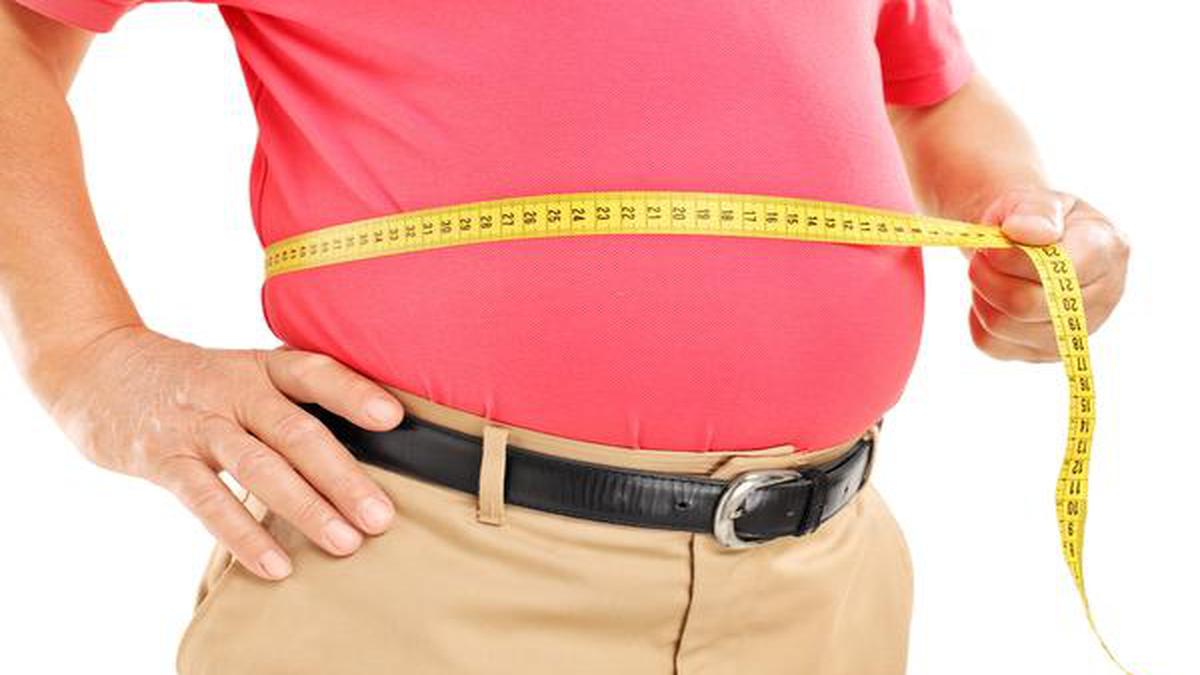
BMI has remained the go-to method for measuring health since it first started being used in the latter part of the 20th century.
| Photo Credit: Getty Images/iStockphoto

Body mass index (better known as BMI) has long been used to get a quick and easy snapshot of a person’s body fat levels. To calculate someone’s BMI, you divide their weight in kilograms by their height in metres times itself. The resulting number is used to determine a person’s health risk.

Although there are far better ways of getting an accurate measure of a person’s body fat levels – such as using dual-energy x-ray absorptiometry (Dexa) or magnetic resonance imaging (MRI) – these are very resource-intensive. This may explain why BMI has remained the go-to method for measuring health since it first started being used in the latter part of the 20th century.

But many health experts believe BMI has significant limitations, particularly for children and young people (whose body fat levels change as they grow), athletic people (who have high levels of muscle mass) and people from ethnic minority groups (who may develop health problems at lower body fat levels).

BMI was never created for use in health and was developed using data from European people in the 19th century. Although child and ethnicity‐specific adjusted BMI and alternative height and weight ratios have been suggested, none have made sufficient headway to improve BMI’s reputation.

Several alternatives to BMI have also been suggested – such as using waist-to-hip ratio (waist circumference divided by hip circumference) or body volume index (which uses 3D body scanners to estimate total body fat distribution).

But a recent study suggests that instead of BMI, we should be using something called body roundness index (BRI) to get a more accurate picture of a person’s body fat levels and predict health risk.

What is body roundness index?

BRI was developed by U.S. researchers in 2013 in response to criticisms of BMI. Instead of looking at height and weight, BRI mathematically quantifies body fat levels by looking at height and waist circumference instead. This provides a value typically ranging from one to 20. It is the lowest and highest values that suggest the highest health risk.

Numerous studies have shown that BRI may be better than BMI at predicting the health risks associated with different levels of body fat. This includes predicting risk of weight-related diseases such as cardiovascular disease, diabetes, kidney disease and cancer, as well as death from any cause.

This latest study, which looked at 32,995 U.S. adults between 1999 and 2018, found an association between BRI and death from any cause. Specifically, they also found that people with the lowest and highest BRI scores had the greatest health risks.

They also found that BRI was better than BMI at accurately detecting this risk. This is because BRI considers the fat held around the abdomen, which is linked to greater risk of health problems. This is different to BMI, which only considers overall weight.

BRI v. BMI

Given BRI only requires a tape measure and a maths equation, this means it’s as easy to use and accessible as BMI. But assuming BRI is manually measured, it remains as subject to human error as BMI.

One study even found that eight out of ten trained health professionals demonstrated such high levels of human error when manually measuring the abdomen that they failed to notice an increase of 3cm the second time they took the measurement. This margin of error will probably be even higher in people taking their own measurements at home.

As a new metric, BRI also does not yet have the kind of extensive data backing up its use that exists for BMI. This makes it harder to know just how effective and reliable it is compared to these more established methods.

And like BMI, BRI is a composite measure – meaning it combines multiple highly related measures into a single index. This makes it very hard to unpick the impact that different body fat levels can have on health – and can lead to misleading interpretations of the results.

While BRI may improve on some of BMI’s shortcomings, it’s not immune to misclassification. For example, people with high muscle mass might still face inaccuracies in their health risk assessments if their body fat distribution does not conform to “typical” patterns around the abdomen. Research also suggests that BRI’s accuracy at predicting the health risks may vary depending on a person’s ethnicity, age and sex.

BRI most certainly represents an advancement in the hunt for a more accurate alternative to BMI by focusing more on body shape and fat distribution rather than just body size. But it still has its limitations. Although this latest study gives us more data on BRI’s accuracy, more research is still needed before we can be certain it’s better than BMI and should replace it.

Perhaps an even better way of getting a picture of a person’s health is to use 3D body surface imaging. This creates a scale digital 3D image of the human body which allows health professionals to explore all potential existing body measures, including both BRI and BMI, as well as allowing us to explore new digital alternatives.

But regardless of which body measure you or a doctor may use to asses your health, it’s important to remember that every person is unique, and our bodies do – and should – always come in a wide range of shapes and sizes.

Alice Bullas is Senior Research Fellow, Sports Engineering Research Group, Sheffield Hallam University. This article is republished from The Conversation.


The Conversation


Source link

Science Tags:body mass index, body roundness index, obesity health risk, weight loss

Post navigation

Previous Post: Heavy Rain In Delhi Brings Some Relief From Intense Heat Ahead Of Monsoon Arrival
Next Post: Venezuela Into Copa America Quarterfinals After Mexico Victory, Jamaica Out

Related Posts

  • Solar eclipse to create rare ‘ring of fire’ over South America
    Solar eclipse to create rare ‘ring of fire’ over South America Science
  • How big fossil-fuel-producing countries export emissions abroad | Explained
    How big fossil-fuel-producing countries export emissions abroad | Explained Science
  • The Rearview Podcast | PC Mahalanobis: India’s First Data Cruncher
    The Rearview Podcast | PC Mahalanobis: India’s First Data Cruncher Science
  • Telescopes spot start of planet formation in Orion
    Telescopes spot start of planet formation in Orion Science
  • FDA approval for Cobenfy casts light on schizophrenia’s wickedness
    FDA approval for Cobenfy casts light on schizophrenia’s wickedness Science
  • New technique helps superconductor break 33-year temperature record
    New technique helps superconductor break 33-year temperature record Science

More Related Articles

‘The more we learn about bats, the less we fear them’ ‘The more we learn about bats, the less we fear them’ Science
Silent killer: The Hindu editorial on hypertension and the first WHO report on the subject Silent killer: The Hindu editorial on hypertension and the first WHO report on the subject Science
Efforts to restore mangroves can turn the tide on India’s coastal security Efforts to restore mangroves can turn the tide on India’s coastal security Science
Medicine Nobel 2024 awarded to Victor Ambros and Gary Ruvkun Medicine Nobel 2024 awarded to Victor Ambros and Gary Ruvkun Science
Solar Eclipse 2024: A total solar eclipse races across North America as clouds part along totality Solar Eclipse 2024: A total solar eclipse races across North America as clouds part along totality Science
Data gaps beyond India are holding monsoon forecasts back | Analysis Data gaps beyond India are holding monsoon forecasts back | Analysis Science
SiteLock

Archives

  • May 2026
  • April 2026
  • March 2026
  • February 2026
  • January 2026
  • December 2025
  • November 2025
  • October 2025
  • September 2025
  • August 2025
  • July 2025
  • June 2025
  • May 2025
  • April 2025
  • March 2025
  • February 2025
  • January 2025
  • December 2024
  • November 2024
  • October 2024
  • September 2024
  • August 2024
  • July 2024
  • June 2024
  • May 2024
  • April 2024
  • March 2024
  • February 2024
  • January 2024
  • December 2023
  • November 2023
  • October 2023
  • September 2023
  • August 2023
  • July 2023
  • June 2023
  • May 2023
  • April 2023
  • March 2023
  • February 2023
  • January 2023
  • December 2022
  • November 2022
  • October 2022
  • September 2022
  • August 2022
  • July 2022
  • June 2022
  • May 2022

Categories

  • Business
  • Nation
  • Science
  • Sports
  • World

Recent Posts

  • The challenge to not breach the limit
  • Trump embarks on visit to China, focus on trade
  • Baltimore ship crash: U.S. slaps criminal cases against Singapore, Chennai firms and Indian national
  • Three arrested for smuggling banned tobacco products, over 112 kg seized
  • Two persons arrested for burglary in Tirupattur

Recent Comments

  1. Raymonddow on UP Teacher Who Asked Students To Slap Muslim Classmate
  2. Jeffreyroure on UP Teacher Who Asked Students To Slap Muslim Classmate
  3. AaronPrido on UP Teacher Who Asked Students To Slap Muslim Classmate
  4. AaronThymn on UP Teacher Who Asked Students To Slap Muslim Classmate
  5. Matthewerano on UP Teacher Who Asked Students To Slap Muslim Classmate
  • King’s Cup: Team India Leaves Scars Of Semifinal Loss Behind; Ready To Outfox Lebanon Challenge
    King’s Cup: Team India Leaves Scars Of Semifinal Loss Behind; Ready To Outfox Lebanon Challenge Sports
  • Access Denied Sports
  • Ukraine says it foiled a Russian spy agency plot to assassinate President Zelensky
    Ukraine says it foiled a Russian spy agency plot to assassinate President Zelensky World
  • Updated World Test Championship Table After India Lose Border-Gavaskar Trophy After 10 Years
    Updated World Test Championship Table After India Lose Border-Gavaskar Trophy After 10 Years Sports
  • An Hour On Counting Day, And A Big Mood Swing At Congress, BJP Offices
    An Hour On Counting Day, And A Big Mood Swing At Congress, BJP Offices Nation
  • Access Denied World
  • Access Denied Sports
  • Access Denied World

Editor-in-Chief:
Mohammad Ariff,
MSW, MAJMC, BSW, DTL, CTS, CNM, CCR, CAL, RSL, ASOC.
editor@artifex.news

Associate Editors:
1. Zenellis R. Tuba,
zenelis@artifex.news
2. Haris Daniyel
daniyel@artifex.news

Photograher:
Rohan Das
rohan@artifex.news

Artifex.News offers Online Paid Internships to college students from India and Abroad. Interns will get a PRESS CARD and other online offers.
Send your CV (Subjectline: Paid Internship) to internship@artifex.news

Links:
Associate Journalism
About Us
Privacy Policy

News Links:
Breaking News
World
Nation
Sports
Business
Entertainment
Lifestyle

Registered Office:
72/A, Elliot Road, Kolkata - 700016
Tel: 033-22277777, 033-22172217
Email: office@artifex.news

Editorial Office / News Desk:
No. 13, Mezzanine Floor, Esplanade Metro Rail Station,
12 J. L. Nehru Road, Kolkata - 700069.
(Entry from Gate No. 5)
Tel: 033-46011099, 033-46046046
Email: editor@artifex.news

Copyright © 2023 Artifex.News Newsportal designed by Artifex Infotech.