


Skip to content
  • Facebook
  • X
  • Linkedin
  • WhatsApp
  • YouTube
  • Associate Journalism
  • About Us
  • Privacy Policy
  • 033-46046046
  • editor@artifex.news
Artifex.News

Artifex.News

Stay Connected. Stay Informed.

  • Breaking News
  • World
  • Nation
  • Sports
  • Business
  • Science
  • Entertainment
  • Lifestyle
  • Toggle search form
  • Indian Open Jumps | Sarvesh wins high jump but misses out of Asian Games qualifying
    Indian Open Jumps | Sarvesh wins high jump but misses out of Asian Games qualifying Sports
  • Access Denied
    Access Denied Nation
  • Goodbye To Tupperware
    Goodbye To Tupperware Nation
  • Access Denied
    Access Denied Nation
  • Kylian Mbappe Eyes Return To Form As France Face Spain In Euro 2024 Semi-Final
    Kylian Mbappe Eyes Return To Form As France Face Spain In Euro 2024 Semi-Final Sports
  • Access Denied Sports
  • Access Denied
    Access Denied Nation
  • “Can’t Believe We’re…”: Ex-Australia Skipper On Usman Khawaja’s Retirement Speculations
    “Can’t Believe We’re…”: Ex-Australia Skipper On Usman Khawaja’s Retirement Speculations Sports
Muscle, wood, coal, oil: what earlier energy transitions tell us about renewables

Muscle, wood, coal, oil: what earlier energy transitions tell us about renewables

Posted on September 26, 2023 By admin


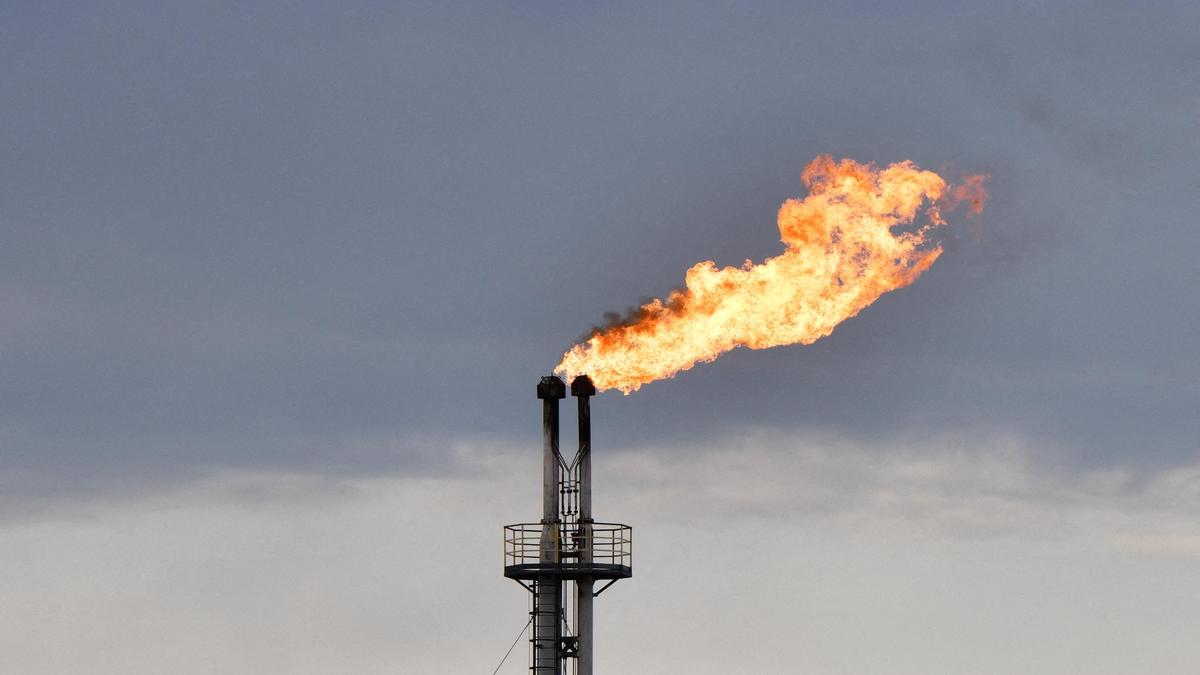
In 2022, the burning of fossil fuels provided 82% of the world’s energy. In 2000, it was 87%. Even as renewables have undergone tremendous growth, they’ve been offset by increased demand for energy.

That’s why the United Nations earlier this month released a global stocktake – an assessment on how the world is going in weaning itself off these energy-dense but dangerously polluting fuels. Short answer: progress, but nowhere near enough, soon enough.

If we consult history, we find that energy transitions are not new. To farm fields and build cities, we’ve gone from relying on human or animal muscle to wind and water to power sailboats and mill grain. Then we began switching to the energy dense hydrocarbons, coal, gas and oil. But this can’t last. We were first warned in 1859 that when burned, these fuels add to the Earth’s warming blanket of greenhouse gases and threatening our liveable climate.

It’s time for another energy transition. We’ve done it before. The problem is time – and resistance from the old energy regime, fossil fuel companies. Energy historian Vaclav Smil calculates past energy transitions have taken 50–75 years to ripple through societies. And we no longer have that kind of time, as climate change accelerates. This year is likely the hottest in 120,000 years.

Also Read | Seeing India’s energy transition through its States 

So can we learn anything from past energy transitions? As it happens, we can.

Energy shifts happen in fits and starts

Until around 1880, the world ran on wood, charcoal, crop residue, manure, water and wind. In fact, some countries relied on wood and charcoal throughout the 20th century – even as others were shifting from coal to oil.

The English had used coal for domestic heating from the time of the Romans because it burned longer and had nearly double the energy intensity of wood.

So what drove the shift? Deforestation was a part. The reliance on wood worked while there were trees. In the pre-industrial era, cities of 500,000 or more needed huge areas of forests around them.

In some locales wood seemed boundless, free and expendable. The costs to biodiversity would become apparent only later.

Also Read | High hopes for climate and energy outcomes at summit as India takes lead

Britain was once carpeted in forest. Endemic deforestation drove the change to coal in the 16th and 17th centuries. Most English coal pits opened between 1540 and 1640.

When the English figured out how to use coal to make steam and push a piston, it made even more possible – pumping water from deepening mining pits, the invention of locomotives, and transporting produce, including the feed needed by working animals.

Yet for all this, coal had only reached 5% of the global market by 1840.

In North America, coal didn’t overtake wood until as late as 1884 – even as crude oil became more important.

Why did America first start exploiting oil reserves? In part to replace expensive oil from the heads of sperm whales. Before hydrocarbon oil was widely available, whaling was depended upon for lubricants and some lighting. In 1846, the US had 700 whaling vessels scouring the oceans for this source of oil.

Also Read | India plans to export solar power: official

Crude oil was struck first in Pennsylvania in 1859. To extract it required drilling down 21 metres. The drill was powered by a steam engine – which may have been fired by wood.

Steam and muscle

The 19th century energy transition took decades. It wasn’t a revolution so much as a steady shift. By the end of that century, global energy supply had doubled and half of it was from coal.

When they were first invented in 1712, steam engines converted just 2% of coal into useful energy. Almost 150 years later they were still highly inefficient at just 15%. (Petrol-powered cars still waste about 66% of the energy in their fuel).

Even so, steam sped up early proto-industries such as textiles, print production and traditional manufacturing.

But the engines did not free us from the yoke. In fact, early coal mining actually increased demand for human labour. Boys as young as six worked at lighter tasks. Conditions were generally horrific. Alongside human muscle was animal strength. Coal was often raised from pits by draft horses.

Also Read | 57% of power generated will be via renewable sources by 2027: Central Electricity Authority

In 1850s New England, steam was three times more expensive than water flows powering textile mills. Vaclav Smil has shown industrial waterwheels and turbines “competed successfully with steam engines for decades”. The energy of flowing water was free. Digging up coal was labor-intensive.

Why did steam win? Human ecologist Andreas Malm argues what really drove the shift to steam-powered mills was capital. Locating steam engines in urban centres made it easier to concentrate and control workers, as well as overcoming worker walk-outs and machine breaking.

The question of who does the work is often overlooked. When energy historians refer vaguely to human muscle, we should ask: whose muscles? Was the work done by slaves or forced labourers?

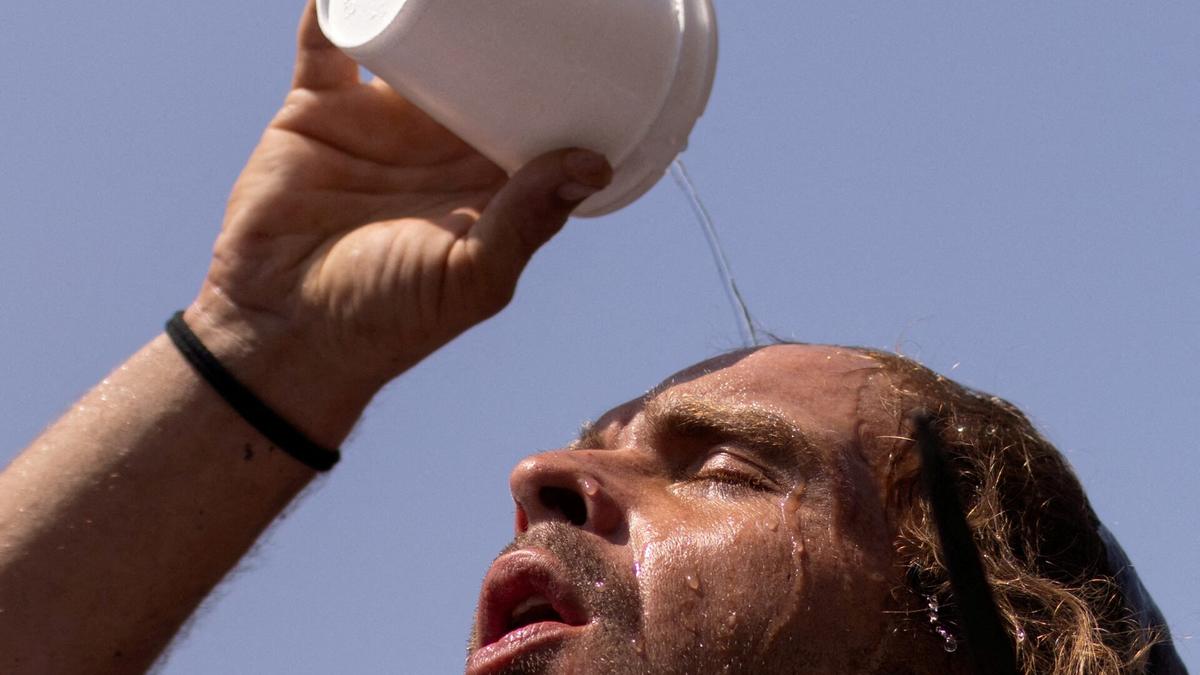
Even in the current energy transition there can be gross disparities between employer and worker. As heat intensifies, some employers are giving ice vests to their migrant workers so they can keep working. That’s reminiscent of coal shovelers in the furnace-like stokeholes of steam ships being immersed in ice-baths on collapse, as historian On Barak has shown.

What does this mean for us?

As Vaclav Smil points out, “every transition to a new energy supply has to be powered by the intensive deployment of existing energies and prime movers”. In fact, Smil argues the idea of the “industrial revolution” is misleading. It was not sudden. Rather, it was “gradual, often uneven”.

History may seem like it unfolds neatly. But it doesn’t at all. In earlier transitions, we see overlaps. Hesitation. Sometimes, more intense use of earlier energy sources. They start as highly localised shifts, depending on available resources, before new technologies spreads along trade routes. Ultimately market forces have driven – or hindered – adoption.

Time is short. But on the plus side, there are market forces now driving the shift to clean energy. Once solar panels and wind turbines are built, sunlight and wind are free. It is the resistance of the old guard – fossil fuel corporations – that is holding us back.

Liz Conor, ARC Future Fellow, La Trobe University

This article is republished from The Conversation under a Creative Commons license. Read the original article.


Source link

Science Tags:alternative Energy, clean energy, Climate change, climate crisis, climate news, energy news, energy transitions, Environment news, fossil fuel energy, global warming, renewable energy

Post navigation

Previous Post: Wet grinder manufacturers in Coimbatore move to other businesses
Next Post: BJP’s Kailash Vijayvargiya To Contest From Indore, Says Will Do Whatever Party Says

Related Posts

  • Science for all: A new type of plant that emits light, but without the genetic engineering this time
    Science for all: A new type of plant that emits light, but without the genetic engineering this time Science
  • Horseshoe crabs, living fossils of the sea, draw endangered species petition
    Horseshoe crabs, living fossils of the sea, draw endangered species petition Science
  • Science quiz | Poisons that became medicines
    Science quiz | Poisons that became medicines Science
  • Artemis mission approaches lunar loop for first flyby since 1972
    Artemis mission approaches lunar loop for first flyby since 1972 Science
  • Did an ancient Vaigai flood contribute to Keezhadi’s abandonment?
    Did an ancient Vaigai flood contribute to Keezhadi’s abandonment? Science
  • Crushed stones beneath our railway tracks? Why?
    Crushed stones beneath our railway tracks? Why? Science

More Related Articles

Karman Line: Where space begins Karman Line: Where space begins Science
If 23andMe goes bust, what happens to its DNA database? If 23andMe goes bust, what happens to its DNA database? Science
fMRI may reveal depression ‘subtypes’ and treatments that could work fMRI may reveal depression ‘subtypes’ and treatments that could work Science
Bumrah’s ball to Rizwan shows energy conservation law in action Bumrah’s ball to Rizwan shows energy conservation law in action Science
Like bronze idols, India’s dino egg fossils risk being sold abroad Like bronze idols, India’s dino egg fossils risk being sold abroad Science
The magpies of the Himalayas The magpies of the Himalayas Science
SiteLock

Archives

  • May 2026
  • April 2026
  • March 2026
  • February 2026
  • January 2026
  • December 2025
  • November 2025
  • October 2025
  • September 2025
  • August 2025
  • July 2025
  • June 2025
  • May 2025
  • April 2025
  • March 2025
  • February 2025
  • January 2025
  • December 2024
  • November 2024
  • October 2024
  • September 2024
  • August 2024
  • July 2024
  • June 2024
  • May 2024
  • April 2024
  • March 2024
  • February 2024
  • January 2024
  • December 2023
  • November 2023
  • October 2023
  • September 2023
  • August 2023
  • July 2023
  • June 2023
  • May 2023
  • April 2023
  • March 2023
  • February 2023
  • January 2023
  • December 2022
  • November 2022
  • October 2022
  • September 2022
  • August 2022
  • July 2022
  • June 2022
  • May 2022

Categories

  • Business
  • Nation
  • Science
  • Sports
  • World

Recent Posts

  • ATS questions 57 in Maharashtra over alleged gangster network links
  • Nicobarese oppose proposal for three wildlife sanctuaries
  • Visakhapatnam Collector calls for inter-departmental synergy to boost investments
  • Kohli’s masterful knock powers Royal Challengers to the top
  • Senior IPS officer Asra Garg posted IGP Intelligence

Recent Comments

  1. RichardClage on UP Teacher Who Asked Students To Slap Muslim Classmate
  2. StevenLek on UP Teacher Who Asked Students To Slap Muslim Classmate
  3. Leonardren on UP Teacher Who Asked Students To Slap Muslim Classmate
  4. NathanQuins on UP Teacher Who Asked Students To Slap Muslim Classmate
  5. Davidgof on UP Teacher Who Asked Students To Slap Muslim Classmate
  • Naomi Osaka Dumped Out Of Wimbledon By Emma Navarro
    Naomi Osaka Dumped Out Of Wimbledon By Emma Navarro Sports
  • SEBI Bans 9 Entities From Market For Generating Illegal Gains Of Rs 21.16 Crore
    SEBI Bans 9 Entities From Market For Generating Illegal Gains Of Rs 21.16 Crore Nation
  • IPL 2026 | SRH and PBKS will strive to return to winning ways
    IPL 2026 | SRH and PBKS will strive to return to winning ways Sports
  • Iran Israel War: Israeli Military asks people in Iran to refrain from using trains as West Asia crisis escalates
    Iran Israel War: Israeli Military asks people in Iran to refrain from using trains as West Asia crisis escalates World
  • Hindenburg shared Adani report with client two months before publishing it: SEBI
    Hindenburg shared Adani report with client two months before publishing it: SEBI Business
  • India to host Foreign Minister-level meetings of BRICS and Quad in May
    India to host Foreign Minister-level meetings of BRICS and Quad in May World
  • Hamas ministry says Israel strike kills three policemen in Gaza
    Hamas ministry says Israel strike kills three policemen in Gaza World
  • Rwanda-backed M23 offensive in South Kivu kills over 400 civilians
    Rwanda-backed M23 offensive in South Kivu kills over 400 civilians World

Editor-in-Chief:
Mohammad Ariff,
MSW, MAJMC, BSW, DTL, CTS, CNM, CCR, CAL, RSL, ASOC.
editor@artifex.news

Associate Editors:
1. Zenellis R. Tuba,
zenelis@artifex.news
2. Haris Daniyel
daniyel@artifex.news

Photograher:
Rohan Das
rohan@artifex.news

Artifex.News offers Online Paid Internships to college students from India and Abroad. Interns will get a PRESS CARD and other online offers.
Send your CV (Subjectline: Paid Internship) to internship@artifex.news

Links:
Associate Journalism
About Us
Privacy Policy

News Links:
Breaking News
World
Nation
Sports
Business
Entertainment
Lifestyle

Registered Office:
72/A, Elliot Road, Kolkata - 700016
Tel: 033-22277777, 033-22172217
Email: office@artifex.news

Editorial Office / News Desk:
No. 13, Mezzanine Floor, Esplanade Metro Rail Station,
12 J. L. Nehru Road, Kolkata - 700069.
(Entry from Gate No. 5)
Tel: 033-46011099, 033-46046046
Email: editor@artifex.news

Copyright © 2023 Artifex.News Newsportal designed by Artifex Infotech.