





Skip to content
  • Facebook
  • X
  • Linkedin
  • WhatsApp
  • YouTube
  • Associate Journalism
  • About Us
  • Privacy Policy
  • 033-46046046
  • editor@artifex.news
Artifex.News

Artifex.News

Stay Connected. Stay Informed.

  • Breaking News
  • World
  • Nation
  • Sports
  • Business
  • Science
  • Entertainment
  • Lifestyle
  • Toggle search form
  • LPG crisis: India needs to electrify heat and win thermal independence
    LPG crisis: India needs to electrify heat and win thermal independence Science
  • Access Denied Sports
  • Manipur Chief Minister’s Apology For Clashes
    Manipur Chief Minister’s Apology For Clashes Nation
  • Mallikarjun Kharge Counters PM Modi’s Attack
    Mallikarjun Kharge Counters PM Modi’s Attack Nation
  • IPL 2026: Where and how to book tickets for the tournament
    IPL 2026: Where and how to book tickets for the tournament Sports
  • On MI’s Shrewd Retention, Ex-KKR Star Says, “Would’ve Given Jasprit Bumrah Rs 25 Crore…”
    On MI’s Shrewd Retention, Ex-KKR Star Says, “Would’ve Given Jasprit Bumrah Rs 25 Crore…” Sports
  • Rupee plunges 13 paise to settle at new record low of 85.87 against U.S. dollar
    Rupee plunges 13 paise to settle at new record low of 85.87 against U.S. dollar Business
  • Ferrari’s Charles Leclerc Wins Italian Grand Prix As Max Verstappen Falters Again
    Ferrari’s Charles Leclerc Wins Italian Grand Prix As Max Verstappen Falters Again Sports
Language learning begins in the womb

Language learning begins in the womb

Posted on May 22, 2026 By admin


By >Josephine Lethbridge , The Conversation 

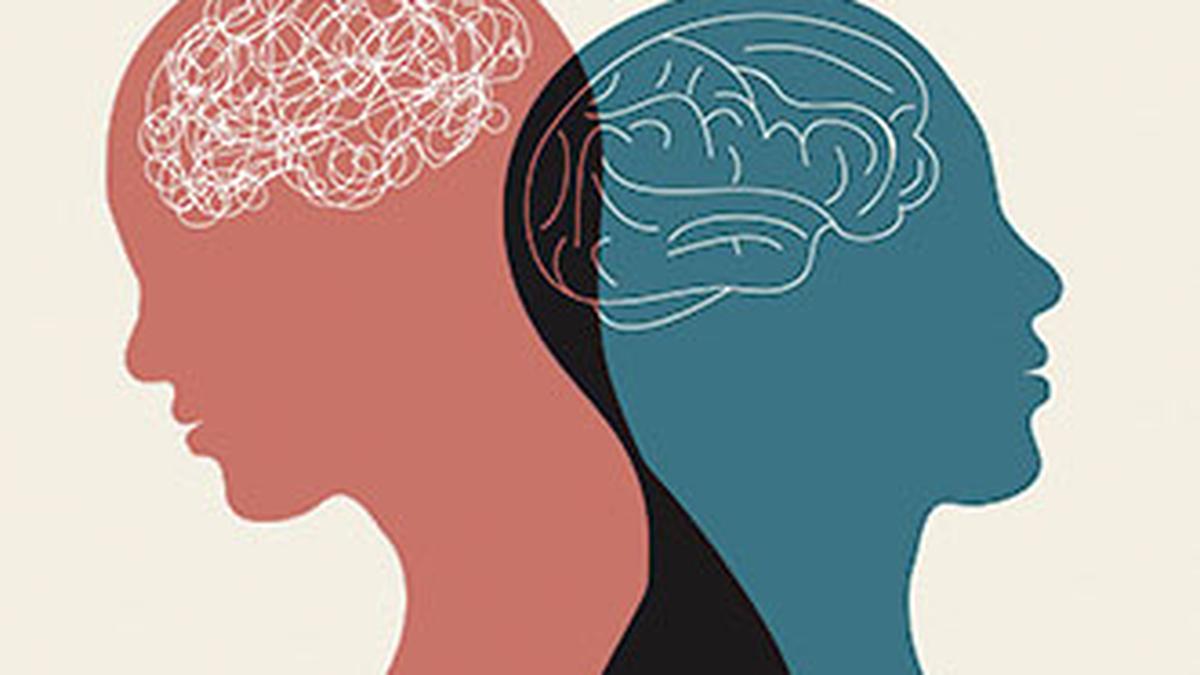
Human foetuses begin to hear sounds outside the womb at about 27 weeks. But whether foetuses can learn from these sounds in ways that shape speech perception and development during infancy has remained unclear.

>New research from the University of Helsinki suggests that humans begin to distinguish between sounds before they are even born. Eino Partanen and colleagues explored how prenatal experiences influence learning. “We wanted to find out what kind of material foetuses can learn in the womb, what kind of neural representations they form,” he said. 

People started to become interested in foetal learning in the 1980s. It was only then that researchers picked up on the widespread anecdotal evidence on the topic. There are >frequent stories of infants apparently recognising and responding to music that was played to them before birth. 

Alexandra Lamont, who specialises in developmental psychology, specifically that of music, explained this. “Sound can be quite clearly heard in the womb,” she said. “Once the necessary brain development has taken place to enable learning, the foetus certainly can learn music or other sounds before birth.”

“This is one reason why newborn infants have a preference for their own mother’s voice, as they have had extended experience with hearing that voice before birth.”

Partanen wanted to prove this on a more detailed level. “Can babies learn from the music, speech, stories that they hear from the womb?” he said. “We were interested in looking at this from a neurophysiological angle.”

In order to find out Partanen and his colleagues used basic sounds. The foetuses in their studies were not played opera or told fairy tales: instead, participating families played a recording of a repeated sound several times a week during pregnancy. This sound was the pseudoword “tatata”. Occasionally this sound was varied with a subtle pitch increment in the middle syllable.

Very soon after birth, researchers compared responses to such sounds to infants who had been exposed to it whilst in the womb, as well as those who had not. They recorded the electrical activity of the brains of the infants using >EEG . They found that the infants who had been exposed reacted much more strongly to the sounds. Furthermore, these infants were capable of discriminating the small pitch differences between them. 

This proves, Partanen said, that “infants are capable of learning the small building blocks of language in the foetal stage. We know that this is much more specific than we thought previously – they respond to subtle changes in verbalisation.”

Can this be developed into any kind of therapy or intervention for infants? Partanen thinks so. Problems such as dyslexia, he thinks, could be approached at a much earlier level. Although there is no way of knowing whether a baby is going to develop dyslexia, with some degree there are factors that you can look into to see whether or not they are at risk. >Dyslexia is partly genetic , for example. In this case, prenatal therapy could be developed for risk groups in order to facilitate learning. 

Dr Lamont cautioned that this, if possible, would be a long way off. “While phonological skills do seem to be a useful treatment for dyslexia in young children,” she explained, “we would be a long way from finding out if prenatal exposure to systematic sounds would be of any benefit.”

Partenen is hopeful though. “Our findings do not mean we can make superbabies!“ he said. “But hope to find out if we could help infants that might have specific deficits from a very early stage.”

This article was originally published at >The Conversation . Read the >original article . 

Published – August 27, 2013 09:52 pm IST


Source link

Science Tags:EEG, foetusus, Language, learning

Post navigation

Previous Post: Albert and Adam rewrite the story of human origins
Next Post: Fake memory implanted in mice with a beam of light

Related Posts

  • Five ISRO technologies transferred to private companies
    Five ISRO technologies transferred to private companies Science
  • COVID-19: anosmia as a marker for susceptible brain damage
    COVID-19: anosmia as a marker for susceptible brain damage Science
  • Could rewiring macrophage metabolism make TB treatments shorter?
    Could rewiring macrophage metabolism make TB treatments shorter? Science
  • How charge-coupled devices revolutionised digital imaging
    How charge-coupled devices revolutionised digital imaging Science
  • The Science Quiz | Spacetime continuum
    The Science Quiz | Spacetime continuum Science
  • Slow consumption is the new cool
    Slow consumption is the new cool Science

More Related Articles

What are carbon credits? – The Hindu What are carbon credits? – The Hindu Science
What Delhi’s wilderness says about the city’s politics What Delhi’s wilderness says about the city’s politics Science
Leprosy spread between red squirrels and people in medieval England: study Leprosy spread between red squirrels and people in medieval England: study Science
The Science Quiz | A brief history of the earth The Science Quiz | A brief history of the earth Science
Where or what is the human mind? Where or what is the human mind? Science
Inside the underground lab in China tasked with solving a physics mystery Inside the underground lab in China tasked with solving a physics mystery Science
SiteLock

Archives

  • May 2026
  • April 2026
  • March 2026
  • February 2026
  • January 2026
  • December 2025
  • November 2025
  • October 2025
  • September 2025
  • August 2025
  • July 2025
  • June 2025
  • May 2025
  • April 2025
  • March 2025
  • February 2025
  • January 2025
  • December 2024
  • November 2024
  • October 2024
  • September 2024
  • August 2024
  • July 2024
  • June 2024
  • May 2024
  • April 2024
  • March 2024
  • February 2024
  • January 2024
  • December 2023
  • November 2023
  • October 2023
  • September 2023
  • August 2023
  • July 2023
  • June 2023
  • May 2023
  • April 2023
  • March 2023
  • February 2023
  • January 2023
  • December 2022
  • November 2022
  • October 2022
  • September 2022
  • August 2022
  • July 2022
  • June 2022
  • May 2022

Categories

  • Business
  • Nation
  • Science
  • Sports
  • World

Recent Posts

  • 42 injured in jallikattu in Perambalur
  • Hundreds rally in Taipei over defence spending cuts
  • Two workers injured in compressor blast at northwest Delhi factory
  • Bruno Fernandes named Premier League player of the season after equalling league assist record
  • Leopard kills three calves near Sathyamangalam Tiger Reserve

Recent Comments

  1. JamesOxick on UP Teacher Who Asked Students To Slap Muslim Classmate
  2. Chrisseart on UP Teacher Who Asked Students To Slap Muslim Classmate
  3. JamesTor on UP Teacher Who Asked Students To Slap Muslim Classmate
  4. Williamirolf on UP Teacher Who Asked Students To Slap Muslim Classmate
  5. Rogershavy on UP Teacher Who Asked Students To Slap Muslim Classmate
  • Delhi IAS Officer Honours Priest, Gives Him His Official Chair, Sparks Row
    Delhi IAS Officer Honours Priest, Gives Him His Official Chair, Sparks Row Nation
  • Is pregnancy-related brain impairment also seen in fish?
    Is pregnancy-related brain impairment also seen in fish? Science
  • Room for optimism: review of Akshat Rathi’s Climate Capitalism
    Room for optimism: review of Akshat Rathi’s Climate Capitalism Business
  • Rohit Sharma A Better No. 6 Option Than Opener vs Australia? Report Makes Startling Claim
    Rohit Sharma A Better No. 6 Option Than Opener vs Australia? Report Makes Startling Claim Sports
  • Access Denied Business
  • Access Denied
    Access Denied Nation
  • Access Denied World
  • Waqf Board Amendment Bill Necessary, Archaeological Body Tells Joint Parliamentary Committee
    Waqf Board Amendment Bill Necessary, Archaeological Body Tells Joint Parliamentary Committee Nation

Editor-in-Chief:
Mohammad Ariff,
MSW, MAJMC, BSW, DTL, CTS, CNM, CCR, CAL, RSL, ASOC.
editor@artifex.news

Associate Editors:
1. Zenellis R. Tuba,
zenelis@artifex.news
2. Haris Daniyel
daniyel@artifex.news

Photograher:
Rohan Das
rohan@artifex.news

Artifex.News offers Online Paid Internships to college students from India and Abroad. Interns will get a PRESS CARD and other online offers.
Send your CV (Subjectline: Paid Internship) to internship@artifex.news

Links:
Associate Journalism
About Us
Privacy Policy

News Links:
Breaking News
World
Nation
Sports
Business
Entertainment
Lifestyle

Registered Office:
72/A, Elliot Road, Kolkata - 700016
Tel: 033-22277777, 033-22172217
Email: office@artifex.news

Editorial Office / News Desk:
No. 13, Mezzanine Floor, Esplanade Metro Rail Station,
12 J. L. Nehru Road, Kolkata - 700069.
(Entry from Gate No. 5)
Tel: 033-46011099, 033-46046046
Email: editor@artifex.news

Copyright © 2023 Artifex.News Newsportal designed by Artifex Infotech.