





Skip to content
  • Facebook
  • X
  • Linkedin
  • WhatsApp
  • YouTube
  • Associate Journalism
  • About Us
  • Privacy Policy
  • 033-46046046
  • editor@artifex.news
Artifex.News

Artifex.News

Stay Connected. Stay Informed.

  • Breaking News
  • World
  • Nation
  • Sports
  • Business
  • Science
  • Entertainment
  • Lifestyle
  • Toggle search form
  • No rethink on FDI curbs in multi-brand retail sector: Piyush Goyal
    No rethink on FDI curbs in multi-brand retail sector: Piyush Goyal Business
  • Access Denied Sports
  • “Kuch Sawaal They Mann Mein”: Anushka Sharma, Virat Kohli Visit Premanand Maharaj
    “Kuch Sawaal They Mann Mein”: Anushka Sharma, Virat Kohli Visit Premanand Maharaj Sports
  • Rajasthan may serve as “living lab” for farm tech companies: CM Bhajan Lal Sharma
    Rajasthan may serve as “living lab” for farm tech companies: CM Bhajan Lal Sharma Nation
  • FIFA World Cup 2026: Caleb Yirenkyi’s stoppage-time goal lifts Ghana over Panama
    FIFA World Cup 2026: Caleb Yirenkyi’s stoppage-time goal lifts Ghana over Panama Sports
  • WWE Royal Rumble 2025 Predictions, Match Card, Preview, Start Time, Location, Date
    WWE Royal Rumble 2025 Predictions, Match Card, Preview, Start Time, Location, Date Sports
  • CBI registers fresh case against Reliance Capital, Anil Ambani
    CBI registers fresh case against Reliance Capital, Anil Ambani Business
  • White House says admiral ordered follow-on strike on alleged drug boat, insists attack was lawful
    White House says admiral ordered follow-on strike on alleged drug boat, insists attack was lawful World
What is a quantum chip?

What is a quantum chip?

Posted on January 9, 2025 By admin


In recent years, the field of quantum computing has been experiencing fast growth, with technological advances and large-scale investments regularly making the news.

The United Nations has designated 2025 as the International Year of Quantum Science and Technology.

The stakes are high – having quantum computers would mean access to tremendous data processing power compared to what we have today. They won’t replace your normal computer, but having this kind of awesome computing power will provide advances in medicine, chemistry, materials science and other fields.

So it’s no surprise that quantum computing is rapidly becoming a global race, and private industry and governments around the world are rushing to build the world’s first full-scale quantum computer. To achieve this, first we need to have stable and scalable quantum processors, or chips.

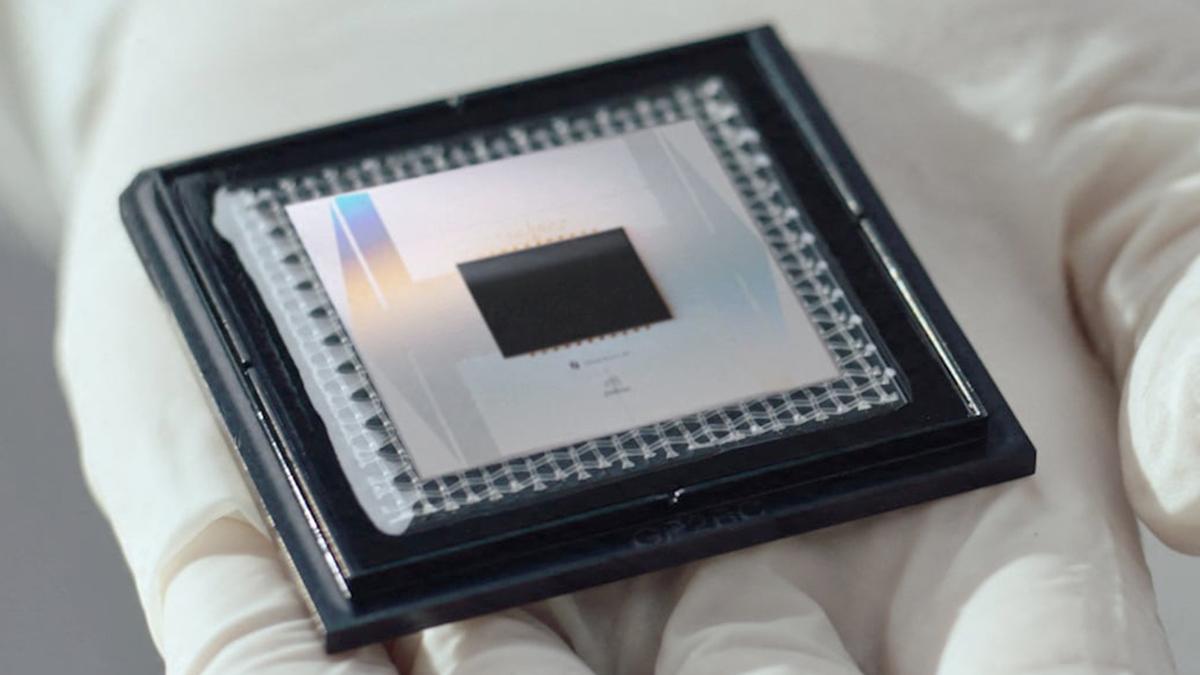
What is a quantum chip?

Everyday computers – like your laptop – are classical computers. They store and process information in the form of binary numbers or bits. A single bit can represent either 0 or 1.

By contrast, the basic unit of a quantum chip is a qubit. A quantum chip is made up of many qubits. These are typically subatomic particles such as electrons or photons, controlled and manipulated by specially designed electric and magnetic fields (known as control signals).

Unlike a bit, a qubit can be placed in a state of 0, 1, or a combination of both, also known as a “superposition state”. This distinct property allows quantum processors to store and process extremely large data sets exponentially faster than even the most powerful classical computer.

There are different ways to make qubits – one can use superconducting devices, semiconductors, photonics (light) or other approaches. Each method has its advantages and drawbacks.

Companies like IBM, Google and QueRa all have roadmaps to drastically scale up quantum processors by 2030.

Industry players that use semiconductors are Intel and Australian companies like Diraq and SQC. Key photonic quantum computer developers include PsiQuantum and Xanadu.

Qubits: quality versus quantity

How many qubits a quantum chip has is actually less important than the quality of the qubits.

A quantum chip made up of thousands of low-quality qubits will be unable to perform any useful computational task.

So, what makes for a quality qubit?

Qubits are very sensitive to unwanted disturbances, also known as errors or noise. This noise can come from many sources, including imperfections in the manufacturing process, control signal issues, changes in temperature, or even just an interaction with the qubit’s environment.

Being prone to errors reduces the reliability of a qubit, known as fidelity. For a quantum chip to stay stable long enough to perform complex computational tasks, it needs high-fidelity qubits.

When researchers compare the performance of different quantum chips, qubit fidelity is one of the crucial parameters they use.

How do we correct the errors?

Fortunately, we don’t have to build perfect qubits.

Over the last 30 years, researchers have designed theoretical techniques which use many imperfect or low-fidelity qubits to encode an abstract “logical qubit”. A logical qubit is protected from errors and, therefore, has very high fidelity. A useful quantum processor will be based on many logical qubits.

Nearly all major quantum chip developers are now putting these theories into practice, shifting their focus from qubits to logical qubits.

In 2024, many quantum computing researchers and companies made great progress on quantum error corrections, including Google, QueRa, IBM and CSIRO.

Quantum chips consisting of over 100 qubits are already available. They are being used by many researchers around the world to evaluate how good the current generation of quantum computers are and how they can be made better in future generations.

For now, developers have only made single logical qubits. It will likely take a few years to figure out how to put several logical qubits together into a quantum chip that can work coherently and solve complex real-world problems.

What will quantum computers be useful for?

A fully functional quantum processor would be able to solve extremely complex problems. This could lead to revolutionary impact in many areas of research, technology and economy.

Quantum computers could help us discover new medicines and advance medical research by finding new connections in clinical trial data or genetics that current computers don’t have enough processing power for.

They could also greatly improve the safety of various systems that use artificial intelligence algorithms, such as banking, military targeting and autonomous vehicles, to name a few.

To achieve all this, we first need to reach a milestone known as quantum supremacy – where a quantum processor solves a problem that would take a classical computer an impractical amount of time to do.

Late last year, Google’s quantum chip Willow finally demonstrated quantum supremacy for a contrived task – a computational problem designed to be hard for classical supercomputers but easy for quantum processors due to their distinct way of working.

Although it didn’t solve a useful real-world problem, it’s still a remarkable achievement and an important step in the right direction that’s taken years of research and development. After all, to run, one must first learn to walk.

What’s on the horizon for 2025 and beyond?

In the next few years, quantum chips will continue to scale up. Importantly, the next generation of quantum processors will be underpinned by logical qubits, able to tackle increasingly useful tasks.

While quantum hardware (that is, processors) has been progressing at a rapid pace, we also can’t overlook an enormous amount of research and development in the field of quantum software and algorithms.

Using quantum simulations on normal computers, researchers have been developing and testing various quantum algorithms. This will make quantum computing ready for useful applications when the quantum hardware catches up.

Building a full-scale quantum computer is a daunting task. It will require simultaneous advancements on many fronts, such as scaling up the number of qubits on a chip, improving the fidelity of the qubits, better error correction, quantum software, quantum algorithms, and several other sub-fields of quantum computing.

After years of remarkable foundational work, we can expect 2025 to bring new breakthroughs in all of the above.

This article is republished from The Conversation under a Creative Commons license. Read the original article here.

Published – January 09, 2025 05:04 pm IST



Source link

Science Tags:data processing, quantum chip, quantum computers, science news, technology news

Post navigation

Previous Post: Viral Video: 41 Days From Champions Trophy, State Of Pakistan Stadiums Amid Row
Next Post: TCS Q3 net profit rises 11.95% to ₹12,380 crore

Related Posts

  • Highly educated professionals are vulnerable to financial cybercrime, finds IIT-Madras study Science
  • The Uncut Diamond: Book explores the life of pioneering physicist and meteorologist Anna Mani
    The Uncut Diamond: Book explores the life of pioneering physicist and meteorologist Anna Mani Science
  • ISRO to triple spacecraft output, launch Chandrayaan-4 in 2028: Chairman
    ISRO to triple spacecraft output, launch Chandrayaan-4 in 2028: Chairman Science
  • Electrifying industrial heat as a path to India’s thermal independence
    Electrifying industrial heat as a path to India’s thermal independence Science
  • Tea drinking across India – The Hindu
    Tea drinking across India – The Hindu Science
  • WhatsApp, training and tenecteplase injection bring heart attack care to rural Punjab
    WhatsApp, training and tenecteplase injection bring heart attack care to rural Punjab Science

More Related Articles

South Asians are missing from global health databases: why this matters and what needs to change South Asians are missing from global health databases: why this matters and what needs to change Science
European court ruling puts cautious Swiss in climate bind European court ruling puts cautious Swiss in climate bind Science
As West Asia war threatens gas supply, remembering a gas grid India never built As West Asia war threatens gas supply, remembering a gas grid India never built Science
ISRO’s SpaDex mission advances lunar exploration, sample return missions and other objectives: ATL ISRO’s SpaDex mission advances lunar exploration, sample return missions and other objectives: ATL Science
Astronomers looking for space gas accidentally find 49 new galaxies Astronomers looking for space gas accidentally find 49 new galaxies Science
What causes nausea? – The Hindu What causes nausea? – The Hindu Science
SiteLock

Archives

  • October 2026
  • September 2026
  • August 2026
  • July 2026
  • June 2026
  • May 2026
  • April 2026
  • March 2026
  • February 2026
  • January 2026
  • December 2025
  • November 2025
  • October 2025
  • September 2025
  • August 2025
  • July 2025
  • June 2025
  • May 2025
  • April 2025
  • March 2025
  • February 2025
  • January 2025
  • December 2024
  • November 2024
  • October 2024
  • September 2024
  • August 2024
  • July 2024
  • June 2024
  • May 2024
  • April 2024
  • March 2024
  • February 2024
  • January 2024
  • December 2023
  • November 2023
  • October 2023
  • September 2023
  • August 2023
  • July 2023
  • June 2023
  • May 2023
  • April 2023
  • March 2023
  • February 2023
  • January 2023
  • December 2022
  • November 2022
  • October 2022
  • September 2022
  • August 2022
  • July 2022
  • June 2022
  • May 2022

Categories

  • Business
  • Nation
  • Science
  • Sports
  • World

Recent Posts

  • AIADMK, BJP leaders slam TVK-led Tamil Nadu government over electricity purchase at high rate
  • Two arrested for attacking security guard with knife in Besant Nagar
  • Women stage silent demonstration at Kathipara against police action on anti-CEC protesters in Delhi
  • DGCA bans specific power banks on flights
  • Saudi Supreme Court sets aside Sri Lankan migrant worker’s death penalty

Recent Comments

  1. RobertTes on UP Teacher Who Asked Students To Slap Muslim Classmate
  2. Manuelret on UP Teacher Who Asked Students To Slap Muslim Classmate
  3. RobertTes on UP Teacher Who Asked Students To Slap Muslim Classmate
  4. RobertTes on UP Teacher Who Asked Students To Slap Muslim Classmate
  5. BrentWes on UP Teacher Who Asked Students To Slap Muslim Classmate
  • Girl, 2, Raped By 50-Year-Old Tenant In UP, Accused Arrested: Cops
    Girl, 2, Raped By 50-Year-Old Tenant In UP, Accused Arrested: Cops Nation
  • Access Denied World
  • Chess Olympiad | Polish women make a habit of beating India
    Chess Olympiad | Polish women make a habit of beating India Sports
  • Access Denied
    Access Denied Nation
  • Armed group in Nigeria kills at least 20 people; exchanges gunfire with police
    Armed group in Nigeria kills at least 20 people; exchanges gunfire with police World
  • Hundreds Of Sea Lions Take Over California Beach Ousting People
    Hundreds Of Sea Lions Take Over California Beach Ousting People World
  • “Marked Their Attendance And Left”: Ex-India Star Slams Rohit Sharma And Co For Skipping Ranji Trophy Round
    “Marked Their Attendance And Left”: Ex-India Star Slams Rohit Sharma And Co For Skipping Ranji Trophy Round Sports
  • Access Denied
    Access Denied Nation

Editor-in-Chief:
Mohammad Ariff,
MSW, MAJMC, BSW, DTL, CTS, CNM, CCR, CAL, RSL, ASOC.
editor@artifex.news

Associate Editors:
1. Zenellis R. Tuba,
zenelis@artifex.news
2. Haris Daniyel
daniyel@artifex.news

Photograher:
Rohan Das
rohan@artifex.news

Associate Journalists
1. Subrata Paul - AN/2020/01
2. Quamruz Zaman - AN/2021/22
3. Ahmed Sha - AN/2021/035
4. Ajay Kumar Shaw - AN/2021/39
5. Tahqiqul Hoda - AN/2021/21

Artifex.News offers Online Paid Internships to college students from India and Abroad. Interns will get a PRESS CARD and other online offers.
Send your CV (Subjectline: Paid Internship) to internship@artifex.news

Links:
Associate Journalism
About Us
Privacy Policy

News Links:
Breaking News
World
Nation
Sports
Business
Entertainment
Lifestyle

Registered Office:
72/A, Elliot Road, Kolkata - 700016
Tel: 033-22277777, 033-22172217
Email: office@artifex.news

Editorial Office / News Desk:
No. 13, Mezzanine Floor, Esplanade Metro Rail Station,
12 J. L. Nehru Road, Kolkata - 700069.
(Entry from Gate No. 5)
Tel: 033-46011099, 033-46046046
Email: editor@artifex.news

Copyright © 2023 Artifex.News Newsportal designed by Artifex Infotech.