


Skip to content
  • Facebook
  • X
  • Linkedin
  • WhatsApp
  • YouTube
  • Associate Journalism
  • About Us
  • Privacy Policy
  • 033-46046046
  • editor@artifex.news
Artifex.News

Artifex.News

Stay Connected. Stay Informed.

  • Breaking News
  • World
  • Nation
  • Sports
  • Business
  • Science
  • Entertainment
  • Lifestyle
  • Toggle search form
  • Markets end lower after scaling record peaks intra-day
    Markets end lower after scaling record peaks intra-day Business
  • Access Denied World
  • Key Conspirator In Bengaluru Cafe Blast Case Arrested By Anti-Terror Agency NIA
    Key Conspirator In Bengaluru Cafe Blast Case Arrested By Anti-Terror Agency NIA Nation
  • “Hit The Wrong Switch”: Nathan Lyon Reveals His Request Led To Floodlight Failure During Adelaide Test
    “Hit The Wrong Switch”: Nathan Lyon Reveals His Request Led To Floodlight Failure During Adelaide Test Sports
  • Access Denied Sports
  • Drones May Deliver Medicines And Groceries In Kolkata’s New Town Soon
    Drones May Deliver Medicines And Groceries In Kolkata’s New Town Soon Nation
  • West Indies vs South Africa, 2nd Test, Live Score Updates
    West Indies vs South Africa, 2nd Test, Live Score Updates Sports
  • Watch | Who is Tim Walz, Kamala Harris’s pick running mate?
    Watch | Who is Tim Walz, Kamala Harris’s pick running mate? World
Tea drinking across India – The Hindu

Tea drinking across India – The Hindu

Posted on October 19, 2024 By admin


 India consumes 540,000 metric tonnes of tea each year

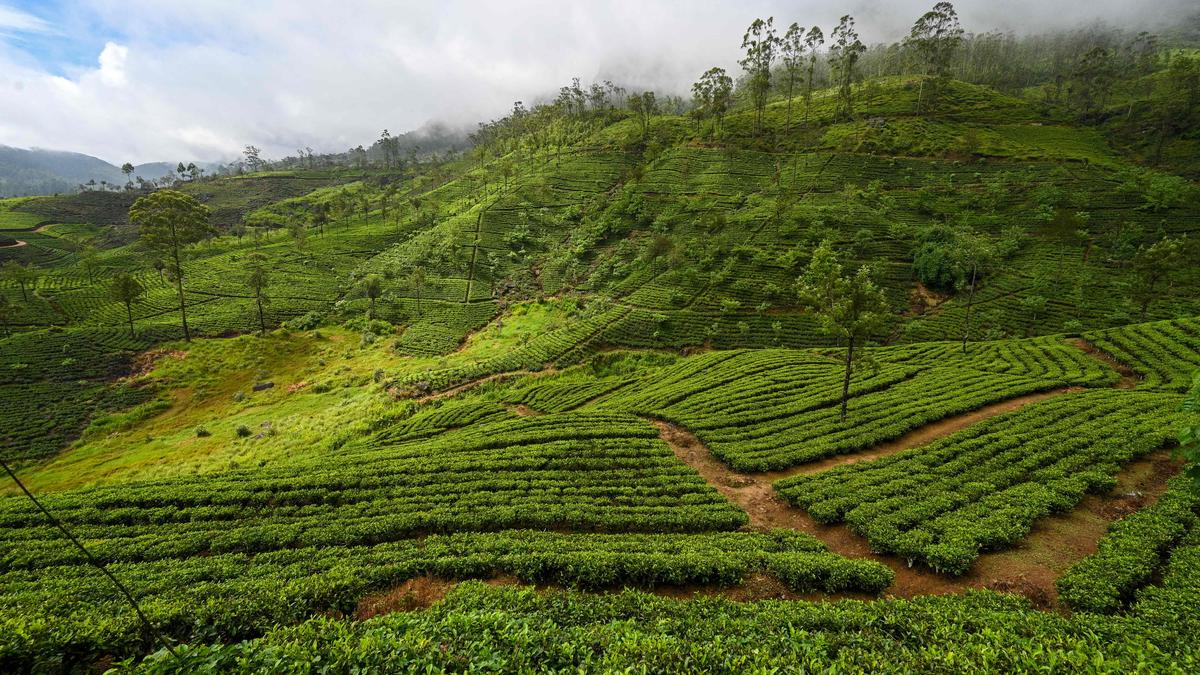
Tea plants came to India from China and Southeastern Asia about three centuries ago, brought here by India by the British colonialists. While experimenting to introduce tea in India, they noticed that tea plants with thicker leaves also grew in Assam, and these, when planted in India, responded very well. (We must add that tea is also grown in some areas in Karnataka, Kerala, and Tamil Nadu, though not in amounts comparable to that in the Northeast). Recently, Uttaranchal and U.P. have also started growing tea. Today, India has the largest total consumption of tea (540,000 metric tonnes of tea, or 620 grams per capita). And India is the world’s fourth largest exporter of tea and generates about $800 million.

According to the National Sample Survey Organization, India consumes 15 times more tea than coffee. In North India, tea has become the main daily drink there, both in urban and rural areas. A cup of it costs just ₹8 to ₹10, affordable for all. In contrast, even in South India (the home for coffee), a cup of tea is Rs.10 while coffee costs ₹15 to ₹20.

Chemical components

Several publications in the journals Food Chemistry and Food Science and Human Wellness have described the chemical molecules in tea leaves. They point out that these leaves are rich in aroma, which gives tea its fragrance. A 2015 paper in the journal Food Science and Human Wellness offers some examples of such aroma-filled compounds. In our daily diet, we have them in carrots, pumpkins, and sweet potatoes. Among the non-volatile examples, we have foodstuffs such as salt, sugar, calcium, and fruits, which are rich in vitamins and minerals.

Tea leaves are also rich in vitamins, and protective compounds that help in improving blood pressure, and cardiovascular health, reducing diabetes risk, improving gut health, alleviating stress and anxiety, improving attention and focus, and improving attention. In these, tea scores better than coffee, since tea has less caffeine, which is a nervous system stimulant. This is also why children are not advised to drink either of these.

The authors of the 2015 paper found that the aroma of tea leaves is due to the presence of carotenoids such as volatile compounds called carotenoids such as lycopene, lutein, and Jasmonate. On the other hand, the taste of food is due to non-volatile compounds such as sugar, salt, iron, and calcium.

In daily food cooked and made at home, these flavours come by using iron, salt, calcium, and sugar on one hand, and vegetables such as carrots, sweet potatoes, and fresh vegetables on the other. In India, the Central Food Technology and Research Institute (CSIR-CFTRI) at Mysuru (and its branches elsewhere), is involved in studying antioxidants, polyphenols, and other health-promoting molecules in Indian food.

As mentioned above, more Indians drink tea rather than coffee. What then are the benefits of drinking tea over coffee? Tea has less caffeine than coffee. Tea has more antioxidants than coffee beans, but some scientists claim that coffee is better against diabetes than tea. So, depending on your taste, you may choose!

Published – October 19, 2024 09:25 pm IST


Source link

Science

Post navigation

Previous Post: Plankton balloon to six times their size to reach ocean surface
Next Post: “Felt Amazing”: Sarfaraz Khan After Smashing Maiden Test Century For India In Bengaluru Test

Related Posts

  • What is ‘Net Zero’, anyway? A short history of a monumental concept
    What is ‘Net Zero’, anyway? A short history of a monumental concept Science
  • RRI technique yields certified randomness with one qubit
    RRI technique yields certified randomness with one qubit Science
  • Storm fears overshadow India coast decades after tsunami
    Storm fears overshadow India coast decades after tsunami Science
  • What is orbital docking?
    What is orbital docking? Science
  • Fossil reveals Cretaceous drama of croc attacking flying reptile
    Fossil reveals Cretaceous drama of croc attacking flying reptile Science
  • What happens if you have a medical emergency onboard the ISS?
    What happens if you have a medical emergency onboard the ISS? Science

More Related Articles

IISc announces distinguished alumni awards for 2023 IISc announces distinguished alumni awards for 2023 Science
Why were the Spain floods so deadly? Why were the Spain floods so deadly? Science
IIT Madras and ISRO develop indigenous aerospace chip for space applications IIT Madras and ISRO develop indigenous aerospace chip for space applications Science
Tamil Nadu: Why is Chennai’s microplastic problem bigger than it looks? | Explained Tamil Nadu: Why is Chennai’s microplastic problem bigger than it looks? | Explained Science
Seeing the magic of artificial intelligence applications in ophthalmology Seeing the magic of artificial intelligence applications in ophthalmology Science
M.S. Swaminathan, the scientist who sliced potatoes M.S. Swaminathan, the scientist who sliced potatoes Science
SiteLock

Archives

  • May 2026
  • April 2026
  • March 2026
  • February 2026
  • January 2026
  • December 2025
  • November 2025
  • October 2025
  • September 2025
  • August 2025
  • July 2025
  • June 2025
  • May 2025
  • April 2025
  • March 2025
  • February 2025
  • January 2025
  • December 2024
  • November 2024
  • October 2024
  • September 2024
  • August 2024
  • July 2024
  • June 2024
  • May 2024
  • April 2024
  • March 2024
  • February 2024
  • January 2024
  • December 2023
  • November 2023
  • October 2023
  • September 2023
  • August 2023
  • July 2023
  • June 2023
  • May 2023
  • April 2023
  • March 2023
  • February 2023
  • January 2023
  • December 2022
  • November 2022
  • October 2022
  • September 2022
  • August 2022
  • July 2022
  • June 2022
  • May 2022

Categories

  • Business
  • Nation
  • Science
  • Sports
  • World

Recent Posts

  • Eggs, shoes hurled at TMC’s Abhishek Banerjee during visit to post-poll violence victims’ families in Bengal
  • Government exempts import duty on cotton till October 30
  • TNGCTA condemns T.N. government’s appointment of IAS officer as Director of Collegiate Education
  • Bus carrying young athletes crashes in Hungary, killing driver and injuring 23
  • Undertrial prisoners entitled to be treated at private hospitals of their choice: Madras High Court

Recent Comments

  1. BarrymoW on UP Teacher Who Asked Students To Slap Muslim Classmate
  2. Darrelldat on UP Teacher Who Asked Students To Slap Muslim Classmate
  3. BarrettNOM on UP Teacher Who Asked Students To Slap Muslim Classmate
  4. BillyTut on UP Teacher Who Asked Students To Slap Muslim Classmate
  5. ManuelBlene on UP Teacher Who Asked Students To Slap Muslim Classmate
  • India saw 92 lakh foreign tourist arrivals in 2023: Economic Survey
    India saw 92 lakh foreign tourist arrivals in 2023: Economic Survey Business
  • BSF Officer’s Calm Talk With Bangladesh Refugees
    BSF Officer’s Calm Talk With Bangladesh Refugees World
  • Access Denied
    Access Denied Nation
  • Access Denied Business
  • Access Denied Sports
  • U.S. President Joe Biden signs law banning Russian uranium imports
    U.S. President Joe Biden signs law banning Russian uranium imports World
  • Access Denied Sports
  • BJP’s Dilip Ghosh Amid Row Over Remarks On Mamata Banerjee
    BJP’s Dilip Ghosh Amid Row Over Remarks On Mamata Banerjee Nation

Editor-in-Chief:
Mohammad Ariff,
MSW, MAJMC, BSW, DTL, CTS, CNM, CCR, CAL, RSL, ASOC.
editor@artifex.news

Associate Editors:
1. Zenellis R. Tuba,
zenelis@artifex.news
2. Haris Daniyel
daniyel@artifex.news

Photograher:
Rohan Das
rohan@artifex.news

Artifex.News offers Online Paid Internships to college students from India and Abroad. Interns will get a PRESS CARD and other online offers.
Send your CV (Subjectline: Paid Internship) to internship@artifex.news

Links:
Associate Journalism
About Us
Privacy Policy

News Links:
Breaking News
World
Nation
Sports
Business
Entertainment
Lifestyle

Registered Office:
72/A, Elliot Road, Kolkata - 700016
Tel: 033-22277777, 033-22172217
Email: office@artifex.news

Editorial Office / News Desk:
No. 13, Mezzanine Floor, Esplanade Metro Rail Station,
12 J. L. Nehru Road, Kolkata - 700069.
(Entry from Gate No. 5)
Tel: 033-46011099, 033-46046046
Email: editor@artifex.news

Copyright © 2023 Artifex.News Newsportal designed by Artifex Infotech.