


Skip to content
  • Facebook
  • X
  • Linkedin
  • WhatsApp
  • YouTube
  • Associate Journalism
  • About Us
  • Privacy Policy
  • 033-46046046
  • editor@artifex.news
Artifex.News

Artifex.News

Stay Connected. Stay Informed.

  • Breaking News
  • World
  • Nation
  • Sports
  • Business
  • Science
  • Entertainment
  • Lifestyle
  • Toggle search form
  • Indonesian authorities find wreckage of missing surveillance plane with 11 on board
    Indonesian authorities find wreckage of missing surveillance plane with 11 on board World
  • Ekya children’s biennale spurs young minds to think about future through art
    Ekya children’s biennale spurs young minds to think about future through art Nation
  • U.S. House passes Bill to aid Ukraine and impose new sanctions on Russia
    U.S. House passes Bill to aid Ukraine and impose new sanctions on Russia World
  • Access Denied Sports
  • Hurricane Rafael becomes a Category 2 storm as it barrels toward Cuba
    Hurricane Rafael becomes a Category 2 storm as it barrels toward Cuba World
  • Duleep Trophy: Sooryavanshi, Kishan take East into the final
    Duleep Trophy: Sooryavanshi, Kishan take East into the final Sports
  • “Didn’t Know Camera Was On Him”: Virat Kohli, Rohit Sharma Chatter On Rishabh Pant Becomes Big Talking Point
    “Didn’t Know Camera Was On Him”: Virat Kohli, Rohit Sharma Chatter On Rishabh Pant Becomes Big Talking Point Sports
  • Access Denied World
New AI model ‘GenCast’ can beat the best traditional weather forecasts

New AI model ‘GenCast’ can beat the best traditional weather forecasts

Posted on December 12, 2024 By admin


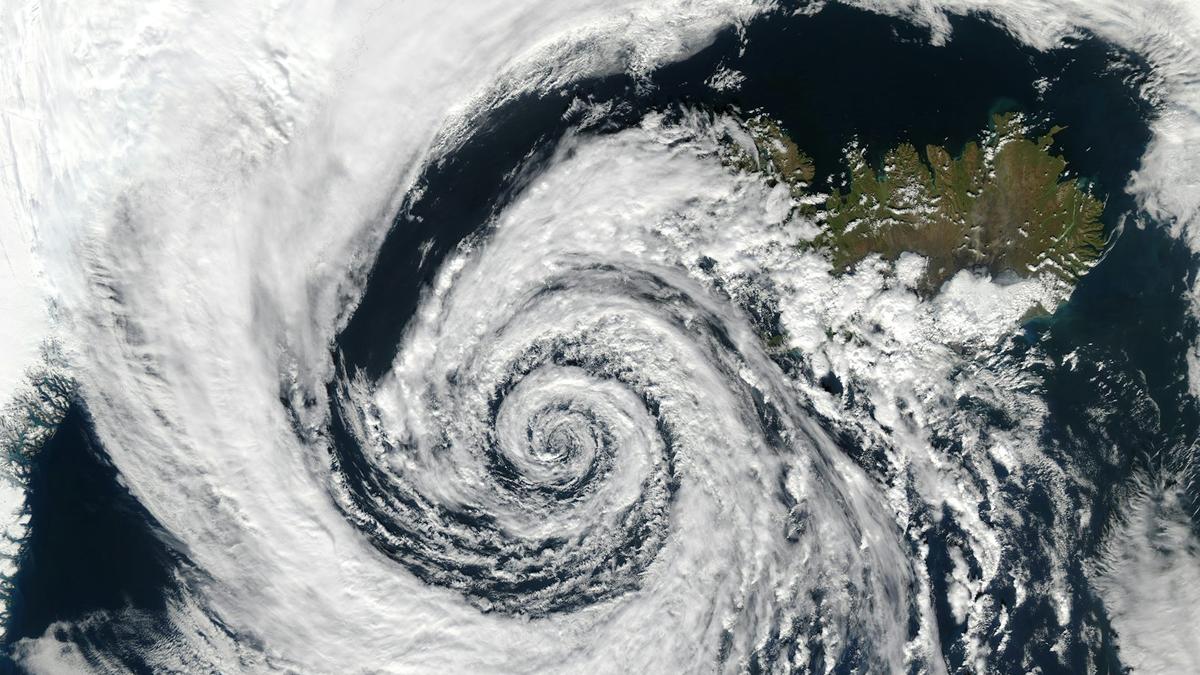
A new machine-learning weather prediction model called GenCast can outperform the best traditional forecasting systems in at least some situations, according to a new paper.
| Photo Credit: NASA/GSFC, MODIS Rapid Response Team, Jacques Descloitres

A new machine-learning weather prediction model called GenCast can outperform the best traditional forecasting systems in at least some situations, according to a paper by Google DeepMind researchers published today in Nature.

Using a diffusion model approach similar to artificial intelligence (AI) image generators, the system generates multiple forecasts to capture the complex behaviour of the atmosphere. It does so with a fraction of the time and computing resources required for traditional approaches.

How weather forecasts work

The weather predictions we use in practice are produced by running multiple numerical simulations of the atmosphere.

Each simulation starts from a slightly different estimate of the current weather. This is because we don’t know exactly what the weather is at this instant everywhere in the world. To know that, we would need sensor measurements everywhere.

These numerical simulations use a model of the world’s atmosphere divided into a grid of three-dimensional blocks. By solving equations describing the fundamental physical laws of nature, the simulations predict what will happen in the atmosphere.

Known as general circulation models, these simulations need a lot of computing power. They are usually run at high-performance supercomputing facilities.

Machine-learning the weather

The past few years have seen an explosion in efforts to produce weather prediction models using machine learning. Typically, these approaches don’t incorporate our knowledge of the laws of nature the way general circulation models do.

Most of these models use some form of neural network to learn patterns in historical data and produce a single future forecast. However, this approach produces predictions that lose detail as they progress into the future, gradually becoming “smoother”. This smoothness is not what we see in real weather systems.

Researchers at Google’s DeepMind AI research lab have just published a paper in Nature describing their latest machine-learning model, GenCast.

GenCast mitigates this smoothing effect by generating an ensemble of multiple forecasts. Each individual forecast is less smooth, and better resembles the complexity observed in nature.

The best estimate of the actual future then comes from averaging the different forecasts. The size of the differences between the individual forecasts indicates how much uncertainty there is.

According to the GenCast paper, this probabilistic approach creates more accurate forecasts than the best numerical weather prediction system in the world – the one at the European Centre for Medium-Range Weather Forecasts.

Generative AI – for weather

GenCast is trained on what is called reanalysis data from the years 1979 to 2018. This data is produced by the kind of general circulation models we talked about earlier, which are additionally corrected to resemble actual historical weather observations to produce a more consistent picture of the world’s weather.

The GenCast model makes predictions of several variables such as temperature, pressure, humidity and wind speed at the surface and at 13 different heights, on a grid that divides the world up into 0.25-degree regions of latitude and longitude.

GenCast is what is called a “diffusion model”, similar to AI image generators. However, instead of taking text and producing an image, it takes the current state of the atmosphere and produces an estimate of what it will be like in 12 hours.

This works by first setting the values of the atmospheric variables 12 hours into the future as random noise. GenCast then uses a neural network to find structures in the noise that are compatible with the current and previous weather variables. An ensemble of multiple forecasts can be generated by starting with different random noise.

Forecasts are run out to 15 days, taking 8 minutes on a single processor called a tensor processor unit (TPU). This is significantly faster than a general circulation model. The training of the model took five days using 32 TPUs.

Machine-learning forecasts could become more widespread in the coming years as they become more efficient and reliable.

However, classical numerical weather prediction and reanalysed data will still be required. Not only are they needed to provide the initial conditions for the machine learning weather forecasts, they also produce the input data to continually fine-tune the machine learning models.

What about the climate?

Current machine learning weather forecasting systems are not appropriate for climate projections, for three reasons.

Firstly, to make weather predictions weeks into the future, you can assume that the ocean, land and sea ice won’t change. This is not the case for climate predictions over multiple decades.

Secondly, weather prediction is highly dependent on the details of the current weather. However, climate projections are concerned with the statistics of the climate decades into the future, for which today’s weather is irrelevant. Future carbon emissions are the greater determinant of the future state of the climate.

Thirdly, weather prediction is a “big data” problem. There are vast amounts of relevant observational data, which is what you need to train a complex machine learning model.

Climate projection is a “small data” problem, with relatively little available data. This is because the relevant physical phenomena (such as sea levels or climate drivers such as the El Niño–Southern Oscillation) evolve much more slowly than the weather.

There are ways to address these problems. One approach is to use our knowledge of physics to simplify our models, meaning they require less data for machine learning.

Another approach is to use physics-informed neural networks to try to fit the data and also satisfy the laws of nature. A third is to use physics to set “ground rules” for a system, then use machine learning to determine the specific model parameters.

Machine learning has a role to play in the future of both weather forecasting and climate projections. However, fundamental physics – fluid mechanics and thermodynamics – will continue to play a crucial role.

This article is republished from The Conversation under a Creative Commons license. Read the original article here.

Published – December 12, 2024 03:19 pm IST


Source link

Science Tags:artificial intelligence, Environment news, GenCast, Machine learning, science news, using AI to predict weather

Post navigation

Previous Post: South Korean Opposition parties submit a new motion to impeach President Yoon over martial law
Next Post: Indian team prepares at The Gabba ahead of third Border-Gavaskar Trophy Test

Related Posts

  • DRDO successfully flight-tests indigenous third-generation MPATGM with top-attack capability
    DRDO successfully flight-tests indigenous third-generation MPATGM with top-attack capability Science
  • How are semiconductors fabricated? | Explained
    How are semiconductors fabricated? | Explained Science
  • Four UN environmental summits fell short in 2024. What happened?
    Four UN environmental summits fell short in 2024. What happened? Science
  • ISRO’s SpaDex mission advances lunar exploration, sample return missions and other objectives: ATL
    ISRO’s SpaDex mission advances lunar exploration, sample return missions and other objectives: ATL Science
  • Spaceflight is reckoning anew with new generation of ‘space planes’”
    Spaceflight is reckoning anew with new generation of ‘space planes’” Science
  • How much do dark matter particles weigh?
    How much do dark matter particles weigh? Science

More Related Articles

Why isn’t one antivenom enough for India? | Explained Why isn’t one antivenom enough for India? | Explained Science
Girl’s death in China reveals human cost of unregulated science Girl’s death in China reveals human cost of unregulated science Science
Zambia find shows humans have built with wood for 476,000 years Zambia find shows humans have built with wood for 476,000 years Science
Hiccups explained: Small sounds, big answers Hiccups explained: Small sounds, big answers Science
Why is whale vomit worth millions? Why is whale vomit worth millions? Science
The case to rethink India’s influenza vaccination strategy The case to rethink India’s influenza vaccination strategy Science
SiteLock

Archives

  • October 2026
  • September 2026
  • August 2026
  • July 2026
  • June 2026
  • May 2026
  • April 2026
  • March 2026
  • February 2026
  • January 2026
  • December 2025
  • November 2025
  • October 2025
  • September 2025
  • August 2025
  • July 2025
  • June 2025
  • May 2025
  • April 2025
  • March 2025
  • February 2025
  • January 2025
  • December 2024
  • November 2024
  • October 2024
  • September 2024
  • August 2024
  • July 2024
  • June 2024
  • May 2024
  • April 2024
  • March 2024
  • February 2024
  • January 2024
  • December 2023
  • November 2023
  • October 2023
  • September 2023
  • August 2023
  • July 2023
  • June 2023
  • May 2023
  • April 2023
  • March 2023
  • February 2023
  • January 2023
  • December 2022
  • November 2022
  • October 2022
  • September 2022
  • August 2022
  • July 2022
  • June 2022
  • May 2022

Categories

  • Business
  • Nation
  • Science
  • Sports
  • World

Recent Posts

  • Man killed as lorry rams two-wheeler in Tiruvannamalai
  • Koder House fire under fresh scrutiny amid probe into synagogue arson
  • Govt proposes BS-VII emission norms from April 2029; adds brake, tyre, battery-durability rules
  • Kochi Mayor elected to global climate alliance’s board
  • Centre sets up panel to study problems of sugarcane farmers

Recent Comments

  1. RobertTes on UP Teacher Who Asked Students To Slap Muslim Classmate
  2. HermanTwito on UP Teacher Who Asked Students To Slap Muslim Classmate
  3. WalterBoumn on UP Teacher Who Asked Students To Slap Muslim Classmate
  4. HermanTwito on UP Teacher Who Asked Students To Slap Muslim Classmate
  5. JamesWhazy on UP Teacher Who Asked Students To Slap Muslim Classmate
  • Take Measures To Manage Heatwaves In 6th Phase: Poll Body To Officers
    Take Measures To Manage Heatwaves In 6th Phase: Poll Body To Officers Nation
  • Access Denied Sports
  • Iron Mirage claims the Y. Shanker Rao Memorial Deccan Colts Championship
    Iron Mirage claims the Y. Shanker Rao Memorial Deccan Colts Championship Sports
  • Rupee rises 28 paise to close at 82.71 against U.S. dollar
    Rupee rises 28 paise to close at 82.71 against U.S. dollar Business
  • Astronomers Discover How Massive Black Holes Create Their Own Meals
    Astronomers Discover How Massive Black Holes Create Their Own Meals World
  • Europe is the fastest-warming continent, at nearly twice the average global rate, report says
    Europe is the fastest-warming continent, at nearly twice the average global rate, report says World
  • Tokshakhana corruption case | Pak court suspends 14-year jail term of Imran Khan and his wife
    Tokshakhana corruption case | Pak court suspends 14-year jail term of Imran Khan and his wife World
  • Bankers laud RBI’s focus on disinflation
    Bankers laud RBI’s focus on disinflation Business

Editor-in-Chief:
Mohammad Ariff,
MSW, MAJMC, BSW, DTL, CTS, CNM, CCR, CAL, RSL, ASOC.
editor@artifex.news

Associate Editors:
1. Zenellis R. Tuba,
zenelis@artifex.news
2. Haris Daniyel
daniyel@artifex.news

Photograher:
Rohan Das
rohan@artifex.news

Associate Journalists
1. Subrata Paul - AN/2020/01
2. Quamruz Zaman - AN/2021/22
3. Ahmed Sha - AN/2021/035
4. Ajay Kumar Shaw - AN/2021/39
5. Tahqiqul Hoda - AN/2021/21

Artifex.News offers Online Paid Internships to college students from India and Abroad. Interns will get a PRESS CARD and other online offers.
Send your CV (Subjectline: Paid Internship) to internship@artifex.news

Links:
Associate Journalism
About Us
Privacy Policy

News Links:
Breaking News
World
Nation
Sports
Business
Entertainment
Lifestyle

Registered Office:
72/A, Elliot Road, Kolkata - 700016
Tel: 033-22277777, 033-22172217
Email: office@artifex.news

Editorial Office / News Desk:
No. 13, Mezzanine Floor, Esplanade Metro Rail Station,
12 J. L. Nehru Road, Kolkata - 700069.
(Entry from Gate No. 5)
Tel: 033-46011099, 033-46046046
Email: editor@artifex.news

Copyright © 2023 Artifex.News Newsportal designed by Artifex Infotech.