



Skip to content
  • Facebook
  • X
  • Linkedin
  • WhatsApp
  • YouTube
  • Associate Journalism
  • About Us
  • Privacy Policy
  • 033-46046046
  • editor@artifex.news
Artifex.News

Artifex.News

Stay Connected. Stay Informed.

  • Breaking News
  • World
  • Nation
  • Sports
  • Business
  • Science
  • Entertainment
  • Lifestyle
  • Toggle search form
  • Access Denied
    Access Denied Nation
  • Access Denied World
  • PM Modi After “Terrorists Attacks” On Israel
    PM Modi After “Terrorists Attacks” On Israel World
  • India’s Predicted XI vs Australia, 3rd Test: Rohit Sharma In Focus But ‘One Change’ On Cards
    India’s Predicted XI vs Australia, 3rd Test: Rohit Sharma In Focus But ‘One Change’ On Cards Sports
  • Moscow attack turns spotlight on uneasy Tajikistan
    Moscow attack turns spotlight on uneasy Tajikistan World
  • What Supreme Court Told Centre On Extending COVID-19 Schemes To All Orphans
    What Supreme Court Told Centre On Extending COVID-19 Schemes To All Orphans Nation
  • Malayalam Actor Vinayakan Charged For “Rude Behaviour” At Hyderabad Airport
    Malayalam Actor Vinayakan Charged For “Rude Behaviour” At Hyderabad Airport Nation
  • Libyan armed groups, authorities reach deal on security in Tripoli
    Libyan armed groups, authorities reach deal on security in Tripoli World
As sun nears peak of solar cycle, small satellites are paying the price

As sun nears peak of solar cycle, small satellites are paying the price

Posted on November 20, 2024 By admin


Last week, three tiny Australian satellites from Curtin University’s Binar Space Program burned up in Earth’s atmosphere. That was always going to happen. In fact, Binar means “fireball” in the Noongar language of the First Nations people of Perth.

When a satellite is in low Earth orbit (2,000 km or less), it experiences orbital decay as it drags closer and closer to the surface, eventually burning up.

But these cube satellites (CubeSats), known as Binar-2, 3 and 4, entered the atmosphere much sooner than originally planned. They only lasted for two months – a third of what was expected. This significantly reduced valuable time for science and testing new systems.

The reason for their untimely demise? Our Sun has kicked into high gear, and the Binar satellites are far from the only casualty. Recent high solar activity has been causing an unexpected headache for satellite operators in the last few years, and it’s only increasing.

Why is the Sun so active?

Solar activity includes phenomena such as sunspots, solar flares and solar wind – the stream of charged particles that flows toward Earth.

This activity is a product of the Sun’s ever-changing magnetic field, and approximately every 11 years, it completely flips. At the midpoint of this cycle, solar activity is at its highest.

While this cycle is known, specific solar activity is challenging to predict – the dynamics are complex and solar forecasting is in its infancy.

In the last few months, indicators of solar activity were more than one and a half times higher than predictions for this point in the current cycle, labelled solar cycle 25.

The impact of space weather

Space weather refers to the environmental effects that originate from outside our atmosphere (mostly the Sun). It affects us on Earth in a variety of noticeable and unnoticeable ways.

The most obvious is the presence of auroras. In the past few months, auroras have been visible far more intensely and closer to the equator than in the last two decades. This is a direct result of the increased solar activity.

Space weather, and solar activity in particular, also creates additional challenges for satellites and satellite operators.

Higher solar activity means more solar flares and stronger solar wind – resulting in a higher flux of charged particles that can damage or disrupt electrical components on satellites.

It also means an increase in ionising radiation, resulting in a higher dose for astronauts and pilots, and potential disruptions to long-distance radio communications.

But for satellites in low Earth orbit, the most consistent effect of solar activity is that the extra energy gets absorbed into the outer atmosphere, causing it to balloon outward.

As a result, all satellites less than 1,000 km from Earth experience a significant increase in atmospheric drag. This is a force that disrupts their orbit and causes them to fall towards the planet’s surface.

Notable satellites in this region include the International Space Station and the Starlink constellation. These satellites have thrusters to counteract this effect, but these corrections can be expensive.

Low Earth orbit also contains many university satellites, such as the Binar CubeSats. Cube satellites are rarely equipped with tools that can adjust their altitude, so they’re entirely at the mercy of space weather.

What happened to Binar?

The Binar Space Program is a satellite research program operating out of Curtin University. It aims to advance our understanding of the Solar System and lower the barrier for operating in space.

The program began operations with its first satellite, Binar-1, in September 2021. This was less than a year into solar cycle 25 when solar activity was relatively low.

In these conditions, the ten-centimetre cube satellite started at an altitude of 420 km and survived a full 364 days in orbit.

The program’s follow-up mission – Binar-2, 3, and 4 – were three equally sized CubeSats. However, they were expected to last approximately six months owing to the extra surface area from new deployable solar arrays and a forecast increase in solar activity.

Instead, they only made it to two months before burning up. While cube satellite missions are relatively cheap, the premature ending of a mission will always be costly. This is even more true for commercial satellites, highlighting the need for more accurate space weather forecasting.

The good news is the Sun will calm down again. Despite the current unexpectedly high solar activity, it will likely slow down by 2026, and is expected to return to a solar minimum in 2030.

While this was not an explicit goal of the mission, the Binar Space Program has now poignantly demonstrated the dramatic effects of solar activity on space operations.

While the untimely loss of Binar-2, 3 and 4 was unfortunate, work has already begun on future missions. They are expected to launch into far more forgiving space weather.

Kyle McMullan is a PhD candidate in aerospace engineering, Curtin University. This article is republished from The Conversation.

Published – November 20, 2024 07:45 am IST



Source link

Science

Post navigation

Previous Post: Weeks after elephant deaths in Madhya Pradesh’s BTR, Bandhavgarh vet transferred
Next Post: Ukraine Will Lose If US Cuts Military Funding, Says President Zelensky

Related Posts

  • If antibiotics are becoming less effective, why not combine them?
    If antibiotics are becoming less effective, why not combine them? Science
  • Two studies conducted by Bengaluru scientists explore how attention and eye movements are linked
    Two studies conducted by Bengaluru scientists explore how attention and eye movements are linked Science
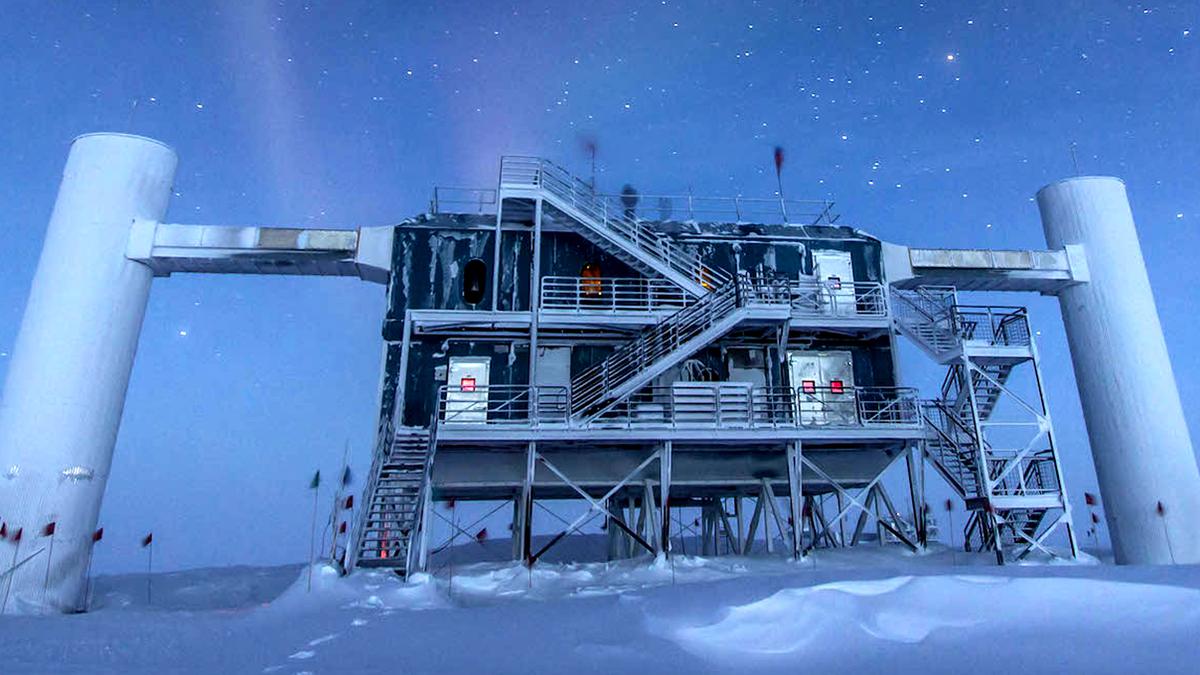
  • What is it? IceCube: The big, chill neutrino-spotter
    What is it? IceCube: The big, chill neutrino-spotter Science
  • Newborn gas planets may be surprisingly flat: new study
    Newborn gas planets may be surprisingly flat: new study Science
  • In breakthrough, cheap aluminium may replace costly catalysts in pharma
    In breakthrough, cheap aluminium may replace costly catalysts in pharma Science
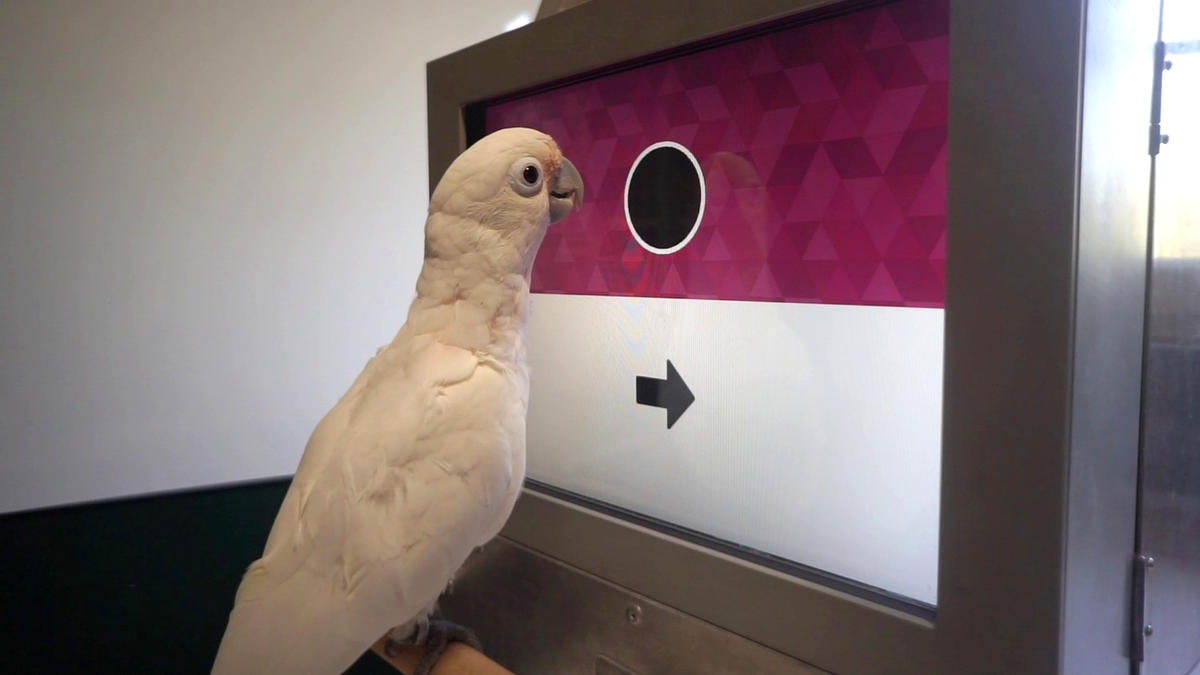
  • Do animals understand death? Scientists are asking cockatoos for answers
    Do animals understand death? Scientists are asking cockatoos for answers Science

More Related Articles

18% hike for Department of Space in Union Budget, lion’s share for development of space technologies 18% hike for Department of Space in Union Budget, lion’s share for development of space technologies Science
Inside the underground lab in China tasked with solving a physics mystery Inside the underground lab in China tasked with solving a physics mystery Science
Trump moves to shut down NASA missions that measure carbon dioxide and plant health Trump moves to shut down NASA missions that measure carbon dioxide and plant health Science
ISRO chief Somnath says space agency prefers woman fighter test pilots for its crewed mission, possible in future ISRO chief Somnath says space agency prefers woman fighter test pilots for its crewed mission, possible in future Science
What makes Skyroot’s Vikram-1 launch unique? | Explained What makes Skyroot’s Vikram-1 launch unique? | Explained Science
M.P. Parameswaran, renowned nuclear scientist and CPI(M) theorist, dies at 92 M.P. Parameswaran, renowned nuclear scientist and CPI(M) theorist, dies at 92 Science
SiteLock

Archives

  • October 2026
  • September 2026
  • August 2026
  • July 2026
  • June 2026
  • May 2026
  • April 2026
  • March 2026
  • February 2026
  • January 2026
  • December 2025
  • November 2025
  • October 2025
  • September 2025
  • August 2025
  • July 2025
  • June 2025
  • May 2025
  • April 2025
  • March 2025
  • February 2025
  • January 2025
  • December 2024
  • November 2024
  • October 2024
  • September 2024
  • August 2024
  • July 2024
  • June 2024
  • May 2024
  • April 2024
  • March 2024
  • February 2024
  • January 2024
  • December 2023
  • November 2023
  • October 2023
  • September 2023
  • August 2023
  • July 2023
  • June 2023
  • May 2023
  • April 2023
  • March 2023
  • February 2023
  • January 2023
  • December 2022
  • November 2022
  • October 2022
  • September 2022
  • August 2022
  • July 2022
  • June 2022
  • May 2022

Categories

  • Business
  • Nation
  • Science
  • Sports
  • World

Recent Posts

  • AIADMK, BJP leaders slam TVK-led Tamil Nadu government over electricity purchase at high rate
  • Women stage silent demonstration at Kathipara against police action on anti-CEC protesters in Delhi
  • DGCA bans specific power banks on flights
  • Saudi Supreme Court sets aside Sri Lankan migrant worker’s death penalty
  • Nedumbassery accident: CPI(M) stages protest march to police station over ‘indifference’ in handling of case

Recent Comments

  1. RobertTes on UP Teacher Who Asked Students To Slap Muslim Classmate
  2. Manuelret on UP Teacher Who Asked Students To Slap Muslim Classmate
  3. RobertTes on UP Teacher Who Asked Students To Slap Muslim Classmate
  4. RobertTes on UP Teacher Who Asked Students To Slap Muslim Classmate
  5. BrentWes on UP Teacher Who Asked Students To Slap Muslim Classmate
  • Sri Lanka’s Parliament begins debate on controversial bill on judges’ retirement age
    Sri Lanka’s Parliament begins debate on controversial bill on judges’ retirement age World
  • Russia strikes Ukraine capital with missiles and drones, wounds five
    Russia strikes Ukraine capital with missiles and drones, wounds five World
  • Access Denied Sports
  • Russia says West trying to ‘block’ Ukraine peace talks
    Russia says West trying to ‘block’ Ukraine peace talks World
  • Ukrainian drones batter Russian oil facilities, set more oil tankers ablaze
    Ukrainian drones batter Russian oil facilities, set more oil tankers ablaze World
  • Access Denied Sports
  • Pakistan NA Speaker Ayaz Sadiq suspends five security officials following arrest of Opposition lawmakers
    Pakistan NA Speaker Ayaz Sadiq suspends five security officials following arrest of Opposition lawmakers World
  • 4th T20I: Sanju Samson’s Weakness Against Raw Pace, Finishing Woes In Focus
    4th T20I: Sanju Samson’s Weakness Against Raw Pace, Finishing Woes In Focus Sports

Editor-in-Chief:
Mohammad Ariff,
MSW, MAJMC, BSW, DTL, CTS, CNM, CCR, CAL, RSL, ASOC.
editor@artifex.news

Associate Editors:
1. Zenellis R. Tuba,
zenelis@artifex.news
2. Haris Daniyel
daniyel@artifex.news

Photograher:
Rohan Das
rohan@artifex.news

Associate Journalists
1. Subrata Paul - AN/2020/01
2. Quamruz Zaman - AN/2021/22
3. Ahmed Sha - AN/2021/035
4. Ajay Kumar Shaw - AN/2021/39
5. Tahqiqul Hoda - AN/2021/21

Artifex.News offers Online Paid Internships to college students from India and Abroad. Interns will get a PRESS CARD and other online offers.
Send your CV (Subjectline: Paid Internship) to internship@artifex.news

Links:
Associate Journalism
About Us
Privacy Policy

News Links:
Breaking News
World
Nation
Sports
Business
Entertainment
Lifestyle

Registered Office:
72/A, Elliot Road, Kolkata - 700016
Tel: 033-22277777, 033-22172217
Email: office@artifex.news

Editorial Office / News Desk:
No. 13, Mezzanine Floor, Esplanade Metro Rail Station,
12 J. L. Nehru Road, Kolkata - 700069.
(Entry from Gate No. 5)
Tel: 033-46011099, 033-46046046
Email: editor@artifex.news

Copyright © 2023 Artifex.News Newsportal designed by Artifex Infotech.