


When I was in middle school, my biology teacher showed our class the sci-fi movie “Star Trek III: The Search for Spock.”
The plot drew me in, with its depiction of the “Genesis Project” – a new technology that transformed a dead alien world into one brimming with life.
After watching the movie, my teacher asked us to write an essay about such technology. Was it realistic? Was it ethical? And to channel our inner Spock: Was it logical? This assignment had a huge impact on me.
Fast-forward to today, and I’m an engineer and professor developing technologies to extend the human presence beyond Earth.
For example: I’m working on advanced propulsion systems to take spacecraft beyond Earth’s orbit. I’m helping to develop lunar construction technologies to support NASA’s goal of long-term human presence on the Moon. And I’ve been on a team that showed how to 3D-print habitats on Mars.
To sustain people beyond Earth will take a lot of time, energy and imagination. But engineers and scientists have started to chip away at the many challenges.
A partial checklist: Food, water, shelter, air
After the Moon, the next logical place for humans to live beyond Earth is Mars.
But is it possible to terraform Mars – that is, transform it to resemble the Earth and support life? Or is that just the musings of science fiction?
To live on Mars, humans will need liquid water, food, shelter and an atmosphere with enough oxygen to breathe and thick enough to retain heat and protect against radiation from the Sun.
But the Martian atmosphere is almost all carbon dioxide, with virtually no oxygen. And it’s very thin – only about 1% as dense as the Earth’s.
The less dense an atmosphere, the less heat it can hold on to. Earth’s atmosphere is thick enough to retain enough heat to sustain life by what’s known as the greenhouse effect.
But on Mars, the atmosphere is so slight that the nighttime temperature drops routinely to 150 degrees below zero Fahrenheit (-101 degrees Celsius).
So what’s the best way to give Mars an atmosphere?
Although Mars has no active volcanoes now – at least as far as we know – scientists could trigger volcanic eruptions via nuclear explosions. The gases trapped deep in a volcano would be released and then drift into the atmosphere. But that scheme is a bit harebrained, because the explosions would also introduce deadly radioactive material into the air.
A better idea: Redirecting water-rich comets and asteroids to crash into Mars. That too would release gases from below the planet’s surface into the atmosphere while also releasing the water found in the comets. NASA has already demonstrated that it is possible to redirect asteroids – but relatively large ones, and lots of them, are needed to make a difference.
Making Mars cozy
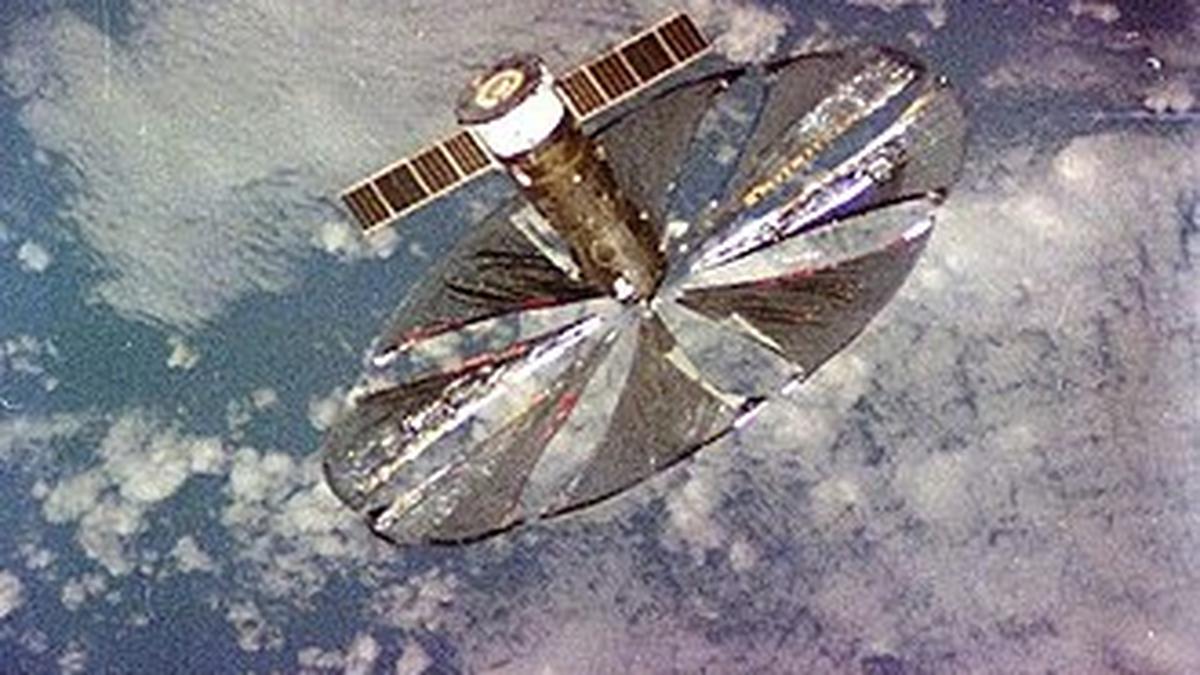
There are numerous ways to heat up the planet. For instance, gigantic mirrors, built in space and placed in orbit around Mars, could reflect sunlight to the surface and warm it up.
One recent study proposed that Mars colonists could spread aerogel, an ultralight solid material, on the ground. The aerogel would act as insulation and trap heat. This could be done all over Mars, including the polar ice caps, where the aerogel could melt the existing ice to make liquid water.
To grow food, you need soil. On Earth, soil is composed of five ingredients: minerals, organic matter, living organisms, gases and water.
But Mars is covered in a blanket of loose, dustlike material called regolith. Think of it as Martian sand. The regolith contains few nutrients, not enough for healthy plant growth, and it hosts some nasty chemicals called perchlorates, used on Earth in fireworks and explosives.
Cleaning up the regolith and turning it into something viable wouldn’t be easy. What the alien soil needs is some Martian fertilizer, maybe made by adding extremophiles to it – hardy microbes imported from Earth that can survive even the harshest conditions. Genetically engineered organisms are also a possibility.
Through photosynthesis, these organisms would begin converting carbon dioxide to oxygen. Eventually, as Mars became more life-friendly to Earthlike organisms, colonists could introduce more complex plants and even animals.
Providing oxygen, water and food in the right proportions is extraordinarily complex. On Earth, scientists have tried to simulate this in Biosphere 2, a closed-off ecosystem featuring ocean, tropical and desert habitats. Although all of Biosphere 2’s environments are controlled, even there scientists struggle to get the balance right. Mother Nature really knows what she is doing.
A house on Mars
Buildings could be 3D-printed; initially, they would need to be pressurized and protected until Mars acquired Earthlike temperatures and air. NASA’s Moon-to-Mars Planetary Autonomous Construction Technologies program is researching how to do exactly this.
There are many more challenges. For example, unlike Earth, Mars has no magnetosphere, which protects a planet from solar wind and cosmic radiation. Without a magnetic field, too much radiation gets through for living things to stay healthy. There are ways to create a magnetic field, but so far the science is highly speculative.
In fact, all of the technologies I’ve described are far beyond current capabilities at the scale needed to terraform Mars. Developing them would take enormous amounts of research and money, probably much more than possible in the near term. Although the Genesis device from “Star Trek III” could terraform a planet in a matter of minutes, terraforming Mars would take centuries or even millennia.
And there are a lot of ethical questions to resolve before people get started on turning Mars into another Earth. Is it right to make such drastic permanent changes to another planet?
If this all leaves you disappointed, don’t be. As scientists create innovations to terraform Mars, we’ll also use them to make life better on Earth. Remember the technology we’re developing to print 3D habitats on Mars? Right now, I’m part of a group of scientists and engineers employing that very same technology to print homes here on Earth – which will help address the world’s housing shortage.
This article is republished from The Conversation under a Creative Commons license. Read the original article.