



Skip to content
  • Facebook
  • X
  • Linkedin
  • WhatsApp
  • YouTube
  • Associate Journalism
  • About Us
  • Privacy Policy
  • 033-46046046
  • editor@artifex.news
Artifex.News

Artifex.News

Stay Connected. Stay Informed.

  • Breaking News
  • World
  • Nation
  • Sports
  • Business
  • Science
  • Entertainment
  • Lifestyle
  • Toggle search form
  • Masato claims the H.H. Sri Chamaraja Wadiyar Memorial Trophy
    Masato claims the H.H. Sri Chamaraja Wadiyar Memorial Trophy Sports
  • Aryna Sabalenka Ousts No.1 Iga Swiatek To Reach Cincinnati Final Against Jessica Pegula
    Aryna Sabalenka Ousts No.1 Iga Swiatek To Reach Cincinnati Final Against Jessica Pegula Sports
  • Access Denied Sports
  • World’s Most Powerful Passports Of 2025 Declared, Indian Passport Weakens
    World’s Most Powerful Passports Of 2025 Declared, Indian Passport Weakens World
  • Champions Trophy 2025 Live: Focus On Playing XI As India Take On Bangladesh
    Champions Trophy 2025 Live: Focus On Playing XI As India Take On Bangladesh Sports
  • Access Denied
    Access Denied Nation
  • Access Denied
    Access Denied Nation
  • NASA’s Artemis II moonship returns home to its launch site after historic voyage
    NASA’s Artemis II moonship returns home to its launch site after historic voyage Science
TB: gene editing could add new power to a 100-year-old vaccine

TB: gene editing could add new power to a 100-year-old vaccine

Posted on August 14, 2024 By admin


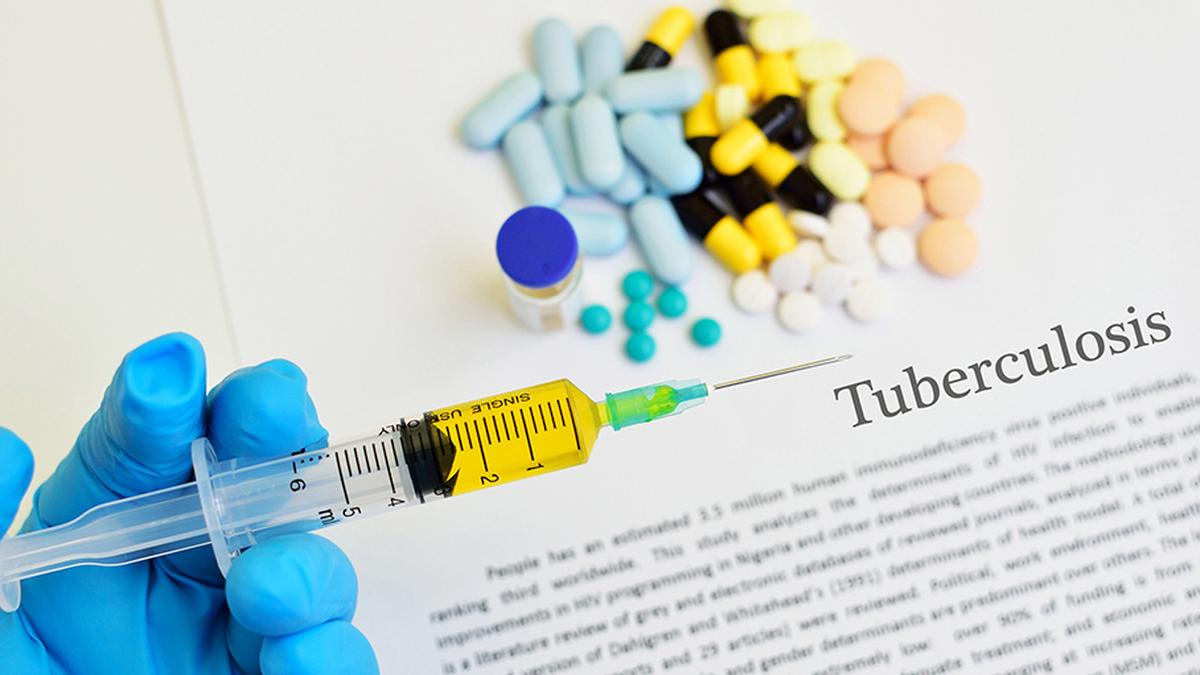
Tuberculosis dates back more than 9,000 years. It is the most infectious bacterial disease and in 2022 10.6 million people fell ill with it.
| Photo Credit: Getty Images/iStockphoto

Tuberculosis dates back more than 9,000 years. It is the most infectious bacterial disease and in 2022 10.6 million people fell ill with it. Of these 23% occurred in Africa.

The only vaccine against tuberculosis, the Bacillus Calmette-Guérin (BCG) vaccine, is more than 100 years old and is primarily effective for infants and young children.

Researchers at the University of the Witwatersrand School of Pathology have made a significant breakthrough in vaccine development by gene-editing the BCG to make it more effective.

Mice vaccinated with the modified BCG vaccine were better able to limit tuberculosis growth in their lungs than mice that had received the original vaccine.

Microbiologist Bavesh Kana, one of the lead researchers, explains to Nadine Dreyer from The Conversation Africa the science behind this breakthrough and the potential it holds for other vaccines.

How do vaccines work?


Vaccines primarily work by mimicking dangerous infectious agents. You want your immune system to recognise the vaccine as an “invader” and then mount an immune response to it. But you don’t want the invasive agent to make you sick.

To understand how vaccines work, it helps to look at how the immune system works, because vaccines harness the natural activity of your immune system.

The immune system: There are about 100 trillion bacteria and viruses in the gastrointestinal tract.

The proteins and sugars on the surface of bacteria, viruses or other disease-causing pathogens have different shapes to any of the ones in the human body. These markers are pathogen-associated molecular patterns, commonly known as PAMPs. Think of the spikes on coronavirus.

So, your immune system quickly recognises the invaders. And the body fights back with a complex chain of events involving many different types of white blood cells working together. See video below on how the immune system works.

One type of white blood cell is able to make antibodies to fight the invaders. These antibodies can stick to the proteins or sugars on the bacteria’s surface, and this kills the bacteria or disables them. They have to be exactly the right shape, a bit like a key fitting a door. These white blood cells are known as B-cells.

Producing antibodies of the right shape can take several days. By this time there could be billions of disease-causing bacteria in your body.

Once the right cells are activated, they quickly divide and turn into a production line, making masses of antibodies that stick to the invading agents and disable them.

Eventually, your body gets rid of all the invaders and you recover.

Antibodies remain in the blood, and some white blood cells may also become memory cells for specific bacteria in case they invade the body again.

So with this stored arsenal of tools the immune system will respond quickly to future invasions.

Vaccines: Vaccines work in the same way as the immune system. They contain weakened or dead bacteria or viruses or even just a few proteins or sugars from the surface. This is enough to convince the immune system that a real invader has entered the body.

So the same process takes place as when real bacteria or viruses invade our bodies, except you don’t get ill afterwards. Vaccines are engineered to look like pathogens but are made in such a way that they do not make you sick.

When you do encounter the real agent, you have immunological memory, because your body has been exposed to something that looks very similar.

And that immunological memory allows you to withstand the infection or even prevent establishment of full infection, or to manage the infection without getting too sick.

How did you go about modifying the TB vaccine?


TB vaccines are very challenging to develop. The bacterium that causes the disease is complex. It is also proficient at evading the human immune system, which is why there is only one vaccine that has been developed against the disease in 100 years.

Our laboratory does a lot of TB research and for a long time we’ve been interested in the cell wall of these bacteria. We noticed that the cell wall has a small chemical decoration on the surface and that chemical decoration allows the bacteria to hide an important marker (PAMP), called the NOD-1 ligand, from the immune system.

Both the tuberculosis and the live bacteria used in the BCG vaccine are able to hide the NOD-1 ligand from the immune system, making it harder for the body to detect them.

We thought that modifying the BCG bacterium so it cannot hide this NOD-1 ligand might lead to a new, more effective vaccine.

To investigate this possibility we turned to CRISPR, a gene editing technology that allows scientists to modify DNA.

We used CRISPR to develop a modified version of the BCG bacterium which is unable to hide its NOD-1 ligand.

Mice vaccinated with the modified BCG vaccine were better able to limit tuberculosis growth in their lungs than mice that had received the original vaccine.

Further studies will be needed to modify the vaccine for use in humans.

What happens now?


Our findings offer a new candidate vaccine in the fight against tuberculosis.

With some novel vaccine candidates in the pipeline, we can finally begin to address this devastating illness adequately.

This work is very exciting because it demonstrates that gene editing is a powerful way to develop vaccines and may help develop more effective vaccines for other diseases in the future.

Bavesh Kana is the Head of the Centre of Excellence for Biomedical TB Research at the University of the Witwatersrand. This article is republished from The Conversation.


Source link

Science Tags:gene editing, gene editing to treat TB, science news, tuberculosis, vaccine for tb

Post navigation

Previous Post: Why Was Vinesh Phogat Case Verdict Delayed? Here’s What Lawyer Told Court
Next Post: What would it take to turn Mars into a life-friendly planet like the earth?

Related Posts

  • IIT Madras and ISRO develop indigenous aerospace chip for space applications
    IIT Madras and ISRO develop indigenous aerospace chip for space applications Science
  • Failure of atomic clock cripples ISRO’s NavIC system
    Failure of atomic clock cripples ISRO’s NavIC system Science
  • A comprehensive immunisation schedule for adult women is now ready
    A comprehensive immunisation schedule for adult women is now ready Science
  • SpaceX Starship launch aborted on pad at last moment
    SpaceX Starship launch aborted on pad at last moment Science
  • Google DeepMind unveils next generation of drug discovery AI model
    Google DeepMind unveils next generation of drug discovery AI model Science
  • How will AlphaFold 3 change life sciences research?
    How will AlphaFold 3 change life sciences research? Science

More Related Articles

What is ethical hacking? – The Hindu What is ethical hacking? – The Hindu Science
How does air pollution affect the brain? How does air pollution affect the brain? Science
Can nations save the shorebird that flies 30,000 km a year? Can nations save the shorebird that flies 30,000 km a year? Science
Vaccine for dengue may be available commercially by mid-2026  Vaccine for dengue may be available commercially by mid-2026  Science
Google claims first ‘verifiable’ quantum advantage for Willow chip Google claims first ‘verifiable’ quantum advantage for Willow chip Science
The Israel model, and Indian realities The Israel model, and Indian realities Science
SiteLock

Archives

  • October 2026
  • September 2026
  • August 2026
  • July 2026
  • June 2026
  • May 2026
  • April 2026
  • March 2026
  • February 2026
  • January 2026
  • December 2025
  • November 2025
  • October 2025
  • September 2025
  • August 2025
  • July 2025
  • June 2025
  • May 2025
  • April 2025
  • March 2025
  • February 2025
  • January 2025
  • December 2024
  • November 2024
  • October 2024
  • September 2024
  • August 2024
  • July 2024
  • June 2024
  • May 2024
  • April 2024
  • March 2024
  • February 2024
  • January 2024
  • December 2023
  • November 2023
  • October 2023
  • September 2023
  • August 2023
  • July 2023
  • June 2023
  • May 2023
  • April 2023
  • March 2023
  • February 2023
  • January 2023
  • December 2022
  • November 2022
  • October 2022
  • September 2022
  • August 2022
  • July 2022
  • June 2022
  • May 2022

Categories

  • Business
  • Nation
  • Science
  • Sports
  • World

Recent Posts

  • India’s IT exports: Deliver the code, chase the cash
  • Is Wetland Authority accountable to government or construction companies, asks Anbumani
  • TCS looks to quantum computing to solve complex ‘what if’ problems
  • AIADMK, BJP leaders slam TVK-led Tamil Nadu government over electricity purchase at high rate
  • Two arrested for attacking security guard with knife in Besant Nagar

Recent Comments

  1. RobertTes on UP Teacher Who Asked Students To Slap Muslim Classmate
  2. Manuelret on UP Teacher Who Asked Students To Slap Muslim Classmate
  3. RobertTes on UP Teacher Who Asked Students To Slap Muslim Classmate
  4. RobertTes on UP Teacher Who Asked Students To Slap Muslim Classmate
  5. BrentWes on UP Teacher Who Asked Students To Slap Muslim Classmate
  • Leopard Enters House’s Garden in Rajasthan, Pounces On Pet Dog
    Leopard Enters House’s Garden in Rajasthan, Pounces On Pet Dog Nation
  • Pakistan’s Asim Munir conferred with Saudi Arabia’s highest civilian honour
    Pakistan’s Asim Munir conferred with Saudi Arabia’s highest civilian honour World
  • Fan Invades Ranji Trophy Match To Meet Rohit Sharma. India Captain Does This. Video
    Fan Invades Ranji Trophy Match To Meet Rohit Sharma. India Captain Does This. Video Sports
  • Bill Gates flags off 1st Indian Independence Day celebration in Seattle area, describes India as ‘global leader’
    Bill Gates flags off 1st Indian Independence Day celebration in Seattle area, describes India as ‘global leader’ World
  • Access Denied
    Access Denied Nation
  • Agents of death: Sudan’s Rapid Support Forces
    Agents of death: Sudan’s Rapid Support Forces World
  • BJP Leader Ashok Chavan Says Batenge To Katenge Slogan Not In Good Taste
    BJP Leader Ashok Chavan Says Batenge To Katenge Slogan Not In Good Taste Nation
  • Joe Biden On Hezbollah Chief’s Killing
    Joe Biden On Hezbollah Chief’s Killing World

Editor-in-Chief:
Mohammad Ariff,
MSW, MAJMC, BSW, DTL, CTS, CNM, CCR, CAL, RSL, ASOC.
editor@artifex.news

Associate Editors:
1. Zenellis R. Tuba,
zenelis@artifex.news
2. Haris Daniyel
daniyel@artifex.news

Photograher:
Rohan Das
rohan@artifex.news

Associate Journalists
1. Subrata Paul - AN/2020/01
2. Quamruz Zaman - AN/2021/22
3. Ahmed Sha - AN/2021/035
4. Ajay Kumar Shaw - AN/2021/39
5. Tahqiqul Hoda - AN/2021/21

Artifex.News offers Online Paid Internships to college students from India and Abroad. Interns will get a PRESS CARD and other online offers.
Send your CV (Subjectline: Paid Internship) to internship@artifex.news

Links:
Associate Journalism
About Us
Privacy Policy

News Links:
Breaking News
World
Nation
Sports
Business
Entertainment
Lifestyle

Registered Office:
72/A, Elliot Road, Kolkata - 700016
Tel: 033-22277777, 033-22172217
Email: office@artifex.news

Editorial Office / News Desk:
No. 13, Mezzanine Floor, Esplanade Metro Rail Station,
12 J. L. Nehru Road, Kolkata - 700069.
(Entry from Gate No. 5)
Tel: 033-46011099, 033-46046046
Email: editor@artifex.news

Copyright © 2023 Artifex.News Newsportal designed by Artifex Infotech.