Skip to content
  • Facebook
  • X
  • Linkedin
  • WhatsApp
  • YouTube
  • Associate Journalism
  • About Us
  • Privacy Policy
  • 033-46046046
  • editor@artifex.news
Artifex.News

Artifex.News

Stay Connected. Stay Informed.

  • Breaking News
  • World
  • Nation
  • Sports
  • Business
  • Science
  • Entertainment
  • Lifestyle
  • Toggle search form
  • Boy, 16, Kills Father For “Thrashing” Mother During Quarrel In Delhi: Cops
    Boy, 16, Kills Father For “Thrashing” Mother During Quarrel In Delhi: Cops Nation
  • In A First For Kerala, Wife Succeeds IAS Husband As Chief Secretary
    In A First For Kerala, Wife Succeeds IAS Husband As Chief Secretary Nation
  • Virat Kohli’s Glorious T20 World Cup Streak Ends, Does A Forgettable First With 5th Single Digit Score
    Virat Kohli’s Glorious T20 World Cup Streak Ends, Does A Forgettable First With 5th Single Digit Score Sports
  • Smriti Irani’s “Courtiers” Swipe At Congress Leader’s “Nari Shakti” Remarks
    Smriti Irani’s “Courtiers” Swipe At Congress Leader’s “Nari Shakti” Remarks Nation
  • Access Denied
    Access Denied Nation
  • Geetika Srivastava Gets Charge Of Indian High Commission In Islamabad
    Geetika Srivastava Gets Charge Of Indian High Commission In Islamabad Nation
  • Access Denied Sports
  • Access Denied Sports
Data gaps beyond India are holding monsoon forecasts back | Analysis

Data gaps beyond India are holding monsoon forecasts back | Analysis

Posted on July 19, 2024 By admin


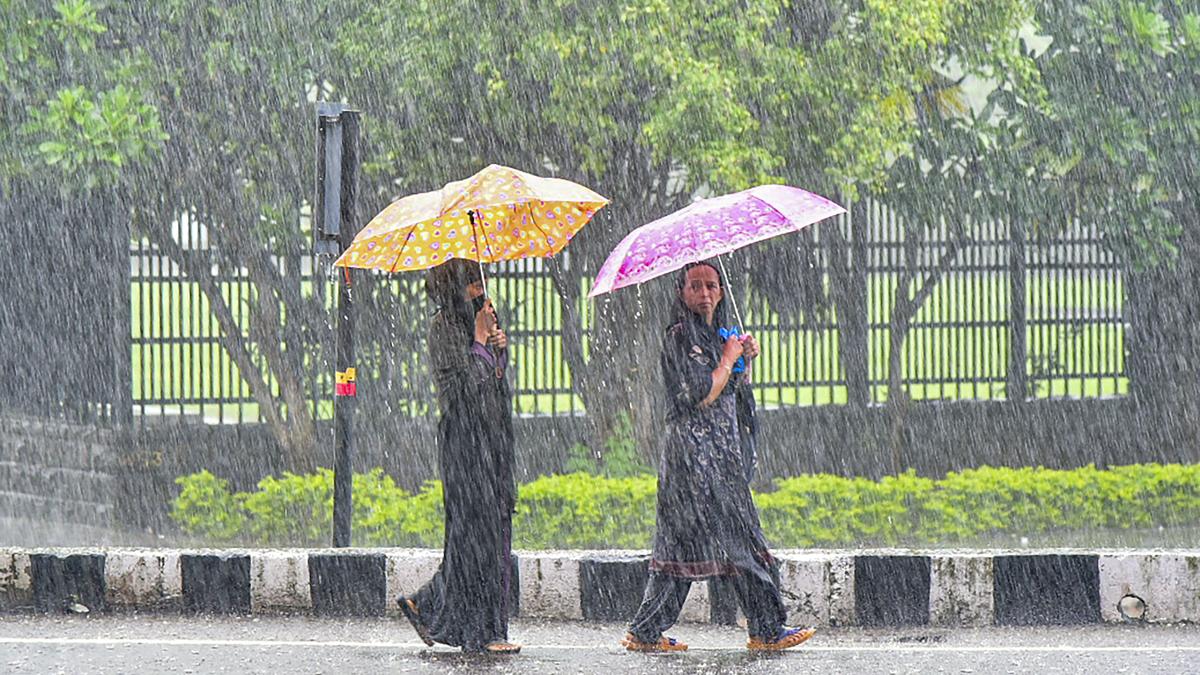
Pedestrians walk on a road amid heavy monsoon rains in Navi Mumbai, July 13, 2024.
| Photo Credit: PTI

We are in the middle of the monsoon season of 2024. The monsoon onset happened on time on May 30 but its evolution thus far has sprung some surprises. The distribution of rainfall looks as patchy as ever, albeit with some unexpected patterns. The seasonal outlook by the India Meteorological Department (IMD) has predicted a normal to above-normal amount of rainfall based on the expectation that a La Niña appears to be likely. But this La Niña appears to be playing truant so far.

After the on-time onset, the northward movement of the monsoon trough seemed to be quite rapid. But then the trough stalled and produced a fairly dry June for large swaths of the country. Even the entire stretch of the Western Ghats received below-normal rainfall levels into July. An unusual pattern of excess rain stretching from south to north persists to this day, with dry patches over large parts of Uttar Pradesh, Bihar, Jharkhand, and Odisha, as well as northwestern India into Jammu & Kashmir.

A useful index with disclaimers

I have used this analogy before and it still works well. As the Sun crosses into the Northern Hemisphere and starts warming the Indian subcontinent like a popcorn kettle, monsoon systems pop like kernels of corn in the kettle. The temperature inside the kettle will be essentially uniform but kernels will still pop randomly, here and there.

These kernels are like the rainfall: its patchy pattern is visible on day-to-day data as well as data averaged over the whole season and even over a whole decade.

However, the convenience of using the ‘all India monsoon rainfall’ index for providing seasonal outlooks — as the IMD does — is undermined by the uncertainty India’s farmers face at the local levels. Our forecasts of rain days or weeks ahead of a given date are getting better but they concomitantly increase the demand for and value of even more accurate and hyperlocal forecasts.

This demand is not only from farmers but also water managers and energy companies, among others. We need a broader perspective of the monsoon circulation to help understand where the limitations exist and how they can be resolved.

The circulation beyond India

People know the summer monsoon as the “southwest monsoon” because the winds sweep in from the southwest over the Arabian Sea into mainland India, across the Western Ghats. The western edge of the winds graze the African highlands, and some experts have often argued that they are critical for steering the southwesterly winds. The active Bay of Bengal, which is full of convective events, can be expected to ‘pull’ the winds towards India as well.

Convection in the atmosphere refers to rain events that release condensation heat.

The heating over West Asia and even the dust from the deserts there contribute to the monsoon circulation and its variability, as well as the changes it is experiencing due to global warming. Pakistan is very much a part of the monsoon circulation and it experiences high rainfall variability. This is because the edges of the monsoon circulation tend to be highly variable.

The land encompassed by the Himalayan foothills, and thus Nepal and Bhutan as well as the eastern edge of the Bay of Bengal (including Myanmar), is also involved in regulating the monsoon and the transfer of its heat to the Indian subcontinent. Bangladesh is of course ensconced between Northeast India and mainland India. We don’t pay attention to the role of heating over Bangladesh or the ocean-land-atmosphere dynamics that creates the beautiful monsoon and its heartbreaking vagaries every year.

The heating centres over the subcontinent are very strong and they maintain a sustained demand for moisture to sustain the convection centers. Indeed, the circulation that sweeps the oceans and the subcontinent can’t be represented accurately in rainfall models unless we capture all the heating centres from Pakistan and West Asia in the west to Myanmar in the east, and the Indian Ocean from about 10º south to its northern edge against the subcontinent.

Detail gaps beyond India’s borders

As hard as the IMD and its labs are working to improve their monsoon forecasting abilities at all timescales, their efforts are also undermined by a lack of rainfall and other weather data over parts of the subcontinent beyond India. Satellites can help to some extent but the amount of data available in near real-time to initiate forecasts is often quite inadequate.

These rainfall models are global for most subcontinent-scale forecasts even though the IMD also develops regional model forecasts, at the levels of cities, and at the national scale. The global models ingest data about the oceans and the planetary atmosphere to initiate forecasts and the volume of data can appear to be large and adequate — but this is often not the case.

Monitoring the whole subcontinent

India has been fortunate enough to have a rainfall monitoring network since the 19th century, and the advantages are now bearing fruit with investments in forecasting infrastructure. At this point, we need a few important steps to reach the next level in forecast accuracy. This is also essential to sustain continuous economic growth for India, especially in terms of food, water, and energy security.

In fact, even our national security depends heavily on weather and climate forecasts — for India as well as for the country’s more climate-vulnerable neighbors. Debilitating natural disasters can quickly turn into national security concerns, especially with some neighbors having to seek aid from non-allies.

India does share its forecasts with some countries but it may benefit more by extending this strategy to also establish a broad network to monitor weather and climate across the subcontinent. Improved forecasts for the subcontinent will make everybody safe and less vulnerable. This can only mean better opportunities for safety for all, including food, water, and energy, as well as better health.

Raghu Murtugudde is a professor, IIT Bombay, and emeritus professor, University of Maryland.



Source link

Science Tags:convective events, India Meteorological Department, India monsoon 2024, India monsoon forecast, monsoon forecast, southwest monsoons

Post navigation

Previous Post: Trump urges unity after assassination attempt while proposing sweeping populist agenda in RNC finale
Next Post: On Past Conflicts With Gautam Gambhir, Virat Kohli’s Clear Message To BCCI

Related Posts

  • Why do microwave ovens sometimes overheat water?
    Why do microwave ovens sometimes overheat water? Science
  • This century, heat waves are moving slower and lasting longer
    This century, heat waves are moving slower and lasting longer Science
  • Education: Why India needs to radically think its doctoral education programmes
    Education: Why India needs to radically think its doctoral education programmes Science
  • Archaeologists unearth 3,000-year-old priestly tomb in northern Peru
    Archaeologists unearth 3,000-year-old priestly tomb in northern Peru Science
  • SpaceX launches its mega Starship rocket on fifth test flight
    SpaceX launches its mega Starship rocket on fifth test flight Science
  • Australian scientists discover new ‘lucifer’ bee with devil-like horns
    Australian scientists discover new ‘lucifer’ bee with devil-like horns Science

More Related Articles

New genus of jumping spiders ‘Tenkana’ discovered in south India New genus of jumping spiders ‘Tenkana’ discovered in south India Science
Science for all newsletter Did fire change the landscape of Tasmania with aboriginal migration? Science for all newsletter Did fire change the landscape of Tasmania with aboriginal migration? Science
What role does Arctic sea ice play in Indian monsoon? What role does Arctic sea ice play in Indian monsoon? Science
India sets up its first diabetes biobank India sets up its first diabetes biobank Science
What caused Morocco’s earthquake? A geologist studying the Atlas mountains explains What caused Morocco’s earthquake? A geologist studying the Atlas mountains explains Science
‘Ghost particles’ signature can track where spent nuclear fuel goes ‘Ghost particles’ signature can track where spent nuclear fuel goes Science
SiteLock

Archives

  • October 2026
  • September 2026
  • August 2026
  • July 2026
  • June 2026
  • May 2026
  • April 2026
  • March 2026
  • February 2026
  • January 2026
  • December 2025
  • November 2025
  • October 2025
  • September 2025
  • August 2025
  • July 2025
  • June 2025
  • May 2025
  • April 2025
  • March 2025
  • February 2025
  • January 2025
  • December 2024
  • November 2024
  • October 2024
  • September 2024
  • August 2024
  • July 2024
  • June 2024
  • May 2024
  • April 2024
  • March 2024
  • February 2024
  • January 2024
  • December 2023
  • November 2023
  • October 2023
  • September 2023
  • August 2023
  • July 2023
  • June 2023
  • May 2023
  • April 2023
  • March 2023
  • February 2023
  • January 2023
  • December 2022
  • November 2022
  • October 2022
  • September 2022
  • August 2022
  • July 2022
  • June 2022
  • May 2022

Categories

  • Business
  • Nation
  • Science
  • Sports
  • World

Recent Posts

  • AIADMK, BJP leaders slam TVK-led Tamil Nadu government over electricity purchase at high rate
  • Two arrested for attacking security guard with knife in Besant Nagar
  • Women stage silent demonstration at Kathipara against police action on anti-CEC protesters in Delhi
  • DGCA bans specific power banks on flights
  • Saudi Supreme Court sets aside Sri Lankan migrant worker’s death penalty

Recent Comments

  1. RobertTes on UP Teacher Who Asked Students To Slap Muslim Classmate
  2. Manuelret on UP Teacher Who Asked Students To Slap Muslim Classmate
  3. RobertTes on UP Teacher Who Asked Students To Slap Muslim Classmate
  4. RobertTes on UP Teacher Who Asked Students To Slap Muslim Classmate
  5. BrentWes on UP Teacher Who Asked Students To Slap Muslim Classmate
  • What Is Hybrid Pitch? The Innovation That Is All Set To Make Its IPL Debut
    What Is Hybrid Pitch? The Innovation That Is All Set To Make Its IPL Debut Sports
  • Access Denied Sports
  • Varun Chakaravarthy’s dip in form: Analysis of what went wrong for India’s T20 star spinner
    Varun Chakaravarthy’s dip in form: Analysis of what went wrong for India’s T20 star spinner Sports
  • Starlink to conduct security, technical demo runs in Mumbai on October 30-31
    Starlink to conduct security, technical demo runs in Mumbai on October 30-31 Business
  • Access Denied Sports
  • Shinning Path and Preview please
    Shinning Path and Preview please Sports
  • Access Denied World
  • Senator Marco Rubio introduces U.S.-India Defense Cooperation Act
    Senator Marco Rubio introduces U.S.-India Defense Cooperation Act World

Editor-in-Chief:
Mohammad Ariff,
MSW, MAJMC, BSW, DTL, CTS, CNM, CCR, CAL, RSL, ASOC.
editor@artifex.news

Associate Editors:
1. Zenellis R. Tuba,
zenelis@artifex.news
2. Haris Daniyel
daniyel@artifex.news

Photograher:
Rohan Das
rohan@artifex.news

Associate Journalists
1. Subrata Paul - AN/2020/01
2. Quamruz Zaman - AN/2021/22
3. Ahmed Sha - AN/2021/035
4. Ajay Kumar Shaw - AN/2021/39
5. Tahqiqul Hoda - AN/2021/21

Artifex.News offers Online Paid Internships to college students from India and Abroad. Interns will get a PRESS CARD and other online offers.
Send your CV (Subjectline: Paid Internship) to internship@artifex.news

Links:
Associate Journalism
About Us
Privacy Policy

News Links:
Breaking News
World
Nation
Sports
Business
Entertainment
Lifestyle

Registered Office:
72/A, Elliot Road, Kolkata - 700016
Tel: 033-22277777, 033-22172217
Email: office@artifex.news

Editorial Office / News Desk:
No. 13, Mezzanine Floor, Esplanade Metro Rail Station,
12 J. L. Nehru Road, Kolkata - 700069.
(Entry from Gate No. 5)
Tel: 033-46011099, 033-46046046
Email: editor@artifex.news

Copyright © 2023 Artifex.News Newsportal designed by Artifex Infotech.