




In a scene from The Man Who Knew Infinity (2015), a biopic of the mathematician Srinivasa Ramanujan, G.H. Hardy (played by Jeremy Irons) asks Ramanujan (Dev Patel), “How did you know that theorem?” “It came to me,” Ramanujan says. The scene brought to life a famous aspect of Ramanujan’s mathematical prowess: he just knew the answers to complicated problems and often didn’t explain how he derived them.
Could his biology have given him this amazing ability?
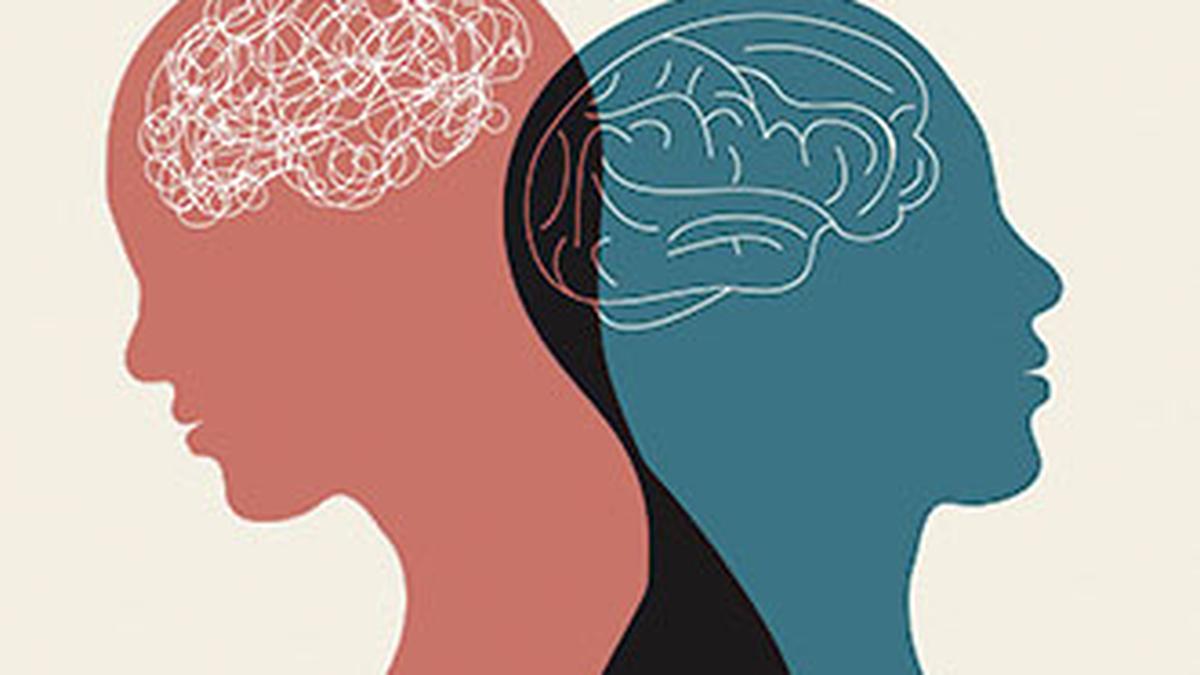
In a study published in the journal Science Advances in May, researchers at Stanford University reported finding a relationship between school students’ performance in mathematical tests and their brain anatomy. The authors also identified genes whose expression correlated, they said, with the students’ ability to do mathematics.
These correlations could be used to predict how much a student’s mathematical proficiency might improve with tuition, the authors added.
The findings have kicked up a storm, but neuroscientists and education researchers caution against reducing complex human abilities to biological readouts.
Maths in the brain
The researchers scanned the brains of 219 students aged 7-13 years using magnetic resonance imaging (MRI). MRI is a non-invasive imaging technique that uses magnetic fields and radio waves to generate detailed images of the body’s internal structures. Then they measured the students’ various mathematical skills, including “arithmetic calculations, number sense, and problem-solving abilities”, Vinod Menon, director of the Stanford Cognitive and Systems Neuroscience Laboratory and one of the authors of the study, said.
Their performance in these tests was used to define their “mathematical ability”.
The researchers then computed the grey matter volume for 246 regions of the brains of all the students. Grey matter is the brain part consisting largely of neuronal cell bodies, and which has been reported to be involved in vision, listening, memory, emotions, speech, decision-making, self-control, and muscle control.
The group used a statistical tool called canonical correlation analysis to identify relationships between grey matter volume and mathematical ability. They found that students who fared worse on the assessments had a higher grey matter volume in three regions of the brain: the posterior parietal cortex, the ventrotemporal occipital cortex, and the prefrontal cortex. These regions have been “implicated in numerical cognition”, the authors wrote in their paper.
These students also had less grey matter in other parts of the brain, including those associated with vision, the subcortical regions, and the posterior insula. The researchers called this pattern of higher and lower volume in different parts the “mathematical ability-related imaging phenotype” (MAIP).
Maths in the genes
The authors then investigated whether the patterns in which genes were expressed in the brain correlated with MAIP. For this, they used the Allen Human Brain Atlas, a publicly available dataset containing the expression patterns of more than 60,000 genes in around 500 human brains.
The researchers found distinct, brain-wide gene expression profiles in the brain correlating with MAIP.

Which specific genes contribute the most to this correlation? Gene ontology enrichment analysis is a method to identify genes that are over- or under-represented in a set of genes whose expression patterns correlate with a biological observation.
They found that MAIP was associated most significantly with genes expressed in synapses — sites where neurons connect to each other — and those dictating the activity of voltage-gated potassium channels (VGPCs). In the brain, VGPCs return neurons to their resting state after a stimulus ‘excites’ it.
Predictability of mathematical performance
The authors hypothesised that if MAIP and corresponding gene expression profiles really determine students’ mathematical ability, we should be able to use this information to predict how well a student can learn maths when tutored. To test this hypothesis, the team worked with two groups of students being taught maths. The first group had 24 students and they were taught arithmetic problem-solving for eight weeks. The second group had 61 students; they were taught number sense for four weeks.
Before each group was tutored, the researchers scanned the brains of its students and generated their MAIP scans. Then they computed a “transcriptome similarity index” (TSI) — a number that accounted for students’ individual MAIPs and gene expression profiles. Finally, the researchers developed a model that could predict how much a student’s TSI would improve after the learning course.
They found their predictions were very close to the observed improvement among students.
Interpreting the data right
Bittu Rajaraman, associate professor of biology and psychology at Ashoka University and who studies numerical cognition, said the findings don’t indicate mathematical ability is “in-born”. Instead, they suggest an individual mathematical performance has neurobiological and transcriptomic correlates, “both of which can change with social experience”.
Prof. Menon agreed, adding that “education quality, socioeconomic status, cultural influences, and even attitudes towards maths learning” along with biological factors play a critical role in students’ mathematical proficiency.
However, he also said it is important to study the neurobiology of mathematical proficiency because non-biological factors “manifest through biological pathways” by changing gene expression and the strength of connections between neurons.
How children learn mathematics
Upinder Bhalla, who studies memory and plasticity at the National Centre for Biological Sciences, Bengaluru, also flagged three concerns. (i) A small cohort of participating students: “Small samples can throw up unusual results occasionally that do not stand up to large-scale analysis.” (ii) While there are correlations between MAIP, gene expression patterns, TSI scores, and the students’ performance, they’re “mostly weak”. (iii) The study doesn’t control for family income and education level of a student’s parents.
Mathematics education researchers expressed more concerns. Jeenath Rahaman, assistant professor of mathematical education at Azim Premji University, Bhopal, said the brain provides only the basic structural capacity for any kind of learning. For mathematics to be accessible and meaningful to students, understanding the “relationship between learners, teachers, the nature of mathematics, and the content of maths education” is more important.
Prof. Bhalla agreed. He said reducing mathematical proficiency to biological readouts would be like reducing the beauty of the Taj Mahal to marble blocks.
Jayasree Subramanian, associate professor of mathematics and a maths education researcher at SRM University, Andhra Pradesh, also pointed to existing critiques of standardised tests, which the study also uses. In a school classroom, she said, while students were unable to gauge whether ½ is greater or lesser than ¼, they were quick to say “aadha” (half) is bigger than “paav” (quarter) — terms they were familiar with in their own languages.
Without incorporating context when interpreting a student’s mathematical ability, Dr. Subramanian said, we may risk getting their proficiency wrong. This in turn will affect what we end up describing as the anatomical and gene expression correlates of mathematical ability, she added.
Sayantan Datta is a science journalist and a faculty member at Krea University. They tweet at @queersprings.