



Skip to content
  • Facebook
  • X
  • Linkedin
  • WhatsApp
  • YouTube
  • Associate Journalism
  • About Us
  • Privacy Policy
  • 033-46046046
  • editor@artifex.news
Artifex.News

Artifex.News

Stay Connected. Stay Informed.

  • Breaking News
  • World
  • Nation
  • Sports
  • Business
  • Science
  • Entertainment
  • Lifestyle
  • Toggle search form
  • Market Capitalisation of four of top-10 most valued firms erode by ₹96,605.66 crore; HDFC Bank hit hard
    Market Capitalisation of four of top-10 most valued firms erode by ₹96,605.66 crore; HDFC Bank hit hard Business
  • IPL 2026: Tilak Varma puts on a show as MI roars back with big win over GT
    IPL 2026: Tilak Varma puts on a show as MI roars back with big win over GT Sports
  • Gabba pitch to have traditional pace and bounce: Pitch curator
    Gabba pitch to have traditional pace and bounce: Pitch curator Sports
  • Access Denied Sports
  • Setback For US President-Elect Donald Trump In Hush Money Case
    Setback For US President-Elect Donald Trump In Hush Money Case World
  • India-Middle East-Europe Corridor Project gains traction as PM Modi holds talks with Macron
    India-Middle East-Europe Corridor Project gains traction as PM Modi holds talks with Macron World
  • Sunflowers ‘dance’ to get more sunlight, scientists find
    Sunflowers ‘dance’ to get more sunlight, scientists find Science
  • Being top buy at TNPL auction high point of Ashwanth’s roller-coaster ride
    Being top buy at TNPL auction high point of Ashwanth’s roller-coaster ride Sports
What caused Morocco’s earthquake? A geologist studying the Atlas mountains explains

What caused Morocco’s earthquake? A geologist studying the Atlas mountains explains

Posted on September 12, 2023 By admin


A military helicopter delivers aid in the aftermath of a deadly earthquake in Talat N’Yaaqoub, in Morocco September 12, 2023.
| Photo Credit: Reuters

The epicentre of Morocco’s devastating earthquake on 8 September was in the High Atlas Mountains, about 71km south-west of Marrakesh. Moina Spooner, from The Conversation Africa, asked Jesús Galindo-Zaldivar, who has been carrying out research on the formation of the Atlas mountains and the geology of the area, about the factors which led to this situation.


What research have you been doing in Morocco’s Atlas mountains?


The Atlas Mountains are a fascinating range in north-west Africa, spanning Morocco, Algeria and Tunisia. They’re situated south of the main Eurasia and Africa (Nubia) tectonic plate boundary.

This area doesn’t usually have a lot of earthquakes compared to other places near the edges of tectonic plates, where the movements of plates will cause intense seismic activity. But in 1960 the Agadir earthquake caused a lot of damage and loss of life.

I’m part of a team of geologists, geophysicists and geodesists from various Moroccan universities and Spanish institutions carrying out research in the area. We want to understand this mountain range’s development and its position at the edge of a continental plate boundary. Studies of seismic activity, gravity and other geophysical phenomena allow us to understand the Earth’s deep structure, down to depths exceeding 100km.

Through field geological research, we can detect and analyse faults – fractures or cracks in the Earth’s crust along which there has been movement. These movements can be horizontal, vertical or diagonal, and they occur due to the immense forces acting on the Earth’s tectonic plates.

Finally, using geodetic techniques (GPS recordings) we are able to determine how tectonic plates are moving. This is done by regularly measuring benchmark sites with millimetre accuracy.


What has your research found?


Our research shows that the Atlas Mountains were formed during the break-up of the Pangea supercontinent. It is now a mountain range that is actively rising, as evidenced by its high peaks and steep slopes.

The steep slopes of the mountains and the straight lines where the Earth’s crust has cracked suggest that there has been recent movement in the Earth beneath this area. It’s surprising that there aren’t more earthquakes here.

The Atlas Mountains are getting pushed together at a rate of about 1 millimetre each year. This happens because the Eurasian and African plates are moving closer to each other. This squeezing action is responsible for creating the tallest mountains in the area, the southern edge of where these two big plates meet.


What do your findings tell you about this earthquake?


The catastrophic earthquake took place to the north of the western Atlas mountains, south of Marrakesh. According to estimates by Morocco’s National Institute of Geophysics and the US geological survey, the depth is between 8km and 26km.

The earthquake resulted from a geological phenomenon called a “reverse fault”. This occurs when tectonic plates collide, causing the Earth’s crust to thicken. The stress along these fault lines can induce earthquakes as rocks abruptly shift to release accumulated stress, which is characteristic of a seismic fault.

The 6.8 magnitude implies that the fault responsible for this earthquake is probably around 30km long. This estimate takes into account the relationships between active fault length and earthquake magnitudes.

So, why don’t we see many earthquakes in this area, even though it’s a place where the tectonic blocks are moving and the mountains are rising? Earthquakes happen when there’s a sudden shift in rocks along a fault line, caused by the release of stored energy that’s been building up over time. In this region, there haven’t been any major recorded earthquakes before, which suggests that the stress from the plates pushing together has been building up deep underground for a long time. When the stress got too much for the fault to handle, it caused an earthquake.

In this mountain belt faults might not produce earthquakes very often. After the earthquake, the rocks in the area moved and adjusted, but other nearby faults might now be under extra stress, and they could produce smaller earthquakes known as aftershocks that might continue for months or even years.


What should authorities be doing to prepare?


Earthquakes are difficult to predict and cannot be avoided. However, we can mitigate their impact. Through integrated studies of the region’s geology, geophysics and geodesy we can find out where there are active earthquake faults. We can also estimate how powerful the earthquakes on these faults could be and how often they might happen again. This helps us understand how strong future earthquakes in a specific area could be. Faults that don’t have earthquakes often but can still produce strong ones are a big concern. In the future, finding and studying these types of faults will be a focus of earthquake research.

The best way to minimise earthquake damage is to improve seismic building design codes to withstand the highest possible seismic activity. This will help buildings and other structures hold up better against strong shaking. In addition, it’s crucial that traditional homes and rock constructions in mountain villages be reinforced to prevent future disasters. New constructions must be tested and designed cheaply and efficiently, respecting new seismic building standards.

The Conversation

Jesús Galindo-Zaldivar, Professor of Geodynamics, Universidad de Granada

This article is republished from The Conversation under a Creative Commons license. Read the original article.


Source link

Science Tags:Atlas mountains, marrakesh, marrakesh earthquake, morcco news, Morocco, Morocco earthquake, Morocco earthquake news

Post navigation

Previous Post: Canadian Prime Minister Justin Trudeau delegation depart national capital after aircraft tech issue gets resolved
Next Post: Rohit Sharma completes 10,000 ODI runs, second fastest after Kohli

Related Posts

  • Science Quiz: On unusual properties of light
    Science Quiz: On unusual properties of light Science
  • Record temperatures in the Great Barrier Reef seen in the last decade
    Record temperatures in the Great Barrier Reef seen in the last decade Science
  • Sensing China threat, India joins race to mine new sea patch
    Sensing China threat, India joins race to mine new sea patch Science
  • WHO’s database on polio cases hides more than it reveals
    WHO’s database on polio cases hides more than it reveals Science
  • What is the context window?
    What is the context window? Science
  • Three groups of cicadas emerge together for first time in 1,547 years
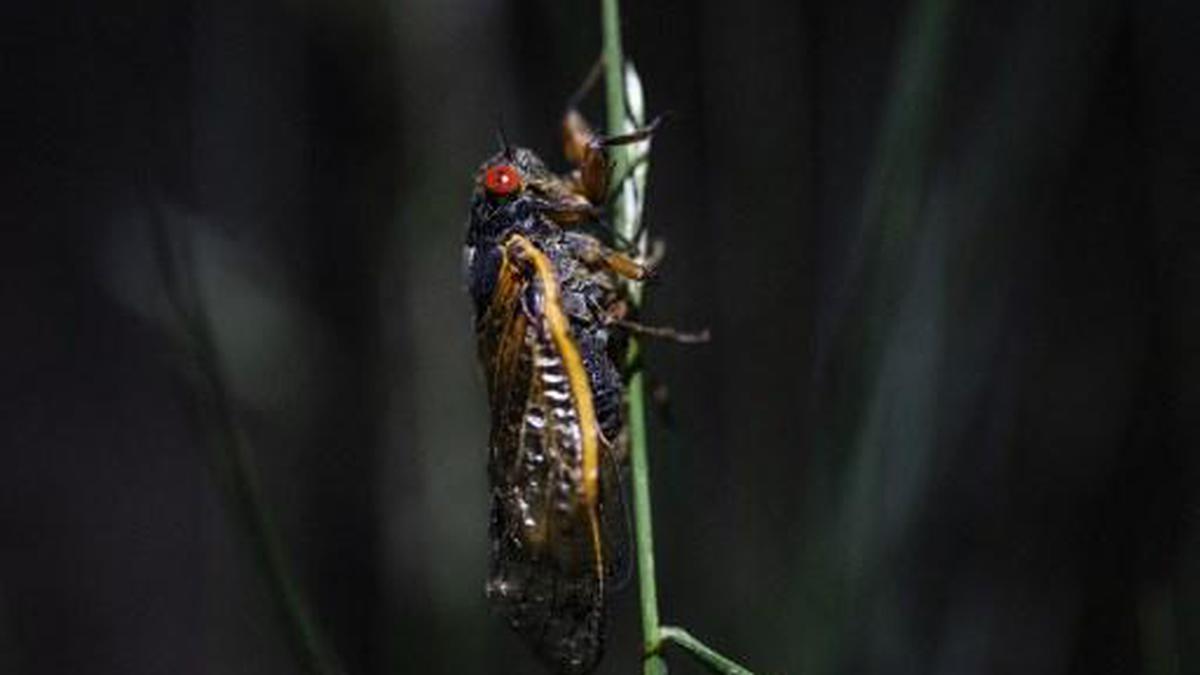
    Three groups of cicadas emerge together for first time in 1,547 years Science

More Related Articles

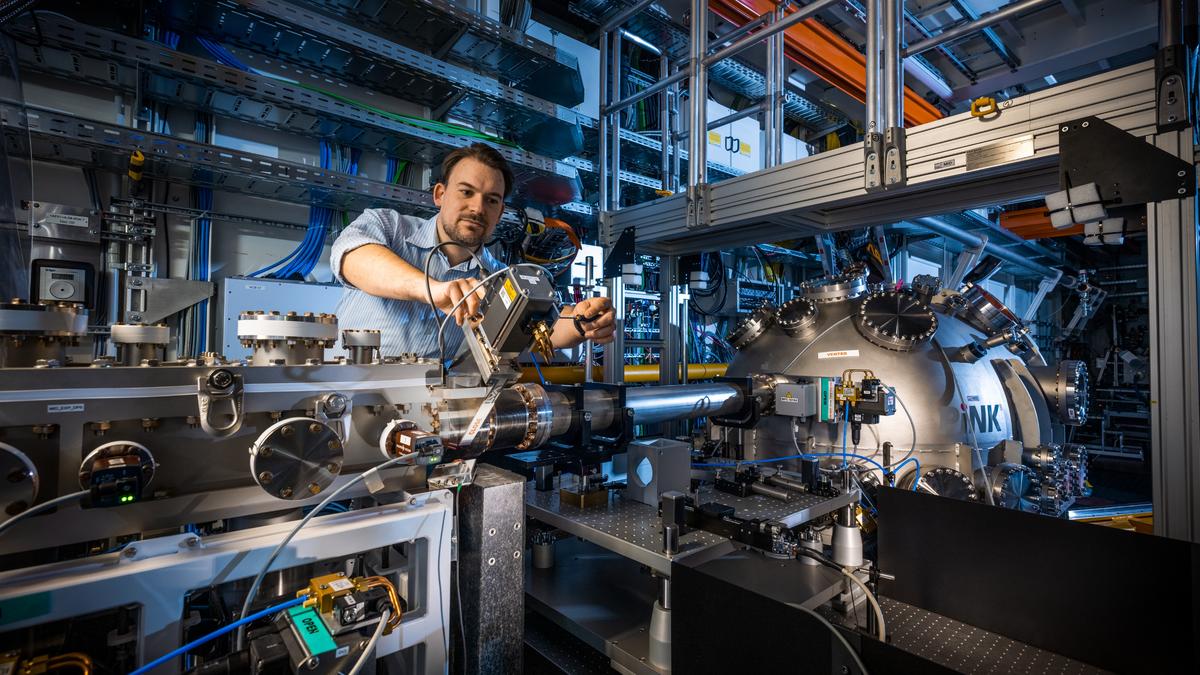
Laser strums atoms trillions of times in search for better computers Laser strums atoms trillions of times in search for better computers Science
Understanding the physics behind cooking a tadka Understanding the physics behind cooking a tadka Science
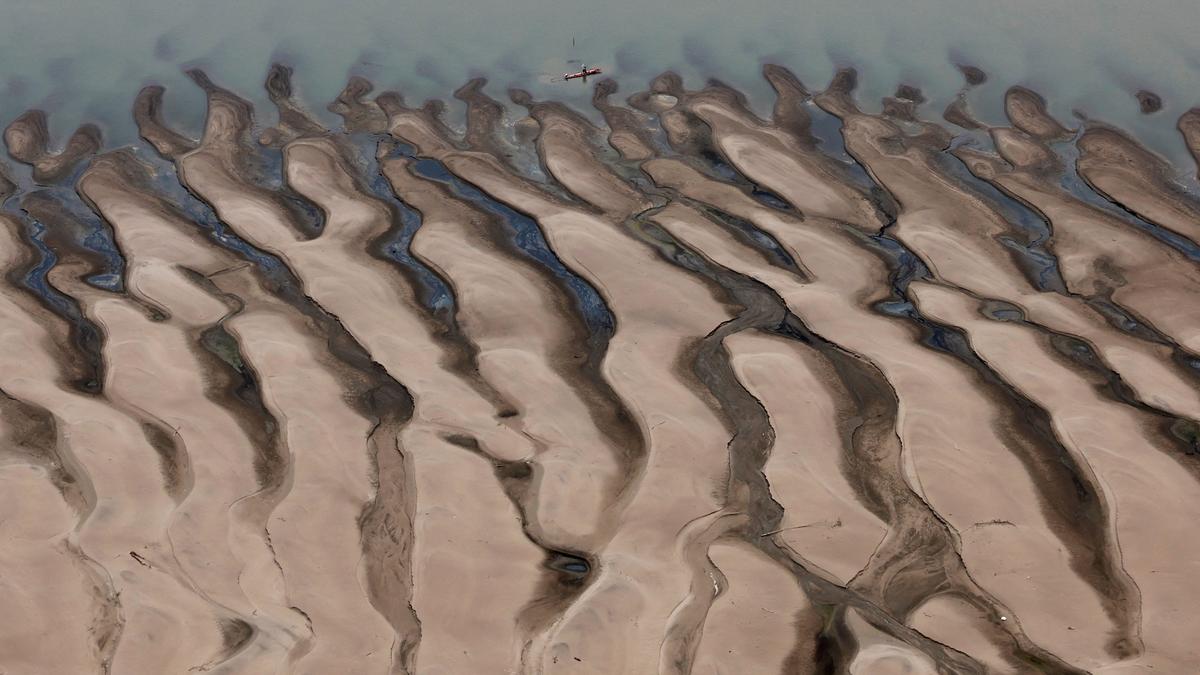
Worst drought on record lowers Amazon rivers to all-time lows Worst drought on record lowers Amazon rivers to all-time lows Science
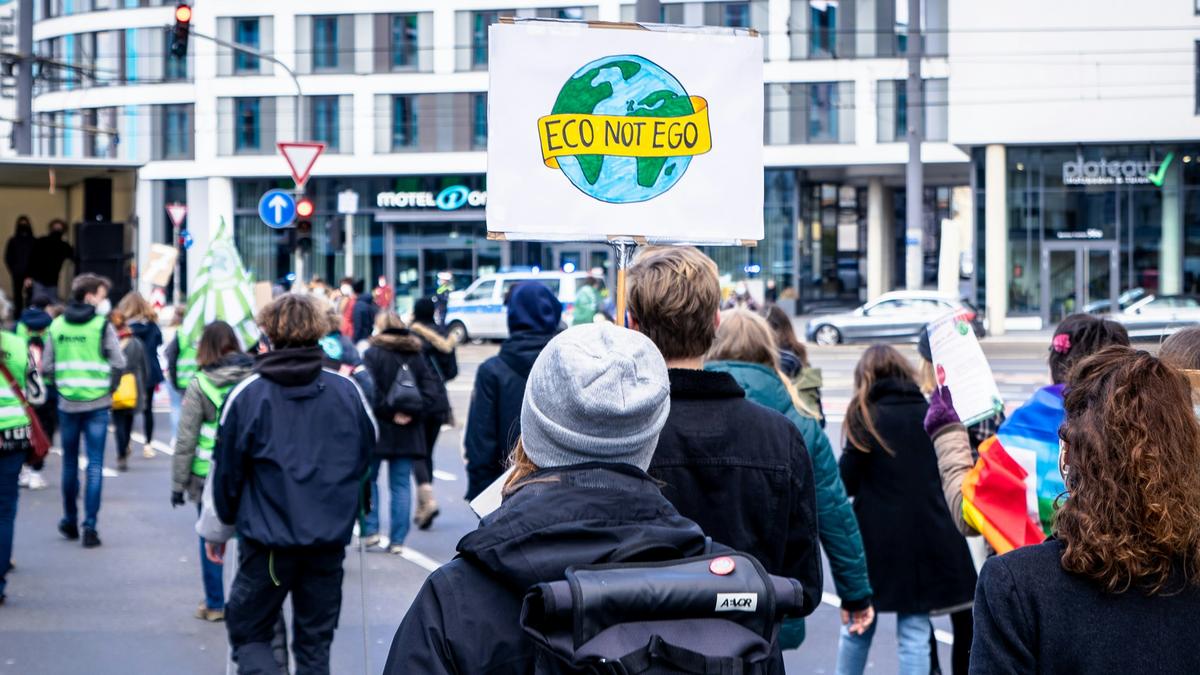
From analysis to action: should climate scientists engage in activism? From analysis to action: should climate scientists engage in activism? Science
What is Chang’e 6 and what is its role in China’s moon missions? | Explained What is Chang’e 6 and what is its role in China’s moon missions? | Explained Science
Science quiz: Giants on whose shoulders Newton stood Science quiz: Giants on whose shoulders Newton stood Science
SiteLock

Archives

  • October 2026
  • September 2026
  • August 2026
  • July 2026
  • June 2026
  • May 2026
  • April 2026
  • March 2026
  • February 2026
  • January 2026
  • December 2025
  • November 2025
  • October 2025
  • September 2025
  • August 2025
  • July 2025
  • June 2025
  • May 2025
  • April 2025
  • March 2025
  • February 2025
  • January 2025
  • December 2024
  • November 2024
  • October 2024
  • September 2024
  • August 2024
  • July 2024
  • June 2024
  • May 2024
  • April 2024
  • March 2024
  • February 2024
  • January 2024
  • December 2023
  • November 2023
  • October 2023
  • September 2023
  • August 2023
  • July 2023
  • June 2023
  • May 2023
  • April 2023
  • March 2023
  • February 2023
  • January 2023
  • December 2022
  • November 2022
  • October 2022
  • September 2022
  • August 2022
  • July 2022
  • June 2022
  • May 2022

Categories

  • Business
  • Nation
  • Science
  • Sports
  • World

Recent Posts

  • Women stage silent demonstration at Kathipara against police action on anti-CEC protesters in Delhi
  • DGCA bans specific power banks on flights
  • Saudi Supreme Court sets aside Sri Lankan migrant worker’s death penalty
  • Nedumbassery accident: CPI(M) stages protest march to police station over ‘indifference’ in handling of case
  • Why CJI Surya Kant said ‘no’ to Rahul Gandhi’s request to meet | Explained

Recent Comments

  1. RobertTes on UP Teacher Who Asked Students To Slap Muslim Classmate
  2. Manuelret on UP Teacher Who Asked Students To Slap Muslim Classmate
  3. RobertTes on UP Teacher Who Asked Students To Slap Muslim Classmate
  4. RobertTes on UP Teacher Who Asked Students To Slap Muslim Classmate
  5. BrentWes on UP Teacher Who Asked Students To Slap Muslim Classmate
  • Sci-Five | The Hindu Science Quiz: On Asteroids
    Sci-Five | The Hindu Science Quiz: On Asteroids Science
  • Sunita Williams’ 3rd Mission To Space Called Off Minutes Before Lift-Off
    Sunita Williams’ 3rd Mission To Space Called Off Minutes Before Lift-Off World
  • UK To Restrict Junk Food Ads To Tackle High Childhood Obesity Levels
    UK To Restrict Junk Food Ads To Tackle High Childhood Obesity Levels World
  • Captain Babar Azam To Be Sacked Again? Gary Kirsten, Jason Gillespie Convey Verdict To PCB
    Captain Babar Azam To Be Sacked Again? Gary Kirsten, Jason Gillespie Convey Verdict To PCB Sports
  • Frightened residents say Rwanda-backed rebels are advancing on a third city in eastern Congo
    Frightened residents say Rwanda-backed rebels are advancing on a third city in eastern Congo World
  • China-Taiwan Conflict: 43 Chinese Warplanes Detected In Taiwan Within 24-hours: Defence Ministry
    China-Taiwan Conflict: 43 Chinese Warplanes Detected In Taiwan Within 24-hours: Defence Ministry World
  • Congress Demands Amit Shah’s Apology For Ambedkar Remark
    Congress Demands Amit Shah’s Apology For Ambedkar Remark Nation
  • “We Have Obtained Our Primary Goal”: Igor Stimac As Indian Football Team Reaches Round Of 16 In Asian Games
    “We Have Obtained Our Primary Goal”: Igor Stimac As Indian Football Team Reaches Round Of 16 In Asian Games Sports

Editor-in-Chief:
Mohammad Ariff,
MSW, MAJMC, BSW, DTL, CTS, CNM, CCR, CAL, RSL, ASOC.
editor@artifex.news

Associate Editors:
1. Zenellis R. Tuba,
zenelis@artifex.news
2. Haris Daniyel
daniyel@artifex.news

Photograher:
Rohan Das
rohan@artifex.news

Associate Journalists
1. Subrata Paul - AN/2020/01
2. Quamruz Zaman - AN/2021/22
3. Ahmed Sha - AN/2021/035
4. Ajay Kumar Shaw - AN/2021/39
5. Tahqiqul Hoda - AN/2021/21

Artifex.News offers Online Paid Internships to college students from India and Abroad. Interns will get a PRESS CARD and other online offers.
Send your CV (Subjectline: Paid Internship) to internship@artifex.news

Links:
Associate Journalism
About Us
Privacy Policy

News Links:
Breaking News
World
Nation
Sports
Business
Entertainment
Lifestyle

Registered Office:
72/A, Elliot Road, Kolkata - 700016
Tel: 033-22277777, 033-22172217
Email: office@artifex.news

Editorial Office / News Desk:
No. 13, Mezzanine Floor, Esplanade Metro Rail Station,
12 J. L. Nehru Road, Kolkata - 700069.
(Entry from Gate No. 5)
Tel: 033-46011099, 033-46046046
Email: editor@artifex.news

Copyright © 2023 Artifex.News Newsportal designed by Artifex Infotech.