

Skip to content
  • Facebook
  • X
  • Linkedin
  • WhatsApp
  • YouTube
  • Associate Journalism
  • About Us
  • Privacy Policy
  • 033-46046046
  • editor@artifex.news
Artifex.News

Artifex.News

Stay Connected. Stay Informed.

  • Breaking News
  • World
  • Nation
  • Sports
  • Business
  • Science
  • Entertainment
  • Lifestyle
  • Toggle search form
  • Ranji Trophy | Shreyas named in Mumbai squad, Washington boost for Tamil Nadu
    Ranji Trophy | Shreyas named in Mumbai squad, Washington boost for Tamil Nadu Sports
  • India Outplayed By Spain In Men’s Pro League Hockey Campaign Opener
    India Outplayed By Spain In Men’s Pro League Hockey Campaign Opener Sports
  • Sicyon, Star Of Night, Avener, Power Of Beauty, Fils De France and Rameil shine
    Sicyon, Star Of Night, Avener, Power Of Beauty, Fils De France and Rameil shine Sports
  • Farooq Abdullah Slams PM Narendra Modi’s Remarks
    Farooq Abdullah Slams PM Narendra Modi’s Remarks Nation
  • Foreign Attempt To Buy India’s Haldiram’s. Offer
    Foreign Attempt To Buy India’s Haldiram’s. Offer Nation
  • Afghanistan vs Bangladesh Live Score Updates 1st ODI
    Afghanistan vs Bangladesh Live Score Updates 1st ODI Sports
  • Russia claims the capture of Tsukuryne in eastern Ukraine
    Russia claims the capture of Tsukuryne in eastern Ukraine World
  • Free, Open Indo-Pacific Is Our Shared Priority
    Free, Open Indo-Pacific Is Our Shared Priority Nation
G.P. Talwar at 100: scientist, institution builder, lifelong researcher

G.P. Talwar at 100: scientist, institution builder, lifelong researcher

Posted on October 2, 2026 By admin


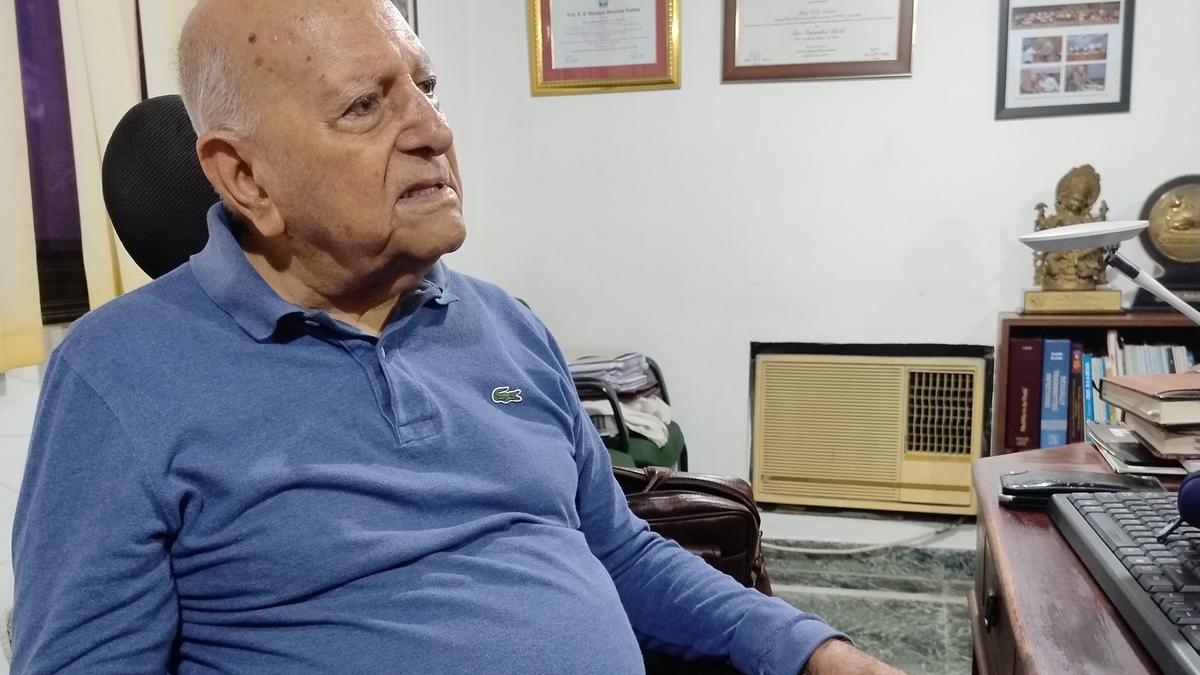
At any gathering, you could easily spot him by his colourful printed shirt or jacket. His tall stature, smiling face, and warm handshakes have put generations of students, researchers, and scientists at ease.

Since 1956, when he joined the founding faculty of the All India Institute of Medical Sciences (AIIMS), New Delhi, he has never stopped working at the bench. Along the way, he developed the world’s first leprosy vaccine and a hormonal birth control vaccine, founded India’s first immunology institution, mentored hundreds of students, and continues his research work at a private R&D institution he established after retirement. That’s Gursaran Prasad Talwar, Pran to friends and colleagues, who turns 100 on October 2, today.

Gaining experience

Talwar had a troubled childhood. His mother passed away a week after delivering him in 1926, at her mother’s place in Hisar, then in undivided Punjab. His father, a science postgraduate from the Indian Institute of Science, Bangalore (now Bengaluru), ran a small pharmacy and dispensary in Lahore, where he shifted after remarrying. After a few years of schooling at a madrasa in Hoshiarpur, his father admitted Talwar to the Central Model School in Lahore. His excellent performance in the matriculation exam got him into the Government College Lahore, where he did his BSc Honours and MSc (tech).

As part of the postgraduation course, Talwar came to work at a pharmaceutical manufacturing unit in the Kangra Valley in the summer of 1947 but was caught in the communal frenzy that followed the partition of Punjab. He somehow made it to Lahore only to find that his family had migrated to India. Thus he landed in Delhi in late 1947 and started looking for jobs.

At this time, European countries began offering scholarships for higher education to Indian students via the Government of India. Talwar applied, and he was shortlisted and given a choice. “I chose France. Their national echo ‘Liberté, Égalité, Fraternité’ appealed to my leftist leanings,” Talwar recalled. He joined the fermentation laboratory of the Pasteur Institute, but soon shifted to the biochemistry wing. He completed his Docteur es Sciences degree in 1953. After two years of postdoctoral work in Germany and working in an industrial concern in Milan in Italy, Dr. Talwar returned to India in 1955. His idea was to gain necessary experience for starting a pharmaceutical or chemical business in India.

Great excitement

But life took a different turn as Dr. Talwar was selected to join the proposed biochemistry department of AIIMS as an associate professor in 1956. “In medical colleges, biochemistry was then a minor part of physiology. I tried against all odds and succeeded in making it an independent course with a separate compulsory paper,” Dr. Talwar said. Simultaneously, he established a research lab and began working on growth-promoting hormones like estradiol. He published papers on mechanisms that enable hormones to activate gene transcription and translation.

The 1960s were a period of great excitement in modern biology, with landmark discoveries being made. Pushpa Mitra Bhargava, then at the Regional Research Laboratory Hyderabad, teamed up with Dr. Talwar to form what came to be called the Guha Research Conference. Bhargava organised an international symposium on nucleic acids at the Regional Research Laboratory, Hyderabad, in January 1964, which several newly minted and future Nobel laureates, such as Francis Crick, Gerhard Schramm, Charles Heidelberger, Seymour Benzer, and Roger Monier, attended. The trio of Bhargava, Dr. Talwar, and Obaid Siddiqui themselves constituted the rising stars of modern biology in India.

In 1970, the World Health Organization (WHO) proposed to start a regional training centre in immunology and initiate research in leprosy at AIIMS. Dr. Talwar was hesitant since his work on hormones was going on satisfactorily. “Howard Goodman, who was leading the WHO team, said India had the largest burden of leprosy in the world and asked me bluntly: ‘Do you think Americans will come and solve this problem?’ I knew nothing about leprosy but then started studying why people get leprosy and found that it was their inability to react immunobiologically to some key antigens of M. leprae,” Dr. Talwar said.

This fundamental understanding eventually led to the first curative vaccine against leprosy. It was a long process but resulted in an effective vaccine that not only cured the disease but also healed the scars. It also has the ability to react with key antigens of M. tuberculosis. The mycobacterium used to make the vaccine was later sequenced and named MIP or Mycobacterium indicus pranii, combining Pran and ‘National Institute of Immunology’, or NII.

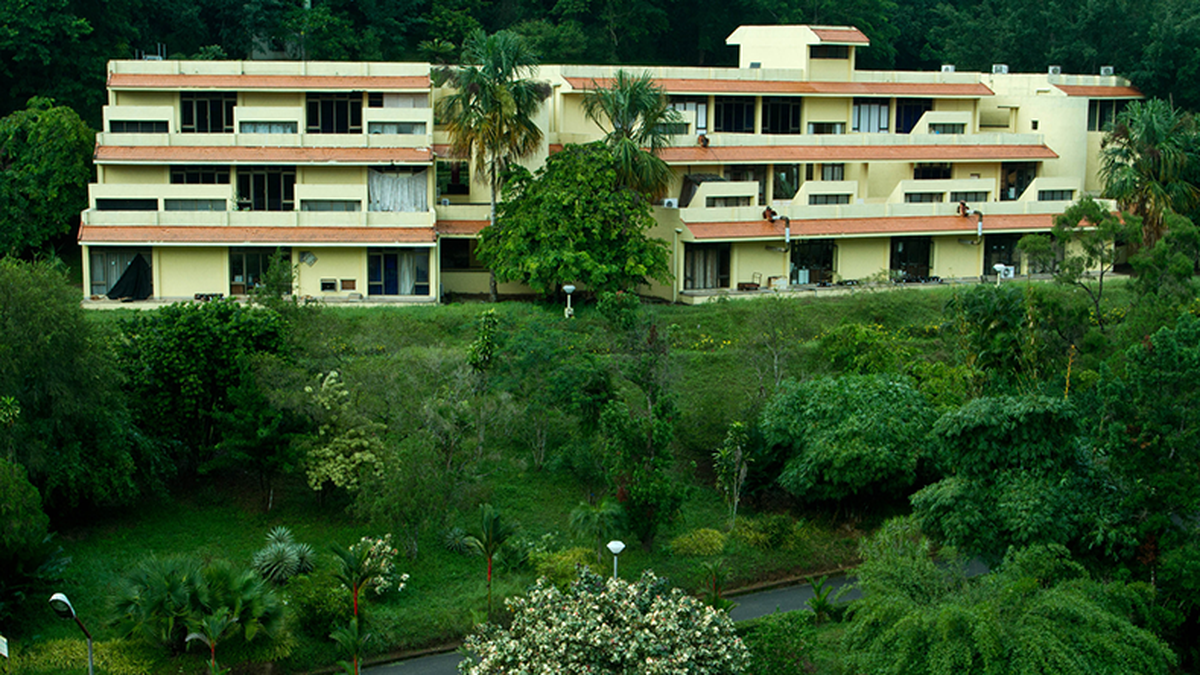
Founding NII

Another landmark contribution by Dr. Talwar was the birth control vaccine, which has undergone extensive human trials and has been found to be safe, but is still to go into commercial production. “I found that all available birth control methods like vasectomy and intra-uterine devices were not yielding desired results because of various reasons. I wanted to develop a vaccine which could prevent pregnancy without derangement of menstrual regularity and hormonal profiles. So the target molecule should have a key role in sustaining pregnancy,” Dr. Talwar explained as to why he chose human chorionic gonadotropin to develop the vaccine.  

Dr. Talwar revealed that the idea of the NII emerged from a discussion with Prime Minister Indira Gandhi. In 1980, the Jawaharlal Nehru Memorial Fund selected Dr. Talwar as a Nehru Fellow; during the fellowship, Indira Gandhi, who was the Fung’s chairperson, used to meet the Fellows to learn about their work. Dr. Talwar told her about the leprosy vaccine and also explained how childhood immunisation could save millions of lives. She asked Dr. Talwar if India had enough vaccines, and he said ‘no’. Ms. Gandhi told him to give him a one-page note in ten days on how India could develop new vaccines.

Dr. Talwar happened to travel to New York the next day for a scientific meeting. “While sipping champagne along with caviar, on the plane, I wrote a note and submitted it to her upon my return. It was this note that became the basis for founding NII just two years later, in 1983,” Dr. Talwar said.

After retiring from the NII and a stint with the International Centre for Genetic Engineering and Biotechnology, New Delhi, Dr. Talwar founded the Talwar Research Foundation in 1999, where he continues to work with a small band of researchers on hormones, antigens, and antibodies. He says he has no regrets in life as he begins his second century.

Dinesh C. Sharma is a New Delhi-based journalist and author.

Published – October 02, 2026 10:30 am IST


Source link

Science

Post navigation

Previous Post: Trump says Iran will be hit ‘very hard’ if it is behind copilot who tried to crash flight to Israel
Next Post: Internet suspended around Delhi’s Jantar Mantar ahead of protest against CEC Gyanesh Kumar; Dipke warns of nationwide unrest | LIVE

Related Posts

  • Russia’s Luna-25 spacecraft enters lunar orbit
    Russia’s Luna-25 spacecraft enters lunar orbit Science
  • How is India responding to crowding disasters? | Explained
    How is India responding to crowding disasters? | Explained Science
  • Fading research hubs are stalling Kerala’s leap into the bio-economy
    Fading research hubs are stalling Kerala’s leap into the bio-economy Science
  • Failure of atomic clock cripples ISRO’s NavIC system
    Failure of atomic clock cripples ISRO’s NavIC system Science
  • SpaceX launches its mega Starship rocket on fifth test flight
    SpaceX launches its mega Starship rocket on fifth test flight Science
  • Zombies in our genes helped us evolve, and could help battle cancers
    Zombies in our genes helped us evolve, and could help battle cancers Science

More Related Articles

Google’s new AI model offers new pathway in cancer drug research Google’s new AI model offers new pathway in cancer drug research Science
Satellites, science, and the new fight for spectrum in space Satellites, science, and the new fight for spectrum in space Science
NISAR satellite mounted on GSLV for launch on July 30, 2025 NISAR satellite mounted on GSLV for launch on July 30, 2025 Science
India’s ‘heat trap’ cities make summers worse, says government official India’s ‘heat trap’ cities make summers worse, says government official Science
Northern lights in India? Here’s how to see Auroras tonight Northern lights in India? Here’s how to see Auroras tonight Science
Satellite launching facility will come up on Hope Island in the Kakinada Bay, says Andhra Pradesh Chief Minister Chandrababu Naidu Satellite launching facility will come up on Hope Island in the Kakinada Bay, says Andhra Pradesh Chief Minister Chandrababu Naidu Science
SiteLock

Archives

  • October 2026
  • September 2026
  • August 2026
  • July 2026
  • June 2026
  • May 2026
  • April 2026
  • March 2026
  • February 2026
  • January 2026
  • December 2025
  • November 2025
  • October 2025
  • September 2025
  • August 2025
  • July 2025
  • June 2025
  • May 2025
  • April 2025
  • March 2025
  • February 2025
  • January 2025
  • December 2024
  • November 2024
  • October 2024
  • September 2024
  • August 2024
  • July 2024
  • June 2024
  • May 2024
  • April 2024
  • March 2024
  • February 2024
  • January 2024
  • December 2023
  • November 2023
  • October 2023
  • September 2023
  • August 2023
  • July 2023
  • June 2023
  • May 2023
  • April 2023
  • March 2023
  • February 2023
  • January 2023
  • December 2022
  • November 2022
  • October 2022
  • September 2022
  • August 2022
  • July 2022
  • June 2022
  • May 2022

Categories

  • Business
  • Nation
  • Science
  • Sports
  • World

Recent Posts

  • USTR Greer says he does not think “something is imminent” on trade deal with India
  • Internet suspended around Delhi’s Jantar Mantar ahead of protest against CEC Gyanesh Kumar; Dipke warns of nationwide unrest | LIVE
  • G.P. Talwar at 100: scientist, institution builder, lifelong researcher
  • Trump says Iran will be hit ‘very hard’ if it is behind copilot who tried to crash flight to Israel
  • Nitin Gadkari calls Ethanol blending a step towards diversification of agricultural sector

Recent Comments

  1. Larrygyday on UP Teacher Who Asked Students To Slap Muslim Classmate
  2. Larrygyday on UP Teacher Who Asked Students To Slap Muslim Classmate
  3. WillieSmete on UP Teacher Who Asked Students To Slap Muslim Classmate
  4. Stephancyday on UP Teacher Who Asked Students To Slap Muslim Classmate
  5. Robertreush on UP Teacher Who Asked Students To Slap Muslim Classmate
  • Study suggests ancient Indian scholars knew mineral acids centuries before Europeans
    Study suggests ancient Indian scholars knew mineral acids centuries before Europeans Science
  • Access Denied Sports
  • ‘My Father Killed A Tiger, Smeared Its Blood On Me’: Yograj Singh, Yuvraj’s Dad. This Was The Reason
    ‘My Father Killed A Tiger, Smeared Its Blood On Me’: Yograj Singh, Yuvraj’s Dad. This Was The Reason Sports
  • As Apple alert to Opposition leaders is investigated, clarity remains out of reach
    As Apple alert to Opposition leaders is investigated, clarity remains out of reach Business
  • Govt must listen to Maharashtra students’ voice otherwise ‘Chhatron ki Goonj’ will grow louder: Rahul Nation
  • Access Denied Sports
  • Ignoring an agricultural sector in distress
    Ignoring an agricultural sector in distress Business
  • Access Denied
    Access Denied Nation

Editor-in-Chief:
Mohammad Ariff,
MSW, MAJMC, BSW, DTL, CTS, CNM, CCR, CAL, RSL, ASOC.
editor@artifex.news

Associate Editors:
1. Zenellis R. Tuba,
zenelis@artifex.news
2. Haris Daniyel
daniyel@artifex.news

Photograher:
Rohan Das
rohan@artifex.news

Artifex.News offers Online Paid Internships to college students from India and Abroad. Interns will get a PRESS CARD and other online offers.
Send your CV (Subjectline: Paid Internship) to internship@artifex.news

Links:
Associate Journalism
About Us
Privacy Policy

News Links:
Breaking News
World
Nation
Sports
Business
Entertainment
Lifestyle

Registered Office:
72/A, Elliot Road, Kolkata - 700016
Tel: 033-22277777, 033-22172217
Email: office@artifex.news

Editorial Office / News Desk:
No. 13, Mezzanine Floor, Esplanade Metro Rail Station,
12 J. L. Nehru Road, Kolkata - 700069.
(Entry from Gate No. 5)
Tel: 033-46011099, 033-46046046
Email: editor@artifex.news

Copyright © 2023 Artifex.News Newsportal designed by Artifex Infotech.