
Skip to content
  • Facebook
  • X
  • Linkedin
  • WhatsApp
  • YouTube
  • Associate Journalism
  • About Us
  • Privacy Policy
  • 033-46046046
  • editor@artifex.news
Artifex.News

Artifex.News

Stay Connected. Stay Informed.

  • Breaking News
  • World
  • Nation
  • Sports
  • Business
  • Science
  • Entertainment
  • Lifestyle
  • Toggle search form
  • Lebanon’s Shia Muslims pay high price in war between Israel and Hezbollah
    Lebanon’s Shia Muslims pay high price in war between Israel and Hezbollah World
  • Access Denied
    Access Denied Nation
  • History ‘Fuels’ Novak Djokovic Wimbledon Title Bid Against Carlos Alcaraz
    History ‘Fuels’ Novak Djokovic Wimbledon Title Bid Against Carlos Alcaraz Sports
  • Access Denied World
  • Byju Hid Rs 4,400 Crore In Fund Once Run From Pancake Shop IHOP In US, Allege Lenders: Report
    Byju Hid Rs 4,400 Crore In Fund Once Run From Pancake Shop IHOP In US, Allege Lenders: Report Nation
  • Access Denied
    Access Denied Nation
  • Stopped India-Pakistan conflict with trade, should get Nobel Prize for ending seven wars: Trump
    Stopped India-Pakistan conflict with trade, should get Nobel Prize for ending seven wars: Trump World
  • U.S., India share unique bond of friendship: White House
    U.S., India share unique bond of friendship: White House World
How is India responding to crowding disasters? | Explained

How is India responding to crowding disasters? | Explained

Posted on October 4, 2025 By admin


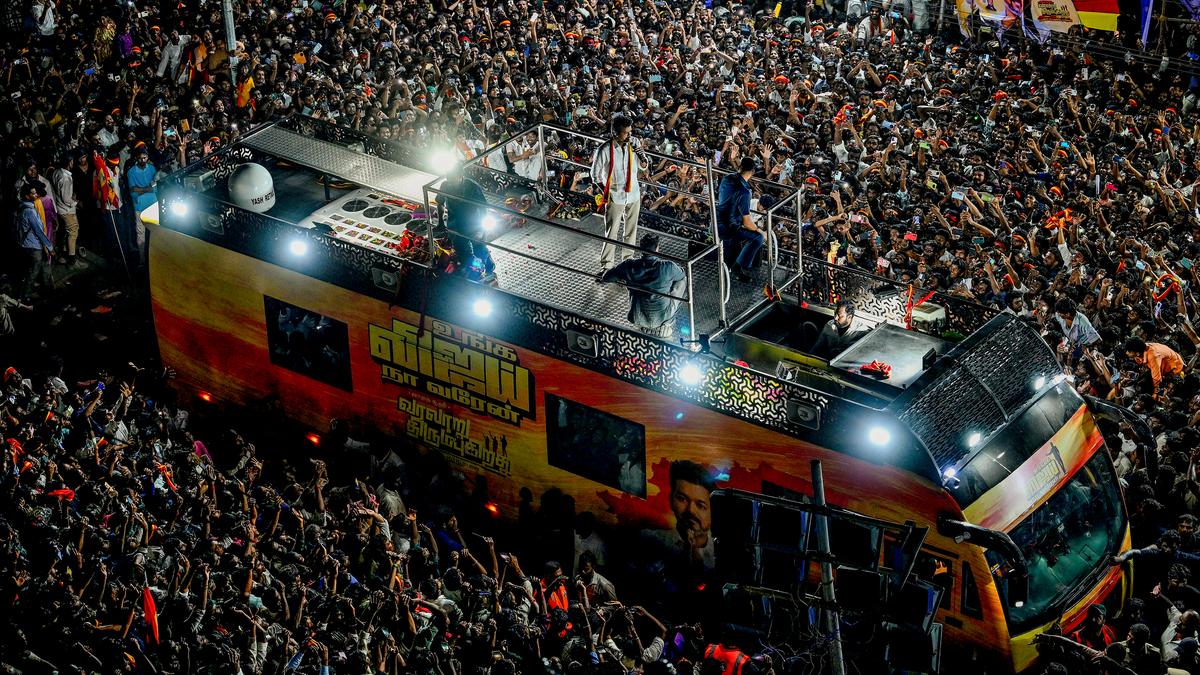
The story so far: On September 27, a political rally by actor and Tamilaga Vettri Kazhagam (TVK) founder Vijay in Tamil Nadu’s Karur district ended in a fatal crowd crush in which 41 people were killed. Chief Minister M.K. Stalin appointed a one-person commission headed by retired judge Aruna Jagadeesan to examine the tragedy’s causes. He said rules for public events would be framed once the commission submitted its report.

What happened in Karur?

The event was part of Mr. Vijay’s first State-wide political tour. TVK organisers initially presented a list of four central business locations in Karur for the rally, but the police rejected them as they were too congested and instead granted permission for Velusamypuram on the Karur-Erode road, where other political parties had previously held events. The organisers said Mr. Vijay would speak at 12 p.m., and supporters began assembling from 9 a.m. He was delayed however, and as the day wore on, the crowd grew steadily, with several thousands gathering in the evening. By the time Mr. Vijay reached Karur from Namakkal around 6 p.m., his convoy could not access the meeting spot because of the crowd. The congestion worsened when the gathering was forced to make way for his vehicles. Witnesses described having no space to move. Residents also recalled younger people climbing poles and transformers to get a glimpse of the actor while others said the event’s timing coincided with evening wage disbursals for textile workers, adding to congestion in the area.

As the programme began around 7.20 p.m., people started fainting in the crowd. When the situation deteriorated further, Mr. Vijay departed from the spot and ambulances began to arrive soon after, taking injured people to government hospitals in Karur, Namakkal, and Tiruchi. By nightfall, dozens were reported dead and scores injured. Many of the 41 people who died were young adults aged 18-30.

What has India done to manage crowds?

At the national level, the Bureau of Police Research and Development (BPR&D) published its most recent Comprehensive Guidelines on Crowd Control and Mass Gathering Management in June 2025. These guidelines, intended for police and other law enforcement agencies, emphasise scientific crowd management practices. The National Disaster Management Authority has maintained its “Managing crowd at events and venues of mass gathering” guide since 2020 alongside “suggestive frameworks” for crowd management plans. These documents recommend advance risk assessment, detailed site layout plans, predetermined ingress and egress routes, real-time monitoring, and communication protocols. The National Institute of Disaster Management (NIDM) has run training modules to handle large congregations as part of its capacity-building programmes.

After the crowd crush at a New Delhi railway station in February, the Indian Railways updated its manuals for around 60 stations with high footfall by introducing holding areas, better dispersal zones and crowd monitoring, among others. These measures are mostly advisory, however, and not statutory.


Editorial | ​An avoidable tragedy: On the TVK rally, the stampede in Karur

What measures have States introduced?

Following a deadly stampede outside M. Chinnaswamy Stadium in Bengaluru in June 2025, the Karnataka government tabled the Crowd Control (Managing Crowd at Events and Venues of Mass Gathering) Bill, 2025. This instrument covers political rallies, conferences, cultural programmes, and other events, and fixes responsibility on organisers. It also empowers district magistrates to cancel or redirect events, regulate the use of loudspeakers, and impose fines and imprisonment for violations.

Watch: What really happened on the night of Karur rally stampede

The Uttar Pradesh State Disaster Management Authority issued the Guidelines for Managing Crowd at Events of Mass Gathering, 2023 — a document that formalises measures for religious and cultural events. The Gujarat Institute of Disaster Management prepared training materials that include technical instructions on calculating site capacity, planning exits, training volunteers, and ensuring first aid and fire safety. After a stampede at the Mansa Devi temple in Haridwar in July, the Uttarakhand government ordered safety arrangements at major temples to be updated and directed authorities to remove encroachments around shrines.

The Maharashtra government introduced a Bill in 2025 empowering the Nasik-Trimbakeshwar Kumbh Mela Authority to authorise temporary townships and bypass certain urban planning norms so that facilities can be created for large gatherings.

Local enforcement agencies have supplemented these steps with operating protocols. After the Bengaluru incident, for instance, the Karnataka police circulated a new Standard Operating Procedure to control crowds at public functions and detailed responsibilities for coordination between departments, medical preparedness, and fire safety.

In many districts across States, the police have also directed organisers of large religious or political gatherings to prepare crowd management plans, limit crowd size, deploy medical teams, set up temporary barricades, and divert routes. These orders are still only administrative and aren’t backed by a law. Most State-level initiatives have also been introduced after specific accidents: the Uttarakhand directives followed the Haridwar stampede; Tamil Nadu’s announcement after the Karur rally deaths; Karnataka’s Bill after the stadium incident; and Maharashtra’s Bill after incidents related to the Prayagraj Kumbh Mela.

What is scientific crowd control?

According to prevailing scientific wisdom, safely navigating a crowd depends on controlling its density and sidestepping hazardous flow patterns. Modelling studies have shown that the risk of a deadly crush escalates when crowd density approaches 5 persons per sq. m. Since cameras on drones linked to computers on the ground can continuously monitor crowd density, not using such technologies to manage crowds is seen as a shortcoming.

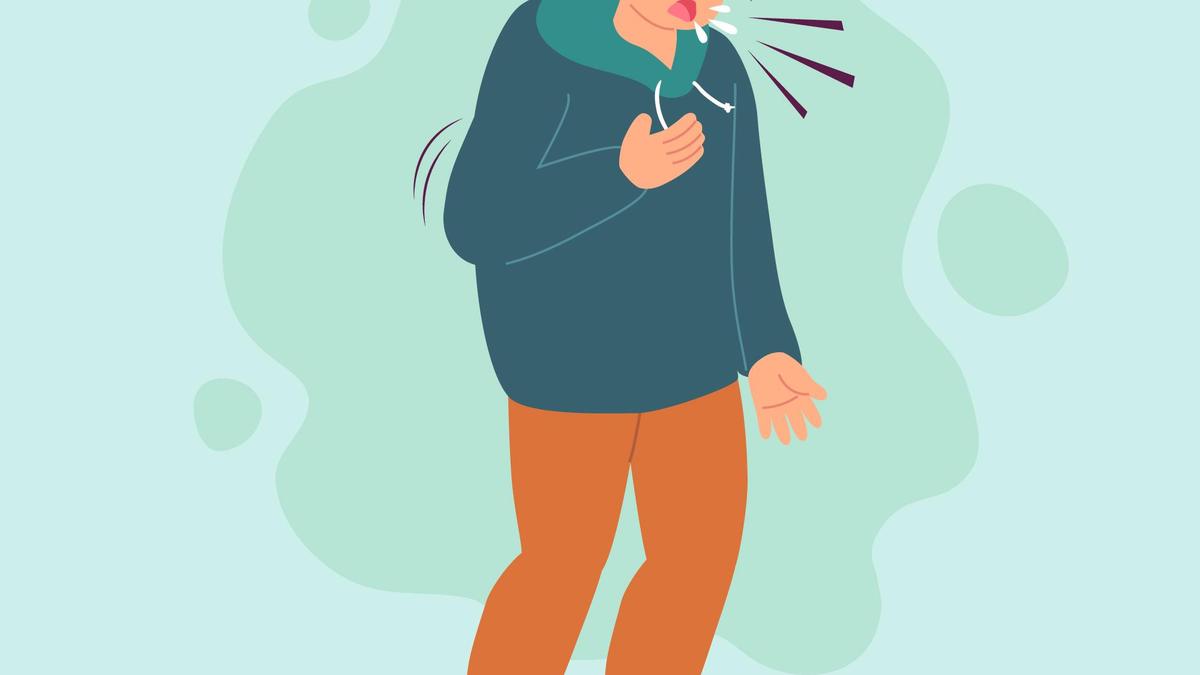
Second, crowds should never be channelled into bottlenecks, slopes or counter-flows because they magnify pressure and destabilise movement. In a moving crowd, individuals are advised to move diagonally, towards the less dense edges, and to avoid resisting the flow. Because compressive asphyxia rather than trampling is the main cause of fatalities, individuals should keep their forearms across the chest to protect their breathing space and maintain balance with staggered footing. If one is knocked down, rolling to the side and shielding the head and neck while attempting to rise quickly is recommended.

Finally, people should avoid rigid barriers such as fences, walls or stages where pressures against the body can rise dangerously. Stopping to retrieve dropped items or to film in dense flows must be avoided since even brief obstructions can create waves of turbulence.

For organisers, the best practice requires real-time monitoring by trained crowd managers, routing the passenger traffic in only one direction, arranging for multiple exits, using unambiguous signage, public address messaging, and on-site medical facilities.

Published – October 05, 2025 02:03 am IST


Source link

Science Tags:Actor vijay rally, Karur rally, Karur rally death toll, tvk rally

Post navigation

Previous Post: Tony Blair | A man of many wars
Next Post: The case to rethink India’s influenza vaccination strategy

Related Posts

  • ISRO launches mission in Ladakh to test mental, physical strength of astronauts
    ISRO launches mission in Ladakh to test mental, physical strength of astronauts Science
  • India lacks diagnostic tests for emerging infectious diseases
    India lacks diagnostic tests for emerging infectious diseases Science
  • Can CAR-T, a therapy for cancer, help treat autoimmune diseases? | In Focus podcast
    Can CAR-T, a therapy for cancer, help treat autoimmune diseases? | In Focus podcast Science
  • Mummified American climber found 22 years later in Peru as glaciers retreat
    Mummified American climber found 22 years later in Peru as glaciers retreat Science
  • New push for mRNA bird flu vaccine development: WHO 
    New push for mRNA bird flu vaccine development: WHO  Science
  • Rubies and emeralds get their colours from a common metal
    Rubies and emeralds get their colours from a common metal Science

More Related Articles

If antibiotics are becoming less effective, why not combine them? If antibiotics are becoming less effective, why not combine them? Science
Science for All | Quest to crack blues mystery in Pollock painting reveals colour-tuning technique Science for All | Quest to crack blues mystery in Pollock painting reveals colour-tuning technique Science
Sunflowers ‘dance’ to get more sunlight, scientists find Sunflowers ‘dance’ to get more sunlight, scientists find Science
Nobel Prize 2023 for Medicine awarded to Katalin Karikó and Drew Weissman for their work in mRNA vaccines Nobel Prize 2023 for Medicine awarded to Katalin Karikó and Drew Weissman for their work in mRNA vaccines Science
Ladakh aurorae validate space weather tracking efforts, scientists say Ladakh aurorae validate space weather tracking efforts, scientists say Science
National Science Day 2024: Why sustainable funding matters for India’s ‘science power’ ambition | Explained National Science Day 2024: Why sustainable funding matters for India’s ‘science power’ ambition | Explained Science
SiteLock

Archives

  • May 2026
  • April 2026
  • March 2026
  • February 2026
  • January 2026
  • December 2025
  • November 2025
  • October 2025
  • September 2025
  • August 2025
  • July 2025
  • June 2025
  • May 2025
  • April 2025
  • March 2025
  • February 2025
  • January 2025
  • December 2024
  • November 2024
  • October 2024
  • September 2024
  • August 2024
  • July 2024
  • June 2024
  • May 2024
  • April 2024
  • March 2024
  • February 2024
  • January 2024
  • December 2023
  • November 2023
  • October 2023
  • September 2023
  • August 2023
  • July 2023
  • June 2023
  • May 2023
  • April 2023
  • March 2023
  • February 2023
  • January 2023
  • December 2022
  • November 2022
  • October 2022
  • September 2022
  • August 2022
  • July 2022
  • June 2022
  • May 2022

Categories

  • Business
  • Nation
  • Science
  • Sports
  • World

Recent Posts

  • Watch: ‘We’re going to have a fantastic future together’: Trump to Xi Jinping
  • Thoothukudi will see highest Tasmac closures of liquor shops near schools, places of worship
  • Sensex climbs 450 points on positive Asian peers
  • India bans sugar exports till September 30
  • What is the OpenAI criminal investigation about? | Explained

Recent Comments

  1. CarlosExorb on UP Teacher Who Asked Students To Slap Muslim Classmate
  2. Robertfloup on UP Teacher Who Asked Students To Slap Muslim Classmate
  3. Davidcag on UP Teacher Who Asked Students To Slap Muslim Classmate
  4. OrvalMaync on UP Teacher Who Asked Students To Slap Muslim Classmate
  5. Jeffreyroure on UP Teacher Who Asked Students To Slap Muslim Classmate
  • Inside Neeraj Chopra’s Big Day: Destination Wedding, 40-50 Guests
    Inside Neeraj Chopra’s Big Day: Destination Wedding, 40-50 Guests Sports
  •  Science This Week | India becomes the first country to land on Moon in the south polar region and more
     Science This Week | India becomes the first country to land on Moon in the south polar region and more Science
  • Access Denied
    Access Denied Nation
  • NSA Ajit Doval, Jake Sullivan speak over phone; discuss defence cooperation, regional issues
    NSA Ajit Doval, Jake Sullivan speak over phone; discuss defence cooperation, regional issues Nation
  • Access Denied
    Access Denied Nation
  • Entanglement breakthrough brings quantum computers closer
    Entanglement breakthrough brings quantum computers closer Science
  • Access Denied Sports
  • Harris woos Republicans in Pennsylvania campaign and on Fox News
    Harris woos Republicans in Pennsylvania campaign and on Fox News World

Editor-in-Chief:
Mohammad Ariff,
MSW, MAJMC, BSW, DTL, CTS, CNM, CCR, CAL, RSL, ASOC.
editor@artifex.news

Associate Editors:
1. Zenellis R. Tuba,
zenelis@artifex.news
2. Haris Daniyel
daniyel@artifex.news

Photograher:
Rohan Das
rohan@artifex.news

Artifex.News offers Online Paid Internships to college students from India and Abroad. Interns will get a PRESS CARD and other online offers.
Send your CV (Subjectline: Paid Internship) to internship@artifex.news

Links:
Associate Journalism
About Us
Privacy Policy

News Links:
Breaking News
World
Nation
Sports
Business
Entertainment
Lifestyle

Registered Office:
72/A, Elliot Road, Kolkata - 700016
Tel: 033-22277777, 033-22172217
Email: office@artifex.news

Editorial Office / News Desk:
No. 13, Mezzanine Floor, Esplanade Metro Rail Station,
12 J. L. Nehru Road, Kolkata - 700069.
(Entry from Gate No. 5)
Tel: 033-46011099, 033-46046046
Email: editor@artifex.news

Copyright © 2023 Artifex.News Newsportal designed by Artifex Infotech.