


Kerala has long taken pride in its literacy, scientific temper, and environmental consciousness. Home to the biodiverse Western Ghats and centuries of traditional knowledge, it should have emerged as India’s leading hub for biological research and the bioeconomy. But instead, many of its premier biological research institutions are today on the decline.
The reasons are clear: policy support for basic scientific research has eroded and institutions that were once internationally respected centres of excellence have become increasingly politicised.

Crisis at JNTBGRI
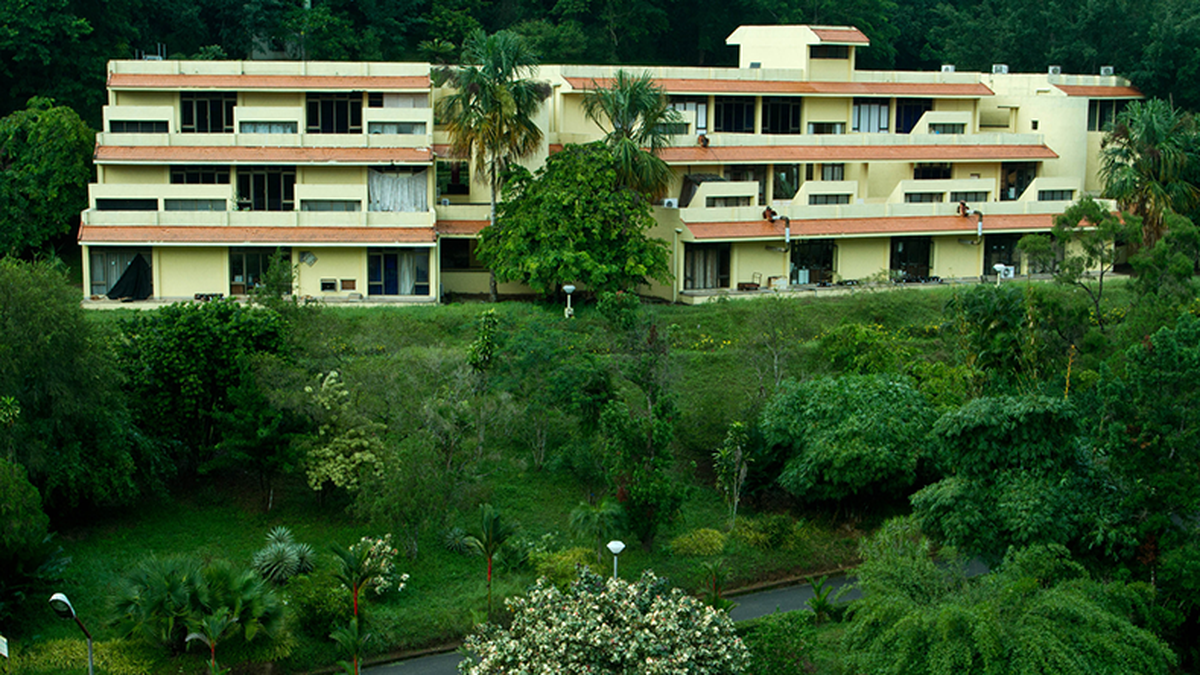
The prime example is the Jawaharlal Nehru Tropical Botanic Garden and Research Institute (JNTBGRI) in Palode, in Thiruvananthapuram district. Established following the United Nations Conference on the Human Environment in 1972, JNTBGRI transformed nearly 300 acres of forest into one of Asia’s finest centres for tropical plant research and conservation. It has housed more than 50,000 plant accessions representing over 5,000 species, and was for most of its life a living repository of India’s botanical wealth. Its achievements ranged from documenting biodiversity and conserving endangered plants to pioneering research on medicinal plants and sustainable utilisation of biological resources.
The institute also demonstrated how scientific research could benefit society. Its researchers’ development of ‘Jeevani’, an anti-fatigue herbal formulation, based on the traditional knowledge of the Kani tribe became an internationally acclaimed model of access and benefit-sharing. In 2024, JNTBGRI also received the Botanic Gardens Conservation International’s Global Genome Initiative for Gardens Award.
These accomplishments were only possible because successive generations of scientists enjoyed the freedom, leadership, and institutional stability that long-term research demands. Today, however, a large fraction of experienced scientists have retired and JNTBGRI has not adequately recruited their successors. The number of research scholars has also dwindled. Together, the technical expertise the institute built over decades is at risk of disappearing.

Poor timing
This crisis at JNTBGRI is actually symptomatic of a larger change in Kerala’s approach to science. Basic research has slowly but surely lost its place among the State’s public policy priorities. State and local governments are understandably attracted to projects that deliver visible and immediate outcomes — but that does not mean abdicating fundamental scientific research is okay. Only such research can lead to long-term innovation and value creation.
For example, discoveries in taxonomy, ecology, genetics, and plant biology usually take decades to turn into medicines, climate-resilient crops, and commercial technologies — but once they do, their effects become transformative. Short-term investments cannot achieve this.

India’s investments in biotechnology are expanding in a few clusters, including the ‘Genome Valley’ in Hyderabad.
| Photo Credit:
iMahesh (CC BY-SA)
Sadly, this retreat from basic research also comes at a time when the global bioeconomy is expanding at an unprecedented scale. Countries are investing heavily in biotechnology, natural products, synthetic biology, nutraceuticals, and biodiversity-based industries. Kerala has the raw material to participate in this revolution, including biodiversity and trained scientists and institutions with decades of expertise; what it crucially lacks at this time is a coherent long-term vision.
Conditions for success
Equally concerning is the gradual politicisation of scientific institutions. Research organisations thrive when scientific excellence determines leadership, recruitment, and institutional priorities. But when political considerations influence these decisions, the scientific culture inevitably suffers. Administrators replace academic leaders and long-term research planning gives way to a fondness for routine management. Thus scientific autonomy gradually erodes and institutions become less attractive to talented young researchers.
Many of Kerala’s leading scientific institutions were built by visionary scientists who enjoyed considerable administrative autonomy, including because their credibility stemmed from academic excellence rather than political affiliation. That culture now appears to be weakening, with the consequences going beyond laboratories. Scientific institutions are repositories of specialised knowledge that cannot be recreated overnight.
The State’s scientific ecosystem also suffers from a tendency to create new institutions while existing ones struggle with vacancies, ageing infrastructure, and declining manpower. New centres certainly have their place but scientific excellence cannot be built merely by inaugurating new buildings or announcing ambitious missions. Institutions mature through sustained investment in people, infrastructure, and the research culture.

So instead, the State should focus on revitalising its established centres of excellence. Institutions such as JNTBGRI, the Kerala Forest Research Institute, and the Malabar Botanical Garden already possess internationally recognised collections, infrastructure, and scientific credibility. Strengthening these institutions will yield greater dividends than continuously expanding the institutional landscape without adequately supporting existing facilities.
Changing relationship with science
Kerala also needs to rethink how it views biodiversity. Its forests, medicinal plants, endemic species, and traditional knowledge systems are ecological assets, yes, but they also present significant economic opportunities. With appropriate safeguards for conservation and equitable benefit-sharing, biological research can support biotechnology, pharmaceuticals, natural cosmetics, and climate-resilient agriculture. Around the world, scientists and policymakers are increasingly recognising biodiversity as the foundation of future bioeconomies. Kerala should be leading this transformation.
Reversing the decline will also require a renewed commitment to basic science, transparent and merit-based institutional leadership, timely recruitment of young scientists, greater research autonomy, and stronger partnerships with universities and responsible industries. Above all, policymakers must recognise that scientific institutions cannot be managed like routine administrative departments. They require long-term vision and intellectual freedom.
The trajectory of JNTBGRI reflects Kerala’s changing relationship with science. The State once demonstrated that patient investment in scientific institutions could produce global recognition, conservation success and innovations that benefited society. Allowing those institutions to weaken would represent not merely an administrative failure but a loss of one of Kerala’s, and indeed India’s, greatest intellectual assets.
The forests of the Western Ghats continue to hold countless scientific discoveries waiting to be made. Whether Kerala remains at the forefront of that exploration or becomes a spectator to opportunities seized elsewhere will depend on the choices policymakers make today.
Biju Dharmapalan is dean, Academic Affairs, Garden City University, Bengaluru and an adjunct faculty member at the National Institute of Advanced Studies, Bengaluru. bijudharmapalan@gmail.com
Published – July 13, 2026 09:00 am IST