



Skip to content
  • Facebook
  • X
  • Linkedin
  • WhatsApp
  • YouTube
  • Associate Journalism
  • About Us
  • Privacy Policy
  • 033-46046046
  • editor@artifex.news
Artifex.News

Artifex.News

Stay Connected. Stay Informed.

  • Breaking News
  • World
  • Nation
  • Sports
  • Business
  • Science
  • Entertainment
  • Lifestyle
  • Toggle search form
  • Palestinian PM Mohammed Shtayyeh submits resignation, a move that could open door to reforms
    Palestinian PM Mohammed Shtayyeh submits resignation, a move that could open door to reforms World
  • ATF price cut by steep 7%, commercial LPG rate up ₹111 per cylinder
    ATF price cut by steep 7%, commercial LPG rate up ₹111 per cylinder Business
  • Dalai Lama backs Pope Leo’s peace appeal, urges to end global conflicts
    Dalai Lama backs Pope Leo’s peace appeal, urges to end global conflicts World
  • Amid global uncertainty, assertive Sanae Takaichi has the mandate to pursue structural reforms: Sanjaya Baru
    Amid global uncertainty, assertive Sanae Takaichi has the mandate to pursue structural reforms: Sanjaya Baru World
  • RBI monetary panel member sees no challenges in Indian economy growing over 6.5% in FY26
    RBI monetary panel member sees no challenges in Indian economy growing over 6.5% in FY26 Business
  • India Signs  Million Project Agreement With International Solar Alliance
    India Signs $2 Million Project Agreement With International Solar Alliance World
  • Access Denied
    Access Denied Nation
  • Belgian Football Star Eden Hazard Announces Retirement
    Belgian Football Star Eden Hazard Announces Retirement Sports
India needs a risk-based approach to food adulteration: Sukhvinder Pal Singh

India needs a risk-based approach to food adulteration: Sukhvinder Pal Singh

Posted on September 18, 2026 By admin


Australia-based food-safety scientist Sukhvinder Pal Singh, whose roots hail from a family of farmers in Una, Himachal Pradesh, is a senior research scientist with the New South Wales Department of Primary Industries and Regional Development, in Ourimbah. Fondly called SP Singh, at 46, he leads research on fresh-produce safety and traceability.

His work following Australia’s deadly 2018 Listeria (bacteria in rockmelons) outbreak — which infected 22 people, killed seven, and caused a miscarriage — helped drive changes in horticultural food-safety practices. In 2025, he received the Australian Institute of Food Science and Technology’s national Food Safety Award. Excerpts from an interview on how to curb India’s rising food adulteration incidences:

How serious is food adulteration as a public-health problem in India and who does it hit the most?


Low- to medium-income households are more prone to food fraud due to affordability and accessibility issues. While some adulteration is primarily an economic deception, some can create genuine health risks.

There is also a significant data and knowledge gap regarding population exposure to chemical contaminants, heavy metals, environmental toxins, microplastics and antimicrobial-resistant organisms through food and water. Comprehensive and easily accessible public data on the scale and cumulative impact of these exposures remain limited, while the long-term health consequences of some emerging contaminants are still not fully understood.

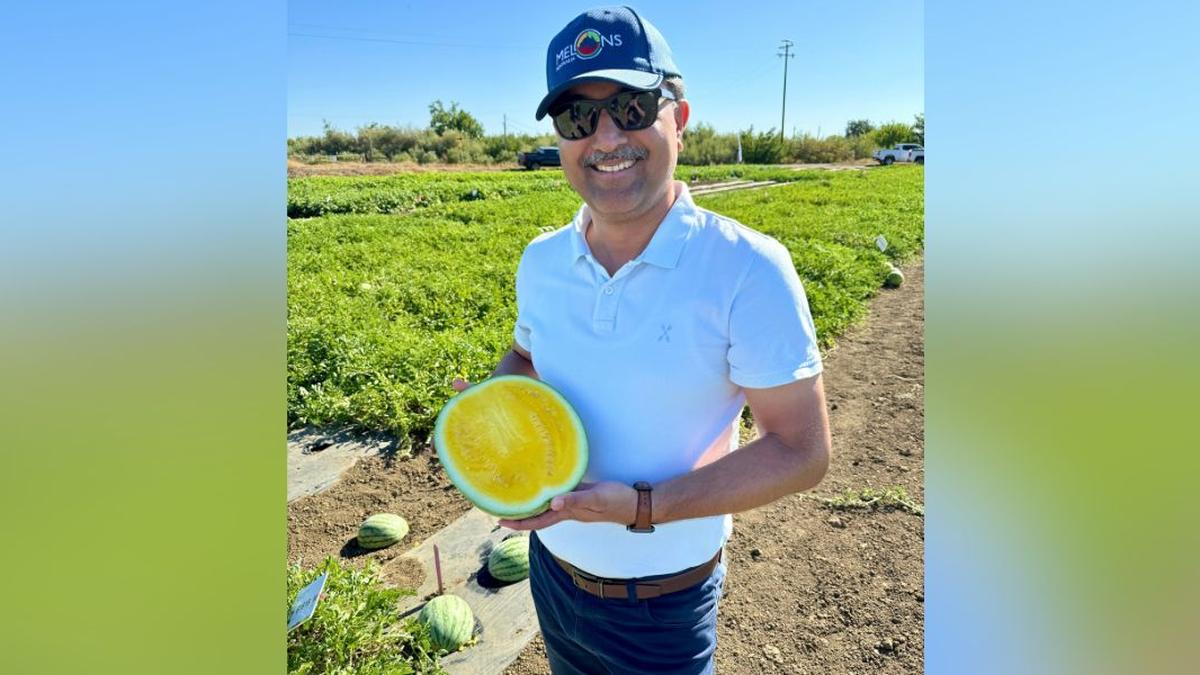
Sukhvinder Pal Singh, senior research scientist, New South Wales Department of Primary Industries and Regional Development, Ourimbah, Australia.

Sukhvinder Pal Singh, senior research scientist, New South Wales Department of Primary Industries and Regional Development, Ourimbah, Australia.
| Photo Credit:
Special arrangement

Where is India going wrong in tackling adulteration?


A major weakness is the lack of a sufficiently systematic, intelligence-led and risk-based approach to food fraud and contamination. The system needs to identify food supply chains that are particularly vulnerable to adulteration, substitution, misleading labelling or contamination and determine where in the supply chain these risks are most likely to originate or occur at scale and who are the supply chain actors involved. Enforcement can become fragmented when it is overly concentrated on inspections and sampling at the retail end.

Why isn’t catching adulterated food at shops and markets enough?


Given the enormous scale and complexity of India’s formal and informal food economy, from farms and mandis to processors, distributors, restaurants, street vendors and households, monitoring compliance at the final point of sale cannot adequately control risks that originate much earlier in the supply chain.

What should India do immediately to control food adulteration?


First, make high-risk food chains safer through risk-based, intelligence-led enforcement. Rather than attempting to fix every part of an enormous and complex food system simultaneously, India should identify, perhaps, top 10 high-risk, high-volume food categories and address them systematically. These could include milk and dairy products, spices, edible oils, meat and seafood, and fresh produce.

For each commodity, authorities should map the entire supply chain and identify where adulteration, substitution, contamination and temperature abuse are most likely to occur. Regulatory resources should be concentrated at these critical points, particularly bulk manufacturers, processors and distributors, rather than relying predominantly on end-point retail sampling.

Can India make a noticeable difference without overhauling the entire food system?

 India does not need to wait for a complete transformation of its food system before achieving meaningful improvements. It can concentrate resources on a manageable number of high-risk food chains, build safer behaviour from the household upwards, and prepare now for the growing pressures of heat and flooding. The objective should be to move from a system that predominantly detects problems after they occur to one that anticipates where the greatest risks will arise and intervenes before unsafe food reaches the consumer.




Source link

Science Tags:food adulteration, food adulteration in India, food contamination, food fraud, food safety, food safety in India, food safety regulations, food safety scientist, food supply chain, india, risk-based food safety, Sukhvinder Pal Singh, Sukhvinder Pal Singh interview

Post navigation

Previous Post: Coimbatore Corporation gives vacant plot owners 15 days to clean premises
Next Post: Who’s watching what we eat? Inside India’s food adulteration problem

Related Posts

  • Ancient spice route may have shaped Keralam’s Malabari goat’s genetic legacy, study shows
    Ancient spice route may have shaped Keralam’s Malabari goat’s genetic legacy, study shows Science
  • Science This Week | CSIR announces Bhatnagar prize winners, NASA names chief of UFO research and more
    Science This Week | CSIR announces Bhatnagar prize winners, NASA names chief of UFO research and more Science
  • How does the brain turn light waves into experiences of colour?
    How does the brain turn light waves into experiences of colour? Science
  • India’s private space sector | History, start-up boom, policy liberalisation & ISRO’s role explained
    India’s private space sector | History, start-up boom, policy liberalisation & ISRO’s role explained Science
  • A liver protein triggered by exercise reversed memory loss in mice
    A liver protein triggered by exercise reversed memory loss in mice Science
  • India is running out of phosphorus. Does the solution lie in our sewage?
    India is running out of phosphorus. Does the solution lie in our sewage? Science

More Related Articles

We’ve seen matter become light. What about the other way? We’ve seen matter become light. What about the other way? Science
With Sci-Hub gone, will the ‘One Nation, One Subscription’ scheme step up? With Sci-Hub gone, will the ‘One Nation, One Subscription’ scheme step up? Science
Chandrayaan-3 | ‘Smile, please!’ Pragyan’s cameras capture Vikram Chandrayaan-3 | ‘Smile, please!’ Pragyan’s cameras capture Vikram Science
Babies in Nigeria being born with antibiotic resistant bacteria Babies in Nigeria being born with antibiotic resistant bacteria Science
Biochar offers a way to turn India’s farm smoke into ‘black gold’ Biochar offers a way to turn India’s farm smoke into ‘black gold’ Science
The way we name cancers could affect access to treatment, researchers say The way we name cancers could affect access to treatment, researchers say Science
SiteLock

Archives

  • September 2026
  • August 2026
  • July 2026
  • June 2026
  • May 2026
  • April 2026
  • March 2026
  • February 2026
  • January 2026
  • December 2025
  • November 2025
  • October 2025
  • September 2025
  • August 2025
  • July 2025
  • June 2025
  • May 2025
  • April 2025
  • March 2025
  • February 2025
  • January 2025
  • December 2024
  • November 2024
  • October 2024
  • September 2024
  • August 2024
  • July 2024
  • June 2024
  • May 2024
  • April 2024
  • March 2024
  • February 2024
  • January 2024
  • December 2023
  • November 2023
  • October 2023
  • September 2023
  • August 2023
  • July 2023
  • June 2023
  • May 2023
  • April 2023
  • March 2023
  • February 2023
  • January 2023
  • December 2022
  • November 2022
  • October 2022
  • September 2022
  • August 2022
  • July 2022
  • June 2022
  • May 2022

Categories

  • Business
  • Nation
  • Science
  • Sports
  • World

Recent Posts

  • Agarkar’s eventful stint as chief selector all but over
  • Fisheries Minister visits five coastal hamlets of Tirunelveli district; meets fishermen to understand their problems, demands
  • Manipal Health repays ₹5,310 crore debt using IPO proceeds
  • CSIR-CFTRI inaugurates integrated oilseed processing unit
  • Who’s watching what we eat? Inside India’s food adulteration problem

Recent Comments

  1. Jamesslits on UP Teacher Who Asked Students To Slap Muslim Classmate
  2. Jamesslits on UP Teacher Who Asked Students To Slap Muslim Classmate
  3. MichaelClear on UP Teacher Who Asked Students To Slap Muslim Classmate
  4. CharleshIc on UP Teacher Who Asked Students To Slap Muslim Classmate
  5. MichaelClear on UP Teacher Who Asked Students To Slap Muslim Classmate
  • Boyfriend Stabs 20-Year-Old To Death Near Mumbai, Dumps Body In Bushes: Cops
    Boyfriend Stabs 20-Year-Old To Death Near Mumbai, Dumps Body In Bushes: Cops Nation
  • Access Denied Business
  • U.S. faces shortage of IV fluids, India alerts domestic firms to chip in 
    U.S. faces shortage of IV fluids, India alerts domestic firms to chip in  Business
  • Access Denied World
  • Access Denied
    Access Denied Nation
  • Newborn Declared Dead By UP Hospital, Then Dogs Eat His Head
    Newborn Declared Dead By UP Hospital, Then Dogs Eat His Head Nation
  • “Huge Hole Will Be Left”: Stuart Broad On England Pacer James Anderson’s Retirement
    “Huge Hole Will Be Left”: Stuart Broad On England Pacer James Anderson’s Retirement Sports
  • Access Denied Business

Editor-in-Chief:
Mohammad Ariff,
MSW, MAJMC, BSW, DTL, CTS, CNM, CCR, CAL, RSL, ASOC.
editor@artifex.news

Associate Editors:
1. Zenellis R. Tuba,
zenelis@artifex.news
2. Haris Daniyel
daniyel@artifex.news

Photograher:
Rohan Das
rohan@artifex.news

Artifex.News offers Online Paid Internships to college students from India and Abroad. Interns will get a PRESS CARD and other online offers.
Send your CV (Subjectline: Paid Internship) to internship@artifex.news

Links:
Associate Journalism
About Us
Privacy Policy

News Links:
Breaking News
World
Nation
Sports
Business
Entertainment
Lifestyle

Registered Office:
72/A, Elliot Road, Kolkata - 700016
Tel: 033-22277777, 033-22172217
Email: office@artifex.news

Editorial Office / News Desk:
No. 13, Mezzanine Floor, Esplanade Metro Rail Station,
12 J. L. Nehru Road, Kolkata - 700069.
(Entry from Gate No. 5)
Tel: 033-46011099, 033-46046046
Email: editor@artifex.news

Copyright © 2023 Artifex.News Newsportal designed by Artifex Infotech.