
Skip to content
  • Facebook
  • X
  • Linkedin
  • WhatsApp
  • YouTube
  • Associate Journalism
  • About Us
  • Privacy Policy
  • 033-46046046
  • editor@artifex.news
Artifex.News

Artifex.News

Stay Connected. Stay Informed.

  • Breaking News
  • World
  • Nation
  • Sports
  • Business
  • Science
  • Entertainment
  • Lifestyle
  • Toggle search form
  • BJP Gets Fresh ‘Sheesh Mahal’ Ammo After Centre Audit
    BJP Gets Fresh ‘Sheesh Mahal’ Ammo After Centre Audit Nation
  • Punjab Reports 587 Farm Fires Today, Highest Single-Day Spike This Season
    Punjab Reports 587 Farm Fires Today, Highest Single-Day Spike This Season Nation
  • Benchmark indices trade lower on foreign fund outflows, renewed concerns over tariff hikes
    Benchmark indices trade lower on foreign fund outflows, renewed concerns over tariff hikes Business
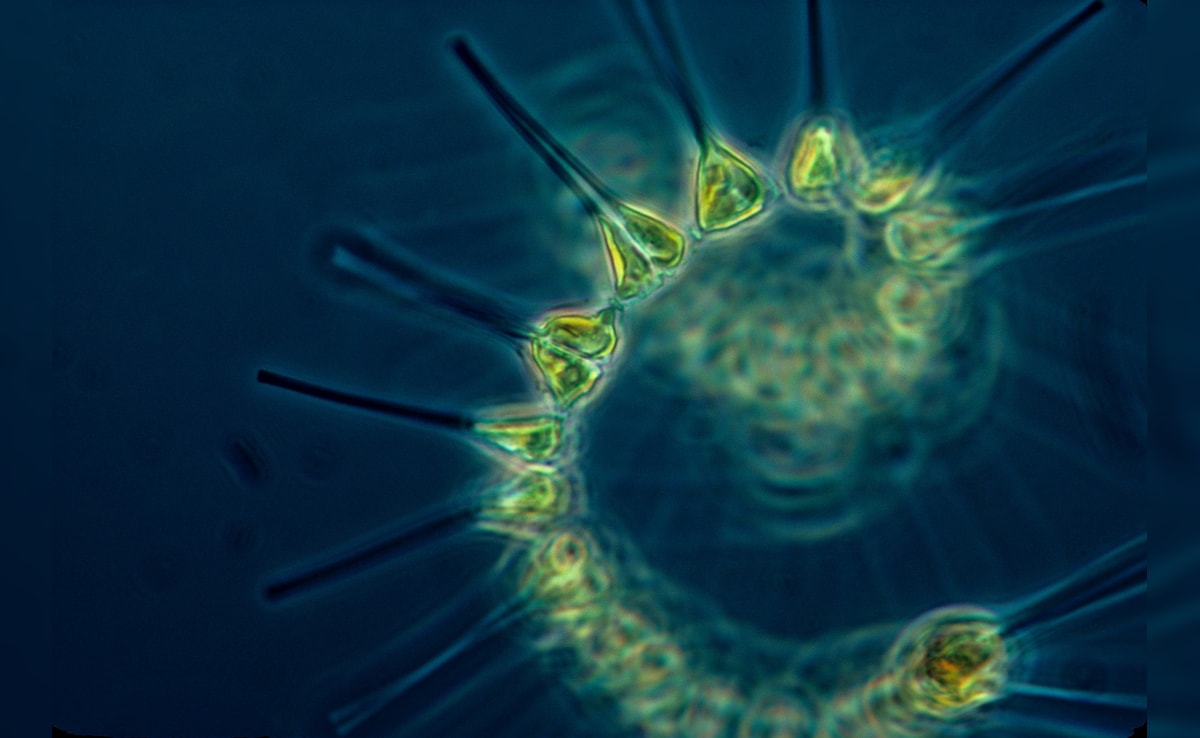
  • Ocean Plankton Survived Ice Age But May Not Cope With Climate Change Now
    Ocean Plankton Survived Ice Age But May Not Cope With Climate Change Now World
  • Access Denied
    Access Denied Nation
  • Access Denied Business
  • India Sees Record Rise In Exports, Employment At 18-Year High In May: PMI Data
    India Sees Record Rise In Exports, Employment At 18-Year High In May: PMI Data Nation
  • Why has Delhi University allowed some colleges to admit students based on Class 12 marks? | Explained
    Why has Delhi University allowed some colleges to admit students based on Class 12 marks? | Explained Nation
Census 2027: Statistics and Statecraft

Census 2027: Statistics and Statecraft

Posted on August 31, 2026 By admin


A census enumeration team visits homes in Vattiyoorkavu locality.
| Photo Credit: NIRMAL HARINDRAN

The census questionnaire is perhaps the most comprehensive manuscript of a nation’s social, economic and political evolution. Far from being a neutral statistical exercise, it is also a record of the state’s priorities and anxieties at a given moment. Every new question added, and every old one dropped, offers clues about what a society values, what policymakers seek to measure, and how governments perceive their citizens.

The evolution of census questionnaires across the world reflects this intimate relationship between statistics and statecraft. The population enumeration phase of the Census, scheduled to begin next month, will have 13 new or modified questions compared with the 2011 Census, including details of a person’s father and mother and their places of birth. These questions were also part of the National Population Register schedule notified in 2020, sparking a political debate, with opposition questioning the government’s motive.

Australia, which conducts a census every five years, included eight questions on heritage and migration backgrounds in its latest census, completed in August 2026. The emphasis is unsurprising in a country where immigration remains one of the defining political debates and where over a third of the population was born overseas. The questionnaire reflects not merely demographic realities but also contemporary political concerns.

India’s census forms tell a similar story. As “Population Census in India: A Futuristic Perspective” by Seema Jain and Madhav Shyam shows, changes in the census schedule over the past century and a half mirror India’s transition from a colonial possession to a developmental state, and later to a society increasingly concerned with welfare delivery, urbanisation, financial inclusion and social identity.

Popularly, 1872 census is considered to be the first for the Indian subcontinent, though it covered only the tracts that were under British rule. The questionnaire framed by the imperial government was shaped by colonial imperatives. Religion, caste and community formed the backbone of enumeration because understanding and categorising Indian society was critical to colonial governance. Educational qualification, taken for granted in modern surveys, appeared only in the 1941 census.

One of the most significant shifts occurred after Independence with the rise of planning. The demands of the Five-Year Plans exposed major gaps in information about housing, infrastructure and living standards. Until 1951, states followed their own houselisting formats, making nationwide comparisons difficult. The introduction of a uniform houselisting schedule in 1961 represented more than administrative standardisation; it reflected a state increasingly interested in measuring the material conditions of its population.

The evolution of the houselisting schedule over subsequent decades maps India’s development trajectory. The 1961 schedule focused on basic housing characteristics such as building material, tenure status and number of rooms. By 1991, it had expanded to include drinking water, electricity, sanitation and cooking fuel, reflecting a growing focus on basic services and rural infrastructure. The shift became even more pronounced in 2001 and 2011, when questions on bathrooms, kitchens, drainage connections, household assets, electricity sources and access to banking facilities moved the census beyond counting houses to assessing quality of life. The census was increasingly measuring developmental outcomes rather than merely recording demographic facts.

The treatment of work in the census offers another window into changing economic thinking. Early censuses employed relatively narrow definitions of work. By 1991, unpaid labour on family farms and enterprises was recognised as work, signalling a broader understanding of economic contribution in a largely agrarian society. The introduction of categories such as main workers, marginal workers and non-workers reflected the state’s growing concern with labour participation and underemployment rather than simple occupational classification.Migration provides a similar example. From 1981, the forms started recording birth and the last place of residence, to capture the data on migration.

The evolution of questions relating to family and gender also reveals changing social attitudes. Marital status classifications gradually expanded from a simple distinction between married, unmarried and widowed persons to include separated and divorced persons. The introduction of age at marriage in 2001 reflected increasing policy attention to gender, reproductive health and social development. Likewise, the recognition of a category other than male and female in 2011, and the subsequent adoption of the category “transgender person”, marked an acknowledgement of identities that earlier census frameworks had erased.

Urbanisation emerged as another major concern. The dedicated enumeration of slum populations in 2001 and the expansion of such coverage in 2011 reflected growing awareness that India’s urban story could not be understood without accounting for informal settlements. The decision to collect more detailed slum data was itself a recognition that urban poverty had become a central development challenge.

Seen in totality, the history of the Indian census questionnaire is the history of the Indian state itself.

Published – August 31, 2026 12:22 pm IST


Source link

Nation Tags:Census 2027, india census 2027, india census questionnaire, india census questions

Post navigation

Previous Post: PM Modi pays tribute to Mahatma Gandhi in Kyrgyzstan
Next Post: ₹10 lakh ex gratia for families of Chilakaluripet accident victims, announces Chandrababu Naidu

Related Posts

  • Access Denied
    Access Denied Nation
  • Access Denied
    Access Denied Nation
  • As India, Vietnam Strengthen Ties, PM Modi Speaks Against ‘Expansionism’
    As India, Vietnam Strengthen Ties, PM Modi Speaks Against ‘Expansionism’ Nation
  • Temple festival conducted in village is not merely religious event, it is social institution intended to unite people, says HC
    Temple festival conducted in village is not merely religious event, it is social institution intended to unite people, says HC Nation
  • Watch: Abhijeet Dipke: Attack on me an effort to divert from real issue
    Watch: Abhijeet Dipke: Attack on me an effort to divert from real issue Nation
  • Drunk Man Starts Fire At Petrol Pump On “Dare”
    Drunk Man Starts Fire At Petrol Pump On “Dare” Nation

More Related Articles

Access Denied Access Denied Nation
First Reactions From First-Time MPs First Reactions From First-Time MPs Nation
Access Denied Access Denied Nation
CBI Charges Karti Chidambaram In Fresh Corruption Case CBI Charges Karti Chidambaram In Fresh Corruption Case Nation
SiteLock

Archives

  • October 2026
  • September 2026
  • August 2026
  • July 2026
  • June 2026
  • May 2026
  • April 2026
  • March 2026
  • February 2026
  • January 2026
  • December 2025
  • November 2025
  • October 2025
  • September 2025
  • August 2025
  • July 2025
  • June 2025
  • May 2025
  • April 2025
  • March 2025
  • February 2025
  • January 2025
  • December 2024
  • November 2024
  • October 2024
  • September 2024
  • August 2024
  • July 2024
  • June 2024
  • May 2024
  • April 2024
  • March 2024
  • February 2024
  • January 2024
  • December 2023
  • November 2023
  • October 2023
  • September 2023
  • August 2023
  • July 2023
  • June 2023
  • May 2023
  • April 2023
  • March 2023
  • February 2023
  • January 2023
  • December 2022
  • November 2022
  • October 2022
  • September 2022
  • August 2022
  • July 2022
  • June 2022
  • May 2022

Categories

  • Business
  • Nation
  • Science
  • Sports
  • World

Recent Posts

  • Umpire exchange programme: Australian umpire Ben Treloar to officiate two Ranji Trophy matches
  • Tamil Nadu government orders additional 25 days of guaranteed employment for vulnerable rural households
  • Pakistan cuts GDP growth estimate to 3.65 per cent in fiscal year 2026
  • Lula takes to streets with people’s demands as Flávio leans on Big Tech in Brazil’s presidential race
  • Sahil Wakode death case: Parents seek CM intervention in demise of IIT Bombay student

Recent Comments

  1. AndrewDuS on UP Teacher Who Asked Students To Slap Muslim Classmate
  2. JamesIcora on UP Teacher Who Asked Students To Slap Muslim Classmate
  3. JerryExpix on UP Teacher Who Asked Students To Slap Muslim Classmate
  4. AndrewDuS on UP Teacher Who Asked Students To Slap Muslim Classmate
  5. DavidRen on UP Teacher Who Asked Students To Slap Muslim Classmate
  • UK PM Stays Quiet On Ukraine’s Use Of Long-Range Missiles Against Russia
    UK PM Stays Quiet On Ukraine’s Use Of Long-Range Missiles Against Russia World
  • Congress Drops Supriya Shrinate As Poll Pick From Maharajganj UP Amid Row Over Remarks On Kangana Ranaut
    Congress Drops Supriya Shrinate As Poll Pick From Maharajganj UP Amid Row Over Remarks On Kangana Ranaut Nation
  • Access Denied World
  • Access Denied Sports
  • Italy and Balkans endure heatwave, U.S. also faces soaring temperatures
    Italy and Balkans endure heatwave, U.S. also faces soaring temperatures World
  • Access Denied
    Access Denied Nation
  • Stock Market Today: Markets decline in early trade after record-breaking rally
    Stock Market Today: Markets decline in early trade after record-breaking rally Business
  • Access Denied World

Editor-in-Chief:
Mohammad Ariff,
MSW, MAJMC, BSW, DTL, CTS, CNM, CCR, CAL, RSL, ASOC.
editor@artifex.news

Associate Editors:
1. Zenellis R. Tuba,
zenelis@artifex.news
2. Haris Daniyel
daniyel@artifex.news

Photograher:
Rohan Das
rohan@artifex.news

Associate Journalists
1. Subrata Paul - AN/2020/01
2. Quamruz Zaman - AN/2021/22
3. Ahmed Sha - AN/2021/035
4. Ajay Kumar Shaw - AN/2021/39
5. Tahqiqul Hoda - AN/2021/21

Artifex.News offers Online Paid Internships to college students from India and Abroad. Interns will get a PRESS CARD and other online offers.
Send your CV (Subjectline: Paid Internship) to internship@artifex.news

Links:
Associate Journalism
About Us
Privacy Policy

News Links:
Breaking News
World
Nation
Sports
Business
Entertainment
Lifestyle

Registered Office:
72/A, Elliot Road, Kolkata - 700016
Tel: 033-22277777, 033-22172217
Email: office@artifex.news

Editorial Office / News Desk:
No. 13, Mezzanine Floor, Esplanade Metro Rail Station,
12 J. L. Nehru Road, Kolkata - 700069.
(Entry from Gate No. 5)
Tel: 033-46011099, 033-46046046
Email: editor@artifex.news

Copyright © 2023 Artifex.News Newsportal designed by Artifex Infotech.
