

Skip to content
  • Facebook
  • X
  • Linkedin
  • WhatsApp
  • YouTube
  • Associate Journalism
  • About Us
  • Privacy Policy
  • 033-46046046
  • editor@artifex.news
Artifex.News

Artifex.News

Stay Connected. Stay Informed.

  • Breaking News
  • World
  • Nation
  • Sports
  • Business
  • Science
  • Entertainment
  • Lifestyle
  • Toggle search form
  • India Sends Relief Supplies To Typhoon-Hit Myanmar, Laos And Vietnam
    India Sends Relief Supplies To Typhoon-Hit Myanmar, Laos And Vietnam World
  • Access Denied Sports
  • Asian Games 2026: Shafali’s fiery ton fires India to women’s cricket final, ensures medal
    Asian Games 2026: Shafali’s fiery ton fires India to women’s cricket final, ensures medal Sports
  • Odisha Man, 25, Jailed For Life For Raping Woman
    Odisha Man, 25, Jailed For Life For Raping Woman Nation
  • IPL 2024: Mumbai Indians End At Bottom Of Points Table With Loss To Lucknow Super Giants
    IPL 2024: Mumbai Indians End At Bottom Of Points Table With Loss To Lucknow Super Giants Sports
  • Hamas says its longtime spokesman was killed following an Israeli strike in August
    Hamas says its longtime spokesman was killed following an Israeli strike in August World
  • Access Denied Sports
  • U.S. Senator Lindsey Graham passes away at 71
    U.S. Senator Lindsey Graham passes away at 71 World
Ocean Plankton Survived Ice Age But May Not Cope With Climate Change Now

Ocean Plankton Survived Ice Age But May Not Cope With Climate Change Now

Posted on November 18, 2024 By admin


Global temperature records are expected to exceed the 1.5 °C threshold for the first time this year. This has happened much sooner than predicted. So can life on the planet adapt quickly enough?

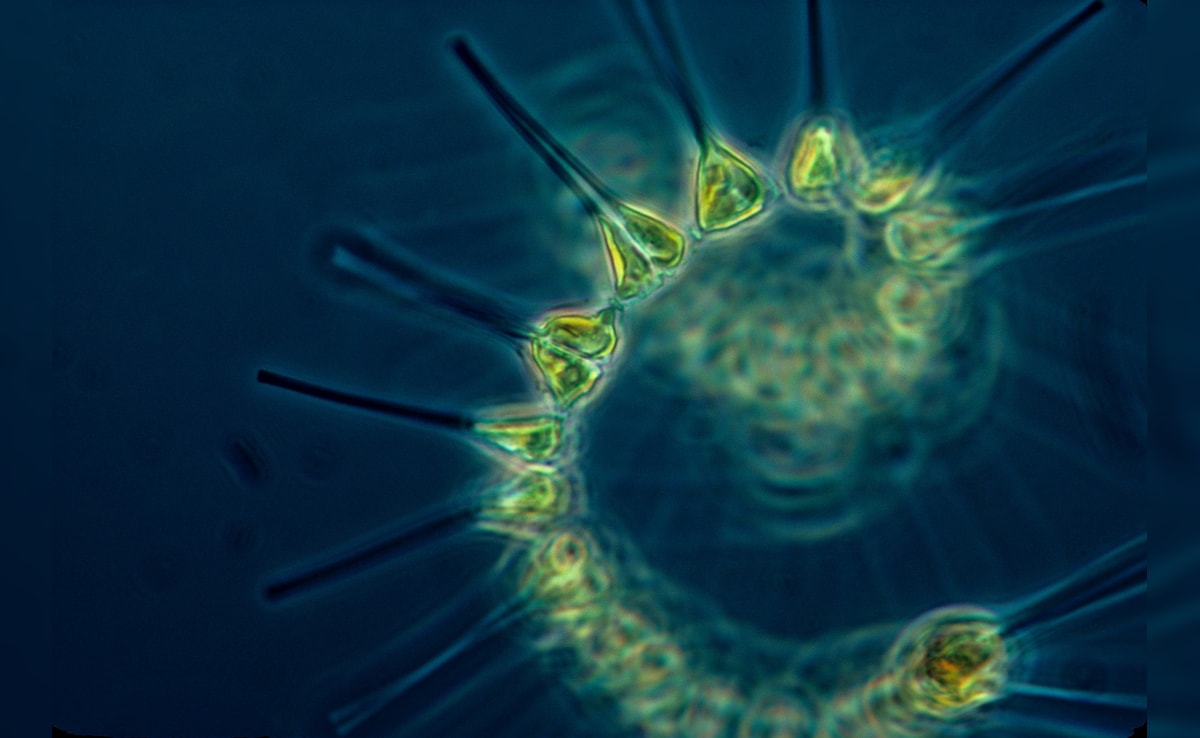
In our new research, published today in Nature, we explored the ability of tiny marine organisms called plankton to adapt to global warming. Our conclusion: some plankton are less able to adapt now than they were in the past.

Plankton live in the top few metres of ocean. These algae (phytoplankton) and animals (zooplankton) are transported by ocean currents as they do not actively swim.

Climate change is increasing the frequency of heatwaves in the sea. But predicting the future effects of climate change is difficult because some projections depend on ocean physics and chemistry, while others consider the effects on ecosystems and their services.

Some data suggest that current climate change have already altered the marine plankton dramatically. Models project a shift of plankton towards both poles (where ocean temperatures are cooler), and losses to zooplankton in the tropics but might not predict the patterns we see in data. Satellite data for plankton biomass are still too short term to determine trends through time.

To overcome these problems, we have compared how plankton responded to past environmental change and modelled how they could respond to future climate changes. As the scientist Charles Lyell said, “the past is the key to the present”.

We explored one of the best fossil records from a group of marine plankton with hard shells called Foraminifera. This comprehensive database of current and past distributions, compiled by researchers at the University of Bremen, has been collected by hundreds of scientists from the seafloor across the globe since the 1960s. We compared data from the last ice age, around 21,000 years ago, and modern records to see what happened when the world has previously warmed.

We used computational models, which combine climate trends with traits of marine plankton and their effect on marine plankton, to simulate the oceanic ecosystems from the last ice age to the pre-industrial age. Comparing the model with the data from the fossil record is giving us support that the model simulated the rules determining plankton growth and distribution.

We found that some subtropical and tropical species’ optimum temperature for peak growth and reproduction could deal with seawater warming in the past, supported by both fossil data and model. Colder water species of plankton managed to drift to flourish under more favourable water temperatures.

Our analysis shows that Foraminifera could handle the natural climate change, even without the need to adapt via evolution. But could they deal with the current warming and future changes in ocean conditions, such as temperature?

Future of the food chain

We used this model to predict the future under four different degrees of warming from 1.5 to 4 °C. Unfortunately, this type of plankton’s ability to deal with climate change is much more limited than it was during past warming. Our study highlights the difference between faster human-induced and slower-paced geological warming for marine plankton. Current climate change is too rapid and is reducing food supply due to ocean stratification, both making plankton difficult to adapt to this time.

Phytoplankton produce around 50% of the world’s oxygen. So every second breath we take comes from marine algae, while the rest comes from plants on land. Some plankton eat other plankton. That in turn gets eaten by fish and then marine mammals, so energy transfers further up the food chain. As it photosynthesises, phytoplankton is also a natural carbon fixation machine, storing 45 times more carbon than the atmosphere.

Around the world, many people depend heavily on food from the ocean as their primary protein sources. When climate change threatens marine plankton, this has huge knock-on effects throughout the rest of the marine food web. Plankton-eating marine mammals like whales won’t have enough food to prey on and there’ll be fewer fish to eat for predators (and people). Reducing warming magnitude and slowing down the warming rate are necessary to protect ocean health.

(Author: Rui Ying, Postdoctoral Researcher, Marine Ecology, University of Bristol and Daniela Schmidt, Professor in Palaebiology, University of Bristol

Disclosure Statement: Rui Ying received funding from China Scholarship Council for this study.

Daniela Schmidt received funding from NERC. She is a member of NERC Science Committee and the council of the Palaeontological Association.)

This article is republished from The Conversation under a Creative Commons license. Read the original article.



Source link

World Tags:Climate change, extinction, marine plankton, ocean plankton, plankton

Post navigation

Previous Post: “We Sacrifice A Lot…”: On Rohit Sharma Missing 1st Test, Australia Star’s Blunt Take
Next Post: Elon Musk Reacts To His Viral LOL Moment

Related Posts

  • Elon Musk, Neil deGrasse Tyson Clash Again Over Mars Colonisation: “It Doesn’t Happen”
    Elon Musk, Neil deGrasse Tyson Clash Again Over Mars Colonisation: “It Doesn’t Happen” World
  • Israel PM Netanyahu acknowledges ‘tragic mistake’ after Rafah strike kills dozens of Palestinians
    Israel PM Netanyahu acknowledges ‘tragic mistake’ after Rafah strike kills dozens of Palestinians World
  • Outrage over controversial U.K. professorship for business tycoon Anant Ambani
    Outrage over controversial U.K. professorship for business tycoon Anant Ambani World
  • Access Denied World
  • Childbirths In South Korea Rises By Largest Margin In 14 Years In September
    Childbirths In South Korea Rises By Largest Margin In 14 Years In September World
  • How Beijing innovates: Lessons from China’s market-state hybrid model World

More Related Articles

India initiates anti-dumping probe against three Chinese products India initiates anti-dumping probe against three Chinese products World
Telangana Cabinet decides to conduct last rites of bus accident victims in Saudi Arabia Telangana Cabinet decides to conduct last rites of bus accident victims in Saudi Arabia World
In the Strait of Hormuz, Iran draws its red lines In the Strait of Hormuz, Iran draws its red lines World
Study Explains How Traffic Noise, Pollution Are Linked To Infertility Study Explains How Traffic Noise, Pollution Are Linked To Infertility World
Access Denied World
Sydney Ashes Test begins with tribute to Bondi shooting responders Sydney Ashes Test begins with tribute to Bondi shooting responders World
SiteLock

Archives

  • October 2026
  • September 2026
  • August 2026
  • July 2026
  • June 2026
  • May 2026
  • April 2026
  • March 2026
  • February 2026
  • January 2026
  • December 2025
  • November 2025
  • October 2025
  • September 2025
  • August 2025
  • July 2025
  • June 2025
  • May 2025
  • April 2025
  • March 2025
  • February 2025
  • January 2025
  • December 2024
  • November 2024
  • October 2024
  • September 2024
  • August 2024
  • July 2024
  • June 2024
  • May 2024
  • April 2024
  • March 2024
  • February 2024
  • January 2024
  • December 2023
  • November 2023
  • October 2023
  • September 2023
  • August 2023
  • July 2023
  • June 2023
  • May 2023
  • April 2023
  • March 2023
  • February 2023
  • January 2023
  • December 2022
  • November 2022
  • October 2022
  • September 2022
  • August 2022
  • July 2022
  • June 2022
  • May 2022

Categories

  • Business
  • Nation
  • Science
  • Sports
  • World

Recent Posts

  • AIADMK, BJP leaders slam TVK-led Tamil Nadu government over electricity purchase at high rate
  • Two arrested for attacking security guard with knife in Besant Nagar
  • Women stage silent demonstration at Kathipara against police action on anti-CEC protesters in Delhi
  • DGCA bans specific power banks on flights
  • Saudi Supreme Court sets aside Sri Lankan migrant worker’s death penalty

Recent Comments

  1. RobertTes on UP Teacher Who Asked Students To Slap Muslim Classmate
  2. Manuelret on UP Teacher Who Asked Students To Slap Muslim Classmate
  3. RobertTes on UP Teacher Who Asked Students To Slap Muslim Classmate
  4. RobertTes on UP Teacher Who Asked Students To Slap Muslim Classmate
  5. BrentWes on UP Teacher Who Asked Students To Slap Muslim Classmate
  • Access Denied Sports
  • Stock markets surge in early trade as crude oil prices drop sharply
    Stock markets surge in early trade as crude oil prices drop sharply Business
  • Syria’s long-ruling Baath party faces collapse
    Syria’s long-ruling Baath party faces collapse World
  • Access Denied Business
  • Copa America Closing Ceremony LIVE: When And Where To Watch LIVE Telecast, LIVE Streaming
    Copa America Closing Ceremony LIVE: When And Where To Watch LIVE Telecast, LIVE Streaming Sports
  • Japan Summons China’s Ambassador Over Fukushima Crank Name
    Japan Summons China’s Ambassador Over Fukushima Crank Name World
  • Modi government has put India’s education system into ICU: Congress
    Modi government has put India’s education system into ICU: Congress Nation
  • New Zealand’s Māori King dies after 18-year reign
    New Zealand’s Māori King dies after 18-year reign World

Editor-in-Chief:
Mohammad Ariff,
MSW, MAJMC, BSW, DTL, CTS, CNM, CCR, CAL, RSL, ASOC.
editor@artifex.news

Associate Editors:
1. Zenellis R. Tuba,
zenelis@artifex.news
2. Haris Daniyel
daniyel@artifex.news

Photograher:
Rohan Das
rohan@artifex.news

Associate Journalists
1. Subrata Paul - AN/2020/01
2. Quamruz Zaman - AN/2021/22
3. Ahmed Sha - AN/2021/035
4. Ajay Kumar Shaw - AN/2021/39
5. Tahqiqul Hoda - AN/2021/21

Artifex.News offers Online Paid Internships to college students from India and Abroad. Interns will get a PRESS CARD and other online offers.
Send your CV (Subjectline: Paid Internship) to internship@artifex.news

Links:
Associate Journalism
About Us
Privacy Policy

News Links:
Breaking News
World
Nation
Sports
Business
Entertainment
Lifestyle

Registered Office:
72/A, Elliot Road, Kolkata - 700016
Tel: 033-22277777, 033-22172217
Email: office@artifex.news

Editorial Office / News Desk:
No. 13, Mezzanine Floor, Esplanade Metro Rail Station,
12 J. L. Nehru Road, Kolkata - 700069.
(Entry from Gate No. 5)
Tel: 033-46011099, 033-46046046
Email: editor@artifex.news

Copyright © 2023 Artifex.News Newsportal designed by Artifex Infotech.