


Skip to content
  • Facebook
  • X
  • Linkedin
  • WhatsApp
  • YouTube
  • Associate Journalism
  • About Us
  • Privacy Policy
  • 033-46046046
  • editor@artifex.news
Artifex.News

Artifex.News

Stay Connected. Stay Informed.

  • Breaking News
  • World
  • Nation
  • Sports
  • Business
  • Science
  • Entertainment
  • Lifestyle
  • Toggle search form
  • 34 medals in 16 years, Hockey Jharkhand has emerged as women’s hockey powerhouse
    34 medals in 16 years, Hockey Jharkhand has emerged as women’s hockey powerhouse Sports
  • Palestinian officials say Israeli raids across the occupied West Bank have killed 9
    Palestinian officials say Israeli raids across the occupied West Bank have killed 9 World
  • Kerala Assembly election 2026 LIVE updates: Polling commences in 140 constituencies across the State
    Kerala Assembly election 2026 LIVE updates: Polling commences in 140 constituencies across the State Nation
  • Rupee falls 3 paise to close at 84.32 against U.S. dollar
    Rupee falls 3 paise to close at 84.32 against U.S. dollar Business
  • 59 Hongkongers Tricked Into Undressing During Video Chats, Forced To Pay Extortion Amount
    59 Hongkongers Tricked Into Undressing During Video Chats, Forced To Pay Extortion Amount World
  • “Engagement With Global South Not Just A Matter Of Policy”: India At UN
    “Engagement With Global South Not Just A Matter Of Policy”: India At UN Nation
  • Access Denied Sports
  • Elvish Yadav: How Elvish Yadav Got Venom To Parties: How Elvish Yadav Got Venom To Parties: Shocking Allegations In Chargesheet
    Elvish Yadav: How Elvish Yadav Got Venom To Parties: How Elvish Yadav Got Venom To Parties: Shocking Allegations In Chargesheet Nation
Alcohol is one of the most dangerous drugs, yet its presence is ubiquitous in social settings and celebrations

Alcohol is one of the most dangerous drugs, yet its presence is ubiquitous in social settings and celebrations

Posted on July 5, 2026 By admin


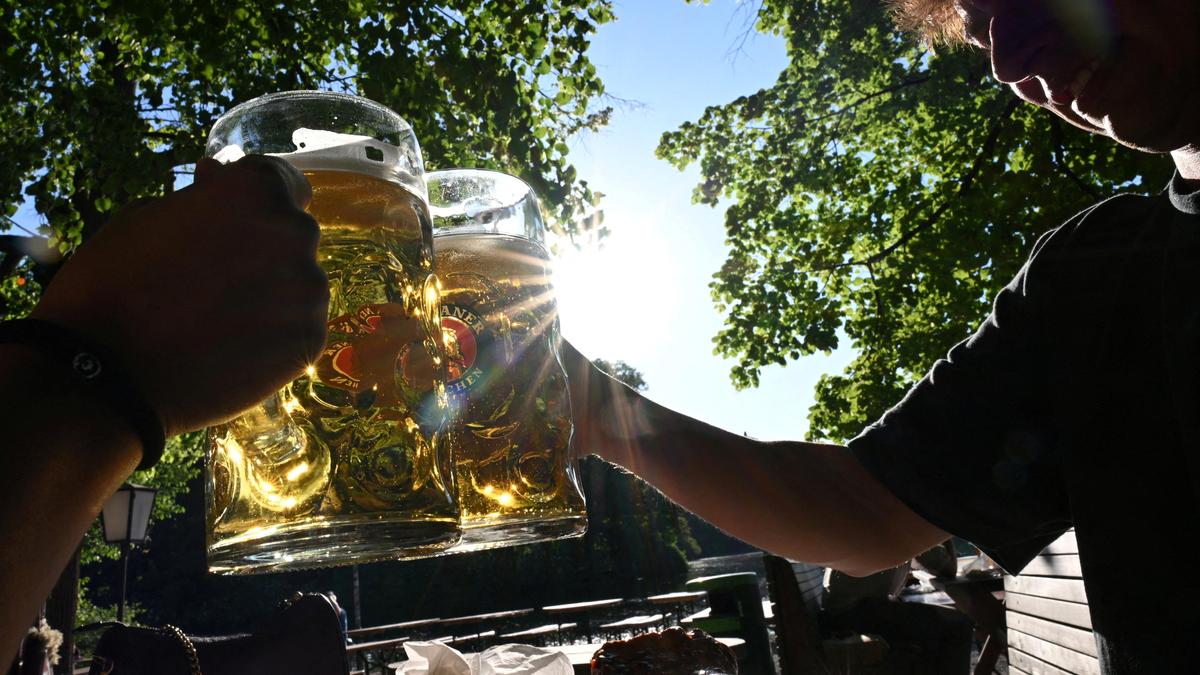
Few substances are as deeply woven into everyday life as alcohol. It is a fixture at holiday celebrations, work-related social gatherings, sporting events, airports, and brunch or dinner tables. A raised glass for a toast, the ubiquitous wedding open bar or drinks shared during a Fourth of July celebration all demonstrate how deeply alcohol has become embedded in social customs and cultural traditions.

Yet alcohol contributes to millions of deaths globally each year and is linked to cancer, liver disease, unintentional accidents, violence and, importantly, dependence and addiction. Despite this, the disconnect between alcohol’s cultural role and its serious health burden is striking.

Although drinking patterns vary substantially across countries, an estimated 2.3 billion people worldwide consume alcohol. It is deeply integrated into social life across the globe, despite its well-documented health risks.

As a physician working in addiction medicine, I regularly care for patients whose alcohol use affects nearly every organ system. It is often not until these patients end up admitted to the hospital that they learn the impact of alcohol on various parts of their body besides their liver.

No such thing as a ‘safe’ amount

Newer evidence challenges assumptions about what was long considered “safe drinking.” Even moderate drinking carries risk and is not as harmless as people, including experts, once thought.

Many people associate alcohol risk primarily with addiction or legal complications such as driving while intoxicated. However, its effects extend far beyond this, into nearly every aspect of a person’s well-being.

While alcohol may transiently improve mood and ease social anxiety, long-term alcohol use can lead to a worsening of mood, cognition and sleep, which can further compound use.

A 2021 literature review found that consuming approximately two standard drinks roughly doubles the odds of sustaining both motor vehicle and non-motor vehicle injuries. The review also found that heavy episodic (binge) drinking can increase the risk of injury by 20- to 50-fold, depending on the amount of alcohol consumed and the type of injury. While alcohol’s effects on the liver are well known, it can also lead to gastrointestinal complications and heart disease

The World Health Organization estimates that 2.6 million deaths each year are attributable to alcohol, accounting for nearly 1 in every 20 deaths worldwide.

Mixed messaging around alcohol and cancer

While many people recognize the risks of alcohol addiction, people are generally much less aware of the links between alcohol use and cancer risk.

The World Health Organization classifies alcohol as a Group 1 carcinogen, – the same category as tobacco and asbestos. In other words, these are agents classified as having sufficient evidence that they cause cancer in humans.

In 2025, a U.S. Surgeon General advisory emphasized that alcohol increases the risk of at least seven cancers and called for updated warning labels. It concluded that alcohol increases an individual’s risk of developing seven types of cancer, including cancers of the breast, colorectal, liver, oral, esophagus and larynx.

Yet fewer than half of Americans recognise alcohol as a risk factor for cancer, particularly for cancers such as breast cancer that are not commonly associated with alcohol use.

The relationship between alcohol and cancer is nuanced. Throughout the 1990s and early 2000s, observational studies suggested that moderate alcohol consumption might offer cardiovascular benefits.

Over the past decade, however, higher-quality studies have challenged those findings, suggesting that much of the apparent benefit may have reflected differences in the health and lifestyles of moderate drinkers rather than a protective effect of alcohol itself.

According to the Dietary Guidelines for Americans, current evidence increasingly suggests that even low levels of alcohol may increase cancer risk.

The guidelines acknowledge that adults should “consume less alcohol for better overall health.” However, the most recent version of the guidelines for 2025-2030, updated in January 2026, removed the previous recommendation to limit intake to no more than one drink per day for women and two for men. It also omitted explicit discussion of alcohol’s links to cancer.

These changes have drawn criticism from public health experts, who argue that the revised language downplays the growing evidence of alcohol-related harms and provides less specific guidance to consumers. Against this backdrop, Dr. Mehmet Oz, Administrator of the Centers for Medicare & Medicaid Services, characterized alcohol as a “social lubricant” that brings people together, rather than emphasizing its well-established health risks.

That may be true physiologically, at least temporarily, but it obscures the fact that relying on alcohol as a social lubricant can lead to chemical and psychological dependency. In my view, statements to that effect are shortsighted, prioritizing short-term social effects over more insidious and long-term issues, including addiction.

A seismic cultural shift

While many dangerous mind-altering substances are hidden from public perception, alcohol is often placed at the center of it – a trend that shows no sign of changing imminently.

Further, large companies often profit from ads that appeal to young people.

Looking back at the history of tobacco smoking provides some helpful insights. In 1965, 42.4% of the U.S. population smoked. By 2022, that figure had dropped to 11.6%.

This dramatic decline did not happen because of a single intervention, but through decades of accumulating scientific evidence, public education campaigns, warning labels, restrictions on advertising, smoke-free policies, higher tobacco taxes and shifts in social norms. Together, these efforts transformed smoking from a widely accepted social behavior into one broadly recognized as a major health risk and, correspondingly, less socially accepted.

Although alcohol consumption has modestly declined in recent years, it remains deeply embedded in social life in ways cigarette smoking no longer is.

People often assume that if a substance is legal, common and widely socially accepted, as well as encouraged, then it must also be safe. But public health history suggests those assumptions can and should change.

(Emma Fenske, Addiction Medicine Fellow and Internal Medicine Physician, Oregon Health & Science University)

(This article is republished from The Conversation under a Creative Commons license. Read the original article here: https://theconversation.com/alcohol-is-one-of-the-most-dangerous-drugs-yet-its-presence-is-ubiquitous-in-social-settings-and-celebrations-278631)

Published – July 05, 2026 07:17 pm IST



Source link

Science

Post navigation

Previous Post: MoS External Affairs to lead Indian delegation at UN Dialogue on AI governance
Next Post: ‘Very dangerous’ super typhoon nears U.S. Pacific islands

Related Posts

  • The man who bridged the skies and the seas
    The man who bridged the skies and the seas Science
  • India raises clean-energy ambition with 60% non-fossil fuel power goal by 2035
    India raises clean-energy ambition with 60% non-fossil fuel power goal by 2035 Science
  • Sci-Five | The Hindu Science Quiz: On Elephants
    Sci-Five | The Hindu Science Quiz: On Elephants Science
  • AIIMS, Delhi developing low cost adaptive cellular therapy for treatment of multiple myeloma
    AIIMS, Delhi developing low cost adaptive cellular therapy for treatment of multiple myeloma Science
  • Artemis II astronauts rocket toward moon after spending day around Earth
    Artemis II astronauts rocket toward moon after spending day around Earth Science
  • Why the location of China’s magnitude 7.1 quake matters
    Why the location of China’s magnitude 7.1 quake matters Science

More Related Articles

Why does India need climate-resilient agriculture? | Explained Why does India need climate-resilient agriculture? | Explained Science
Before the toast: The wild story of avocado Before the toast: The wild story of avocado Science
How India established its first research station in Antarctica How India established its first research station in Antarctica Science
The “biggest blunder” of Einstein’s life The “biggest blunder” of Einstein’s life Science
India to convey its plans to build a new research station in Antarctica at Antarctic Treaty Consultative Meeting India to convey its plans to build a new research station in Antarctica at Antarctic Treaty Consultative Meeting Science
Aerosols aloft lift, thicken winter fog over North India: IIT-M study Aerosols aloft lift, thicken winter fog over North India: IIT-M study Science
SiteLock

Archives

  • July 2026
  • June 2026
  • May 2026
  • April 2026
  • March 2026
  • February 2026
  • January 2026
  • December 2025
  • November 2025
  • October 2025
  • September 2025
  • August 2025
  • July 2025
  • June 2025
  • May 2025
  • April 2025
  • March 2025
  • February 2025
  • January 2025
  • December 2024
  • November 2024
  • October 2024
  • September 2024
  • August 2024
  • July 2024
  • June 2024
  • May 2024
  • April 2024
  • March 2024
  • February 2024
  • January 2024
  • December 2023
  • November 2023
  • October 2023
  • September 2023
  • August 2023
  • July 2023
  • June 2023
  • May 2023
  • April 2023
  • March 2023
  • February 2023
  • January 2023
  • December 2022
  • November 2022
  • October 2022
  • September 2022
  • August 2022
  • July 2022
  • June 2022
  • May 2022

Categories

  • Business
  • Nation
  • Science
  • Sports
  • World

Recent Posts

  • Migrant worker killed while trying to board moving train at Tambaram railway station
  • Wimbledon | Sinner turns on the heat against Struff, books a semifinal berth
  • India supports two-state solution for solving Israel-Palestine conflict, says PM Modi
  • Totapuri mango farmers slip further into distress as price crash continues
  • Formula One | A fortnight of fine margins: How Austria and Silverstone reset the tussle for the title

Recent Comments

  1. Adrianmot on UP Teacher Who Asked Students To Slap Muslim Classmate
  2. Stevenved on UP Teacher Who Asked Students To Slap Muslim Classmate
  3. Adrianmot on UP Teacher Who Asked Students To Slap Muslim Classmate
  4. Adrianmot on UP Teacher Who Asked Students To Slap Muslim Classmate
  5. Adrianmot on UP Teacher Who Asked Students To Slap Muslim Classmate
  • Access Denied
    Access Denied Nation
  • Access Denied
    Access Denied Nation
  • Access Denied Business
  • “Goa Would Have Collapsed Had The Congress Rule Continued”: Kiren Rijiju
    “Goa Would Have Collapsed Had The Congress Rule Continued”: Kiren Rijiju Nation
  • Pentagon asked to probe SpaceX for potential Chinese ownership
    Pentagon asked to probe SpaceX for potential Chinese ownership World
  • “There Is A Conspiracy To Put Me In Prison”: DK Shivakumar
    “There Is A Conspiracy To Put Me In Prison”: DK Shivakumar Nation
  • 270kg Rod Falls On Powerlifter Yashtika Acharya’s Neck During Training, 17-Year-Old Gold Medallist Athlete Dies
    270kg Rod Falls On Powerlifter Yashtika Acharya’s Neck During Training, 17-Year-Old Gold Medallist Athlete Dies Sports
  • How serendipity led to sticky success for 3M’s Ramesh Ramadurai
    How serendipity led to sticky success for 3M’s Ramesh Ramadurai Business

Editor-in-Chief:
Mohammad Ariff,
MSW, MAJMC, BSW, DTL, CTS, CNM, CCR, CAL, RSL, ASOC.
editor@artifex.news

Associate Editors:
1. Zenellis R. Tuba,
zenelis@artifex.news
2. Haris Daniyel
daniyel@artifex.news

Photograher:
Rohan Das
rohan@artifex.news

Artifex.News offers Online Paid Internships to college students from India and Abroad. Interns will get a PRESS CARD and other online offers.
Send your CV (Subjectline: Paid Internship) to internship@artifex.news

Links:
Associate Journalism
About Us
Privacy Policy

News Links:
Breaking News
World
Nation
Sports
Business
Entertainment
Lifestyle

Registered Office:
72/A, Elliot Road, Kolkata - 700016
Tel: 033-22277777, 033-22172217
Email: office@artifex.news

Editorial Office / News Desk:
No. 13, Mezzanine Floor, Esplanade Metro Rail Station,
12 J. L. Nehru Road, Kolkata - 700069.
(Entry from Gate No. 5)
Tel: 033-46011099, 033-46046046
Email: editor@artifex.news

Copyright © 2023 Artifex.News Newsportal designed by Artifex Infotech.