


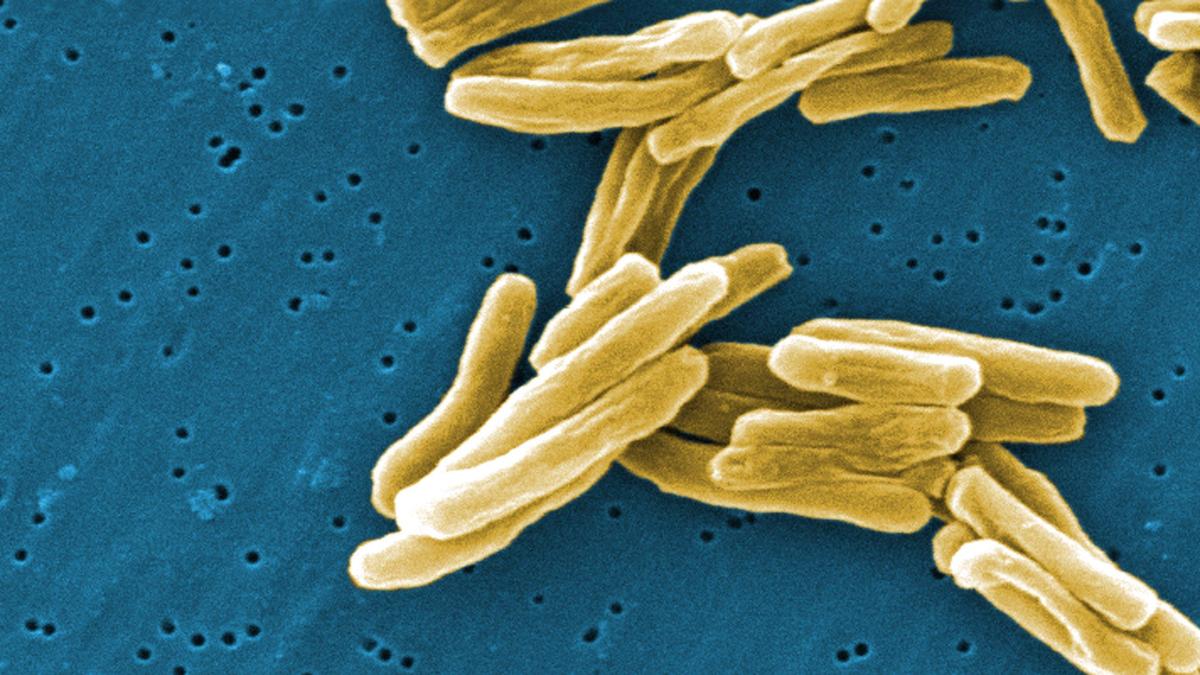
Mycobacterium tuberculosis (TB) bacteria in a high magnification scanning electron micrograph image. The bacteria grow slowly, making drug susceptibility testing arduous.
| Photo Credit: AP
Technique tests TB drugs’ effectiveness in just 50 hours
Scientists have developed a faster way to test for drug resistance in the bacteria that cause tuberculosis. Traditional phenotypic tests have to wait for the bacteria to multiply over four to eight weeks. The new way, called Raman-DIP, uses single-cell imaging to track how cells process heavy water, thus revealing if an antibiotic is inhibiting the bacteria in just 50 hours. The team reported this method was 100% accurate vis-à-vis four major drugs against various strains.
Hominin body sizes didn’t steadily increase over time
Upon analysing nearly 400 fossils across 21 species, researchers found moderate evidence of a slow, general increase in body size across hominins over time. However, the evidence was much stronger for a sudden, significant jump in size among later members of the genus Homo (excluding Homo habilis), likely when species like H.erectus appeared. Overall, the research suggested the human body size didn’t steadily increase over time but transitioned distinctly among our more recent ancestors.
Turtles use internal compass, and some fixes, on journeys
Using satellite tags to track compass headings, researchers found that green sea turtles don’t constantly adjust their course but instead swim in one direction for long periods, even if they drift off-track. Then, the study found, they make occasional mid-ocean changes over several hours to fix their bearings. Since the turtles had the same heading day and night, the researchers figured they likely use the earth’s magnetic field to navigate and don’t sleep when they migrate.
Published – June 28, 2026 06:53 pm IST