


Skip to content
  • Facebook
  • X
  • Linkedin
  • WhatsApp
  • YouTube
  • Associate Journalism
  • About Us
  • Privacy Policy
  • 033-46046046
  • editor@artifex.news
Artifex.News

Artifex.News

Stay Connected. Stay Informed.

  • Breaking News
  • World
  • Nation
  • Sports
  • Business
  • Science
  • Entertainment
  • Lifestyle
  • Toggle search form
  • Can India eliminate malaria by 2030? | Explained
    Can India eliminate malaria by 2030? | Explained Science
  • Access Denied Sports
  • US Sending More Warships, Fighter Jets To Middle East Amid Rising Tensions
    US Sending More Warships, Fighter Jets To Middle East Amid Rising Tensions World
  • Bezos dethrones Musk to reclaim title of world’s richest man
    Bezos dethrones Musk to reclaim title of world’s richest man World
  • Polluting shipwrecks are a ticking time-bomb at the bottom of our oceans
    Polluting shipwrecks are a ticking time-bomb at the bottom of our oceans Science
  • Magnus Carlsen Secures Rapid And Blitz Chess Tournament In Poland, R Praggnanandhaa Finishes Fourth
    Magnus Carlsen Secures Rapid And Blitz Chess Tournament In Poland, R Praggnanandhaa Finishes Fourth Sports
  • Kerala’s Pariyathukavu residents hope government intervention will put an end to eviction threat
    Kerala’s Pariyathukavu residents hope government intervention will put an end to eviction threat Nation
  • National Mourning For 7 Days To Honour Manmohan Singh: Sources
    National Mourning For 7 Days To Honour Manmohan Singh: Sources Nation
How red moved through empires, trade networks, and industrial factories

How red moved through empires, trade networks, and industrial factories

Posted on June 1, 2026 By admin


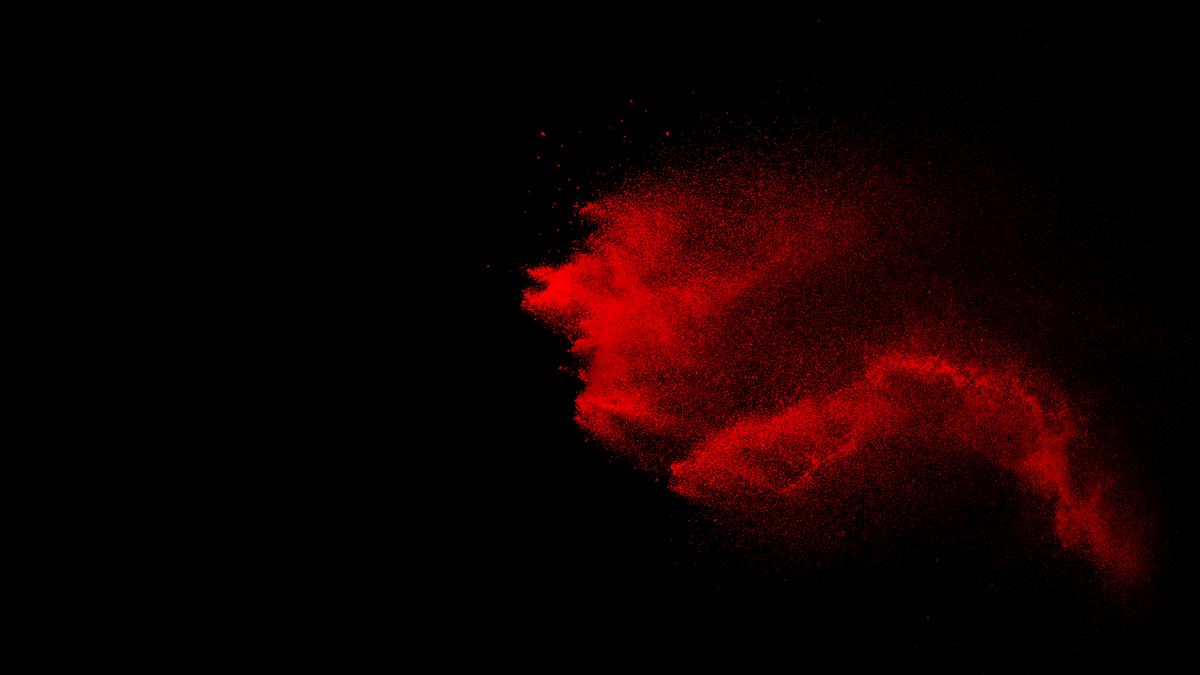
Red moved from earth, to organism, to laboratory — from ritual substance to industrial commodity
| Photo Credit: Getty Images

In 1799, during the storming of the fortress of Seringapatam, British troops broke through the defences of Srirangapatna and killed Tipu Sultan, the ruler of Mysore. The palace inventories compiled in the aftermath record jewels, weapons, manuscripts and textiles of startling colour. Officers wrote with particular fascination about the intensity of the dyed fabrics stored in the royal workshops.

At the same moment, the soldiers themselves wore uniforms dyed in equally vivid scarlet. The British redcoat marching through the palace and the Mysorean textile he admired were both products of a vast global system of dyes — insects raised in the Americas, plants cultivated in Asia, shellfish harvested along Mediterranean coasts.

Global red trade

In the Mediterranean world, the most famous red-purple dye was extracted from marine snails harvested along Levantine shores. Classical writers such as Pliny the Elder describe vats of crushed shells fermenting under the sun, releasing a colour so rare that Roman law eventually reserved it for imperial robes. The value of the dye lay not merely in its hue but in the difficulty of its production: thousands of mollusks sacrificed to colour a single garment. In the Americas, Indigenous farmers raised the cochineal insect on cactus paddles, harvesting the tiny bodies and drying them into a powder that produced a red of extraordinary intensity. A pound of red from these insects could produce enough red colour to run an entire factory. When Spanish ships began exporting cochineal to Europe in the sixteenth century, the dye rapidly became one of the most valuable commodities of the Atlantic world, rivaling silver in price and strategic importance.

Elsewhere, especially across Eurasia, dyers cultivated the roots of the madder plant, whose alizarin compounds could produce deep crimson lakes. These biological reds travelled astonishing distances. A single crimson cloak worn in London or Istanbul might contain colour drawn from insects cultivated in Oaxaca, plants grown in Central Asia, or mollusks harvested from Mediterranean shores. Colour, therefore, linked distant ecologies into networks of exchange long before industrial globalisation. Each red carried with it a geography.

Military power depended on these networks. By the eighteenth century, the scarlet coats of European regiments required reliable supplies of imported dyes. On battlefields clouded with gunpowder smoke, vivid uniforms helped commanders identify their troops and maintain order. The siege of Seringapatam unfolded within this global colour economy. Mysore’s textile workshops produced fabrics dyed through Indian Ocean trade networks that connected Persian, Southeast Asian and South Asian markets. British officers entering the palace encountered not simply decorative cloth but the material traces of a rival commercial system. Empires fought not only for territory but also for control of the commodities that coloured the world.

Imperial cloth

Yet even as imperial armies marched in crimson, the foundations of the dye trade were beginning to shift. For centuries, every brilliant red had depended on living organisms, whether it was roots pulled from soil, or insects harvested from cacti, or shellfish gathered along rocky coasts. In 1856, the English chemist William Henry Perkin inadvertently altered this relationship. While attempting to synthesise quinine in an experiment, he produced a purple residue that dyed silk with remarkable intensity. The compound, later marketed as mauveine, inaugurated the modern synthetic dye industry. Within a few decades, chemists learned to reproduce the molecular structures responsible for many natural colours. In 1869, industrial chemists succeeded in synthesising alizarin, which is the key red component of madder, making centuries of agricultural cultivation suddenly unnecessary.

The implications were profound. Madder fields across Europe collapsed almost overnight. Cochineal plantations faced competition from cheaper laboratory pigments. What had once required soil, insects, seasons and skilled cultivation could now be produced in factories wherever coal, glassware and chemical knowledge were available.

Red was becoming abstract. Red moved from earth, to organism, to laboratory — from ritual substance to industrial commodity. And as pigments entered the circuits of factories, markets and empires, the meanings attached to red also began to shift: from sacrifice and sovereignty to revolution, warning, and mass politics.

Synthetic shift

The colour remained the same to the eye, but the world that produced it, and the world that would perceive red as a phenomenon, had both fundamentally changed.

(Satwik Gade is a Chennai-based writer and illustrator. This article is part of a series on the history and development of colours)

Published – June 02, 2026 08:30 am IST



Source link

Science

Post navigation

Previous Post: New district and sessions court begins operation in Puttur
Next Post: Meghalaya and Nagaland CMs call for release of 20 hostages

Related Posts

  • Greece targets threat of invasive fruit flies from Asia
    Greece targets threat of invasive fruit flies from Asia Science
  • Chip that steers terahertz beams sets stage for 6G internet
    Chip that steers terahertz beams sets stage for 6G internet Science
  • AI-fit cameras in Similipal Tiger Reserve send poaching plummeting
    AI-fit cameras in Similipal Tiger Reserve send poaching plummeting Science
  • IISc announces distinguished alumni awards for 2023
    IISc announces distinguished alumni awards for 2023 Science
  • Four new studies report progress towards long-awaited HIV vaccine
    Four new studies report progress towards long-awaited HIV vaccine Science
  • Assam study sheds new light on sun’s surface tremors
    Assam study sheds new light on sun’s surface tremors Science

More Related Articles

Sci-Five | The Hindu Science Quiz: On Microplastics Sci-Five | The Hindu Science Quiz: On Microplastics Science
The snail as a model for restoring vision in humans The snail as a model for restoring vision in humans Science
Revisiting Katou-Indel in 17th-century botanical treatise Hortus Malabaricus yields new finds for researchers Revisiting Katou-Indel in 17th-century botanical treatise Hortus Malabaricus yields new finds for researchers Science
Deep tech investments in India doubling every three years, crossed  billion between 2021-23: Report Deep tech investments in India doubling every three years, crossed $1 billion between 2021-23: Report Science
Data gaps beyond India are holding monsoon forecasts back | Analysis Data gaps beyond India are holding monsoon forecasts back | Analysis Science
Beyond the stars – The Hindu Beyond the stars – The Hindu Science
SiteLock

Archives

  • June 2026
  • May 2026
  • April 2026
  • March 2026
  • February 2026
  • January 2026
  • December 2025
  • November 2025
  • October 2025
  • September 2025
  • August 2025
  • July 2025
  • June 2025
  • May 2025
  • April 2025
  • March 2025
  • February 2025
  • January 2025
  • December 2024
  • November 2024
  • October 2024
  • September 2024
  • August 2024
  • July 2024
  • June 2024
  • May 2024
  • April 2024
  • March 2024
  • February 2024
  • January 2024
  • December 2023
  • November 2023
  • October 2023
  • September 2023
  • August 2023
  • July 2023
  • June 2023
  • May 2023
  • April 2023
  • March 2023
  • February 2023
  • January 2023
  • December 2022
  • November 2022
  • October 2022
  • September 2022
  • August 2022
  • July 2022
  • June 2022
  • May 2022

Categories

  • Business
  • Nation
  • Science
  • Sports
  • World

Recent Posts

  • Tamil Nadu CM Vijay fails to uphold constitutional morality: DMK MP A. Raja
  • Delhi restaurant fire LIVE: At least 21 people killed, several foreigners among those dead
  • India’s services sector growth hits 6-month high in May on new orders, softer rise in cost burdens
  • Former Thai Prime Minister Thaksin Shinawatra freed early from parole after receiving royal pardon
  • U.S. Supreme Court approves Republican-drawn voting map in Alabama

Recent Comments

  1. Justinheefs on UP Teacher Who Asked Students To Slap Muslim Classmate
  2. Charlesged on UP Teacher Who Asked Students To Slap Muslim Classmate
  3. Edwarddooft on UP Teacher Who Asked Students To Slap Muslim Classmate
  4. Matthewcut on UP Teacher Who Asked Students To Slap Muslim Classmate
  5. Scottgat on UP Teacher Who Asked Students To Slap Muslim Classmate
  • Access Denied World
  • Access Denied World
  • Atletico Madrid Make Comeback To Beat Deportivo Alaves As Diego Simeone Hits Milestone
    Atletico Madrid Make Comeback To Beat Deportivo Alaves As Diego Simeone Hits Milestone Sports
  • Access Denied
    Access Denied Nation
  • Sydney blanketed by smoke for a 4th day due to hazard reduction burning
    Sydney blanketed by smoke for a 4th day due to hazard reduction burning World
  • Access Denied Sports
  • Acharya urges detariffing, break-up of conglomerates
    Acharya urges detariffing, break-up of conglomerates Business
  • Access Denied
    Access Denied Nation

Editor-in-Chief:
Mohammad Ariff,
MSW, MAJMC, BSW, DTL, CTS, CNM, CCR, CAL, RSL, ASOC.
editor@artifex.news

Associate Editors:
1. Zenellis R. Tuba,
zenelis@artifex.news
2. Haris Daniyel
daniyel@artifex.news

Photograher:
Rohan Das
rohan@artifex.news

Artifex.News offers Online Paid Internships to college students from India and Abroad. Interns will get a PRESS CARD and other online offers.
Send your CV (Subjectline: Paid Internship) to internship@artifex.news

Links:
Associate Journalism
About Us
Privacy Policy

News Links:
Breaking News
World
Nation
Sports
Business
Entertainment
Lifestyle

Registered Office:
72/A, Elliot Road, Kolkata - 700016
Tel: 033-22277777, 033-22172217
Email: office@artifex.news

Editorial Office / News Desk:
No. 13, Mezzanine Floor, Esplanade Metro Rail Station,
12 J. L. Nehru Road, Kolkata - 700069.
(Entry from Gate No. 5)
Tel: 033-46011099, 033-46046046
Email: editor@artifex.news

Copyright © 2023 Artifex.News Newsportal designed by Artifex Infotech.