




Global levels of physical activity remained unchanged despite policy recommendations and adoption over the last two decades, with large differences across gender and socio-economic groups, three new research reports have shown.
Current efforts to promote participation in physical activity are both insufficient and have made no dent, the reports say. Worldwide, more than five million deaths per year are attributed to physical inactivity. About one in three adults and eight in ten adolescents do not meet the World Health Organization’s recommended activity guidelines, which is 150 minutes of moderately intense weekly physical activity for adults and 60 minutes daily for children.
Deborah Salvo, associate professor and Research Center Director at the University of Texas at Austin, and her colleagues analysed physical activity data from 68 countries worldwide and found persistent inequalities in the ways in which people across the world are active.
“We were not just interested in understanding the overall levels of total physical activity in countries, but rather, in how many people in each country are meeting physical activity guidelines through active leisure, active transport, and active labour,” Dr. Salvo said.
“What we found is a huge disparity: the higher the country income level, the higher the percentage of the population getting their physical activity through active leisure. And the lower the country income level, the higher the proportion of individuals getting their physical activity from active labour and transport.”
The findings have been reported in Nature Medicine.
Active leisure gap
Dr. Salvo said that within countries, the team observed a large gap in terms of who gets to be active through leisure or free time — and “it is mostly wealthy men that do”.
The most striking finding was the opportunity gap (of 40 percentage points) worldwide for active leisure when contrasting wealthy men in wealthy countries with socio-economically disadvantaged women in poor countries.
The team’s paper summarised decades of evidence to show that physical activity should not merely be part of obesity and cardiometabolic disease prevention and control agendas, as it also helps prevent and treat multiple cancers as well as depression, and boosts immunity.
During the COVID-19 pandemic, evidence emerged showing lower rates of infection, severe COVID-19, hospitalisation, and mortality due to COVID-19 among active individuals, she said.
“Despite all this, for some reason, doctors, public health professionals, policy makers, and the public at large seem to only discuss and promote physical activity within the context of a limited range of health conditions.”
While physical activity is certainly very important to prevent and manage these conditions, it is so much more, and sometimes even health professionals do not harness or promote the totality of its benefits, she adds.
Rich-poor divide
“The problem of inactivity globally is way worse than we think it is,” according to Dr. Salvo. “We need to think more carefully about the sources of physical activity for a majority of people globally — 84% of the world’s population lives in low- and middle-income countries — and their implications for whole health: physical, mental, societal.”
The disparity between rich and low- and middle-income countries (LMICs) is again emphasised in another study, led by Erica Hinckson, professor of physical activity and urban health at the Auckland University of Technology in New Zealand, and colleagues in Nature Health.
Their study shows how physical activity can support climate mitigation and adaptation. They also outline how strategies that support walking, cycling, and public transport instead of driving may reduce emissions, and how climate change can disrupt activity because of extreme events such as heatwaves.

Additionally, they show how some physical activity initiatives can themselves contribute to emissions, and unintended consequences such as cities in an effort to make themselves more walkable displacing their own residents can occur.
The work points to several important gaps from LMICs, with much of the evidence linking physical activity and climate change still coming from high-income settings.
“So we know far less about how these relationships play out in LMIC contexts where the climate risks, urban conditions, and resource constraints may be very different,” Dr. Hinckson says.
There is also limited evidence from LMICs on how physical activity initiatives can support both climate mitigation and adaptation in ways that are feasible, equitable, and locally relevant. For example, more research is needed on what works in informal settlements, rapidly urbanising areas, and places facing high exposure to heat, flooding, and air pollution.
Dr. Hinckson’s team’s work also shows that there is a need for more context-specific evidence that includes indigenous, local, and community knowledge rather than that relying too much on models and assumptions drawn from high-income countries.
“So the gap is not only about having fewer studies, it is also about needing research that better reflects LMIC realities, priorities, and solutions,” Dr. Hinckson says.
The novelty of their paper, according to her, is that it brings environment, climate, and health together in a structured, integrated way. The four key messages are that physical inactivity and climate change are connected; physical activity initiatives are also climate mitigation and adaptation initiatives; equity, indigenous knowledge and community voice are essential to avoid unintended consequences when physical activity and climate change agendas are integrated; and that all major physical activity investments should be designed as climate-sensitive investments.

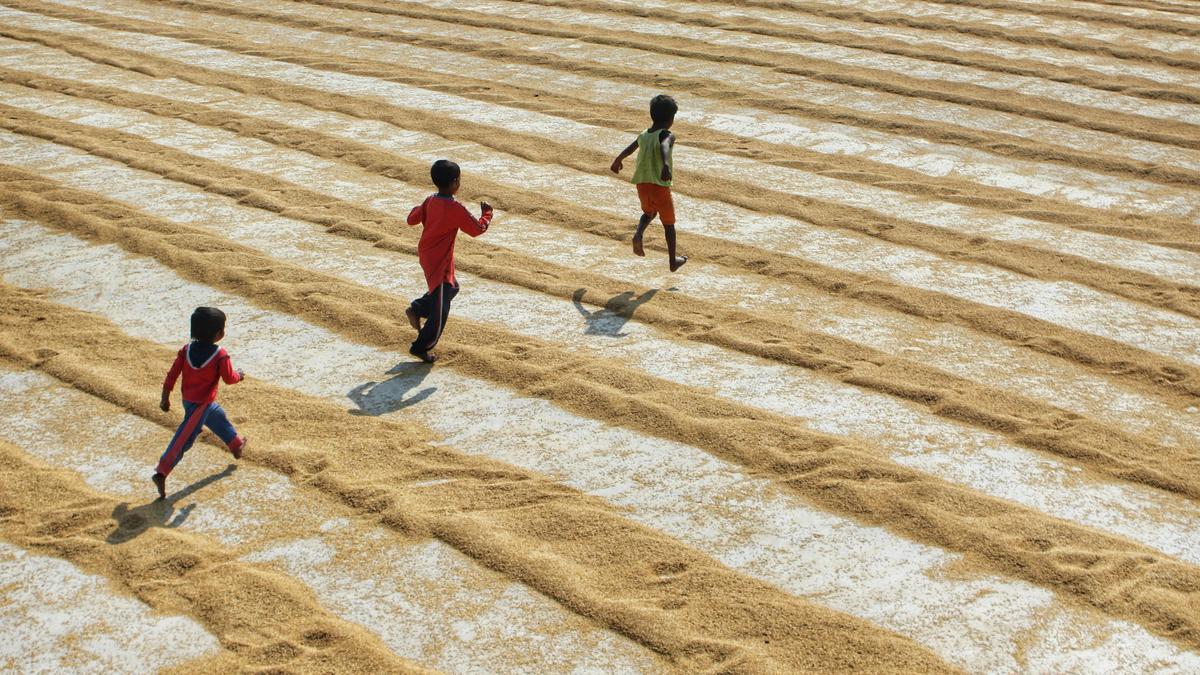
“We must step away from trying to blame individuals for their levels of inactivity and turn to fix the systems that promote this type of behaviour in the first place,” Dr. Salvio said. Representative image.
| Photo Credit:
Talaviya Rahul/Unsplash
Unclear end goals
In a second Nature Health paper, Andrea Ramírez Varela, assistant professor at the University of Texas Health Science Center at Houston,and colleagues assessed 661 national policy documents to promote physical activity from 200 countries worldwide from 2004 to 2025. They found that although most countries have developed and adopted physical activity policies, the evidence of implementation remains limited. Just 38.7% (or 256) of the 661 policies analysed in the study assigned actions to three or more government sectors (including, for example, health and education), indicating a lack of cross-sectoral collaboration.
Meanwhile, 26.5% (53) of countries with policy documents did not include measurable targets to determine their impact.
“This disconnect is significant because it challenges a common assumption in global health that once policies are developed and adopted, change will follow,” Dr. Ramirez says. “In this case, the presence of written documents has not translated into implementation at scale.”

Participants described four challenges: no clear consensus on whether physical activity should be an outcome in its own right or a means to broader goals; continued framing of physical activity as an individual health behaviour rather than a systems issue; fragmented leadership and accountability; and weak cross-sector alliances.
Her team’s suggested framework includes movement across several domains of everyday life, such as leisure-time activities like sports and exercise, transportation-related activity such as walking or cycling. Physical activity can occur at different intensities, including moderate activities such as brisk walking or cycling and vigorous activities such as running or competitive sports.
According to Dr Ramirez, many of the underlying challenges are also more pronounced in LMICs. These settings often face additional constraints such as limited institutional capacity, fewer resources dedicated to prevention, and competing policy priorities including infectious diseases and economic development. “Patterns of physical activity also differ in important ways. In many LMICs, physical activity is more commonly associated with transportation or occupational necessity rather than leisure or recreational exercise.”
“These reports reaffirm the importance of physical activity for global health but also extend our understanding beyond the traditional focus on obesity and cardiometabolic disease,” says Gregore Iven Mielke, a behavioural epidemiologist at the University of Queensland, Australia. They highlight that physical activity contributes to wellbeing in broader ways, including social, emotional, and environmental dimensions.
Infrastructure for physical activity
A major contribution of the series is the clear recognition that physical activity is not simply an individual choice, Dr. Mielke adds. Instead, it is shaped by wider social and structural factors such as gender, socioeconomic position, neighbourhood environments, and policy contexts. This perspective contrasts with earlier approaches that focused more heavily on individual behaviour and biomedical outcomes.
“In my point of view, by emphasising these broader determinants, the reports shift responsibility away from individuals and towards the societal systems that enable or constrain opportunities for movement, and shows a clear message that meaningful increases in physical activity require supportive environments, equitable access, and policy-level change rather than individual motivation alone,” Dr. Mielke says.
While these studies offer an updated synthesis of the current state of physical activity research, some of the existing gaps are inherent to the data available to researchers, according to Dr. Mielke.
For example, the analyses of global inequalities in physical activity rely on data from 68 countries, which does not fully capture the diversity of global contexts and may underrepresent some groups of people: “This limitation highlights the need for greater investment in global surveillance systems so that future studies can draw on more comprehensive and truly representative datasets.”
Systems-level solutions are required to address both the major socioeconomic and gender opportunity gaps for choice-based physical activity, according to Dr. Salvo. “We must step away from trying to blame individuals for their levels of inactivity and turn to fix the systems that promote this type of behaviour in the first place.”
These include car-centric urban design, low investment in widespread infrastructure for physical activity, like parks and public open spaces, but also full sidewalk and protected bicycle lane coverage in cities, and excellent transit.
“Further, we must stop trying to push physical activity policy through health-centric approaches,” Dr. Salvo adds. “Policy must be trans-sectoral, be properly funded, and have sufficiently ambitious and well-evaluated targets.”
Key sectors to involve include urban planning and transport departments, parks and recreation, the environment, economic development, education, and of course, the sport and health sectors While the health sector can and should be a key partner for physical activity policy development and implementation, and healthcare providers can play a key role in elevating the totality of health benefits of physical activity when interacting with their patients, other sectors hold equal or likely more weight in how we are active in real life.
Physical activity naturally fluctuates across the lifespan for many reasons, including health, work, family responsibilities, and life transitions, adds Mielke’s. His team’s research team has shown that people follow diverse physical activity trajectories across adulthood, and that meaningful health benefits can still be achieved even among those who were inactive for part of their lives but became active later on. This highlights the importance of creating opportunities for people to re-engage in physical activity at any stage of life, rather than assuming that early-life inactivity determines long-term outcomes.
T.V. Padma is a science journalist based in New Delhi.