



Skip to content
  • Facebook
  • X
  • Linkedin
  • WhatsApp
  • YouTube
  • Associate Journalism
  • About Us
  • Privacy Policy
  • 033-46046046
  • editor@artifex.news
Artifex.News

Artifex.News

Stay Connected. Stay Informed.

  • Breaking News
  • World
  • Nation
  • Sports
  • Business
  • Science
  • Entertainment
  • Lifestyle
  • Toggle search form
  • After Rohit Sharma’s Recreation, Lionel Messi Repeats That ‘Trophy Lift Walk’. Watch
    After Rohit Sharma’s Recreation, Lionel Messi Repeats That ‘Trophy Lift Walk’. Watch Sports
  • Rahul Gandhi Visits Keventers Store, Makes Cold Coffee
    Rahul Gandhi Visits Keventers Store, Makes Cold Coffee Nation
  • Access Denied
    Access Denied Nation
  • AFSPA Imposed In New Areas Of Manipur Amid Fresh Violence
    AFSPA Imposed In New Areas Of Manipur Amid Fresh Violence Nation
  • Kaziranga releases first scientific report on greater hog badger
    Kaziranga releases first scientific report on greater hog badger Nation
  • Trump threatens to charge U.S. tolls in Strait of Hormuz if final Iran deal not reached in 60 days
    Trump threatens to charge U.S. tolls in Strait of Hormuz if final Iran deal not reached in 60 days World
  • All Eyes On Virat Kohli As India Eye Victory In Boxing Day Test At MCG
    All Eyes On Virat Kohli As India Eye Victory In Boxing Day Test At MCG Sports
  • CIA believes COVID most likely originated from lab but has low confidence in its own finding
    CIA believes COVID most likely originated from lab but has low confidence in its own finding World
Newfound ‘obelisks’ join viruses, viroids as third unusual life form

Newfound ‘obelisks’ join viruses, viroids as third unusual life form

Posted on February 27, 2024 By admin


For nearly seven decades since their discovery in 1898, viruses were the only organisms at the boundary between the living and the non-living. Their obligate host dependence, parasitism, and small genome sizes collectively made sure they weren’t classified as ‘life’per se.

Each virion is composed of a nucleic acid (DNA or RNA) core that serves as the genetic material, surrounded by a protein coat, and, in some cases, a lipid (fat) layer outside that coat. Viruses’ life cycle is simple: they infect a host cell, use the cell’s machinery to make more copies of themselves, then infect a new cell to repeat the cycle.

The simplest life

Biologically, scientists couldn’t imagine anything simpler. That changed in 1971 when Theodor Diener, a plant pathologist at the U.S. Department of Agriculture’s Research Center in Maryland tried to isolate the pathogen that caused potato spindle tuber disease. With his colleague William Raymer, Deiner realised the organism responsible – if he could call it that – didn’t contain the lipid layer or the protein coat found in viruses. It appeared to be just plain, naked RNA.

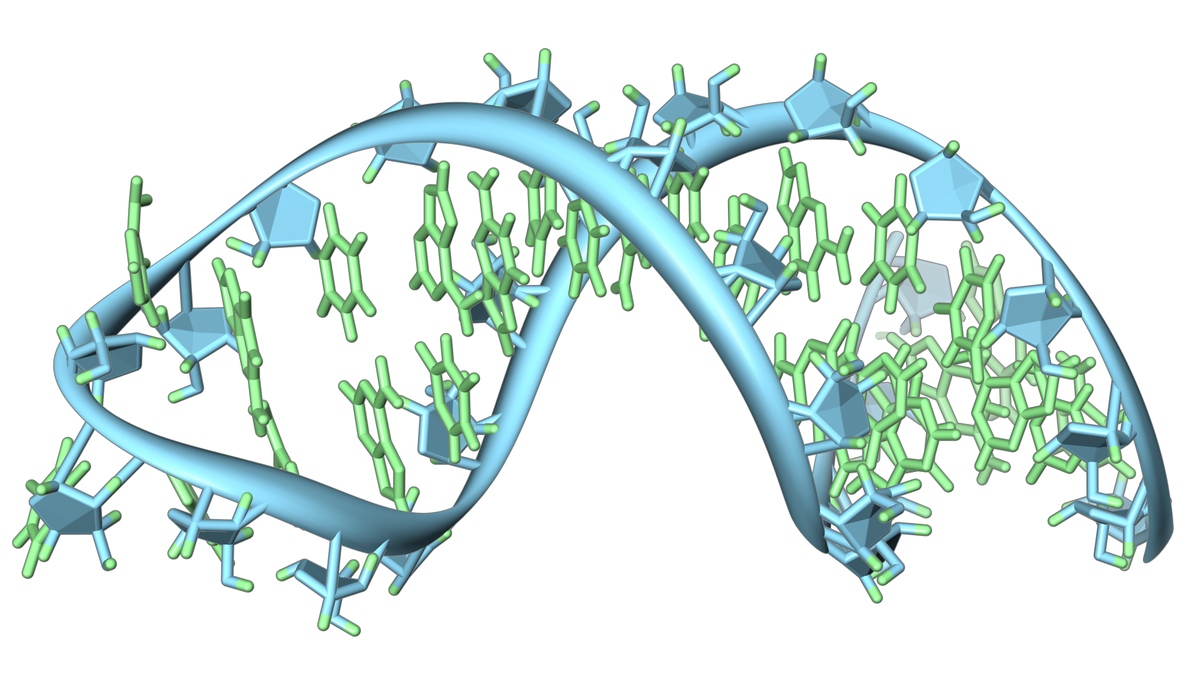
This RNA would enter a cell as RNA, force the cell to make more copies of itself, and the new RNAs would then infect other cells. Diener called these life-forms ‘viroids’ since they resembled viruses. There was, however, one important distinction. Usually, genetic material contains a code that tells cells how to make various proteins. This is true of all known organisms, including viruses. But the RNA of viroids didn’t code for any protein. For the most part, they were just small pieces of RNA that served no function apart from propagating themselves.

Deiner also noticed that the viroid RNA was tiny (250-400 base pairs versus a few thousand in RNA viruses). Deiner’s discovery added a new dimension to plant pathology, and, as a result, viruses were no longer the sole creatures at the edge of life.

Viruses, viroids, now obelisks

Now, however, it appears viruses and viroids may have company. According to a preprint paper uploaded recently, scientists at Stanford University have reported another extremely simple, and unusual, form of life.

When analysing genetic material from bacteria present in the human gut, the scientists identified a new form of life lying between viruses and viroids on the scale of simplicity. They called them ‘obelisks’.

The discovery was made possible using data obtained using a powerful technique called next-generation sequencing (NGS), which allows researchers to parallelly determine genome sequences, in bits and pieces from different organisms.

Understanding NGS

Imagine you walk into a library full of books. You see that a mischievous student has removed the binding and cut out the page numbers from all the books, and scattered the pages all over the room. The only way you can assemble the pieces is if you read each page and figure out what comes next by searching all the scattered pages and determining what makes sense logically. This process would be a lot simpler if you have already read a given book, since you will know what the subsequent page is expected to contain.

In the example above, each book represents the DNA sequence of a particular organism. NGS yields the sequence information in bits and pieces, generating large amounts of data. Researchers then feed this data to computers, which piece together the complete sequence information. If the genome sequence of an organism is already known, then – like in the example above – assembly becomes very easy.

Looking for a circular genome

The Stanford team discovered obelisks when they were analysing RNA from all the bacteria present in the human gut using NGS, while specifically looking for viroid-like elements. The team wrote a software script that would look through the RNA fragments, searching for those pieces whose sequential assembly starting from a given point would lead back to the same point – i.e. a sign of a circular RNA genome.

The team analysed 5.4 million publicly available sequence datasets of RNA from bacteria in the human gut using this method. In 220,000 of them, it identified 29,959 distinct obelisks. The team proceeded to search for obelisks in the RNA datasets of bacteria found in the human mouth as well, and found them in approximately half of the sets. Further searches revealed obelisks were present in human-gut and -oral bacteria from all seven continents as well, demonstrating their ubiquity.

Finally, the team set about ascertaining the degree of similarity of obelisks to viroids. They observed that while both organisms do have circular RNA for genomes, the similarity ended there. The obelisk RNA was much longer – around a thousand base pairs – and appeared to code for two proteins, neither of which bore any similarity to any known protein from any other life form!

A link to S. sanguini

Despite its ingenuity, the new study suffers from one minor limitation: since the team was analysing RNA data from all the gut or oral bacteria put together, it was impossible to determine which bacteria hosted a given obelisk.

This issue notwithstanding, the team, to demonstrate proof of the notion that obelisk sequences are indeed a part of data from the bacterial hosts, managed to analyse all the RNA from a few bacteria individually grown in the laboratory. This way, they managed to link one particular obelisk to the bacterial species Streptococcus sanguini, commonly found in the human mouth.

The discovery of obelisks raises multiple questions. For example, how do they make copies of their genome? How do they transmit? Are they pathogenic to bacteria? How did they evolve? Do they have roles to play in human health and disease?

Further research will no doubt answer these questions. For now, all we know is that at the far reaches of life, the distinction between the living and the non-living is becoming increasingly murky.

Arun Panchapakesan is an assistant professor at the Y.R. Gaithonde Centre for AIDS Research and Education, Chennai.




Source link

Science Tags:RNA obelisk, single stranded RNA, viroids, viruses

Post navigation

Previous Post: Russian court jails veteran activist Orlov for 2.5 years
Next Post: Land reforms included on top of the agenda in Modi government’s third term: Nirmala Sitharaman

Related Posts

  • Northern lights in India? Here’s how to see Auroras tonight
    Northern lights in India? Here’s how to see Auroras tonight Science
  • Sci-Five | The Hindu Science Quiz: On Clean Energy
    Sci-Five | The Hindu Science Quiz: On Clean Energy Science
  • Jharia coal fires may burn hotter, emit more greenhouse gases than thought
    Jharia coal fires may burn hotter, emit more greenhouse gases than thought Science
  • Watch: 2026 to be driest in 11 years. How badly can a deficient monsoon hit crop output?
    Watch: 2026 to be driest in 11 years. How badly can a deficient monsoon hit crop output? Science
  • As sun nears peak of solar cycle, small satellites are paying the price
    As sun nears peak of solar cycle, small satellites are paying the price Science
  • UV camera snaps treetops glowing as thunderstorm passed overhead
    UV camera snaps treetops glowing as thunderstorm passed overhead Science

More Related Articles

What helped Vikram lander to soft-land on the moon What helped Vikram lander to soft-land on the moon Science
BRICS condemns EU carbon tax BRICS condemns EU carbon tax Science
Foam cladding from France delaying India’s Samudrayaan mission Foam cladding from France delaying India’s Samudrayaan mission Science
Science quiz: Giants on whose shoulders Newton stood Science quiz: Giants on whose shoulders Newton stood Science
ISRO’s LVM3 to launch next-generation communication satellite on Dec. 24 ISRO’s LVM3 to launch next-generation communication satellite on Dec. 24 Science
Study says microbes, not fossil fuels, produced most new methane Study says microbes, not fossil fuels, produced most new methane Science
SiteLock

Archives

  • October 2026
  • September 2026
  • August 2026
  • July 2026
  • June 2026
  • May 2026
  • April 2026
  • March 2026
  • February 2026
  • January 2026
  • December 2025
  • November 2025
  • October 2025
  • September 2025
  • August 2025
  • July 2025
  • June 2025
  • May 2025
  • April 2025
  • March 2025
  • February 2025
  • January 2025
  • December 2024
  • November 2024
  • October 2024
  • September 2024
  • August 2024
  • July 2024
  • June 2024
  • May 2024
  • April 2024
  • March 2024
  • February 2024
  • January 2024
  • December 2023
  • November 2023
  • October 2023
  • September 2023
  • August 2023
  • July 2023
  • June 2023
  • May 2023
  • April 2023
  • March 2023
  • February 2023
  • January 2023
  • December 2022
  • November 2022
  • October 2022
  • September 2022
  • August 2022
  • July 2022
  • June 2022
  • May 2022

Categories

  • Business
  • Nation
  • Science
  • Sports
  • World

Recent Posts

  • Sivaganga police arrest five under Goondas Act in double murder case
  • Mining project threatens future of rare Jeypore ground gecko
  • Tata Trusts row: Noel, son Neville Tata move Bombay HC and Mumbai civil court with caveats
  • Private bus operators to begin indefinite hunger strike on October 27
  • Yemen’s Houthis vow more attacks on Saudi airports, oil facilities after Aramco HQ hit

Recent Comments

  1. RobertTes on UP Teacher Who Asked Students To Slap Muslim Classmate
  2. Manuelret on UP Teacher Who Asked Students To Slap Muslim Classmate
  3. RobertTes on UP Teacher Who Asked Students To Slap Muslim Classmate
  4. RobertTes on UP Teacher Who Asked Students To Slap Muslim Classmate
  5. BrentWes on UP Teacher Who Asked Students To Slap Muslim Classmate
  • ICC lawyer warns over preventing aid getting to Gaza
    ICC lawyer warns over preventing aid getting to Gaza World
  • Treesa and Gayatri rue defensive tactics and lack of patience
    Treesa and Gayatri rue defensive tactics and lack of patience Sports
  • “India Is Ready To Host 2036 Olympics”: Home Minister Amit Shah Dials Affirmation Call
    “India Is Ready To Host 2036 Olympics”: Home Minister Amit Shah Dials Affirmation Call Sports
  • Study finds dual nerve blocks procedure may help people with treatment-resistant anxiety
    Study finds dual nerve blocks procedure may help people with treatment-resistant anxiety Nation
  • Blue Corner Notice Issued To Track Down Rape-Accused MP Prajwal Revanna
    Blue Corner Notice Issued To Track Down Rape-Accused MP Prajwal Revanna Nation
  • Rupee ends flat at 88.69 against U.S. dollar
    Rupee ends flat at 88.69 against U.S. dollar Business
  • Access Denied Sports
  • Zelenskyy condemns ’horrific attacks’ as Russian strikes kill 8, wound 35 in Ukraine
    Zelenskyy condemns ’horrific attacks’ as Russian strikes kill 8, wound 35 in Ukraine World

Editor-in-Chief:
Mohammad Ariff,
MSW, MAJMC, BSW, DTL, CTS, CNM, CCR, CAL, RSL, ASOC.
editor@artifex.news

Associate Editors:
1. Zenellis R. Tuba,
zenelis@artifex.news
2. Haris Daniyel
daniyel@artifex.news

Photograher:
Rohan Das
rohan@artifex.news

Associate Journalists
1. Subrata Paul - AN/2020/01
2. Quamruz Zaman - AN/2021/22
3. Ahmed Sha - AN/2021/035
4. Ajay Kumar Shaw - AN/2021/39
5. Tahqiqul Hoda - AN/2021/21

Artifex.News offers Online Paid Internships to college students from India and Abroad. Interns will get a PRESS CARD and other online offers.
Send your CV (Subjectline: Paid Internship) to internship@artifex.news

Links:
Associate Journalism
About Us
Privacy Policy

News Links:
Breaking News
World
Nation
Sports
Business
Entertainment
Lifestyle

Registered Office:
72/A, Elliot Road, Kolkata - 700016
Tel: 033-22277777, 033-22172217
Email: office@artifex.news

Editorial Office / News Desk:
No. 13, Mezzanine Floor, Esplanade Metro Rail Station,
12 J. L. Nehru Road, Kolkata - 700069.
(Entry from Gate No. 5)
Tel: 033-46011099, 033-46046046
Email: editor@artifex.news

Copyright © 2023 Artifex.News Newsportal designed by Artifex Infotech.