





The story so far: On February 1, Finance Minister Nirmala Sitharaman proposed a slew of resources for AYUSH in the 2026-27 Union Budget. A week earlier, India’s new free trade agreement (FTA) with the European Union opened the door for Indian doctors and products to enter the European market more easily.
What has AYUSH received in the budget?
In the 2026-27 budget, its total allocation reached ₹4,408 crore, up from ₹3,992 crore in 2025-26 and ₹2,122 crore in 2020-21.
Ms. Sitharaman also announced plans to set up three new All India Institutes of Ayurveda intended to be the gold standard for traditional medicine, similar to how AIIMS works for scientific medicine. These institutes will treat patients, conduct high-level research, and teach. The budget also pitched for funds to upgrade the WHO Global Traditional Medicine Centre in Jamnagar, with the aim of India leading the way in setting standards for how traditional medicine should be practiced and documented worldwide.
The budget for the National AYUSH Mission has been hiked by 66% to ₹1,300 crore, to modernise local AYUSH hospitals and dispensaries, to place AYUSH clinics inside existing modern hospitals, and to upgrade existing centres to focus on preventive health. The budget also provides funds to upgrade AYUSH pharmacies and drug-testing laboratories.
The government is also introducing a multilingual AI assistant named Bharat-VISTAAR, designed to give farmers who grow medicinal plants real-time advice on growing herbs of better quality, current market prices, and certifying crops for export.
What does the India-EU FTA do for AYUSH?
In the past, Indian Ayurvedic doctors have had a hard time working in Europe because their degrees weren’t recognised. But under the FTA, in EU countries that don’t specifically regulate traditional medicine, Indian AYUSH practitioners can provide their services using qualifications obtained in India.
The deal also gives Indian companies a legal guarantee to open wellness centers, Ayurvedic clinics, etc. across the bloc’s 27 countries without them having to worry that the laws will suddenly change and shut them down.
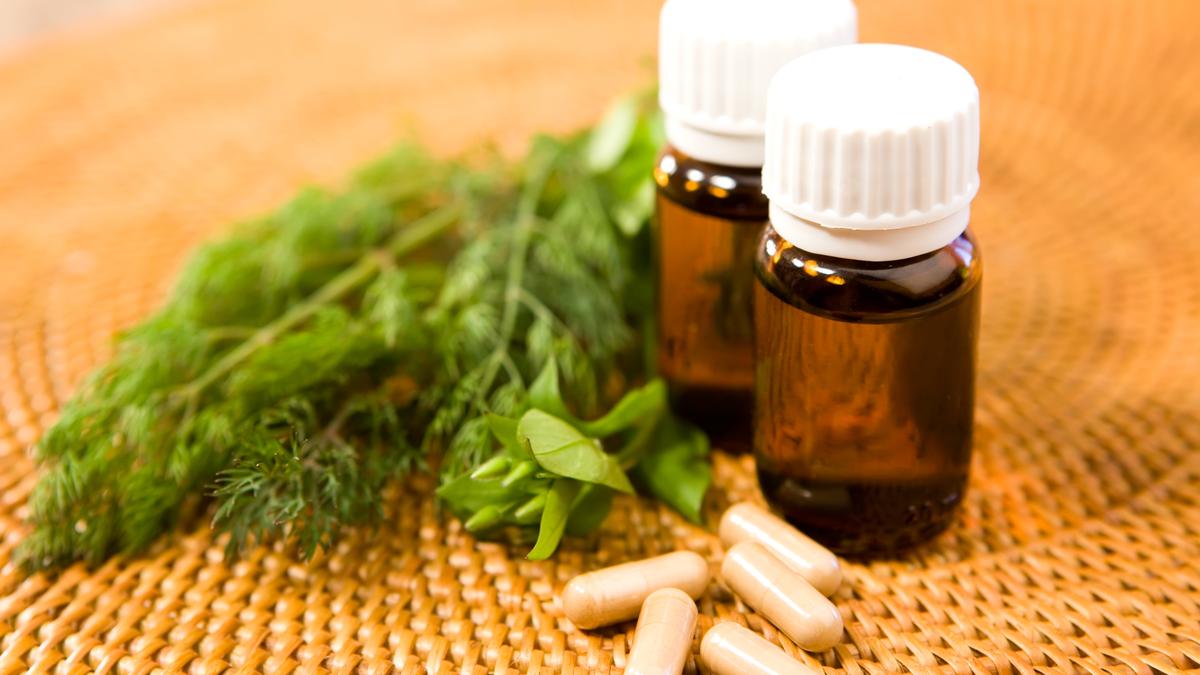
Third, India and the EU will work together to recognise (some of) each other’s lab results and safety certifications. As a result a particular Ayurvedic supplement tested in an Indian lab will likely be accepted by European customs without needing to be tested again.
Finally, the FTA recognises India’s Traditional Knowledge Digital Library, a database of formulations, thus preventing companies from wrongly claiming ownership of traditional Indian remedies.
What resources does AYUSH have?
India’s AYUSH sector has a network of hospitals, research councils, and regulatory frameworks. In 2024-25, the government’s support for the AYUSH Ministry was designed to integrate traditional medicine into the broader national healthcare landscape. The primary vehicle was the National AYUSH Mission and co-location the primary policy (i.e. placing AYUSH facilities within existing primary and community health centres and district hospitals).
The sector has several ‘Institutes of National Importance’ and autonomous bodies, including an All India Institute of Ayurveda in New Delhi, which sets benchmarks for postgraduate and doctoral education, and the National Institute of Homoeopathy in Kolkata. Other specialised institutions provide training and care in Siddha, Unani, Yoga, and naturopathy. The government also manages several research councils, such as the Central Council for Research in Ayurvedic Sciences, focused on drug standardisation and clinical research.
The National Commission for Indian System of Medicine and the National Commission for Homoeopathy have to ensure medical education remains affordable and reliable. The Pharmacopoeia Commission for Indian Medicine and Homoeopathy sets the official standards for all Indian AYUSH drugs. The National Medicinal Plants Board has also worked with 32 State boards to encourage the cultivation of high-quality herbs for both domestic use and export. The ‘AYURGYAN’ scheme promotes education and capacity building while ‘Ayurswasthay Yojana’ focuses on using traditional medicine to meet community health goals.
Is AYUSH medicine scientific?
Critics led by the Indian Medical Association (IMA) have argued that traditional systems like Ayurveda often lack the rigorous, empirical evidence required to meet the thresholds of modern medicine. Allopathic drugs must clear randomised controlled trials that test their safety and efficacy. Many AYUSH treatments however are based on ancient texts and observational history, and either haven’t been tested or whose specifics remain unverifiable.
The presence of heavy metals such as lead and mercury in certain AYUSH products has been a major concern. Health advisories in 2025 and last month from agencies in Australia, the US, and New Zealand have highlighted cases of lead poisoning linked to imported Ayurvedic products.
Perhaps the most controversial aspect of AYUSH has been “mixopathy”, the state-sanctioned blurring of lines between traditional and modern medical practice. In 2020, the Central Council of Indian Medicine authorised postgraduate Ayurveda students to be trained in 58 surgical procedures, including general surgery. The IMA called this “legalised quackery”, arguing surgery is a complex discipline requiring deep knowledge of anatomy, anesthesia, and perioperative care that AYUSH curricula don’t sufficiently cover. The controversy intensified in 2025 when the Andhra Pradesh government allowed Ayurveda exponents to perform these surgeries independently, leading to nationwide protests and legal challenges currently pending before the Supreme Court.
Friction also persists over the practice of AYUSH doctors prescribing allopathic medicines like antibiotics or steroids. Some States have issued executive orders allowing this to plug the doctor shortage in rural areas but the medical community has also warned that it could lead to irrational drug use and worsen antibiotic resistance.
What does the boost mean for AYUSH?
A smattering of independent estimates suggests the AYUSH sector will be worth $26.5 billion (Rs 2.3 lakh crore) in 2026, with startups and MSMEs accounting for 80%.
More broadly, the new plans are in line with the government’s attempts to turn AYUSH from a domestic, welfare-adjacent public health programme to a regulated industry and source of economic growth.
The proposed All India Institutes are explicitly modelled on AIIMS and, together with plans to upgrade testing facilities and pharmacies, signal efforts to recast parts of traditional medicine as being scientific rather than based on lineage or experiences. Likewise the expanded Mission continues the programme to normalise AYUSH inside India’s healthcare system, with platforms like Bharat-VISTAAR offering to improve timely access to information.
That said, while global markets may reward standardisation, they will also raise expectations of evidence and accountability at home. In this sense the government’s AYUSH push may also subject the sector to a level of scrutiny and institutional discipline that India itself has only partially enforced thus far.
mukunth.v@thehindu.co.in
Published – February 04, 2026 07:00 am IST