

Skip to content
  • Facebook
  • X
  • Linkedin
  • WhatsApp
  • YouTube
  • Associate Journalism
  • About Us
  • Privacy Policy
  • 033-46046046
  • editor@artifex.news
Artifex.News

Artifex.News

Stay Connected. Stay Informed.

  • Breaking News
  • World
  • Nation
  • Sports
  • Business
  • Science
  • Entertainment
  • Lifestyle
  • Toggle search form
  • Pakistan: Primary school teachers in Khyber Pakhtunkhwa plan province-wide strike amid educational crisis
    Pakistan: Primary school teachers in Khyber Pakhtunkhwa plan province-wide strike amid educational crisis World
  • ‘Samudrayaan set to explore ocean bed by 2025 end’
    ‘Samudrayaan set to explore ocean bed by 2025 end’ Science
  • Access Denied Sports
  • French Open 2026: Sabalenka survives first set wobble to beat Jacquemot
    French Open 2026: Sabalenka survives first set wobble to beat Jacquemot Sports
  • WC Qualifiers: Igor Stimac Says He Will Resign If India Fail To Reach Third Round
    WC Qualifiers: Igor Stimac Says He Will Resign If India Fail To Reach Third Round Sports
  • Imad Wasim Comes Out Of Retirement After Meeting PCB Officials, Available For T20 World Cup
    Imad Wasim Comes Out Of Retirement After Meeting PCB Officials, Available For T20 World Cup Sports
  • Access Denied World
  • Access Denied Sports
A turning point for nuclear deterrence

A turning point for nuclear deterrence

Posted on February 4, 2026 By admin


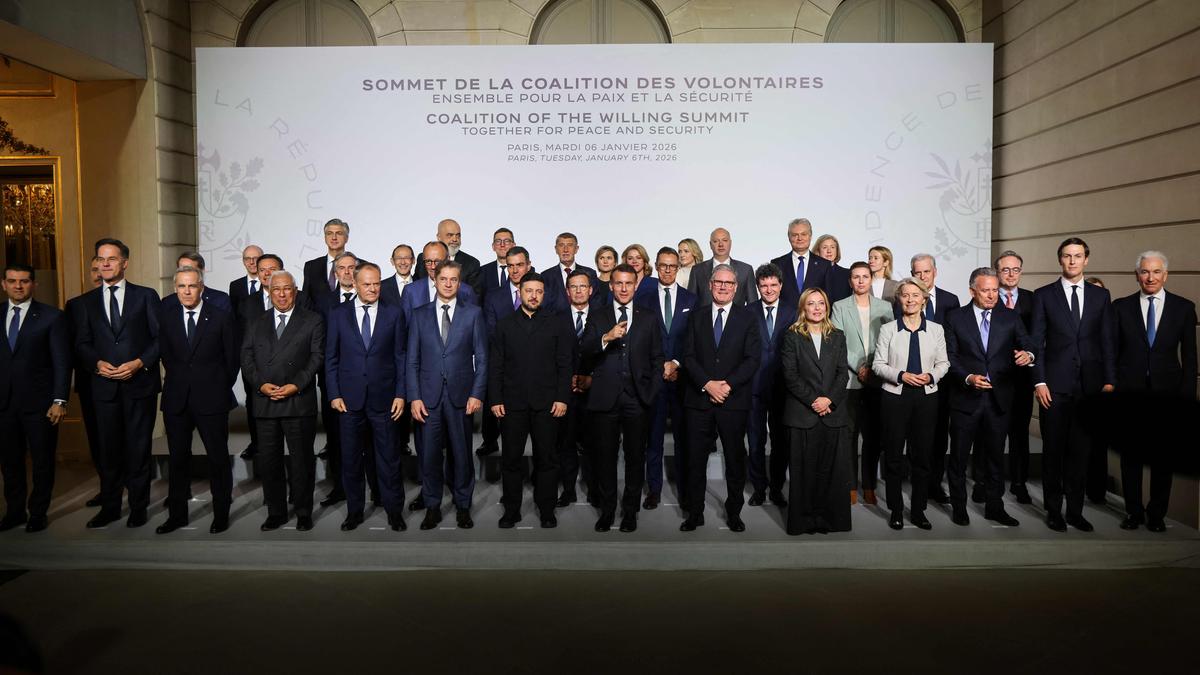
The Coalition of the Willing summit on security guarantees for Ukraine on January 6, 2026.
| Photo Credit: AFP

The rupture between Europe and Donald Trump’s U.S. over Greenland may be papered over in time, but Europe’s trust in the U.S. as a reliable North Atlantic Treaty Organization (NATO) ally has been irreparably broken. As the last remaining arms control treaty limiting Russia’s nuclear arsenal comes to an end, conversations about defending Europe are acquiring a sharper edge.

NATO came together in 1949 as a defensive nuclear alliance against the Soviet Union with the U.S. as its primus inter pares— the ultimate guarantor of the security of its western European members. Now, the hegemon has turned on its own alliance, over Mr. Trump’s desire to acquire Greenland, a sovereign territory under the jurisdiction of NATO member Denmark. Mr. Trump’s bullying and economic warfare has broken trust, and without trust NATO as a nuclear alliance is hollowed out. How Europe responds to this rupture will shape not only the future of the continent’s security, but also the future of conversations about nuclear deterrence. Depending on whether the new security architecture of Europe privileges nuclear deterrence, thinking about nuclear weapons will either be updated to reflect the lessons of the 80 years since a nuclear weapon was last detonated, or continue to echo conversations that took place when the Nuclear Non-Proliferation Treaty (NPT) separated the world into nuclear haves and have-nots.

The nuclear conversation

The intervening years since the NPT restrained horizontal proliferation have seen threats to world security shift from nuclear rivalry to terrorism and extremism; climate change; economic stress; inequality; and regional rivalries. While none of these is easily addressed by nuclear weapons, conversations about nuclear possession and use continue to privilege nukes as the ultimate guarantor of peace and security even as great power rivalry returns to the global stage.

Moreover, discussions about ‘what deters’ appear to have ossified. At the dawn of the nuclear age, when possessors were still building their arsenals, there was a debate on whether deterrence rested on certainty or uncertainty. Some believed that uncertainty was enough; that allowing an adversary to not be certain that any adventurism would not be countered with a nuclear response was enough for deterrence to work. A form of this deterrence arguably operated between India and Pakistan between the 1980s and 1998. Israel, with its opaque nuclear status, also relies on this uncertainty. For the rest of the nuclear possessors, a complex interplay of great power politics led to growing stockpiles and an emphasis on the certainty of a nuclear response. Testing demonstrated intent and number of weapons indicated resolve.

Yet, even as nuclear states were racing to stockpile warheads, a taboo on nuclear use was gaining strength. A nuclear weapon has not been deployed since 1945. While nuclear threats have been issued, and states have developed ever smaller and more ‘useable’ weapons (tactical or battlefield nukes), nuclear use, to the best of our knowledge, has never been seriously contemplated.

Arms control agreements between the U.S. and the Soviet Union/Russia, along with the global non-proliferation architecture may have contributed to sparing the world another Hiroshima, but thinking on nuclear deterrence remains essentially unchanged. And now, after a sharp reduction in nuclear stockpiles between the U.S. and Russia, the pendulum may be swinging back. 


Editorial | Neo-colonial shadows: on Trump, Greenland and his Davos talk

China, Russia and the U.S. are ambitiously modernising their nuclear stockpiles. China has reportedly added 100 warheads a year since 2023 to reach a total of 600. In 2015, the U.K. reversed a 2006 decision to reduce its stockpile and is at 225 warheads. The last remaining arms control agreement between Russia and the U.S. —New START — expires on February 5, and if both states start increasing their stockpiles from the current 5,459 and 5,277, respectively, it will send a clear message of moving back to Cold War ideas of deterrence. 

Lessons from Ukraine

The war in Ukraine should have led to a more serious debate about what deters. Russian President Vladimir Putin had made nuclear threats before his invasion and then again in October 2022. Yet those threats were countered not by the certainty of a nuclear response, but by the certainty of a robust response that left the nuclear element unclear. It is worth remembering that Ukraine — a non-nuclear country — has been able to defend itself against a nuclear adversary. Yes, it has had help and yes, it has lost territory, but Ukraine has not yet been defeated by its nuclear neighbour. 

Therefore, what happens in the next few months as Europe comes up with a security architecture that does not rely on the U.S could reshape nuclear thinking. 

Apart from some tepid discussion about how France and the U.K. might extend their nuclear umbrella to cover Europe, most of the previous debate appeared to return to hugging the U.S. ever closer. In the meantime, an ad hoc grouping of mainly European states, called the Coalition of the Willing, has come together to guarantee Ukraine’s security. Ukraine now has experience in defending itself against a nuclear state. Against this backdrop, whether Europe chooses to base its new security architecture on some sort of replacement nuclear alliance, or on a defensive alliance that may have a nuclear element, will shape future discussions about nuclear weapons and deterrence. 

Priyanjali Malik writes on nuclear politics and security.

Published – February 05, 2026 01:37 am IST


Source link

World Tags:Donald Trump quest for Greenland, NATO-U.S. ties over Greenland, Nuclear deterrence

Post navigation

Previous Post: U19 World Cup: Aaron’s classy hundred carries India to final
Next Post: Iran, U.S. to hold nuclear talks in Oman on February 6

Related Posts

  • Donald Trump’s Inaugural Fund Set To Break Record As US Businesses Line-Up To Donate
    Donald Trump’s Inaugural Fund Set To Break Record As US Businesses Line-Up To Donate World
  • Access Denied World
  • Debunked accounts of Hamas’s sexual crimes fuel debates over Israel’s war
    Debunked accounts of Hamas’s sexual crimes fuel debates over Israel’s war World
  • Trump hosts Syria’s al-Sharaa for first-of-its-kind meeting at White House
    Trump hosts Syria’s al-Sharaa for first-of-its-kind meeting at White House World
  • Musk, ex-EU tech chief Breton spar over Germany
    Musk, ex-EU tech chief Breton spar over Germany World
  • Donald Trump calls for  trillion from an initially promised 0 billion Saudi investment, lower oil prices
    Donald Trump calls for $1 trillion from an initially promised $600 billion Saudi investment, lower oil prices World

More Related Articles

Biden calls alliance with South Korea ‘linchpin for peace’ in region Biden calls alliance with South Korea ‘linchpin for peace’ in region World
Kremlin says Swiss conference showed futility of talks without Russia Kremlin says Swiss conference showed futility of talks without Russia World
Iran, U.S. boost military posture as West Asia remains on edge Iran, U.S. boost military posture as West Asia remains on edge World
Super Typhoon Man-Yi Hits Philippines, Forcing Lakhs to Flee Super Typhoon Man-Yi Hits Philippines, Forcing Lakhs to Flee World
Trump administration reviewing all 55 million people with U.S. visas for potential deportable violations Trump administration reviewing all 55 million people with U.S. visas for potential deportable violations World
British PM Keir Starmer likely to visit India in October to boost ties British PM Keir Starmer likely to visit India in October to boost ties World
SiteLock

Archives

  • September 2026
  • August 2026
  • July 2026
  • June 2026
  • May 2026
  • April 2026
  • March 2026
  • February 2026
  • January 2026
  • December 2025
  • November 2025
  • October 2025
  • September 2025
  • August 2025
  • July 2025
  • June 2025
  • May 2025
  • April 2025
  • March 2025
  • February 2025
  • January 2025
  • December 2024
  • November 2024
  • October 2024
  • September 2024
  • August 2024
  • July 2024
  • June 2024
  • May 2024
  • April 2024
  • March 2024
  • February 2024
  • January 2024
  • December 2023
  • November 2023
  • October 2023
  • September 2023
  • August 2023
  • July 2023
  • June 2023
  • May 2023
  • April 2023
  • March 2023
  • February 2023
  • January 2023
  • December 2022
  • November 2022
  • October 2022
  • September 2022
  • August 2022
  • July 2022
  • June 2022
  • May 2022

Categories

  • Business
  • Nation
  • Science
  • Sports
  • World

Recent Posts

  • Councillors complain about a rise in dengue cases
  • Higher education council holds talks with Indo-German centre official
  • 172 candidates receive appointment letters at Visakhapatnam Rozgar Mela
  • Flawed AI-linked intel almost led U.S. to board China ship: report
  • IIT Bombay faculty member booked for caste abuse, suicide abetment

Recent Comments

  1. AlvinNet on UP Teacher Who Asked Students To Slap Muslim Classmate
  2. AlvinNet on UP Teacher Who Asked Students To Slap Muslim Classmate
  3. Jamesslits on UP Teacher Who Asked Students To Slap Muslim Classmate
  4. MichaelClear on UP Teacher Who Asked Students To Slap Muslim Classmate
  5. Jamesslits on UP Teacher Who Asked Students To Slap Muslim Classmate
  • Rajasthan To Paint 20 Government College Gates ‘Orange’, Congress Reacts
    Rajasthan To Paint 20 Government College Gates ‘Orange’, Congress Reacts Nation
  • Ukraine war: Russia claims another village in east Ukraine, near Pokrovsk
    Ukraine war: Russia claims another village in east Ukraine, near Pokrovsk World
  • Access Denied
    Access Denied Nation
  • Russia’s Wagner to be declared a terrorist organisation by U.K.: report
    Russia’s Wagner to be declared a terrorist organisation by U.K.: report World
  • Help hospitals in Gaza and West Bank, Palestine envoy urges India
    Help hospitals in Gaza and West Bank, Palestine envoy urges India World
  • Access Denied
    Access Denied Nation
  • BCCI Awards: Jasprit Bumrah Is Best Men’s Cricketer, Smriti Mandhana Bags Women’s Honour, Lifetime Award for Sachin Tendulkar
    BCCI Awards: Jasprit Bumrah Is Best Men’s Cricketer, Smriti Mandhana Bags Women’s Honour, Lifetime Award for Sachin Tendulkar Sports
  • Russia to fulfil all agreements on energy supply to India: FM Lavrov
    Russia to fulfil all agreements on energy supply to India: FM Lavrov World

Editor-in-Chief:
Mohammad Ariff,
MSW, MAJMC, BSW, DTL, CTS, CNM, CCR, CAL, RSL, ASOC.
editor@artifex.news

Associate Editors:
1. Zenellis R. Tuba,
zenelis@artifex.news
2. Haris Daniyel
daniyel@artifex.news

Photograher:
Rohan Das
rohan@artifex.news

Artifex.News offers Online Paid Internships to college students from India and Abroad. Interns will get a PRESS CARD and other online offers.
Send your CV (Subjectline: Paid Internship) to internship@artifex.news

Links:
Associate Journalism
About Us
Privacy Policy

News Links:
Breaking News
World
Nation
Sports
Business
Entertainment
Lifestyle

Registered Office:
72/A, Elliot Road, Kolkata - 700016
Tel: 033-22277777, 033-22172217
Email: office@artifex.news

Editorial Office / News Desk:
No. 13, Mezzanine Floor, Esplanade Metro Rail Station,
12 J. L. Nehru Road, Kolkata - 700069.
(Entry from Gate No. 5)
Tel: 033-46011099, 033-46046046
Email: editor@artifex.news

Copyright © 2023 Artifex.News Newsportal designed by Artifex Infotech.