





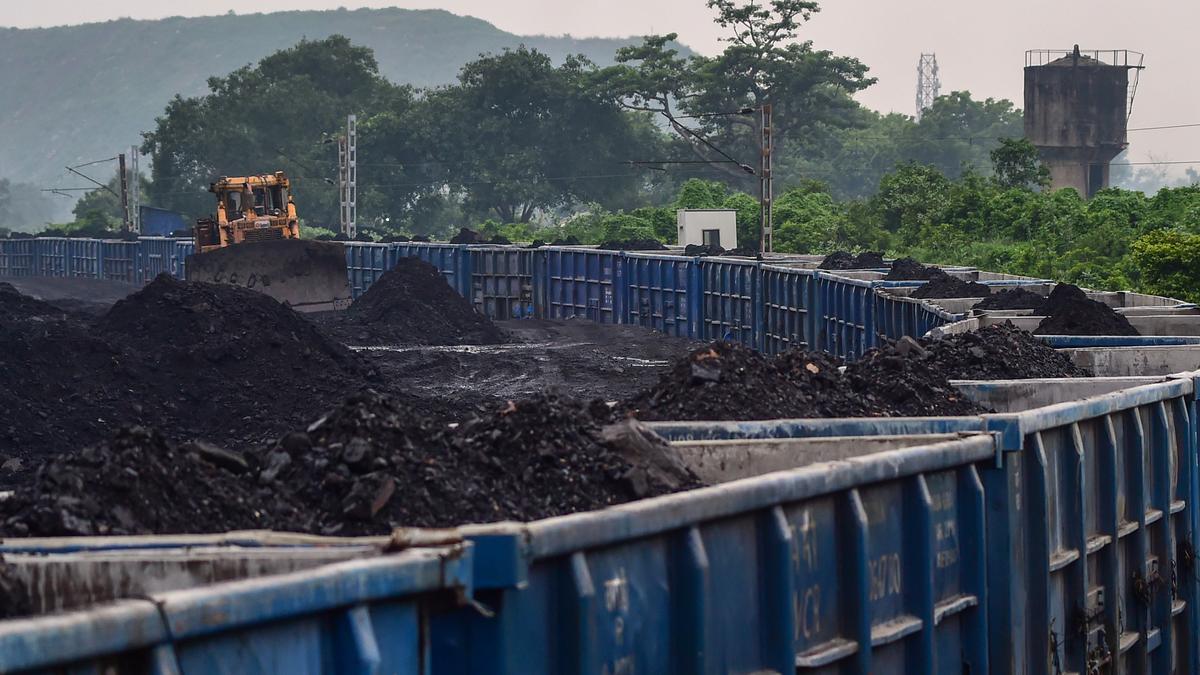
On December 23 Air Marshal and the Integrated Defence Staff chief Ashutosh Dixit laid out the defence establishment’s case for critical minerals. Modern defence systems, he said, rely on reliable access to these minerals and import dependence has become a strategic vulnerability because global supply chains are concentrated and exposed to export controls and geopolitics. He also linked self sufficiency in defence manufacturing and operational readiness to secure mineral value chains and pointed to the National Critical Mineral Mission as the country’s policy vehicle of choice.
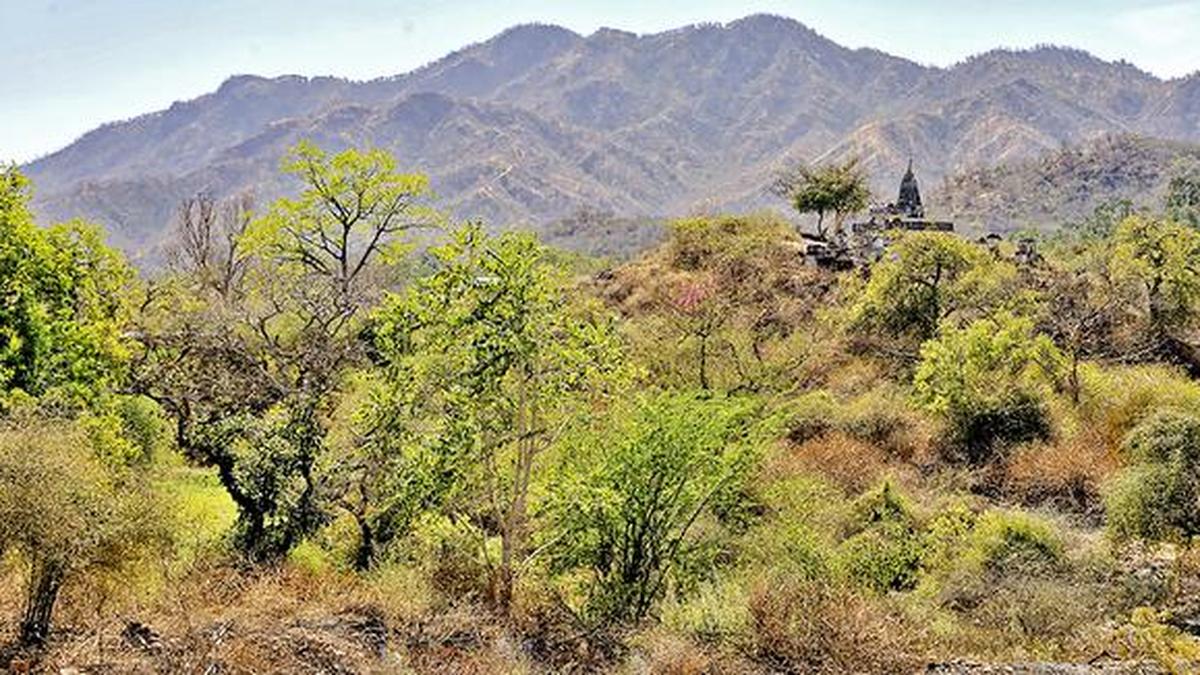
Even if they were understated, his words come as the defence establishment’s contribution to the charged public debate over how the Aravalli Hills should be protected and whether their mineral wealth should be mined.
Right now, India doesn’t resolve clashes between its climate commitments and industrial demand through any clear rules. Instead it often resorts to executive discretion and opaque instruments like office memoranda, project-specific exemptions, and ad hoc appraisals that treat “national defence” or “strategic considerations” as sufficient reason to evade scrutiny. The environmental impact assessment (EIA) framework itself allows exemptions from public consultation for projects linked to security and other strategic considerations “as determined by the Central Government”. This together with the government’s disinclination to bind itself to transparent criteria has often rendered the scope of “national interest” arbitrary and opaque, however.
Relief and hindrance
Controversy over the Aravalli Hills flared up after November 20, when the Supreme Court adopted a uniform way to identify the “hills and ranges”, froze new mining leases until the Environment Ministry had prepared a sustainable mining plan for the landscape, and said mining should be prohibited in “core” or “inviolate” areas, with an exception for critical, strategic and atomic minerals notified under the Mines and Minerals (Development and Regulation) Act 1957. The Court called this a “strategic exemption”.
In the new operational definition vis-à-vis mining, “Aravalli Hills” is any landform in the Aravalli districts that rises at least 100 m above the local relief (measured from the lowest contour line encircling the landform). Likewise the “Aravalli Range” is two or more such Aravalli Hills that lie within 500 m of each other, including the landforms in between.
Environmental groups and opposition parties have argued that this definition could still exclude large tracts from protection and weaken enforcement in a landscape already stressed by illegal mining, urban expansion, denudation, and a dropping water table. For instance, if a surveyor draws the Aravalli Hills’ boundary using the elevation and distance rules, the new landscape that emerges will be of ‘Aravalli’-like feature sitting like islands in a sea of non-‘Aravalli’ features, including valleys, plains, scrubland, and forests. Yet the latter connect the Aravalli Hills and make the current landscape as good as it currently is.
And just these features are endangered by the same Environment Ministry that must execute the sustainable mining plan — whatever it looks like — also having weakened the legal environment protection framework to promote ease of doing business, creating gaps that make the “strategic exemption” easier to misuse.
Scope creep
The Ministry has repeatedly softened India’s environmental clearance process to reduce friction for projects and industrial investments since 2014. Two decisions in 2025 are notable. First, in May, the Supreme Court had held that ex post facto clearances are alien to environmental jurisprudence and “anathema” to the environmental impact assessment (EIA) framework because they invert the logic of prior scrutiny and can lead to irreparable environmental damage. But in November, the Court recalled that judgment on review, reopening the space for post facto regularisation, this time with the Court’s own uncertainty built into the regulatory space. This element wasn’t there before.
Second, in September, the Environment Ministry issued an office memorandum to accelerate mining projects involving critical minerals by exempting them from public consultations as required by the EIA Notification 2006. This move didn’t require the notification to be amended because it already includes a special clause for “strategic considerations”, and the Ministry used that to accelerate projects while also reducing the formal space where affected communities and independent experts could force the government to disclose details of risks and cumulative impact. Ministers also defended the move in Parliament on national security grounds.
Next, the Forest (Conservation) Amendment Act 2023 and subsequent administrative practices have widened the exemptions for certain activities and have introduced new categories of land and projects with modified clearance requirements. The amended Act applies to land notified as ‘forest’ under the Indian Forest Act 1927 (or other laws) and land recorded as forest in government records on or after October 25, 1980, yet it exempted land that had already been shifted to non-forest use on or before December 12, 1996, by a State or UT order. It also exempted land along roads and railway tracks, the international border, and near “security-related infrastructure” and expanded the list of activities not treated as “non-forest purpose”.
As a result, the Centre and States can now collect information by drilling narrow holes during exploration to pull up rock samples before having to file a mining proposal. And in forest districts with mineral deposits and which overlap with areas notified as harbouring left-wing extremism, it’s now easier to establish some connective infrastructure likeroads and power lines, which can also support exploration and other mining work.
Sure, the amendments don’t exempt mining outright, but there’s a scope creep that, together with the government’s sympathetic attitude towards businesses and the post facto regularisation regime, merits scrutiny. If nothing else, it serves the state’s framing of exploration as part of a strategic pipeline for critical minerals, a narrative supported by ministers’ statements in Parliament and in official documents.
Strategic legitimacy
This is also why the public controversy over the Aravalli Hills matters so much. The Supreme Court order itself linked the Hills to groundwater recharge and to functions that prevent desertification, which are the same ecosystem services that India needs to preserve to meet outcomes linked to the Sustainable Development Goals, including clean air, water security, and good living conditions.
The Hills also contain or are believed to have potential for minerals that India’s strategic planners care about, including base metals in certain established belts, minerals such as tungsten and others often classified as ‘strategic’, and other bulk minerals including stone and rocks. The Court-appointed committee has also emphasised the potential for minerals relevant to the green energy transition, including lithium and rare-earth elements. This combination, together with the Ministry’s weakening of safeguards, makes the Court’s “strategic exemption” precarious.
Taken together the state has also effectively reduced the information that outsiders can access to hold claims of greenness — including “sustainable mining” and the circular economy of critical minerals that the new National Critical Minerals Mission promises — accountable.
If India is going to invoke a “strategic” need to carve out exceptions in sensitive areas, it should also formalise how it arbitrates these conflicts, instead of letting them be negotiated through exemptions and post-hoc regularisation. At a minimum, the government or the Court should establish a binding test for when “strategic considerations” merit simpler or easier procedures; require landscape-level cumulative-impact and groundwater assessments before all leases; and disclose, in the public record, assumptions about the alternatives — including imports, substitution, recycling, and sourcing from less sensitive areas — that were rejected. Without such a framework, climate action and economic growth will keep colliding through ad hoc decisions that expand quietly while environmental law is left to absorb the political pressure.
In fact if the Indian government accepts the defence and industrial establishments’ case that critical minerals are strategic enablers, it should also accept that strategic supply chains need strategic legitimacy. This includes the Court’s directions but should also be augmented by the Environment Ministry ceasing its parallel efforts to widen exemptions and reduce procedural checks. On the question of these minerals, the stakes are higher and the temptation to take shortcuts is greater.
mukunth.v@thehindu.co.in
Published – December 29, 2025 07:30 am IST