



Skip to content
  • Facebook
  • X
  • Linkedin
  • WhatsApp
  • YouTube
  • Associate Journalism
  • About Us
  • Privacy Policy
  • 033-46046046
  • editor@artifex.news
Artifex.News

Artifex.News

Stay Connected. Stay Informed.

  • Breaking News
  • World
  • Nation
  • Sports
  • Business
  • Science
  • Entertainment
  • Lifestyle
  • Toggle search form
  • Notre-Dame Cathedral Holds First Mass After Five-Year Long Restoration
    Notre-Dame Cathedral Holds First Mass After Five-Year Long Restoration World
  • Duleep Trophy: Focus On Rinku Singh, Shreyas Iyer, Washington Sundar In Round Two
    Duleep Trophy: Focus On Rinku Singh, Shreyas Iyer, Washington Sundar In Round Two Sports
  • Shaheen Afridi Becomes No.1 ODI Bowler For First Time. Indians In Top 10 Are…
    Shaheen Afridi Becomes No.1 ODI Bowler For First Time. Indians In Top 10 Are… Sports
  • Bangladesh Bowler Tanzim Hasan Sakib Fined 15 Percent Match Fee For Violating ICC Code Of Conduct
    Bangladesh Bowler Tanzim Hasan Sakib Fined 15 Percent Match Fee For Violating ICC Code Of Conduct Sports
  • Access Denied
    Access Denied Nation
  • The Hindu Morning Digest, September 16, 2024
    The Hindu Morning Digest, September 16, 2024 Nation
  • Red Cross received remains of 3 hostages in Gaza, will be handed to Israel’s military
    Red Cross received remains of 3 hostages in Gaza, will be handed to Israel’s military World
  • Access Denied Business
New physics-based model shows healthy guts resist microbial chaos

New physics-based model shows healthy guts resist microbial chaos

Posted on November 5, 2025 By admin


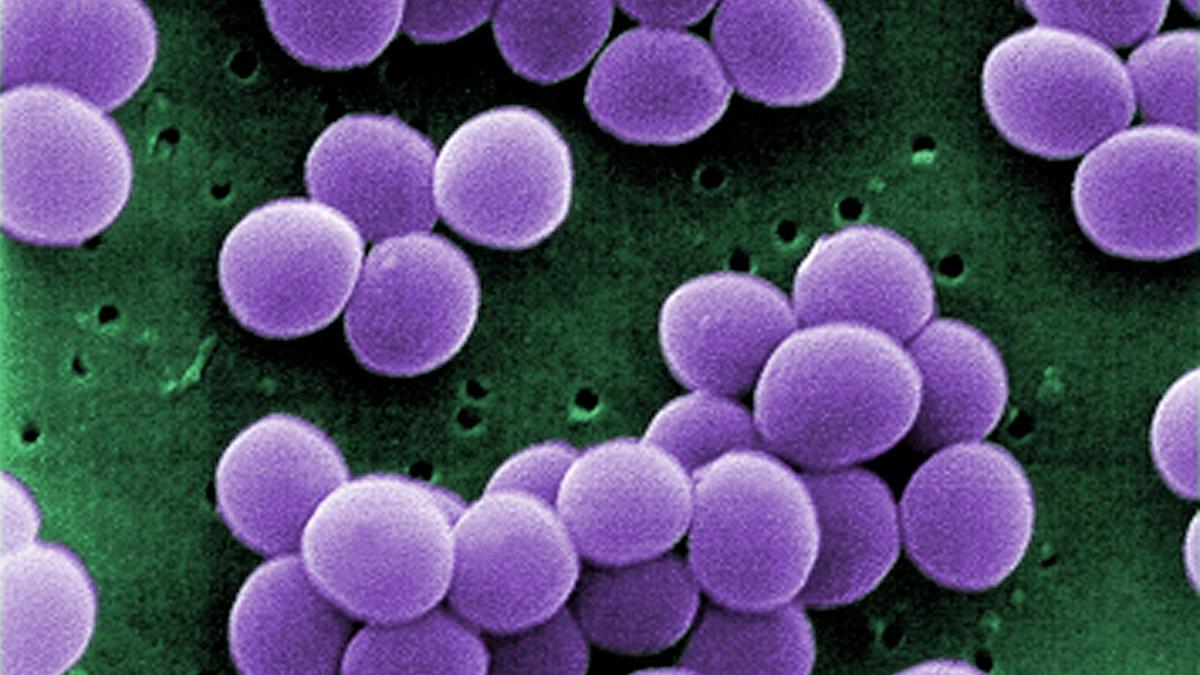
A scanning electron micrograph image of Staphylococcus aureus bacteria, typically found in the upper respiratory tract.
| Photo Credit: US CDC

The human gut is a vast ecosystem of microbes whose balance is central to health. When this balance, known as eubiosis, is disturbed, the result is dysbiosis, and is linked to conditions such as inflammatory bowel disease. Traditional models of microbial communities tend to focus on how many species are present and how abundant they are, but they rarely capture how these species interact. Yet the web of microbial interactions defines whether a community is stable or prone to collapse.

In a new study in eLife, researchers from the University of Padova in Italy, ETH Zurich in Switzerland, and Paris Cité University in France sought to fill this gap by using the tools of statistical physics to study microbial ecosystems. Specifically, they borrowed ideas from the theory of disordered systems, which was originally developed to understand complex materials like spin glasses. Their goal was to connect measurable data from metagenomic sequencing to theoretical models that describe how thousands of species interact. By doing so, they hoped to identify mathematical fingerprints that could distinguish healthy from unhealthy gut microbiomes.

The researchers used the disordered generalised Lotka-Volterra model (dgLV) — a framework that describes how populations of species change over time based on random interactions. Each microbial species’ growth rate depends on its own capacity to thrive and on the positive or negative effects of other species. The interaction strengths, which are impossible to measure directly, were treated as random variables.

Using cross-sectional gut microbiome data from 91 healthy and 202 diseased samples, they extracted a set of numbers that they used to summarise each community’s behaviour. Then, an algorithm adjusted the dgLV parameters so that the model’s predictions matched the empirical data. This allowed the researchers to infer the statistical structure of inter-species interactions and to quantify how ecological stability differed between the healthy and diseased samples.

The analysis revealed that healthy and diseased microbiomes occupy distinct zones in the model’s parameter space. That is to say, healthy communities had stronger but more heterogenous interactions, reflecting a balanced network where fluctuations are absorbed without destabilising the system. Diseased microbiomes had lower interaction diversity and higher randomness, indicating instability and loss of resilience.

Mathematically, the diseased systems were found to lie closer to a critical line that marks the transition to chaotic or unstable dynamics. This suggests that while healthy microbiomes operate in a stable equilibrium, diseased ones hover near disorder.

The new framework reframes gut health as a problem of statistical structure rather than a matter of simple composition. It implies that dysbiosis is less about which microbes are missing and more about how their interactions have weakened or become erratic. As a result, the study suggests that by examining collective behaviour, one might predict or even correct unstable microbial states.

The authors also acknowledged some limitations in their effort. For one, their model assumes a static set of interactions while real microbes evolve and respond to changing environments in different ways. They suggest future studies might allow interactions to fluctuate, capturing their dynamics more realistically.

Published – November 05, 2025 02:49 pm IST


Source link

Science

Post navigation

Previous Post: Access Denied
Next Post: Access Denied

Related Posts

  • ISRO successfully launches INSAT-3DS meteorological satellite
    ISRO successfully launches INSAT-3DS meteorological satellite Science
  • Watch: The science and strides of India’s solar powerhouse Science
  • How do scientists determine the temperature of planets or stars?
    How do scientists determine the temperature of planets or stars? Science
  • How a wandering white shark’s epic journey could provide clues for protecting them
    How a wandering white shark’s epic journey could provide clues for protecting them Science
  • China’s Shenzhou-20 astronauts to return to Earth after delay due to orbital debris
    China’s Shenzhou-20 astronauts to return to Earth after delay due to orbital debris Science
  • Why do we not hear sounds while sleeping?
    Why do we not hear sounds while sleeping? Science

More Related Articles

Sea urchins fed waste cabbage to spare Japan’s seaweed forests Sea urchins fed waste cabbage to spare Japan’s seaweed forests Science
When for-profit companies fund research, how is science affected? When for-profit companies fund research, how is science affected? Science
India’s ‘One Nation, One Subscription’ plan | Explained India’s ‘One Nation, One Subscription’ plan | Explained Science
What ended the ‘dark ages’ in the early universe? Webb telescope finds clue What ended the ‘dark ages’ in the early universe? Webb telescope finds clue Science
Why engineering evolution is a high-stakes race between cure and chaos Why engineering evolution is a high-stakes race between cure and chaos Science
India to convey its plans to build a new research station in Antarctica at ATCM India to convey its plans to build a new research station in Antarctica at ATCM Science
SiteLock

Archives

  • October 2026
  • September 2026
  • August 2026
  • July 2026
  • June 2026
  • May 2026
  • April 2026
  • March 2026
  • February 2026
  • January 2026
  • December 2025
  • November 2025
  • October 2025
  • September 2025
  • August 2025
  • July 2025
  • June 2025
  • May 2025
  • April 2025
  • March 2025
  • February 2025
  • January 2025
  • December 2024
  • November 2024
  • October 2024
  • September 2024
  • August 2024
  • July 2024
  • June 2024
  • May 2024
  • April 2024
  • March 2024
  • February 2024
  • January 2024
  • December 2023
  • November 2023
  • October 2023
  • September 2023
  • August 2023
  • July 2023
  • June 2023
  • May 2023
  • April 2023
  • March 2023
  • February 2023
  • January 2023
  • December 2022
  • November 2022
  • October 2022
  • September 2022
  • August 2022
  • July 2022
  • June 2022
  • May 2022

Categories

  • Business
  • Nation
  • Science
  • Sports
  • World

Recent Posts

  • Sivaganga police arrest five under Goondas Act in double murder case
  • Mining project threatens future of rare Jeypore ground gecko
  • Tata Trusts row: Noel, son Neville Tata move Bombay HC and Mumbai civil court with caveats
  • Ranji Trophy 2026-27 | Sarwate’s resolute 95 helps Kerala deny Jharkhand an outright win
  • Private bus operators to begin indefinite hunger strike on October 27

Recent Comments

  1. RobertTes on UP Teacher Who Asked Students To Slap Muslim Classmate
  2. Manuelret on UP Teacher Who Asked Students To Slap Muslim Classmate
  3. RobertTes on UP Teacher Who Asked Students To Slap Muslim Classmate
  4. RobertTes on UP Teacher Who Asked Students To Slap Muslim Classmate
  5. BrentWes on UP Teacher Who Asked Students To Slap Muslim Classmate
  • Virat Kohli Starts Practice At Perth. Fans Climb Trees, Bring Ladders To Watch Him
    Virat Kohli Starts Practice At Perth. Fans Climb Trees, Bring Ladders To Watch Him Sports
  • Lions Maul Zookeeper To Death At Crimea Safari Park
    Lions Maul Zookeeper To Death At Crimea Safari Park World
  • Access Denied
    Access Denied Nation
  • Access Denied Sports
  • In Sahara saga, small investors find a new hope
    In Sahara saga, small investors find a new hope Business
  • Access Denied Sports
  • Access Denied
    Access Denied Nation
  • Access Denied Sports

Editor-in-Chief:
Mohammad Ariff,
MSW, MAJMC, BSW, DTL, CTS, CNM, CCR, CAL, RSL, ASOC.
editor@artifex.news

Associate Editors:
1. Zenellis R. Tuba,
zenelis@artifex.news
2. Haris Daniyel
daniyel@artifex.news

Photograher:
Rohan Das
rohan@artifex.news

Associate Journalists
1. Subrata Paul - AN/2020/01
2. Quamruz Zaman - AN/2021/22
3. Ahmed Sha - AN/2021/035
4. Ajay Kumar Shaw - AN/2021/39
5. Tahqiqul Hoda - AN/2021/21

Artifex.News offers Online Paid Internships to college students from India and Abroad. Interns will get a PRESS CARD and other online offers.
Send your CV (Subjectline: Paid Internship) to internship@artifex.news

Links:
Associate Journalism
About Us
Privacy Policy

News Links:
Breaking News
World
Nation
Sports
Business
Entertainment
Lifestyle

Registered Office:
72/A, Elliot Road, Kolkata - 700016
Tel: 033-22277777, 033-22172217
Email: office@artifex.news

Editorial Office / News Desk:
No. 13, Mezzanine Floor, Esplanade Metro Rail Station,
12 J. L. Nehru Road, Kolkata - 700069.
(Entry from Gate No. 5)
Tel: 033-46011099, 033-46046046
Email: editor@artifex.news

Copyright © 2023 Artifex.News Newsportal designed by Artifex Infotech.