




A single mosquito carrying malaria parasites can infect dozens of people. A single gene in that mosquito can spread slowly through its population. Gene drives aim to bend this inheritance in our favour by ensuring that a particular genetic change passes to far more than half of the offspring, helping reduce the disease burden.
Whether through applications in health, diagnostics, drug discovery, and development or agriculture, today’s gene engineers can seem to have nature in the palm of their hands. Yet this misplaced view of unbridled human capacity has raised the false sense that any problem related to life on our planet can be addressed or solved by genetic engineering.
Humans have acquired great power in our ability to manipulate cells and organisms. This capacity has helped, and will continue to help, address major problems. Yet our abilities are still modest compared to what nature itself has achieved over billions of years. Manipulating nature in a predictable manner is not straightforward: it involves trade-offs. Understanding nature’s journey over evolutionary time is both illustrative of what an engineered future can look like and a cautionary tale about the complexities that human-driven genetic engineering will face.
A drive to proliferate
Of the many applications of genetic engineering, ‘gene drives’ have received much attention. Gene drives are stretches of DNA engineered into the genome of an organism, say a mosquito. The stretches expand their presence in the population from generation to generation until eventually the inserted DNA is present in almost all the animals in that ecosystem.
Suppose the DNA has the effect of making mosquito males sterile. Males that do not carry the gene drive can mate with females that do, but the progeny, both males and females, will carry the gene drive. This could, in principle, drive the population of mosquitoes to sterility or collapse.
Proponents point to how this can greatly reduce, or even eliminate, disease-carrying vectors such as mosquitoes that transmit malaria or dengue. Critics point to possible failure through the development of resistance, environmental concerns, and the potential for unanticipated biological consequences. If we are to form a considered opinion on this, it will be useful to understand the past, present, and likely future of gene drives.
From viruses to whales, the stretches of DNA called genes share a common feature: the drive to replicate successfully and amplify in populations. For genes, the organism is merely the vehicle to achieve this goal. The reproductive success of the organism is essential to serve this purpose. A virus that infects a host, multiplies several thousand times, exits, and infects hundreds of other hosts is successful at this game. If it is so virulent or the host so weak that it kills the host before it can replicate and spread, it will have failed.

An illustrated cross-section of a measles virus. It is enveloped by a lipid membrane studded with hemagglutinin and fusion proteins. The genome is shown in yellow, protectected by the nucleoproteins in green.
| Photo Credit:
David Goodsell/RCSB
An infection may weaken the host but that does not matter for the genes in the virus. For example, a person with COVID-19 may suffer severe complications that render them incapacitated or even dead. The virus does not care: it has used its human host, amplified its genome, and gone on to propagate elsewhere. But if the incapacitated person is of reproductive age, their genes may not be transmitted to progeny. So while genes may be selfish, they are also selected against gluttony.
Viruses are not gene drives in the strict sense yet they are useful illustrations of the selfish logic of genes — and of the many ways in which genetic material can use living hosts to amplify itself. Smallpox, measles, mumps, and rubella are examples that can devastate human populations while viruses carried by whiteflies and the papaya ringspot virus affect agriculture.
While SARS-CoV-2 adopted a ‘hit-replicate-run’ strategy, many other viruses are more surreptitious. The human papillomavirus (HPV), for example, can integrate parts of its genome into ours while also replicating and being transmitted through sexual contact. Once integrated, viral elements can sometimes persist and amplify within cells. But unless such elements enter the sperm or egg, they usually face an evolutionary dead end.

Jumping genes
Viral, bacterial, fungal, and parasite infections are not the only way genes amplify themselves. Our genome, and that of most organisms, is loaded with stretches of DNA called transposable elements (earlier called jumping genes). These elements replicate and increase their number within genomes. They are typically distributed in the regions between genes, using the host’s machinery to amplify themselves without fatally disrupting survival.
Sometimes, these elements can land within genes and cause the host problems such as cancer, or land in regions that regulate a gene and confer a new function. Current estimates suggest about a quarter of human regulatory elements have signs of originating in transposable elements. These elements have become ‘domesticated’ and repurposed to regulate host genes. The placenta, the immune system, and some brain functions all bear such signs.
When naturally occurring elements use their hosts to amplify themselves, they can weaken their hosts as they use the hosts’ resources. But they cannot do this in an unbridled manner. The host also fights back, developing powerful resistance, silencing, and immune systems. Often, the invasive genes become beneficial residents whose sequences the host co-opts to develop new functions.
This evolutionary balance is important. Natural ‘drivers’ are constrained by selection, host resistance, and the wider biological context in which they operate. Engineered drives, if we build them, seek to harness the same logic — but for our ends and at our pace.

A profound insight
We know all this thanks to advances in molecular biology and genetic engineering. A substantial part of our understanding of human biology comes from studies on organisms such as bacteria, yeasts, fruit flies, and mice. Germ-line transformation is a tool by which DNA from the same species or from other species can be inserted into an organism so that it can be transmitted from generation to generation.
Scientists have deployed this ability in many organisms (excluding humans) to reveal the function of genes, transforming our understanding of biology. Today, genetic systems based on transposable elements are also used in gene therapy vectors and in CAR T-cell therapy to treat cancers.
In 2003, the evolutionary biologist Austin Burt published an important theoretical paper in which he suggested something that seems obvious in hindsight. Most genes in animals and plants come in two copies, one on each of the two chromosomes. If a site-specific selfish element inserted on one chromosome also had a way to cut the matching sequence on the homologous chromosome and then copy itself into that cut site, it would transform the way the element was transmitted from generation to generation.
That is, instead of being inherited by only half the progeny — as Mendel’s rules would predict — it could bias inheritance in its favour and spread rapidly through a population. Burt proposed that such “super-Mendelian” inheritance could be used either to collapse populations by targeting essential or fertility-related genes or to alter populations, for example by making mosquitoes unable to transmit malaria parasites.
Together with advances such as improvements to the CRISPR/Cas9 technology, synthetic gene drives have become practically feasible. When the drive’s chromosome pairs with a non-drive chromosome, it can cut the corresponding sequence and copy itself across. It is today possible to build, on the computer and in the laboratory, several kinds of gene drives: those that reduce or collapse populations of organisms and others that make the mosquito resistant to the malaria parasite, thus reducing disease burden without killing off mosquitoes.

Preparing our debates
There are potential dangers, real, and exaggerated, with the release of gene drives. Unlike pesticides, there is no simple ‘recall’ button. As with drugs, target populations can evolve resistance. Rare events could, in principle, transmit the drive beyond the intended target, resulting in unintended consequences. Some experts have also raised biosafety concerns, including the possibility of misuse. Finally, as we have seen with genetically modified crops, social and political acceptability varies with country and context.
Researchers and policymakers have widely discussed these concerns and have developed (or are developing) technologies to address them. For example, ‘daisy-chain’ or other self-limiting drives, which require several elements to propagate and therefore have a lower chance of spreading indefinitely, are in the works. Drives with greater control of the CRISPR/Cas9 system are being built. Scientists are also working on ‘reversal drives’ to undo the spread, if required, and on split-drive systems that separate key components of the machinery.
To be clear, these concerns have legitimate bases. We know of how invasive species and naturally occurring inheritance-biasing elements have caused population bottlenecks and ecological disruption. Engineered drives are not immune to such concerns, and we need to keep a few points in mind.
First, how do the risks compare with the benefits? If gene drives can be used against parasite vectors such as mosquitoes, how many lives will be saved, and can the risks be minimised? Other methods will also need to be used, and the risk–benefit analysis is complex.

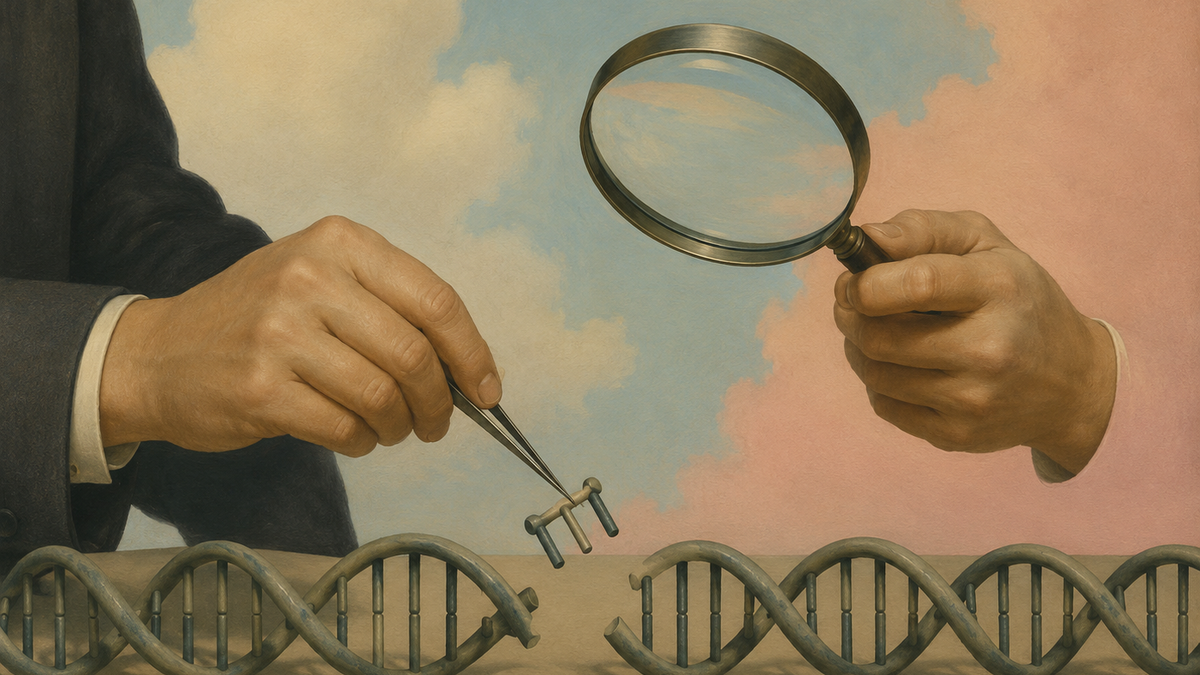
There are potential dangers, real and exaggerated, with the release of gene drives.
| Photo Credit:
Image created with AI
Second, are the technologies to deal with unintended consequences in place? Is the regulatory system required to take a composite view of value in place before one moves from laboratory demonstration to the field?
The U.S. National Academies of Sciences and the World Health Organization have proposed phased testing frameworks, with each stage requiring ecological data and community consent before proceeding.
We are in the same position with gene drives as humankind has found itself with other transformative technologies. The speed with which the capability arrives is often faster than social, political, and regulatory understanding. The selfish gene evolved remarkable mechanisms to propagate itself over billions of years. We now have the ability to use our understanding of how such elements work to make our own drives.
What we do and how we do it will say less about the gene’s selfishness than about our own wisdom. The safest aircraft is one that does not take off. How we balance the risks and benefits of the flight of gene drives is a challenge that each country will address in different ways. The reality is that we will soon have field data on both the concerns and the benefits, and our discussions and debates need to be prepared for this future.
K. VijayRaghavan is the DAE-Homi Bhabha Chair, TIFR-National Centre for Biological Sciences, Bengaluru.