


Skip to content
  • Facebook
  • X
  • Linkedin
  • WhatsApp
  • YouTube
  • Associate Journalism
  • About Us
  • Privacy Policy
  • 033-46046046
  • editor@artifex.news
Artifex.News

Artifex.News

Stay Connected. Stay Informed.

  • Breaking News
  • World
  • Nation
  • Sports
  • Business
  • Science
  • Entertainment
  • Lifestyle
  • Toggle search form
  • Indian Women’s Hockey Team Loses 0-3 To Argentina In FIH Pro League
    Indian Women’s Hockey Team Loses 0-3 To Argentina In FIH Pro League Sports
  • Australia Cricket Great Michael Slater, In Custody For Choking A Woman And Stalking, Makes Desperate Plea For Bail
    Australia Cricket Great Michael Slater, In Custody For Choking A Woman And Stalking, Makes Desperate Plea For Bail Sports
  • Jantar Mantar protest LIVE: Dharmendra Pradhan’s resignation is non-negotiable, protest to continue, says CJP
    Jantar Mantar protest LIVE: Dharmendra Pradhan’s resignation is non-negotiable, protest to continue, says CJP Nation
  • Lucknow Temple Bans Offerings Bought From Outside Amid Tirupati Laddoo Row
    Lucknow Temple Bans Offerings Bought From Outside Amid Tirupati Laddoo Row Nation
  • “I Stopped…”: How Chat With Sourav Ganguly Changed India Star’s Retirement Decision
    “I Stopped…”: How Chat With Sourav Ganguly Changed India Star’s Retirement Decision Sports
  • Donald Trump Fires “Tremendous Tariff-Maker” Warning At India, China
    Donald Trump Fires “Tremendous Tariff-Maker” Warning At India, China World
  • Access Denied Sports
  • “Whenever He Gets Out, His Dismissal Looks Very Ugly”: Ex-India Star On Rishabh Pant
    “Whenever He Gets Out, His Dismissal Looks Very Ugly”: Ex-India Star On Rishabh Pant Sports
Who gets to own the moon? India is uniquely positioned to answer

Who gets to own the moon? India is uniquely positioned to answer

Posted on August 23, 2025 By admin


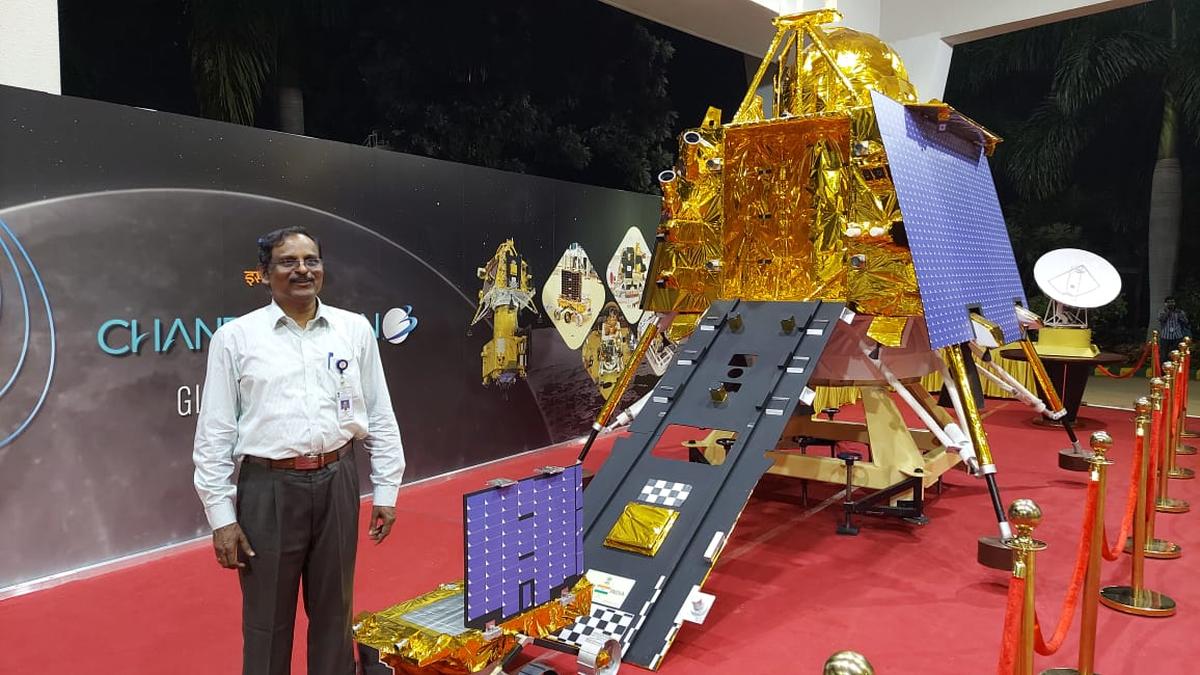
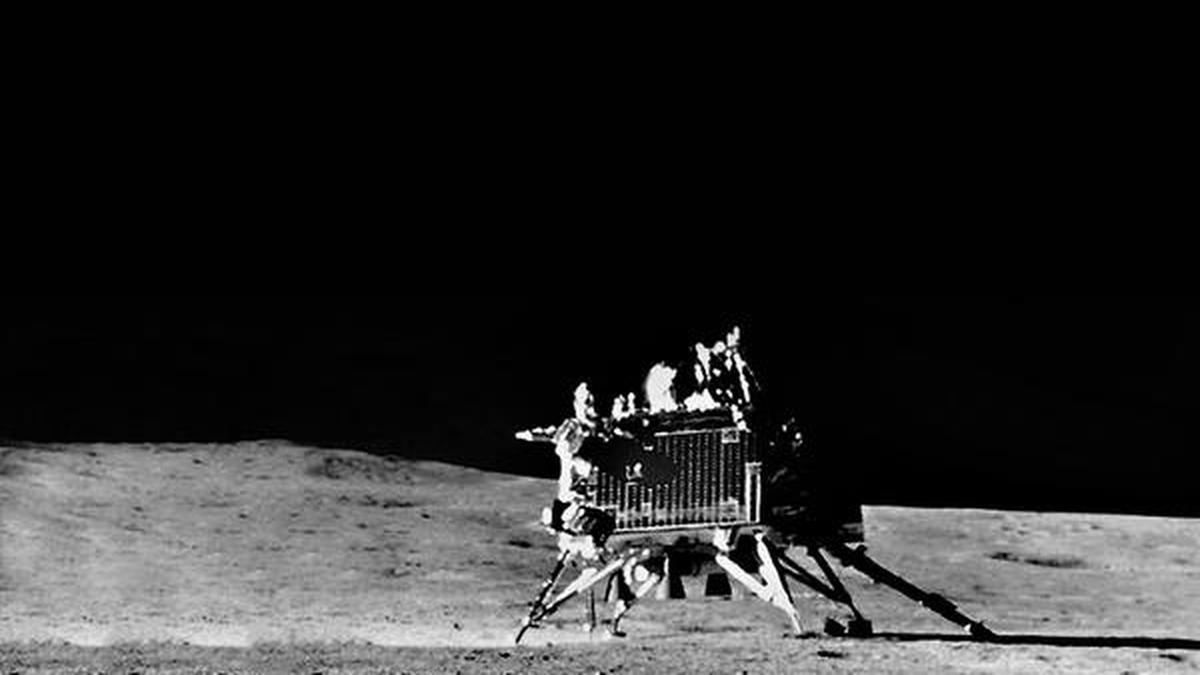
At around 6 pm IST on August 23, 2023, the Vikram lander of the Chandrayaan-3 mission of the Indian Space Research Organisation (ISRO) gently touched down on the moon. Thus, India became only the fourth country with a national space agency that had executed a controlled lunar landing. In honour of the occasion, Prime Minister Narendra Modi designated August 23 as National Space Day.

From mythology to lullabies, from religious symbols to Bollywood, dreams of building homes on the moon have long been part of Indians’ inner worlds. Today, those dreams are coming to life — not as poetry but through space missions, billion-dollar mining ventures, and legal clauses. Suddenly, a very human question arises: who gets to own the moon?

A foundational law

The bedrock of space law is the Outer Space Treaty (OST), signed at the height of the Cold War in 1967. Article I of the treaty declares that “the exploration and use of outer space, including the Moon and other celestial bodies, shall be carried out for the benefit and in the interests of all countries … and shall be the province of all mankind.”

Article II goes further, prohibiting “national appropriation by claim of sovereignty, by means of use or occupation, or by any other means.”

In theory, this creates a commons-like status for the moon, a resource to be shared rather than owned.

However, while the OST bars national sovereignty over lunar territory, it is silent on the extraction of resources. This has given rise to competing interpretations: the extraction and private utilisation of resources are permissible as long as they do not constitute a territorial claim, and permitting such activities violates the spirit of the treaty and risks undermining the principle of non-appropriation.

Unpopular ideal

To address these gaps, the 1984 Moon Agreement proposed that lunar resources be the “common heritage of mankind,” akin to the U.N. Convention on the Law of the Sea. It called for equitable benefit-sharing and international regulation. Article 11 states: “States Parties to this Agreement hereby undertake to establish an international regime, including appropriate procedures, to govern the exploitation of the natural resources of the Moon as such exploitation is about to become feasible.”

The Moon Agreement failed to gain traction, however. Only 17 countries have ratified it to date, none of which are major spacefaring nations, including the U.S., China, Russia, and India. Its provisions are vague, idealistic, and economically unviable. The absence of enforcement mechanisms and the lack of incentives for private companies further diminish their effectiveness.

New legal paradigm

Launched by the U.S. in 2020, the Artemis Accords represent a set of non-binding bilateral agreements that outline principles for peaceful, transparent, and cooperative space exploration. These include commitments to interoperability, emergency assistance, and the responsible extraction and use of space resources.

Notably, the Accords assert that resource extraction does not constitute national appropriation — a position that seeks to navigate the restrictions of Article II of the OST. As of mid-2025, 55 countries had signed the Accords. However, China and Russia remain outside the framework and are jointly developing an International Lunar Research Station, a parallel initiative that reflects a competing vision for lunar governance.

While the Artemis Accords are not legally binding, their status as “soft law” allows them to shape international norms and expectations. Critics, however, have also argued that its provisions like “safety zones” could lead to de facto territorial claims, potentially undermining the OST’s foundational principles of non-appropriation and shared access.

First come, first serve?

The shift from the moon as a shared heritage to the moon as a competitive arena raises concerns about whether we are entering a “first come, first serve” era of lunar exploration. NASA’s Artemis programme, including upcoming missions involving SpaceX and Blue Origin, has plans to establish a sustained human presence near the lunar south pole, a region believed to harbour vast amounts of water ice.

Water ice is a scientific curiosity and a potential fuel source. Through electrolysis, water can be split into hydrogen and oxygen, which can power rockets or sustain life support systems. The ability to produce fuel in space could dramatically reduce the cost and complexity of deep-space missions. For companies and countries eyeing Mars, the moon is no longer a destination: it is a refuelling stop.

Private companies such as Intuitive Machines, Astrobotic, and iSpace have launched robotic missions to the moon, marking a new era in commercial lunar exploration.

In February 2024, Intuitive Machines became the first private company to successfully land a spacecraft, its Nova-C lander Odysseus, on the lunar surface as part of NASA’s Commercial Lunar Payload Services programme. Astrobotic attempted a similar mission in January 2024 with its Peregrine lander but a fuel leak rendered the mission abortive. Japan’s iSpace launched its Hakuto-R Mission 1 in 2022, which also failed to land but demonstrated significant technical progress.

These missions, driven by both scientific and commercial goals, reflect a strategic push to establish an early presence, shape lunar infrastructure, and influence the future governance of space resources.

India’s lunar strategy

With its Chandrayaan missions and the upcoming Gaganyaan human spaceflight programme, India has established itself as a rising space power. Its signing of the Artemis Accords in June 2023 signalled a commitment to transparency and sustainable space exploration. Then again, signing the Accords is not the same as direct participation in NASA’s Artemis missions, which allows countries to support shared principles without immediate operational involvement.

Traditionally, India has championed multilateralism and the peaceful use of outer space, aligning more with the “common heritage” principle than the “first come, first serve” model. On one hand, India is well-positioned to bridge the competing blocs and push for a more inclusive, U.N.-based governance framework. On the other, it must remain vigilant to ensure its interests are not diluted as new norms emerge through bilateral practices and soft law.

India thus has a pivotal role to play. With its technological capabilities, legal credibility, and deep-rooted commitment to peaceful space exploration, it can advocate for a middle path, one that promotes access, equity, and sustainability.

New rules needed

As humankind prepares to return to the moon, not as tourists but as settlers, miners, and perhaps even competitors, the legal landscape governing our nearest celestial neighbour is rapidly shifting. The moon, long a symbol of unity and wonder, is becoming a test case for how we manage our expansion into the cosmos.

The monopolisation of resources by a few technologically advanced actors may also widen global inequalities, echoing familiar patterns from the earth’s history.

In this quiet but consequential legal race above our heads, the question is not just who owns the moon. It is whether we can still learn to share it before it is too late.

Shrawani Shagun is a researcher focusing on environmental sustainability and space governance.


Source link

Science

Post navigation

Previous Post: Access Denied
Next Post: Access Denied

Related Posts

  • Team aims world’s smallest QR code at long-term data storage
    Team aims world’s smallest QR code at long-term data storage Science
  • Science for all newsletter Scientists cause one beam of light to cast a shadow against another
    Science for all newsletter Scientists cause one beam of light to cast a shadow against another Science
  • Hypermetabolism linked to early-life adversity can be harmful in long term: Study
    Hypermetabolism linked to early-life adversity can be harmful in long term: Study Science
  • Rush to return humans to the moon could threaten opportunities for astronomy
    Rush to return humans to the moon could threaten opportunities for astronomy Science
  • Explained | What is genome sequencing and why does the Genome India Project matter?
    Explained | What is genome sequencing and why does the Genome India Project matter? Science
  • Questions arise over reproducibility in social, behavioural sciences
    Questions arise over reproducibility in social, behavioural sciences Science

More Related Articles

Why Union Minister Suresh Gopi met ISRO team in Bengaluru, and who else was with him  Why Union Minister Suresh Gopi met ISRO team in Bengaluru, and who else was with him  Science
How India established its first research station in Antarctica How India established its first research station in Antarctica Science
Katherine Johnson: NASA’s forgotten human computer Katherine Johnson: NASA’s forgotten human computer Science
Science for all: First real-time video of how an embryo implants itself produced Science for all: First real-time video of how an embryo implants itself produced Science
A random number generator using quantum physics and a blockchain A random number generator using quantum physics and a blockchain Science
V. Narayanan, who is set to take over as ISRO Chairman, terms his new assignment ‘a great responsibility’ V. Narayanan, who is set to take over as ISRO Chairman, terms his new assignment ‘a great responsibility’ Science
SiteLock

Archives

  • October 2026
  • September 2026
  • August 2026
  • July 2026
  • June 2026
  • May 2026
  • April 2026
  • March 2026
  • February 2026
  • January 2026
  • December 2025
  • November 2025
  • October 2025
  • September 2025
  • August 2025
  • July 2025
  • June 2025
  • May 2025
  • April 2025
  • March 2025
  • February 2025
  • January 2025
  • December 2024
  • November 2024
  • October 2024
  • September 2024
  • August 2024
  • July 2024
  • June 2024
  • May 2024
  • April 2024
  • March 2024
  • February 2024
  • January 2024
  • December 2023
  • November 2023
  • October 2023
  • September 2023
  • August 2023
  • July 2023
  • June 2023
  • May 2023
  • April 2023
  • March 2023
  • February 2023
  • January 2023
  • December 2022
  • November 2022
  • October 2022
  • September 2022
  • August 2022
  • July 2022
  • June 2022
  • May 2022

Categories

  • Business
  • Nation
  • Science
  • Sports
  • World

Recent Posts

  • BJP party worker killed in Bengaluru as high-end car rams gas tanker near Devanahalli; three injured
  • Ranji Trophy: Bengal picks up Delhi’s gauntlet to win by nine wickets
  • Victory Flair, Exuma and Shamara catch the eye
  • Stock markets close lower amid elevated crude oil, rising inflation
  • C.Ve. Shanmugam wants AIADMK leadership to consult with functionaries over party’s bypoll loss

Recent Comments

  1. RobertTes on UP Teacher Who Asked Students To Slap Muslim Classmate
  2. Manuelret on UP Teacher Who Asked Students To Slap Muslim Classmate
  3. RobertTes on UP Teacher Who Asked Students To Slap Muslim Classmate
  4. RobertTes on UP Teacher Who Asked Students To Slap Muslim Classmate
  5. BrentWes on UP Teacher Who Asked Students To Slap Muslim Classmate
  • Best is yet to come, says first woman Test centurion at Lord’s Yastika Bhatia
    Best is yet to come, says first woman Test centurion at Lord’s Yastika Bhatia Sports
  • Tibet’s exiled government leader sworn in
    Tibet’s exiled government leader sworn in World
  • Houthis Say Will Target Any Ship Supplying, Transporting Goods To Israel
    Houthis Say Will Target Any Ship Supplying, Transporting Goods To Israel World
  • Volvo Car India introduces electric luxury SUV EX90 at ₹1.26 crore
    Volvo Car India introduces electric luxury SUV EX90 at ₹1.26 crore Business
  • Updated ODI World Cup 2023 Points Table After South Africa Beat Sri Lanka
    Updated ODI World Cup 2023 Points Table After South Africa Beat Sri Lanka Sports
  • PM Modi Arrives In Ukraine By Train, 8-Hour Journey With S Jaishankar
    PM Modi Arrives In Ukraine By Train, 8-Hour Journey With S Jaishankar Nation
  • Govt committed to welfare of armed forces, their families: PM Modi
    Govt committed to welfare of armed forces, their families: PM Modi Nation
  • Access Denied
    Access Denied Nation

Editor-in-Chief:
Mohammad Ariff,
MSW, MAJMC, BSW, DTL, CTS, CNM, CCR, CAL, RSL, ASOC.
editor@artifex.news

Associate Editors:
1. Zenellis R. Tuba,
zenelis@artifex.news
2. Haris Daniyel
daniyel@artifex.news

Photograher:
Rohan Das
rohan@artifex.news

Associate Journalists
1. Subrata Paul - AN/2020/01
2. Quamruz Zaman - AN/2021/22
3. Ahmed Sha - AN/2021/035
4. Ajay Kumar Shaw - AN/2021/39
5. Tahqiqul Hoda - AN/2021/21

Artifex.News offers Online Paid Internships to college students from India and Abroad. Interns will get a PRESS CARD and other online offers.
Send your CV (Subjectline: Paid Internship) to internship@artifex.news

Links:
Associate Journalism
About Us
Privacy Policy

News Links:
Breaking News
World
Nation
Sports
Business
Entertainment
Lifestyle

Registered Office:
72/A, Elliot Road, Kolkata - 700016
Tel: 033-22277777, 033-22172217
Email: office@artifex.news

Editorial Office / News Desk:
No. 13, Mezzanine Floor, Esplanade Metro Rail Station,
12 J. L. Nehru Road, Kolkata - 700069.
(Entry from Gate No. 5)
Tel: 033-46011099, 033-46046046
Email: editor@artifex.news

Copyright © 2023 Artifex.News Newsportal designed by Artifex Infotech.