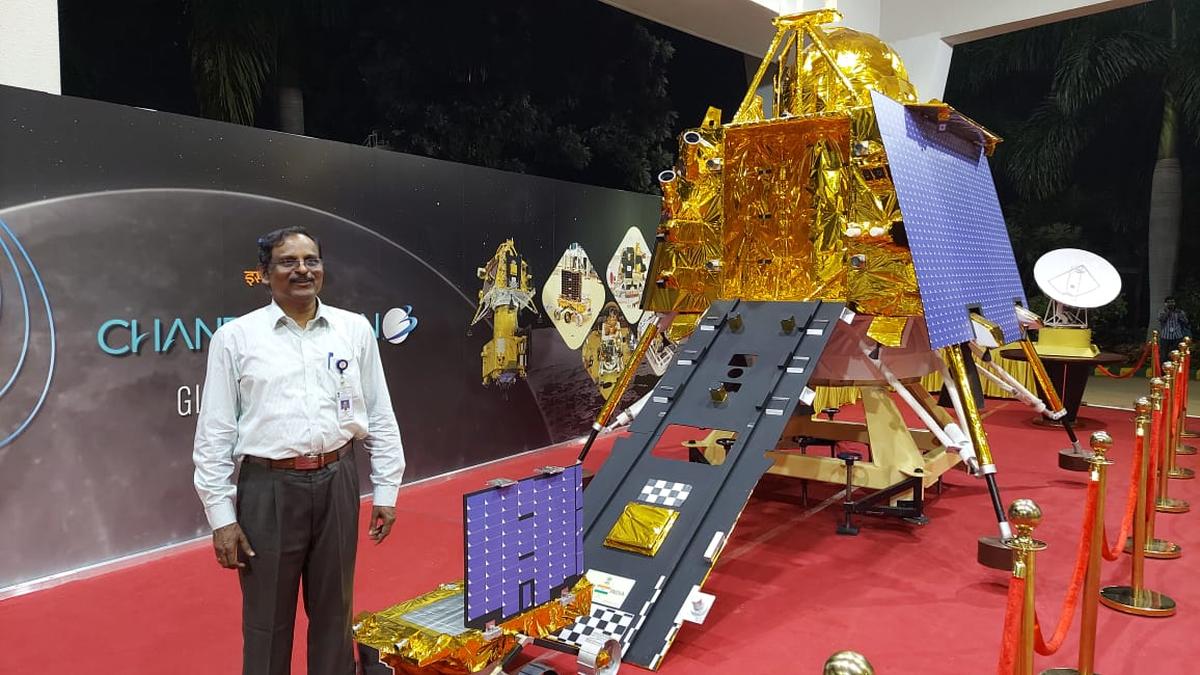





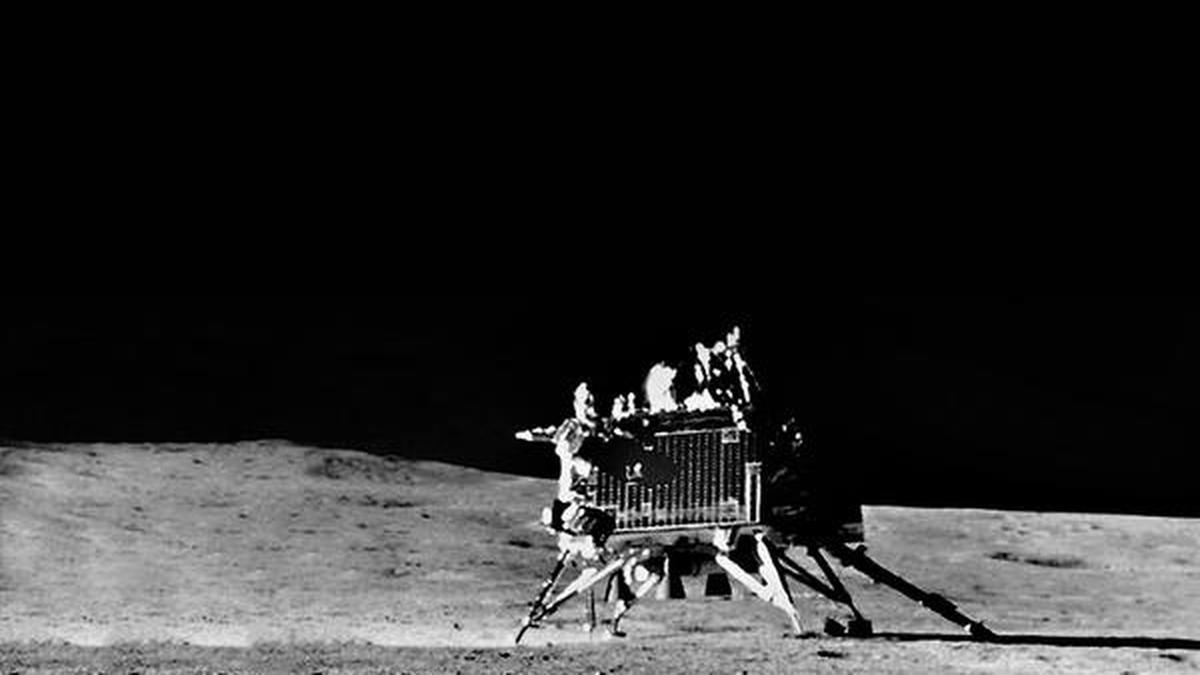
At around 6 pm IST on August 23, 2023, the Vikram lander of the Chandrayaan-3 mission of the Indian Space Research Organisation (ISRO) gently touched down on the moon. Thus, India became only the fourth country with a national space agency that had executed a controlled lunar landing. In honour of the occasion, Prime Minister Narendra Modi designated August 23 as National Space Day.
From mythology to lullabies, from religious symbols to Bollywood, dreams of building homes on the moon have long been part of Indians’ inner worlds. Today, those dreams are coming to life — not as poetry but through space missions, billion-dollar mining ventures, and legal clauses. Suddenly, a very human question arises: who gets to own the moon?
A foundational law
The bedrock of space law is the Outer Space Treaty (OST), signed at the height of the Cold War in 1967. Article I of the treaty declares that “the exploration and use of outer space, including the Moon and other celestial bodies, shall be carried out for the benefit and in the interests of all countries … and shall be the province of all mankind.”
Article II goes further, prohibiting “national appropriation by claim of sovereignty, by means of use or occupation, or by any other means.”
In theory, this creates a commons-like status for the moon, a resource to be shared rather than owned.
However, while the OST bars national sovereignty over lunar territory, it is silent on the extraction of resources. This has given rise to competing interpretations: the extraction and private utilisation of resources are permissible as long as they do not constitute a territorial claim, and permitting such activities violates the spirit of the treaty and risks undermining the principle of non-appropriation.
Unpopular ideal
To address these gaps, the 1984 Moon Agreement proposed that lunar resources be the “common heritage of mankind,” akin to the U.N. Convention on the Law of the Sea. It called for equitable benefit-sharing and international regulation. Article 11 states: “States Parties to this Agreement hereby undertake to establish an international regime, including appropriate procedures, to govern the exploitation of the natural resources of the Moon as such exploitation is about to become feasible.”
The Moon Agreement failed to gain traction, however. Only 17 countries have ratified it to date, none of which are major spacefaring nations, including the U.S., China, Russia, and India. Its provisions are vague, idealistic, and economically unviable. The absence of enforcement mechanisms and the lack of incentives for private companies further diminish their effectiveness.
New legal paradigm
Launched by the U.S. in 2020, the Artemis Accords represent a set of non-binding bilateral agreements that outline principles for peaceful, transparent, and cooperative space exploration. These include commitments to interoperability, emergency assistance, and the responsible extraction and use of space resources.
Notably, the Accords assert that resource extraction does not constitute national appropriation — a position that seeks to navigate the restrictions of Article II of the OST. As of mid-2025, 55 countries had signed the Accords. However, China and Russia remain outside the framework and are jointly developing an International Lunar Research Station, a parallel initiative that reflects a competing vision for lunar governance.

While the Artemis Accords are not legally binding, their status as “soft law” allows them to shape international norms and expectations. Critics, however, have also argued that its provisions like “safety zones” could lead to de facto territorial claims, potentially undermining the OST’s foundational principles of non-appropriation and shared access.
First come, first serve?
The shift from the moon as a shared heritage to the moon as a competitive arena raises concerns about whether we are entering a “first come, first serve” era of lunar exploration. NASA’s Artemis programme, including upcoming missions involving SpaceX and Blue Origin, has plans to establish a sustained human presence near the lunar south pole, a region believed to harbour vast amounts of water ice.
Water ice is a scientific curiosity and a potential fuel source. Through electrolysis, water can be split into hydrogen and oxygen, which can power rockets or sustain life support systems. The ability to produce fuel in space could dramatically reduce the cost and complexity of deep-space missions. For companies and countries eyeing Mars, the moon is no longer a destination: it is a refuelling stop.
Private companies such as Intuitive Machines, Astrobotic, and iSpace have launched robotic missions to the moon, marking a new era in commercial lunar exploration.
In February 2024, Intuitive Machines became the first private company to successfully land a spacecraft, its Nova-C lander Odysseus, on the lunar surface as part of NASA’s Commercial Lunar Payload Services programme. Astrobotic attempted a similar mission in January 2024 with its Peregrine lander but a fuel leak rendered the mission abortive. Japan’s iSpace launched its Hakuto-R Mission 1 in 2022, which also failed to land but demonstrated significant technical progress.
These missions, driven by both scientific and commercial goals, reflect a strategic push to establish an early presence, shape lunar infrastructure, and influence the future governance of space resources.
India’s lunar strategy
With its Chandrayaan missions and the upcoming Gaganyaan human spaceflight programme, India has established itself as a rising space power. Its signing of the Artemis Accords in June 2023 signalled a commitment to transparency and sustainable space exploration. Then again, signing the Accords is not the same as direct participation in NASA’s Artemis missions, which allows countries to support shared principles without immediate operational involvement.
Traditionally, India has championed multilateralism and the peaceful use of outer space, aligning more with the “common heritage” principle than the “first come, first serve” model. On one hand, India is well-positioned to bridge the competing blocs and push for a more inclusive, U.N.-based governance framework. On the other, it must remain vigilant to ensure its interests are not diluted as new norms emerge through bilateral practices and soft law.
India thus has a pivotal role to play. With its technological capabilities, legal credibility, and deep-rooted commitment to peaceful space exploration, it can advocate for a middle path, one that promotes access, equity, and sustainability.

New rules needed
As humankind prepares to return to the moon, not as tourists but as settlers, miners, and perhaps even competitors, the legal landscape governing our nearest celestial neighbour is rapidly shifting. The moon, long a symbol of unity and wonder, is becoming a test case for how we manage our expansion into the cosmos.
The monopolisation of resources by a few technologically advanced actors may also widen global inequalities, echoing familiar patterns from the earth’s history.
In this quiet but consequential legal race above our heads, the question is not just who owns the moon. It is whether we can still learn to share it before it is too late.
Shrawani Shagun is a researcher focusing on environmental sustainability and space governance.