


Skip to content
  • Facebook
  • X
  • Linkedin
  • WhatsApp
  • Associate Journalism
  • About Us
  • Privacy Policy
  • 033-46046046
  • editor@artifex.news
Artifex.News

Artifex.News

Stay Connected. Stay Informed.

  • Breaking News
  • World
  • Nation
  • Sports
  • Business
  • Science
  • Entertainment
  • Lifestyle
  • Toggle search form
  • Meta Removes Restrictions On Trump’s Facebook, Instagram Accounts
    Meta Removes Restrictions On Trump’s Facebook, Instagram Accounts World
  • Igor Stimac Announces First list Of 26 Probables For Bhubaneswar Camp
    Igor Stimac Announces First list Of 26 Probables For Bhubaneswar Camp Sports
  • LeBron James Rescues USA From South Sudan Shock In Paris Olympics Warm-Up
    LeBron James Rescues USA From South Sudan Shock In Paris Olympics Warm-Up Sports
  • Fadnavis’s Rise Will Have Repercussions Beyond Maharashtra
    Fadnavis’s Rise Will Have Repercussions Beyond Maharashtra Nation
  • North Korea and China mark their 75th anniversary of ties as outsiders question their ties
    North Korea and China mark their 75th anniversary of ties as outsiders question their ties World
  • Government infuses ₹1,650 crore in Rashtriya Ispat Nigam Limited
    Government infuses ₹1,650 crore in Rashtriya Ispat Nigam Limited Business
  • In Blockbuster Praise, Yashasvi Jaiswal Compared To Sunil Gavaskar: “Ups And Downs…”
    In Blockbuster Praise, Yashasvi Jaiswal Compared To Sunil Gavaskar: “Ups And Downs…” Sports
  • Elon Musk’s 4-Letter Reply To Influencer Who Said She Is Mother Of His 13th Child
    Elon Musk’s 4-Letter Reply To Influencer Who Said She Is Mother Of His 13th Child World
The first undersea voyage to the North Pole

The first undersea voyage to the North Pole

Posted on August 2, 2025 By admin


Search for power

The concept of underwater transport is deeply embedded in human history. It wasn’t until the 17th Century, however, that the first practical submarine was built. And it was only during World War I that submarines became a huge factor in naval warfare. 

Even in the decades after World War I, the submarines could last underwater for only about 12-48 hours. This practical limitation was due to their power source, something that the U.S. Navy were trying to overcome for years by pursuing alternate sources of energy for their vessels. 

The news of the atom having been split in 1939 didn’t immediately lead to the beginning of the Manhattan Project. The potential of nuclear energy for power generation and explosives, however, didn’t go unnoticed and the U.S. Navy began experimenting nuclear-powered propulsion. 

A labelled cutaway drawing released by the U.S. Department of Defense depicts the insides of USS Nautilus – the world’s first atomic-powered submarine.
| Photo Credit:
THE HINDU ARCHIVES

This was under the aegis of Ross Gunn, a physicist heading the Mechanics and Electricity Division at the Naval Research Lab (NRL). Submarines of the time relied on electric batteries that were charged by diesel-powered generators, thereby requiring resurfacing, fuel, and oxygen. Even if the submarines used fuel cells for propulsion, oxygen remained a limiting factor. Gunn dreamt of a new power source with a uranium core that would heat water to run a steam power plant onboard. 

Once Gunn’s team secured funding, work began to explore ways to separate uranium isotopes. Their work got a fillip once Philip Abelson, a physicist at the Carnegie Institute of Washington, got on board. Abelson pioneered a method of liquid thermal diffusion to separate the isotopes and in his own words “the facility at the Naval Research Laboratory was the world’s most successful separator of uranium isotopes” for a time. 

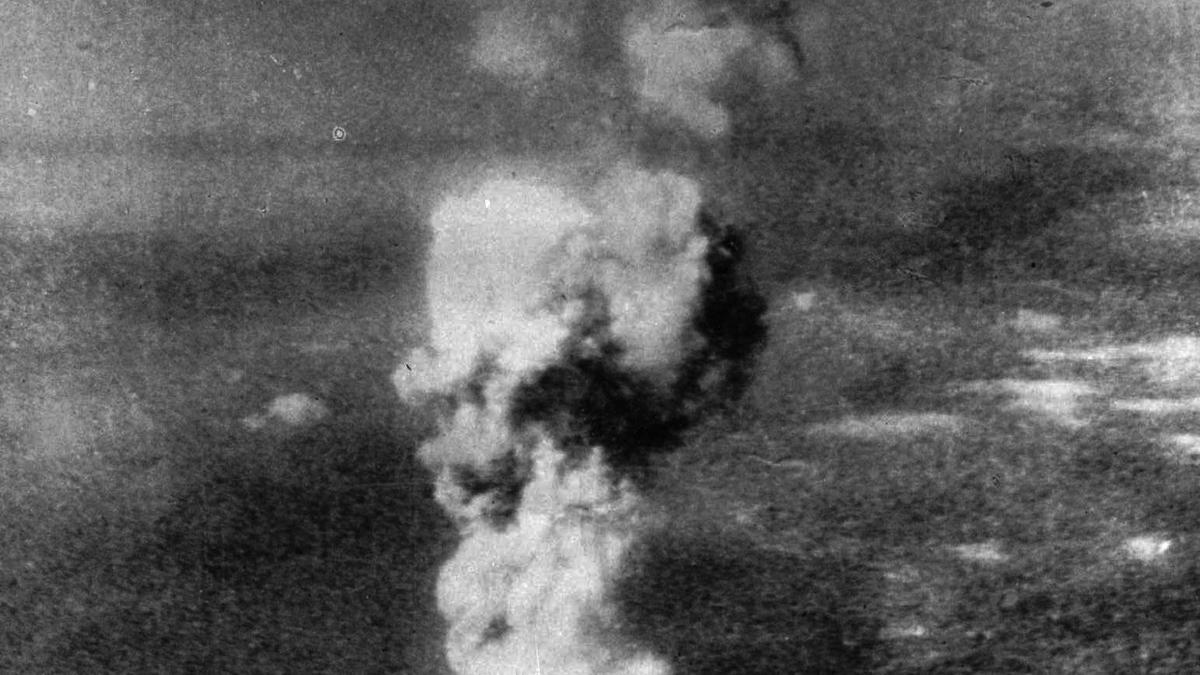
Seeing the success that Abelson’s method was able to produce, the Manhattan Project – operating in secrecy – were quick to replicate it, building a liquid thermal diffusion plant with 2,142 columns, each 15 m tall, at Oak Ridge National Laboratory – the S-50. The S-50 turned out to be the first feeder plant in a trio of plants that enriched uranium in series for the first atomic bomb that was dropped on August 6, 1945 on Hiroshima, Japan. 

Gunn’s contribution was recognised and he urged the Navy in 1946 to send people to learn about nuclear energy from scientists who were involved with the Manhattan Project. With Abelson returning to Carnegie Institution the same year and Gunn switching NRL for the U.S. Weather Bureau, the onus of building the nuclear-powered submarine fell on Russian-born engineer Captain Hyman G. Rickover.  

Building the Nautilus

Rickover was one of the five people who went to learn about nuclear energy from Manhattan Project scientists following Gunn’s recommendation. Quick to see the benefits of nuclear power in their realm, Rickover led the effort to design a power plant for a submarine that would be both safe and compact. 

With Rickover at the helm, a group of engineers began experimenting on reactor designs. They came up with a pressurised water reactor, which continues to be a model for a common type of nuclear reactor even today. 

According to this design, water in a coolant loop is kept under high pressure. Pumped near a core of uranium that is slightly enriched, the water heats up but is prevented from boiling by the high pressure. Once the heated water moves into a steam generator, it vaporises water in a secondary loop. The steam that results from this process turns a turbine generator and electricity is produced. 
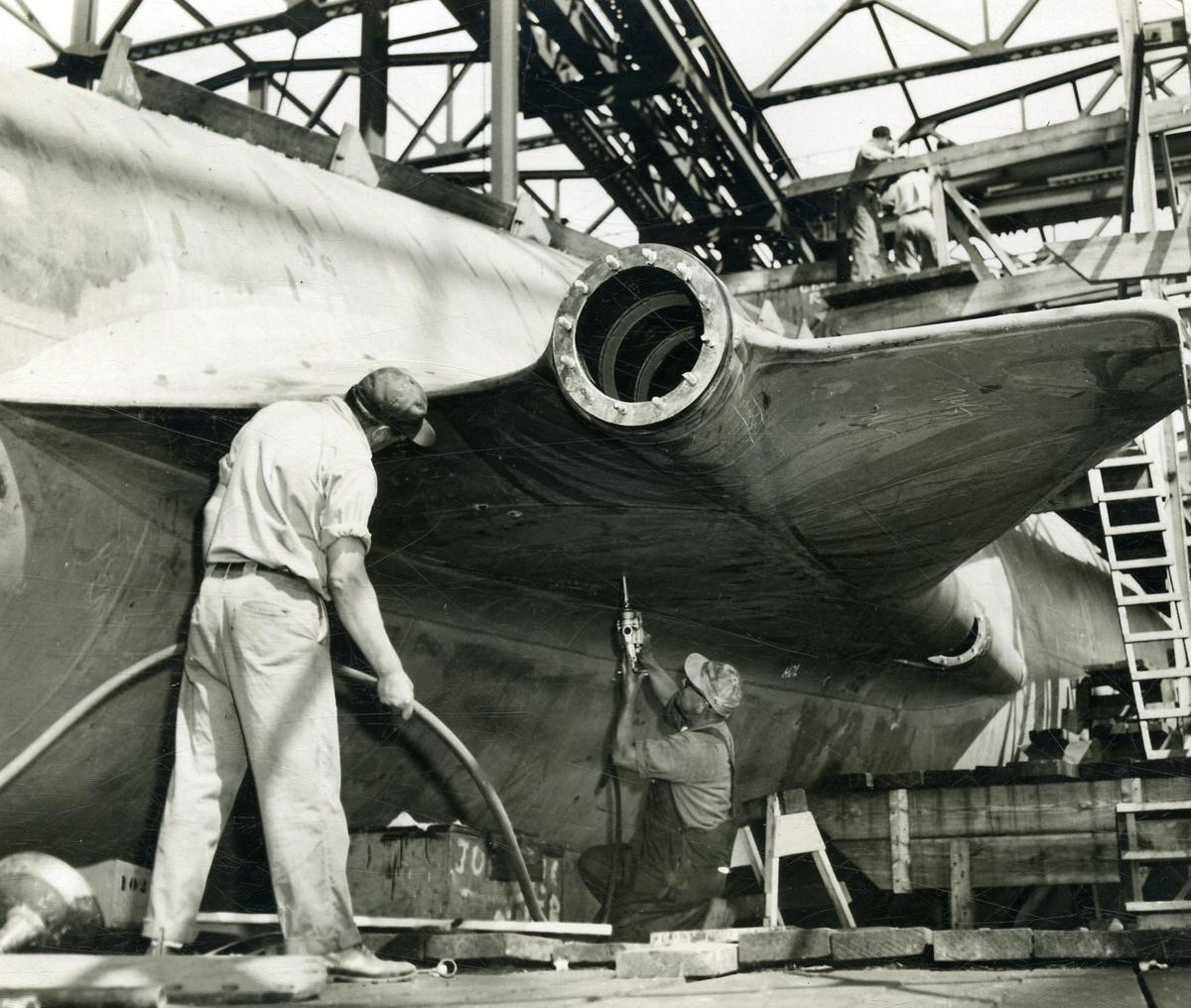
These first overall close-up pictures of the world’s first atomic-powered submarine were made inside the yard of the General Dynamics Corporation’s Electric Boat division and cleared by the Department of Defense.

These first overall close-up pictures of the world’s first atomic-powered submarine were made inside the yard of the General Dynamics Corporation’s Electric Boat division and cleared by the Department of Defense.
| Photo Credit:
THE HINDU ARCHIVES

Rickover contracted with Westinghouse, a manufacturing company, to build the reactor in the early 1950s. In order to build SSN-571 – the submarine that this reactor would power – he brought in the Electric Boat Division of General Dynamics. 

The resulting submarine was tested time and time again, both before and after the reactor was installed by the Navy. Rickover, meanwhile, took it upon himself to personally interview and approve every single Navy officer involved in the programme, not just in the beginning, but for decades thereafter. 

His methods might have been very different, and even earned him the reputation of being a fanatic among his detractors, but Rickover did succeed in building the world’s first nuclear submarine. What’s more, he managed it years ahead of schedule as the USS Nautilus was launched on January 21, 1954. With more than 1,200 people gathered, the submarine was commissioned on September 30, officially entering the Navy service. On the morning of January 17, 1955, the Nautilus ran on nuclear power for the very first time. 

Travelling under the North Pole
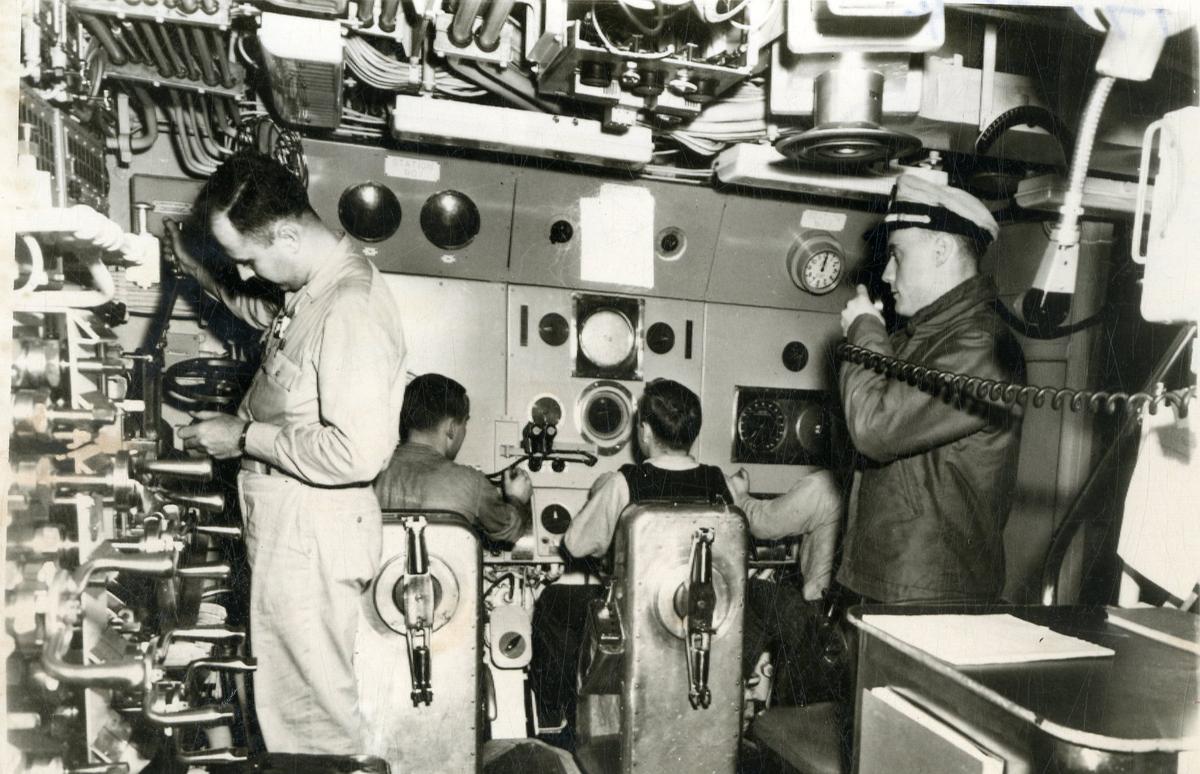
One of the first photos released by the U.S. Navy once USS Nautilus was commissioned.

One of the first photos released by the U.S. Navy once USS Nautilus was commissioned.
| Photo Credit:
THE HINDU ARCHIVES

Stretching nearly 320 feet and displacing over 3,000 tons, the Nautilus was much larger than the diesel-electric submarines that came before it. In addition to being able to travel underwater at speeds in excess of 20 knots, the submarine was also capable of being submerged for almost unlimited time periods. This was a direct result of the method of propulsion as the atomic engine had no need for air and only used up a small amount of nuclear fuel. 

In 25 years of operation, Nautilus smashed speed and distance records, remained capable of avoiding detection by even the best such systems, and remained continuously underwater for more than two weeks in one shot. Among its many firsts and successes, its journey under the North Pole in 1958 is rather special.

Nautilus became the first craft to cross under the North Pole thanks to Operation Sunshine. For this historic voyage, 116 men were on board – a party that included Commander William R. Anderson, 111 officers and crew members, and four scientists, who were civilians.

Having departed from Pearl Harbor, Hawaii on July 23, 1958, it passed north through Bering Strait and surfaced only at Point Barrow, Alaska. On August 1, Nautilus went under the Arctic ice cap as it left the north coast of Alaska. 

With the submarine diving to a depth of nearly 500 feet, the ice cap above it varied from anywhere between 10 to 50 feet. Around 11:15 p.m. EDT (Eastern Daylight Time in the U.S.) on August 3, Commander Anderson made the following announcement: “For the world, our country, and the Navy — the North Pole.” 

The historic moment passed as the Nautilus carried on without stopping under the geographic North Pole. It surfaced next only on August 5, in the Greenland Sea between Spitsbergen and Greenland. It ended its historic journey at Iceland two days later.

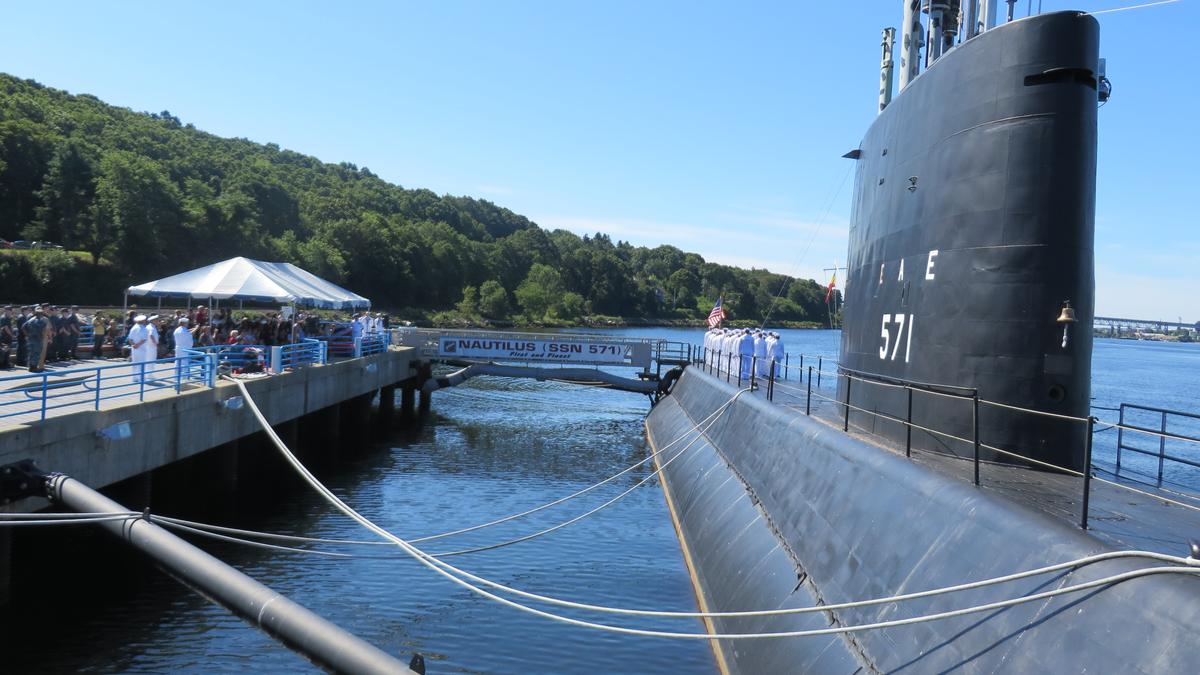
In a career spanning a quarter of a century, the Nautilus travelled about half a million miles. It was decommissioned on March 3, 1980 and designated a National Historic Landmark in 1982. Having first gone on exhibit in 1986, it is now a permanent exhibit open to the public at the Submarine Force Museum in Groton, Connecticut, U.S.

Source link

Science

Post navigation

Previous Post: ED arrests MD of Biswal Tradelink in fake bank guarantee case
Next Post: India will continue to buy Russian oil despite Trump’s threats, government sources tell NYT

Related Posts

  • Insulin’s new upgrade: Can it truly prevent blood sugar lows?
    Insulin’s new upgrade: Can it truly prevent blood sugar lows? Science
  • Centre amends surrogacy rules, allows couples with medical conditions to use donor gametes
    Centre amends surrogacy rules, allows couples with medical conditions to use donor gametes Science
  • Why do we aim with one eye closed?
    Why do we aim with one eye closed? Science
  • When did an uptick in dental cavities in humans begin?
    When did an uptick in dental cavities in humans begin? Science
  • ISRO develops PraVaHa software for aerodynamic design and analysis
    ISRO develops PraVaHa software for aerodynamic design and analysis Science
  • Yellow dye makes live mouse temporarily transparent
    Yellow dye makes live mouse temporarily transparent Science

More Related Articles

Dyson sphere: an energy devourer Dyson sphere: an energy devourer Science
‘Fly me to the moon’ seems to be global ambition in 2023 ‘Fly me to the moon’ seems to be global ambition in 2023 Science
How microbiomes and the smells they produce help shape behaviour in bugs, birds, beasts and humans How microbiomes and the smells they produce help shape behaviour in bugs, birds, beasts and humans Science
Medicine Nobel for the technology that turned the pandemic Medicine Nobel for the technology that turned the pandemic Science
New microscope reveals molecular jostling faster than ever before New microscope reveals molecular jostling faster than ever before Science
Race for Sun heats up: These are various solar missions Race for Sun heats up: These are various solar missions Science
SiteLock

Archives

  • August 2025
  • July 2025
  • June 2025
  • May 2025
  • April 2025
  • March 2025
  • February 2025
  • January 2025
  • December 2024
  • November 2024
  • October 2024
  • September 2024
  • August 2024
  • July 2024
  • June 2024
  • May 2024
  • April 2024
  • March 2024
  • February 2024
  • January 2024
  • December 2023
  • November 2023
  • October 2023
  • September 2023
  • August 2023
  • July 2023
  • June 2023
  • May 2023
  • April 2023
  • March 2023
  • February 2023
  • January 2023
  • December 2022
  • November 2022
  • October 2022
  • September 2022
  • August 2022
  • July 2022
  • June 2022
  • May 2022

Categories

  • Business
  • Nation
  • Science
  • Sports
  • World

Recent Posts

  • What is a cloudburst?
  • Is India underestimating the cost of dealing with invasive species?
  • Trump clashes with Democrats as he expands National Guard plans
  • Emergency fund lapses – The Hindu
  • Cryptocurrency: unlocking the digital vaults

Recent Comments

  1. dfb{{98991*97996}}xca on UP Teacher Who Asked Students To Slap Muslim Classmate
  2. "dfbzzzzzzzzbbbccccdddeeexca".replace("z","o") on UP Teacher Who Asked Students To Slap Muslim Classmate
  3. 1}}"}}'}}1%>"%>'%> on UP Teacher Who Asked Students To Slap Muslim Classmate
  4. bfg6520<s1﹥s2ʺs3ʹhjl6520 on UP Teacher Who Asked Students To Slap Muslim Classmate
  5. pHqghUme9356321 on UP Teacher Who Asked Students To Slap Muslim Classmate
  • Finance Ministry confident of 6.5% growth in FY24 despite symmetric risks
    Finance Ministry confident of 6.5% growth in FY24 despite symmetric risks Business
  • Women Journalists Bear The Brunt Of Cyberbullying, Says Expert
    Women Journalists Bear The Brunt Of Cyberbullying, Says Expert World
  • Centre Further Reduces Stock Limit Amid “Uptick In Wheat Prices”
    Centre Further Reduces Stock Limit Amid “Uptick In Wheat Prices” Nation
  • IOC, BPCL, HPCL post ₹69,000 crore net profit in April-December, higher than pre-oil crisis annual earnings
    IOC, BPCL, HPCL post ₹69,000 crore net profit in April-December, higher than pre-oil crisis annual earnings Business
  • Mumbai City Hold Chennaiyin 1-1 In Thrilling 1000th ISL Match
    Mumbai City Hold Chennaiyin 1-1 In Thrilling 1000th ISL Match Sports
  • Two Polish priests detained over child sex abuse: prosecutors
    Two Polish priests detained over child sex abuse: prosecutors World
  • Hardik Pandya ‘Backup’ As Sunil Gavaskar Picks Perfect India Bowling Attack For T20 World Cup
    Hardik Pandya ‘Backup’ As Sunil Gavaskar Picks Perfect India Bowling Attack For T20 World Cup Sports
  • Himanta Sarma Praises Bengal Governor
    Himanta Sarma Praises Bengal Governor Nation

Editor-in-Chief:
Mohammad Ariff,
MSW, MAJMC, BSW, DTL, CTS, CNM, CCR, CAL, RSL, ASOC.
editor@artifex.news

Associate Editors:
1. Zenellis R. Tuba,
zenelis@artifex.news
2. Haris Daniyel
daniyel@artifex.news

Photograher:
Rohan Das
rohan@artifex.news

Artifex.News offers Online Paid Internships to college students from India and Abroad. Interns will get a PRESS CARD and other online offers.
Send your CV (Subjectline: Paid Internship) to internship@artifex.news

Links:
Associate Journalism
About Us
Privacy Policy

News Links:
Breaking News
World
Nation
Sports
Business
Entertainment
Lifestyle

Registered Office:
72/A, Elliot Road, Kolkata - 700016
Tel: 033-22277777, 033-22172217
Email: office@artifex.news

Editorial Office / News Desk:
No. 13, Mezzanine Floor, Esplanade Metro Rail Station,
12 J. L. Nehru Road, Kolkata - 700069.
(Entry from Gate No. 5)
Tel: 033-46011099, 033-46046046
Email: editor@artifex.news

Copyright © 2023 Artifex.News Newsportal designed by Artifex Infotech.