


Skip to content
  • Facebook
  • X
  • Linkedin
  • WhatsApp
  • YouTube
  • Associate Journalism
  • About Us
  • Privacy Policy
  • 033-46046046
  • editor@artifex.news
Artifex.News

Artifex.News

Stay Connected. Stay Informed.

  • Breaking News
  • World
  • Nation
  • Sports
  • Business
  • Science
  • Entertainment
  • Lifestyle
  • Toggle search form
  • Iran Confirms Arrest Of Italian Journalist Cecilia Sala: State Media
    Iran Confirms Arrest Of Italian Journalist Cecilia Sala: State Media World
  • Kotian credits his good performance to domestic experience
    Kotian credits his good performance to domestic experience Sports
  • Bangladesh to seek extradition of Sheikh Hasina from India
    Bangladesh to seek extradition of Sheikh Hasina from India World
  • How India Can Qualify For World Test Championship Final If Brisbane Test vs Australia Is Washed Out – Explained
    How India Can Qualify For World Test Championship Final If Brisbane Test vs Australia Is Washed Out – Explained Sports
  • US Seeks To End Work Permits For International Students, Impacting Indians
    US Seeks To End Work Permits For International Students, Impacting Indians World
  • Access Denied Sports
  • JNU Vice Chancellor On Court Relief For Teesta Setalvad
    JNU Vice Chancellor On Court Relief For Teesta Setalvad Nation
  • Access Denied Business
What The Pink Elephant Test Reveals About Your Ability To Control Thoughts

What The Pink Elephant Test Reveals About Your Ability To Control Thoughts

Posted on November 29, 2024 By admin


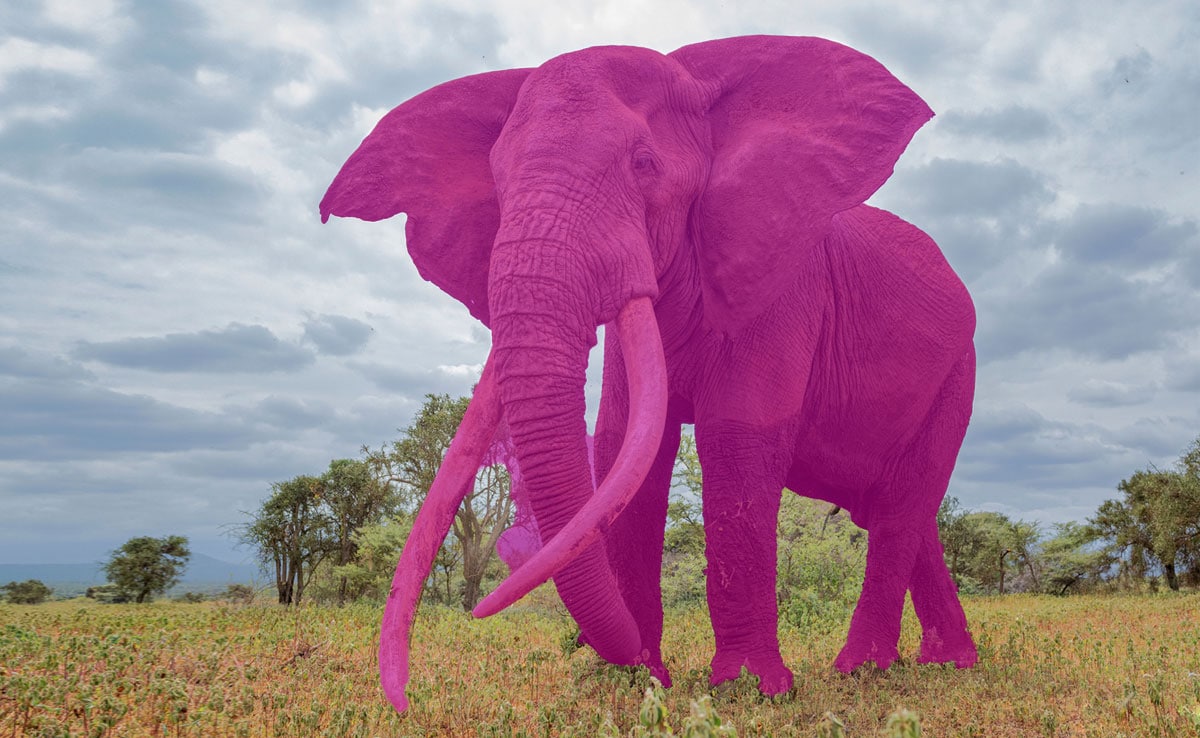
Tell a man he shouldn’t think of a pink elephant and he can’t get that beast out of his mind!

This quote, from Curt Siodmak’s 1974 novel City in the Sky, describes how hard it can be to suppress our thoughts. “Don’t think of a pink elephant” has become a classic example of how difficult it can be to intentionally avoid visualising.

Research suggests many of you, having read about a pink elephant, will have imagined seeing one.

However, some people, like us, have aphantasia – we cannot visualise. So we are a little confused at the idea other people can imagine seeing things that aren’t there.

In a new study, we have found evidence the pink elephant problem is not universal. Some people – including people with aphantasia – can block involuntary visual thoughts from their minds.

What is aphantasia?

People with aphantasia cannot voluntarily imagine seeing things in our mind’s eye. So if you ask us not to think about a pink elephant, we won’t visualise one, because we can’t.

Aphantasia is typically described as a deficit. When people first learn they have aphantasia they are often upset, as they realise other people can do things they cannot. It might be nice to imagine seeing the characters described in a book, for example, or to visualise an absent loved one.

When people are told not to think of a pink elephant, those with more vivid visual imaginations find it difficult to comply. Loren Bouyer, CC BY-SA

However, deficits are often balanced by benefits. There are suggestions people with aphantasia (or aphantasics, as we’re sometimes called) may have a heightened resistance to involuntary intrusive thoughts.

Another way to look at it is that aphantasics are one portion of a natural diversity of human minds, with people having different capacities to visualise. Where aphantasics have no capacity, most people would have an average ability, and a small number of people would have an extremely strong ability to visualise.

Vivid mental imagery and involuntary visualisations

In our new study, we looked at links between the intensity of people’s visual imaginations and their tendency to visualise, even when they try not to. People with vivid visual imaginations were more likely to have involuntary visualisations, and we could predict these outcomes by measuring brain activity.

Some people might enjoy being able to imagine seeing detailed scenes whenever they wish. However, this seems to come at the cost of not being able to shut down these experiences.

Most people have less vibrant imagery, but they seem to be more able to suppress these thoughts.

Do aphantasics have peaceful minds?

Aphantasics are unlikely to have involuntary visualisations. Does that mean they have peaceful minds?

In our study people who reported having weak imagery were less likely to imagine seeing things they were trying not to think about. However, they were more likely to report mind-wandering.

If this describes aphantasics, instead of visualising things we are told not to think about, we may turn our minds to other thoughts, such as what’s for dinner. So we would not have more peaceful minds, just a resistance to think about things we are trying to put out of mind.

If aphantasics do not visualise, do they have daydreams?

From our own experience, we can confirm at least some aphantasics have minds that wander. But when our minds wander, neither of us imagines seeing things. Our experiences are different.

When Derek’s mind wanders he imagines hearing and engaging in purely audio conversations. As daydreaming is typically associated with vision, he did not realise until very recently these imagined conversations could be described as his experience of daydreaming.

Loren cannot visualise or imagine hearing things. She experiences her thoughts as different sensations of texture and imagined feelings of movement – and these are what she experiences when her mind wanders.

Are aphantasics resistant to trauma from re-living events?

Perhaps.

While our evidence suggests aphantasics are resistant to involuntary visualisations, more research will be needed to work out if we are resistant to reliving traumas, or if these will simply trigger different types of imagined experience.

What is clear is that Siodmak was wrong. If you tell people they shouldn’t think of a pink elephant, some of us will happily put that beast out of our minds, and turn our thoughts to other matters. What’s for dinner?The Conversation

(Authors: Derek Arnold, Professor, School of Psychology, The University of Queensland and Loren N. Bouyer, PhD Student, Neuroscience, The University of Queensland)

Disclosure Statement: Derek Arnold receives funding from the Australian Research Council. Loren N. Bouyer does not work for, consult, own shares in or receive funding from any company or organisation that would benefit from this article, and has disclosed no relevant affiliations beyond their academic appointment)

This article is republished from The Conversation under a Creative Commons license. Read the original article.

(Except for the headline, this story has not been edited by NDTV staff and is published from a syndicated feed.)




Source link

World Tags:Aphantasia, aphantasics, Brain activity, Intrusive Thoughts, visual imaginations

Post navigation

Previous Post: Court Seeks Google’s Response For Not Removing Video Targeting NGO, Spiritual Leader
Next Post: World Bank To Provide Haryana As Much Financing In 5 Years As It Did In Past 50

Related Posts

  • Israel to pull back some troops from South Gaza as war crosses six months
    Israel to pull back some troops from South Gaza as war crosses six months World
  • Access Denied World
  • Donald Trump says Jews will be partly to blame if he loses election
    Donald Trump says Jews will be partly to blame if he loses election World
  • India Declares One-Day State Mourning After Iran President Ebrahim Raisi Dies In Chopper Crash
    India Declares One-Day State Mourning After Iran President Ebrahim Raisi Dies In Chopper Crash World
  • Access Denied World
  • Access Denied World

More Related Articles

Access Denied World
Donald Trump Names Richard Grenell As US Envoy For Special Missions Donald Trump Names Richard Grenell As US Envoy For Special Missions World
Climber Falls Nearly 2,000 Feet From New Zealand Mountain, Walks Away With Minor Injuries Climber Falls Nearly 2,000 Feet From New Zealand Mountain, Walks Away With Minor Injuries World
China hands over third Hangor-class submarine to Pakistan China hands over third Hangor-class submarine to Pakistan World
India, US To Elevate Bilateral Ties To Expand Clean Energy Supply Chains India, US To Elevate Bilateral Ties To Expand Clean Energy Supply Chains World
Biden Promised A Peaceful Transition Of Power But Trump Thinks Otherwise Biden Promised A Peaceful Transition Of Power But Trump Thinks Otherwise World
SiteLock

Archives

  • May 2026
  • April 2026
  • March 2026
  • February 2026
  • January 2026
  • December 2025
  • November 2025
  • October 2025
  • September 2025
  • August 2025
  • July 2025
  • June 2025
  • May 2025
  • April 2025
  • March 2025
  • February 2025
  • January 2025
  • December 2024
  • November 2024
  • October 2024
  • September 2024
  • August 2024
  • July 2024
  • June 2024
  • May 2024
  • April 2024
  • March 2024
  • February 2024
  • January 2024
  • December 2023
  • November 2023
  • October 2023
  • September 2023
  • August 2023
  • July 2023
  • June 2023
  • May 2023
  • April 2023
  • March 2023
  • February 2023
  • January 2023
  • December 2022
  • November 2022
  • October 2022
  • September 2022
  • August 2022
  • July 2022
  • June 2022
  • May 2022

Categories

  • Business
  • Nation
  • Science
  • Sports
  • World

Recent Posts

  • Trump’s proposed ‘Golden Dome’ estimated to cost $1.2 trillion, far more than he initially said
  • Iran-Israel war LIVE: Trump says stopping Iran's nuclear program outweighs Americans' economic pain
  • 10 rescued after a small plane crashes off the Florida coast
  • Rangasamy to be sworn-in as CM today
  • Diplomacy and sustainability- dialogues for the future

Recent Comments

  1. JeffryFok on UP Teacher Who Asked Students To Slap Muslim Classmate
  2. StanleyPeapy on UP Teacher Who Asked Students To Slap Muslim Classmate
  3. RonaldLam on UP Teacher Who Asked Students To Slap Muslim Classmate
  4. RaymondKiree on UP Teacher Who Asked Students To Slap Muslim Classmate
  5. Lavernedrums on UP Teacher Who Asked Students To Slap Muslim Classmate
  • Direct tax mop-up rises 20% to ₹5.74 lakh cr on higher corporate advance tax
    Direct tax mop-up rises 20% to ₹5.74 lakh cr on higher corporate advance tax Business
  • City light pollution is shrinking spiders’ brains
    City light pollution is shrinking spiders’ brains Science
  • Emergency Signal Near Maharashtra Airport Sparks Panic For Hours, Probe Underway
    Emergency Signal Near Maharashtra Airport Sparks Panic For Hours, Probe Underway Nation
  • Saare Jahan Se Plays At White House, Pani Puri Served To Guests
    Saare Jahan Se Plays At White House, Pani Puri Served To Guests World
  • Gaza’s Rafah Border Crossing Area Hit In Military Strike
    Gaza’s Rafah Border Crossing Area Hit In Military Strike World
  • New Chief Minister Of Delhi Likely To Be Picked Tomorrow: Sources
    New Chief Minister Of Delhi Likely To Be Picked Tomorrow: Sources Nation
  • How Musk and Altman are feuding over OpenAI’s future in court
    How Musk and Altman are feuding over OpenAI’s future in court World
  • Russian diplomat hopes to meet Hamas for talks to free hostages: Agencies
    Russian diplomat hopes to meet Hamas for talks to free hostages: Agencies World

Editor-in-Chief:
Mohammad Ariff,
MSW, MAJMC, BSW, DTL, CTS, CNM, CCR, CAL, RSL, ASOC.
editor@artifex.news

Associate Editors:
1. Zenellis R. Tuba,
zenelis@artifex.news
2. Haris Daniyel
daniyel@artifex.news

Photograher:
Rohan Das
rohan@artifex.news

Artifex.News offers Online Paid Internships to college students from India and Abroad. Interns will get a PRESS CARD and other online offers.
Send your CV (Subjectline: Paid Internship) to internship@artifex.news

Links:
Associate Journalism
About Us
Privacy Policy

News Links:
Breaking News
World
Nation
Sports
Business
Entertainment
Lifestyle

Registered Office:
72/A, Elliot Road, Kolkata - 700016
Tel: 033-22277777, 033-22172217
Email: office@artifex.news

Editorial Office / News Desk:
No. 13, Mezzanine Floor, Esplanade Metro Rail Station,
12 J. L. Nehru Road, Kolkata - 700069.
(Entry from Gate No. 5)
Tel: 033-46011099, 033-46046046
Email: editor@artifex.news

Copyright © 2023 Artifex.News Newsportal designed by Artifex Infotech.