


Skip to content
  • Facebook
  • X
  • Linkedin
  • WhatsApp
  • Associate Journalism
  • About Us
  • Privacy Policy
  • 033-46046046
  • editor@artifex.news
Artifex.News

Artifex.News

Stay Connected. Stay Informed.

  • Breaking News
  • World
  • Nation
  • Sports
  • Business
  • Science
  • Entertainment
  • Lifestyle
  • Toggle search form
  • IPL-17: CSK vs RR | Chennai Super Kings beat Rajasthan Royals by 5 wickets Sports
  • Court drops all charges against a Thai woman in a 2015 bombing at a Bangkok shrine that killed 20 World
  • Budget 2024: What is taxonomy for climate finance? | Explained Business
  • Haj deaths show challenge of shielding pilgrims from scorching climate World
  • Four Killed, Three Injured In Road Accident In Bihar: Cops Nation
  • Rishabh Pant Mimics Rajinikanth’s Iconic Pose, Cricket And Movie Fans Go Crazy Sports
  • Out On Bail, Arvind Kejriwal Holds 1st Roadshow For Lok Sabha Polls Nation
  • Burkina Faso Suspends BBC and Voice of America after covering report on mass killings World

What The Pink Elephant Test Reveals About Your Ability To Control Thoughts

Posted on November 29, 2024 By admin


Tell a man he shouldn’t think of a pink elephant and he can’t get that beast out of his mind!

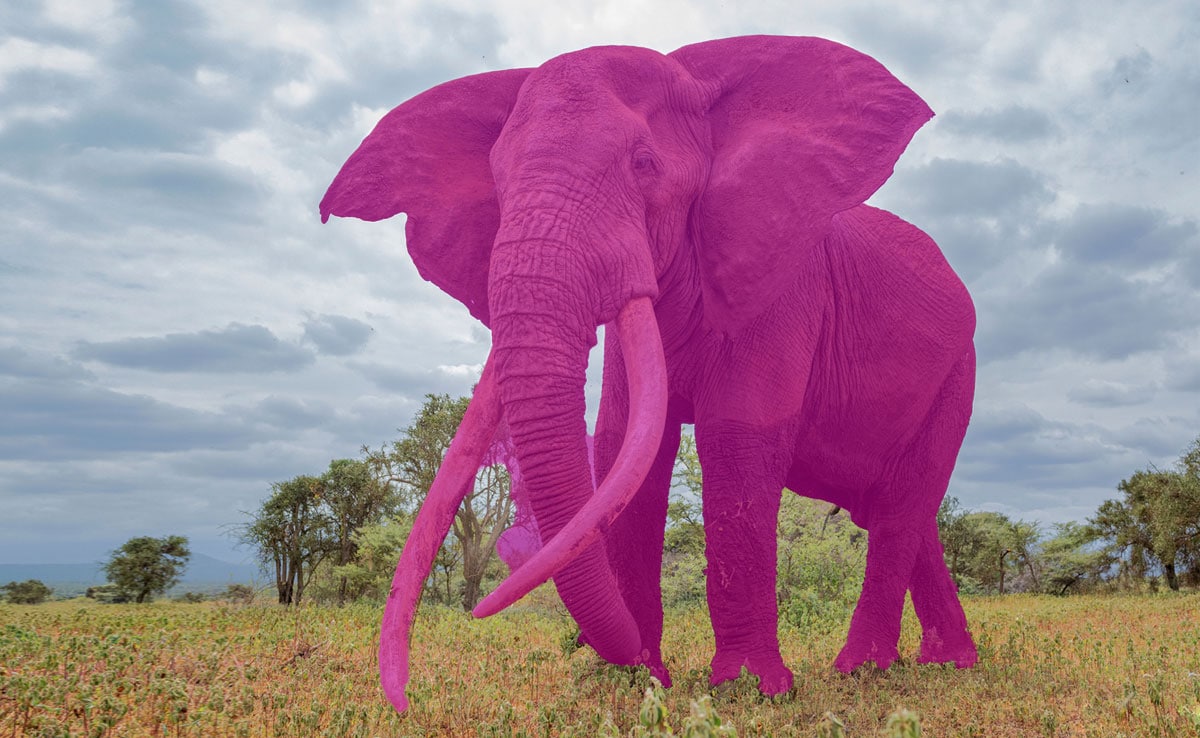
This quote, from Curt Siodmak’s 1974 novel City in the Sky, describes how hard it can be to suppress our thoughts. “Don’t think of a pink elephant” has become a classic example of how difficult it can be to intentionally avoid visualising.

Research suggests many of you, having read about a pink elephant, will have imagined seeing one.

However, some people, like us, have aphantasia – we cannot visualise. So we are a little confused at the idea other people can imagine seeing things that aren’t there.

In a new study, we have found evidence the pink elephant problem is not universal. Some people – including people with aphantasia – can block involuntary visual thoughts from their minds.

What is aphantasia?

People with aphantasia cannot voluntarily imagine seeing things in our mind’s eye. So if you ask us not to think about a pink elephant, we won’t visualise one, because we can’t.

Aphantasia is typically described as a deficit. When people first learn they have aphantasia they are often upset, as they realise other people can do things they cannot. It might be nice to imagine seeing the characters described in a book, for example, or to visualise an absent loved one.

When people are told not to think of a pink elephant, those with more vivid visual imaginations find it difficult to comply. Loren Bouyer, CC BY-SA

However, deficits are often balanced by benefits. There are suggestions people with aphantasia (or aphantasics, as we’re sometimes called) may have a heightened resistance to involuntary intrusive thoughts.

Another way to look at it is that aphantasics are one portion of a natural diversity of human minds, with people having different capacities to visualise. Where aphantasics have no capacity, most people would have an average ability, and a small number of people would have an extremely strong ability to visualise.

Vivid mental imagery and involuntary visualisations

In our new study, we looked at links between the intensity of people’s visual imaginations and their tendency to visualise, even when they try not to. People with vivid visual imaginations were more likely to have involuntary visualisations, and we could predict these outcomes by measuring brain activity.

Some people might enjoy being able to imagine seeing detailed scenes whenever they wish. However, this seems to come at the cost of not being able to shut down these experiences.

Most people have less vibrant imagery, but they seem to be more able to suppress these thoughts.

Do aphantasics have peaceful minds?

Aphantasics are unlikely to have involuntary visualisations. Does that mean they have peaceful minds?

In our study people who reported having weak imagery were less likely to imagine seeing things they were trying not to think about. However, they were more likely to report mind-wandering.

If this describes aphantasics, instead of visualising things we are told not to think about, we may turn our minds to other thoughts, such as what’s for dinner. So we would not have more peaceful minds, just a resistance to think about things we are trying to put out of mind.

If aphantasics do not visualise, do they have daydreams?

From our own experience, we can confirm at least some aphantasics have minds that wander. But when our minds wander, neither of us imagines seeing things. Our experiences are different.

When Derek’s mind wanders he imagines hearing and engaging in purely audio conversations. As daydreaming is typically associated with vision, he did not realise until very recently these imagined conversations could be described as his experience of daydreaming.

Loren cannot visualise or imagine hearing things. She experiences her thoughts as different sensations of texture and imagined feelings of movement – and these are what she experiences when her mind wanders.

Are aphantasics resistant to trauma from re-living events?

Perhaps.

While our evidence suggests aphantasics are resistant to involuntary visualisations, more research will be needed to work out if we are resistant to reliving traumas, or if these will simply trigger different types of imagined experience.

What is clear is that Siodmak was wrong. If you tell people they shouldn’t think of a pink elephant, some of us will happily put that beast out of our minds, and turn our thoughts to other matters. What’s for dinner?The Conversation

(Authors: Derek Arnold, Professor, School of Psychology, The University of Queensland and Loren N. Bouyer, PhD Student, Neuroscience, The University of Queensland)

Disclosure Statement: Derek Arnold receives funding from the Australian Research Council. Loren N. Bouyer does not work for, consult, own shares in or receive funding from any company or organisation that would benefit from this article, and has disclosed no relevant affiliations beyond their academic appointment)

This article is republished from The Conversation under a Creative Commons license. Read the original article.

(Except for the headline, this story has not been edited by NDTV staff and is published from a syndicated feed.)




Source link

World Tags:Aphantasia, aphantasics, Brain activity, Intrusive Thoughts, visual imaginations

Post navigation

Previous Post: Court Seeks Google’s Response For Not Removing Video Targeting NGO, Spiritual Leader
Next Post: World Bank To Provide Haryana As Much Financing In 5 Years As It Did In Past 50

Related Posts

  • In A First, China To Launch Probe To Collect Samples From Far Side Of Moon World
  • 2020 Karachi Plane Crash That Killed 101 Blamed On Human Error By Pilots World
  • ‘Cannot bend rules of state to state interactions’: Canada’s UN Ambassador Rae World
  • Polio in Pakistan: Another vaccination campaign begins after worrying surge World
  • G20 Declaration Builds On 6 Priority Areas… And More”: Hardeep Puri World
  • American consumers are pushing back against high inflation — and they are winning World

More Related Articles

Xi Jinping tells top senator U.S.-China relations impact ‘destiny of mankind’ World
What is animal diplomacy, a longstanding tradition of soft power? | Explained World
How Kamala Harris’ Campaign Cost $12 Million World
Explained | Israel’s limited military operation in Rafah World
Kamala Harris And Trump Target Economy In Close US Election Battle World
Vietnamese authorities say Typhoon Yagi has killed at least 4 and injured 78 others World
SiteLock

Archives

  • December 2024
  • November 2024
  • October 2024
  • September 2024
  • August 2024
  • July 2024
  • June 2024
  • May 2024
  • April 2024
  • March 2024
  • February 2024
  • January 2024
  • December 2023
  • November 2023
  • October 2023
  • September 2023
  • August 2023
  • July 2023
  • June 2023
  • May 2023
  • April 2023
  • March 2023
  • February 2023
  • January 2023
  • December 2022
  • November 2022
  • October 2022
  • September 2022
  • August 2022
  • July 2022
  • June 2022
  • May 2022

Categories

  • Business
  • Nation
  • Science
  • Sports
  • World

Recent Posts

  • France, Saudi Arabia to co-chair June conference on creating Palestinian state: Macron
  • 5.6 Magnitude Earthquake Hits Northern Philippines: Report
  • Joe Biden’s pardon of son Hunter sparks debate over potential clemency for others
  • Israel Says It Killed 3 Hamas Members In Strike On West Bank
  • Namibia will have its first female leader after Vice President Netumbo Nandi-Ndaitwah wins presidential election

Recent Comments

  1. dfb{{98991*97996}}xca on UP Teacher Who Asked Students To Slap Muslim Classmate
  2. "dfbzzzzzzzzbbbccccdddeeexca".replace("z","o") on UP Teacher Who Asked Students To Slap Muslim Classmate
  3. 1}}"}}'}}1%>"%>'%> on UP Teacher Who Asked Students To Slap Muslim Classmate
  4. bfg6520<s1﹥s2ʺs3ʹhjl6520 on UP Teacher Who Asked Students To Slap Muslim Classmate
  5. pHqghUme9356321 on UP Teacher Who Asked Students To Slap Muslim Classmate
  • Pakistan’s Babar Azam rewrites history by scoring record number of fours in Twenty20 internationals Sports
  • Major Boeing-made communications satellite disintegrates in orbit Science
  • PAK vs ENG third Test: England reeling at 24-3 after gritty Saud Shakeel century Sports
  • Russia Says It Downed 2 Ukraine Drones After Man Killed Near Border World
  • Shock French left election win is little solace for nervous investors World
  • IPL mega auction 2025: 13-year-old Vaibhav Suryavanshi goes to Rajasthan Royals Sports
  • India’s UPI system leading in cross-border payment: U.S. treasury official Business
  • 8 Mumbai Railway Stations To Be Renamed: See Full List Nation

Editor-in-Chief:
Mohammad Ariff,
MSW, MAJMC, BSW, DTL, CTS, CNM, CCR, CAL, RSL, ASOC.
editor@artifex.news

Associate Editors:
1. Zenellis R. Tuba,
zenelis@artifex.news
2. Haris Daniyel
daniyel@artifex.news

Photograher:
Rohan Das
rohan@artifex.news

Artifex.News offers Online Paid Internships to college students from India and Abroad. Interns will get a PRESS CARD and other online offers.
Send your CV (Subjectline: Paid Internship) to internship@artifex.news

Links:
Associate Journalism
About Us
Privacy Policy

News Links:
Breaking News
World
Nation
Sports
Business
Entertainment
Lifestyle

Registered Office:
72/A, Elliot Road, Kolkata - 700016
Tel: 033-22277777, 033-22172217
Email: office@artifex.news

Editorial Office / News Desk:
No. 13, Mezzanine Floor, Esplanade Metro Rail Station,
12 J. L. Nehru Road, Kolkata - 700069.
(Entry from Gate No. 5)
Tel: 033-46011099, 033-46046046
Email: editor@artifex.news

Copyright © 2023 Artifex.News Newsportal designed by Artifex Infotech.