
Skip to content
  • Facebook
  • X
  • Linkedin
  • WhatsApp
  • YouTube
  • Associate Journalism
  • About Us
  • Privacy Policy
  • 033-46046046
  • editor@artifex.news
Artifex.News

Artifex.News

Stay Connected. Stay Informed.

  • Breaking News
  • World
  • Nation
  • Sports
  • Business
  • Science
  • Entertainment
  • Lifestyle
  • Toggle search form
  • Teen Threatens Mother With Sword After She Refused To Give Money For Phone
    Teen Threatens Mother With Sword After She Refused To Give Money For Phone Nation
  • Access Denied Sports
  • PM Modi To Address 104th Episode Of Mann Ki Baat Tomorrow
    PM Modi To Address 104th Episode Of Mann Ki Baat Tomorrow Nation
  • Access Denied World
  • Slovak prime minister’s condition remains serious but prognosis positive after assassination bid
    Slovak prime minister’s condition remains serious but prognosis positive after assassination bid World
  • Dhull, Doseja press home Delhi’s advantage
    Dhull, Doseja press home Delhi’s advantage Sports
  • IATA Says GST notices to foreign airlines could “dampen India’s aviation potential”
    IATA Says GST notices to foreign airlines could “dampen India’s aviation potential” Business
  • Access Denied
    Access Denied Nation
What 6 Months In Space Can Do To Perception Of Time

What 6 Months In Space Can Do To Perception Of Time

Posted on August 17, 2024 By admin


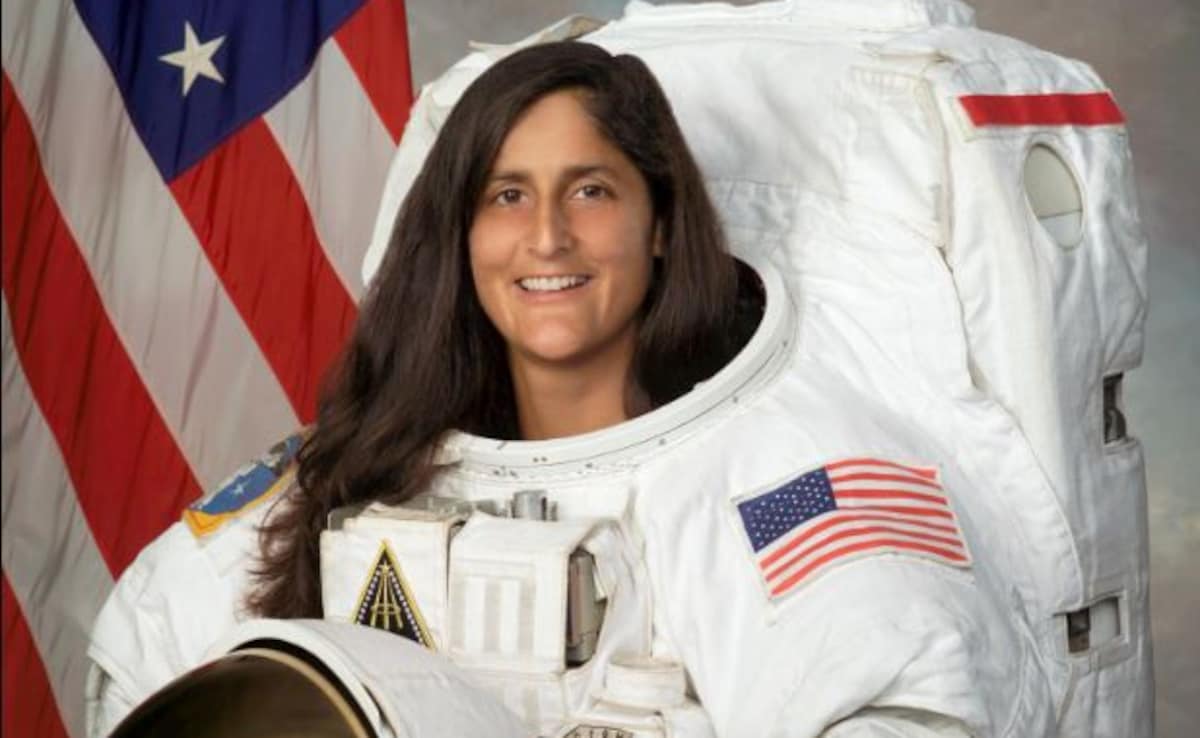
Sunita Williams is currently stuck on the International Space Station (ISS), waiting to return to Earth.

Two astronauts marooned in space may sound like the plot of a Hollywood blockbuster, but for two NASA crew members, it is now a reality. Commander Barry Wilmore and pilot Sunita Williams are currently in limbo on the International Space Station (ISS).

They arrived in the Boeing Starliner spacecraft – the first test of the spaceship with astronauts. Wilmore and Williams were supposed to stay on the ISS for around eight days and return on the same spacecraft. But there is now debate about the safety of Starliner after it experienced helium leaks and thruster problems on its way to the ISS.

In coming days, NASA and Boeing may decide to clear Starliner to carry the astronauts back to Earth. This means their stay might not last too much longer. But if officials decide against Starliner, the astronauts face waiting an additional six months in orbit before returning. So how do astronauts cope with a potential six-month wait for a lift home?

Waiting for things is difficult at the best of times. Under normal circumstances, it is frustrating, stressful and anxiety-provoking. But in extreme situations, with high stakes, waiting can be purgatory.

Part of the reason that waiting is difficult is that it distorts our sense of time. Think of last time you were waiting for a delayed train, test results or a text from a potential new partner. Did it fly by or drag? For most people, time spent waiting crawls at a glacial pace. As a result, delays and periods of anticipation often feel much longer than they actually are.

Waiting slows our perception of time, because it changes the amount of time that we spend thinking about time. During normal daily life we often ignore time; our brains have a limited capacity. If time isn’t important, we simply don’t think about it, and this helps it to pass quickly.

When we are waiting, our desire to know when the wait is over increases how much we think about time. This “clock watching” can make the minutes and hours feel like they are passing at a snail’s pace. Stress, discomfort and pain exacerbate this effect, meaning that waiting in difficult situations can seem even longer.
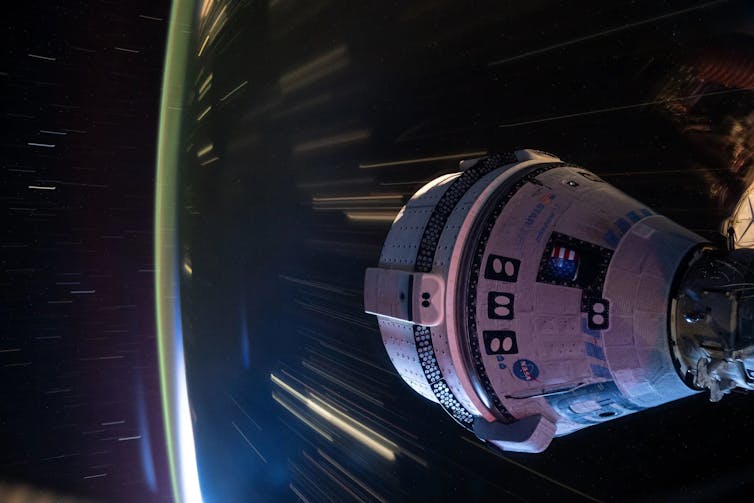
Starliner in orbit.
Starliner in orbit.Nasa

Waiting also slows our perception of time because it what we do and how we feel. Normal life is busy and full of ever-changing activities and interactions. The sudden need to wait halts the flow of life, often leaving us with nothing else to do, thus increasing levels of boredom and frustration.

In general, time filled with activity passes more quickly. We all got a taste of this during COVID lockdowns. When we were stuck inside unable to see friends and engage in normal daily activities, the loss of routine and distractions caused time to drag for many.

For the astronauts stuck on the ISS, anxiety about when they will return, limited opportunities for activities and fewer opportunities to contact friends and families combine to make their wait to return home feel significantly longer than six months – if it should come to that.

However, as academics who research the effects of time on human psychology and biology, our ongoing work with crew members at research stations in Antarctica aims to shed light on whether waiting in extreme environments is different to waiting during normal daily life.

A year in Antarctica

While being stuck for six months on the ISS may sound like many people’s worst nightmare, it is not uncommon for scientists to spend long periods isolated and confined in extreme environments. Every year, organisations such as the Instituto Antártico Argentino (which uses the Belgrano II Antarctic station), the French Polar Institute and the Italian Antarctic Programme, in cooperation with the European Space Agency (which all use Antarctica’s Concordia station), send crews of people for up to 16 months to conduct research on the frozen continent.

During the March to October polar winter, teams spend six months in near darkness – and from May to August, in complete darkness – facing outside temperatures of up to -60C, wind speeds of 160 km/h (100 mph) and storms which prevent almost all outdoor activity. Limited internet coverage can also prevent constant communication with the outside world.

For the last year, we have researched how life in Antarctica influences people’s experience of time. Each month, we asked crew members how time felt like it was passing in comparison to before their mission. Trapped on base, with limited contact with the outside world, you might expect time to drag. However, our results suggest the opposite may be true.

Analysis of crew members’ experiences indicated that being constantly busy with complex tasks such as scientific research helped time to pass swiftly, according to 80% of crew responses. Only 3% of responses indicated that time actually dragged, and these reports occurred when nights were long and there was little to do.

These experiences may provide hope for those stuck on the ISS. Like life on an Antarctic station, these Nasa astronauts have a busy and mentally demanding existence. These factors may help time to pass quickly.

However, a key factor of their wait may be their ability to tolerate the uncertainty of when they will return. Wilmore and Williams will spend their time in a space equivalent to the inside a Boeing 747 plane. But better information about “when” things will happen and “why” delays are being incurred can help people to tolerate waiting and reduce its impact on their wellbeing.The Conversation

(Authors:Ruth Ogden, Professor of the Psychology of Time, Liverpool John Moores University and Daniel Eduardo Vigo, Senior Researcher in Chronobiology, Pontificia Universidad Católica de Argentina)

(Disclosure Statement: Ruth Ogden receives funding from The British Academy, The Wellcome Trust, the Economic and Social Research Council, CHANSE and Horizon 2020. This piece was written as part of the Wellcome Trust Project “After the End” 225238/Z/22/Z. The work reported in this article is in collaboration with ESA and IIA as part of the SPACE-TIME project. Daniel Vigo is a research career awardee from the National Scientific and Technical Research Council (CONICET) and a senior professor at the Catholic University of Argentina (UCA). The work reported in this article is conducted as part of a collaboration between UCA, CONICET, the Argentine Antarctic Institute (IAA), the Joint Antarctic Command, and the Health Coordination of the Defense Ministry, under the frame of an agreement signed between the European Space Agency (ESA), the IAA, and the National Commission on Space Activities (CONAE)

This article is republished from The Conversation under a Creative Commons license. Read the original article.
 

(Except for the headline, this story has not been edited by NDTV staff and is published from a syndicated feed.)

Waiting for response to load…


Source link

World Tags:Boeing Starliner Astronauts, International Space Station ISS, Perception Of Time in Space, Sunita Williams Stuck In Space

Post navigation

Previous Post: “He’s So Rich, Could’ve Given Me…”: Arshad Nadeem’s Hilarious Reaction To ‘Buffalo’ Gift From Father In Law
Next Post: New Signing Joshua Zirkzee Scores Winner On Manchester United Debut vs Fulham

Related Posts

  • At least 16 bodies found in clandestine cemetery near Mexico’s Cancun
    At least 16 bodies found in clandestine cemetery near Mexico’s Cancun World
  • Lebanon says four dead in strike as Israel says targeted Palestinian group
    Lebanon says four dead in strike as Israel says targeted Palestinian group World
  • Trump confirms call with Maduro, Caracas slams U.S. maneuvers
    Trump confirms call with Maduro, Caracas slams U.S. maneuvers World
  • Climate change has made the Hajj pilgrimage more risky
    Climate change has made the Hajj pilgrimage more risky World
  • ‘History is watching:’ Hollywood stars urge Biden to press for Israel, Gaza ceasefire
    ‘History is watching:’ Hollywood stars urge Biden to press for Israel, Gaza ceasefire World
  • Petrol, Diesel Prices In Crisis-Hit Pakistan Cross Rs 300-Mark
    Petrol, Diesel Prices In Crisis-Hit Pakistan Cross Rs 300-Mark World

More Related Articles

Indian American US Presidential Candidate Vivek Ramaswamy Calls For Strategic Clarity On Taiwan Indian American US Presidential Candidate Vivek Ramaswamy Calls For Strategic Clarity On Taiwan World
Libya’s Prime Minister confirms the death of country’s military chief in plane crash in Turkey Libya’s Prime Minister confirms the death of country’s military chief in plane crash in Turkey World
Indian-Origin Man, 20, Shot Dead In Canada, 2nd Death Within A Week Indian-Origin Man, 20, Shot Dead In Canada, 2nd Death Within A Week World
3 Killed As Russian Regional Airliner Crashes Near Moscow: Report 3 Killed As Russian Regional Airliner Crashes Near Moscow: Report World
Access Denied World
Access Denied World
SiteLock

Archives

  • May 2026
  • April 2026
  • March 2026
  • February 2026
  • January 2026
  • December 2025
  • November 2025
  • October 2025
  • September 2025
  • August 2025
  • July 2025
  • June 2025
  • May 2025
  • April 2025
  • March 2025
  • February 2025
  • January 2025
  • December 2024
  • November 2024
  • October 2024
  • September 2024
  • August 2024
  • July 2024
  • June 2024
  • May 2024
  • April 2024
  • March 2024
  • February 2024
  • January 2024
  • December 2023
  • November 2023
  • October 2023
  • September 2023
  • August 2023
  • July 2023
  • June 2023
  • May 2023
  • April 2023
  • March 2023
  • February 2023
  • January 2023
  • December 2022
  • November 2022
  • October 2022
  • September 2022
  • August 2022
  • July 2022
  • June 2022
  • May 2022

Categories

  • Business
  • Nation
  • Science
  • Sports
  • World

Recent Posts

  • Delhi High Court refuses to entertain PIL to prevent suicides
  • Gold ETF prices revive as investors flock on higher import duties on yellow metal
  • Kashmir MLA ‘boycotts’ L-G’s drug campaign after demolition drive in his constituency
  • Assam ships first legal agarwood chips to West Asia
  • How the anti-defection law is going to operate in the AIADMK case?

Recent Comments

  1. Jeffreyroure on UP Teacher Who Asked Students To Slap Muslim Classmate
  2. Stevemonge on UP Teacher Who Asked Students To Slap Muslim Classmate
  3. RichardClage on UP Teacher Who Asked Students To Slap Muslim Classmate
  4. StevenLek on UP Teacher Who Asked Students To Slap Muslim Classmate
  5. Leonardren on UP Teacher Who Asked Students To Slap Muslim Classmate
  • Access Denied
    Access Denied Nation
  • Ukraine says drone attack on Russian airport launched inside Russia
    Ukraine says drone attack on Russian airport launched inside Russia World
  • Earliest Evidence Of Biblical Scarlet Dye Found In Israel Desert
    Earliest Evidence Of Biblical Scarlet Dye Found In Israel Desert World
  • Tesla restarts search for Delhi showroom with DLF, sources say
    Tesla restarts search for Delhi showroom with DLF, sources say Business
  • Access Denied Business
  • Hindu businessman Khokon Das dies three days after attack in Bangladesh
    Hindu businessman Khokon Das dies three days after attack in Bangladesh World
  • Americans will pay more when Trump decides to impose tariffs on Canada: Trudeau
    Americans will pay more when Trump decides to impose tariffs on Canada: Trudeau World
  • Cubans rendered powerless as outages persist and tensions with U.S. escalate
    Cubans rendered powerless as outages persist and tensions with U.S. escalate World

Editor-in-Chief:
Mohammad Ariff,
MSW, MAJMC, BSW, DTL, CTS, CNM, CCR, CAL, RSL, ASOC.
editor@artifex.news

Associate Editors:
1. Zenellis R. Tuba,
zenelis@artifex.news
2. Haris Daniyel
daniyel@artifex.news

Photograher:
Rohan Das
rohan@artifex.news

Artifex.News offers Online Paid Internships to college students from India and Abroad. Interns will get a PRESS CARD and other online offers.
Send your CV (Subjectline: Paid Internship) to internship@artifex.news

Links:
Associate Journalism
About Us
Privacy Policy

News Links:
Breaking News
World
Nation
Sports
Business
Entertainment
Lifestyle

Registered Office:
72/A, Elliot Road, Kolkata - 700016
Tel: 033-22277777, 033-22172217
Email: office@artifex.news

Editorial Office / News Desk:
No. 13, Mezzanine Floor, Esplanade Metro Rail Station,
12 J. L. Nehru Road, Kolkata - 700069.
(Entry from Gate No. 5)
Tel: 033-46011099, 033-46046046
Email: editor@artifex.news

Copyright © 2023 Artifex.News Newsportal designed by Artifex Infotech.