






Skip to content
  • Facebook
  • X
  • Linkedin
  • WhatsApp
  • YouTube
  • Associate Journalism
  • About Us
  • Privacy Policy
  • 033-46046046
  • editor@artifex.news
Artifex.News

Artifex.News

Stay Connected. Stay Informed.

  • Breaking News
  • World
  • Nation
  • Sports
  • Business
  • Science
  • Entertainment
  • Lifestyle
  • Toggle search form
  • Border-Gavaskar Trophy: Australian opener McSweeney braces for “unique” Bumrah challenge
    Border-Gavaskar Trophy: Australian opener McSweeney braces for “unique” Bumrah challenge Sports
  • Former India captain accuses HI secretary of threats, intimidation for asking questions
    Former India captain accuses HI secretary of threats, intimidation for asking questions Sports
  • Access Denied
    Access Denied Nation
  • Russia recalls Envoy to Armenia over EU ties ahead of vote
    Russia recalls Envoy to Armenia over EU ties ahead of vote World
  • Cyient DLM bags production contract from Boeing for precision-machined parts, assemblies 
    Cyient DLM bags production contract from Boeing for precision-machined parts, assemblies  Business
  • Vizag woman dies after illegal kidney removal; senior govt. doctor among seven booked
    Vizag woman dies after illegal kidney removal; senior govt. doctor among seven booked Nation
  • Index of Core Industries set to get an upgrade with revised base year and weights
    Index of Core Industries set to get an upgrade with revised base year and weights Business
  • Danish PM says Nordics united as Trump ratchets up Greenland bid
    Danish PM says Nordics united as Trump ratchets up Greenland bid World
Global warming is turning frogs’ sex reversal into an extinction risk

Global warming is turning frogs’ sex reversal into an extinction risk

Posted on October 11, 2026 By admin


Some fish can switch sex more than once over a lifetime. In lizards, genetically male hatchlings can be born looking and functioning as females. In some frogs, genetically female individuals can develop into fertile males.

This phenomenon is called sex reversal. It is well documented in the animal kingdom, from invertebrates to amphibians to birds, where an individual can begin life with one sex and later switch to another.

But a warming planet is making these changes more frequent and potentially more consequential for animals. In a population skewed towards one sex, individuals may run out of mates to reproduce with, slowing population growth, reducing genetic diversity, and ultimately raising the risk of extinction.

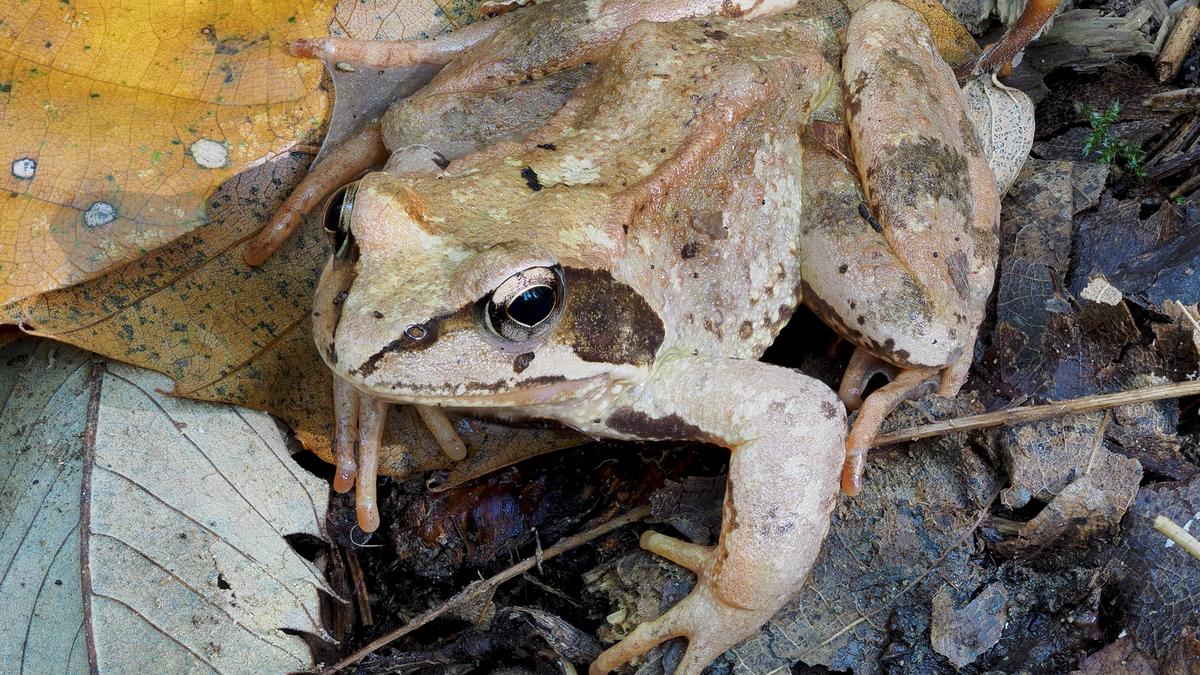
Agile frogs

Around 40% of amphibian species face the risk of extinction, which makes them the most threatened vertebrates on the earth. As temperatures continue to climb, scientists are asking whether increased sex reversal could affect the long-term survival of amphibian populations.

To answer this, a group of researchers turned to agile frogs in Hungary. They found that sex-reversed wild males sire fewer offspring — which are in turn more vulnerable to heat and infectious disease. These disadvantages could together speed up population declines as the planet keeps warming.

The results were published in Science Advances on September 3.

In agile frogs as in mammals, the sex at birth is determined by chromosomes. Two X chromosomes make a genetic female whereas an X and a Y make a genetic male. But excessive heat in the tadpole stage can override that genetic recipe and turn some genetically female tadpoles into physically normal and fertile male tadpoles.

“Theoretical models suggest that this threat can be mitigated, up to a certain severity of climate change, for example XX males siring all-XX offspring,” said Veronika Bokony, the study’s lead author and researcher at the HUN-REN Centre for Agricultural Research. However, “this mitigating effect can be lost if sex-reversed individuals cannot participate in reproduction.”

Chance of mating

Bokony et al. first looked at whether animals whose sex differs from their genetic sex reproduce just as successfully in the wild. They paired 20 sex-reversed males with 20 sex-concordant males, matched for body size and arrival time at the breeding ponds, two traits known to affect mating success. They let each male mate with a female.

The team then tracked whether the female laid eggs, how long it took, and whether the eggs developed into tadpoles. 

The team found that sex-reversed males were just as capable of winning mates and fertilised eggs did develop into tadpoles. 

However, sex-reversed males did not have an equal chance at mating. About one-third of females paired with sex-reversed males laid only part of their eggs, called the split clutch strategy in which they saved the rest for a better mate.

In an experimental set-up, females had no choice, so sex-reversed males could still coerce the female into mating and sire a clutch.

“Had they been free in a real mating aggregation, this could have allowed the female to find another male who could replace the sex-reversed male by fighting,” Dr. Bokony said.

Artificial heatwave

So the researchers turned to breeding ponds in the wild. They sampled more than a hundred egg masses from 16 different populations and found that even though the sex-reversed male agile frogs made up roughly 20% of the wild populations, only 4% of egg clutches belonged to them.

“This suggests that when the frogs mate freely, the sex-reversed individuals are not as successful at becoming sires as the sex-concordant males,” Dr. Bokony said.

The few offspring they did sire were also not in the clear. As researchers tracked the development of lab-reared tadpoles, they found that 61% of the offspring of sex-reversed males underwent sex reversal, developing as males despite being genetically female. Only 17% of offspring of sex-concordant males did, however.

“We were suspicious that sex reversal might have negative consequences on individual fitness and on population viability,” Dr. Bokony said.

A warming climate is also amplifying the threat of infectious diseases. The pathogen ranavirus is of particular concern: in some instances, it has wiped out more than 90% of tadpoles in a single event.

To understand how well these offspring could withstand such climate-driven stressors, researchers exposed eggs from sex-reversed and sex-concordant males to an artificial heat wave along with ranavirus. Under high temperatures, tadpoles of sex-reversed males carried higher viral loads.

With lower paternity, higher rates of sex reversal in offspring, and greater disease susceptibility all being plausible outcomes, the team turned to computer models to test how these combined pressures could affect wild agile frog populations.

Higher extinction risk

“What happens in the laboratory and what occurs in the field are two different matters, and the strength of this study lies in the assessment of the impact of sex reversal in the wild,” University of Canberra professor Arthur Georges, who was not involved in the study, said.

Their results showed small populations were especially vulnerable, since losing even a few breeding females could affect a population’s ability to reproduce.

While some populations may already have begun declining, others could disappear within 60 to 70 years as heat-driven sex reversal pushed populations towards more males with fewer females to mate with.

When the model factored in the mortality from ranavirus among the offspring of sex-reversed males, population decline began roughly 10 years earlier and extinction came about 9.5 years sooner.

Without ranavirus, populations still declined about eight years earlier — but the extinction occurred only about two years earlier.

“We, as scientists, underestimate the number of sex-reversed individuals in populations and species,” Dominique Potvin, associate professor at the University of the Sunshine Coast, Australia, said.

She added that scientists need to know how the environment is affecting sex reversal and affecting the long-term survival of species to update their interpretations and management strategies for conservation.

Rupsy Khurana is science communication and outreach lead at the National Centre for Biological Science, Bengaluru.

Published – October 12, 2026 09:00 am IST


Source link

Science

Post navigation

Previous Post: Berlin to BITS Pilani: How Nobel-winning Optogenetics connects to parasite research in Hyderabad
Next Post: ‘Overemphasis on MCQs’: Ramanujan Prize winner, Mahesh Kakde, on maths education in India

Related Posts

  • Could global warming impede weather and climate forecasting?
    Could global warming impede weather and climate forecasting? Science
  • 7 researchers of KLE Technological University among top 2% of scientists: Stanford University
    7 researchers of KLE Technological University among top 2% of scientists: Stanford University Science
  • Scientists reveal secrets of Earth’s magnificent desert star dunes
    Scientists reveal secrets of Earth’s magnificent desert star dunes Science
  • Science Snapshots: April 26, 2026
    Science Snapshots: April 26, 2026 Science
  • Why FDA approval for vepdegestrant is a major shift in cancer therapy
    Why FDA approval for vepdegestrant is a major shift in cancer therapy Science
  • Can gut microbes help flush out forever chemicals in your body? Here is what experts have to say
    Can gut microbes help flush out forever chemicals in your body? Here is what experts have to say Science

More Related Articles

After 180 years, clues reveal how general anaesthesia works in the brain After 180 years, clues reveal how general anaesthesia works in the brain Science
Space Exploration Day: Life at the International Space Station Space Exploration Day: Life at the International Space Station Science
IIT-Delhi, Germany team makes device to sort current by ‘handedness’ IIT-Delhi, Germany team makes device to sort current by ‘handedness’ Science
When a ‘fellow traveller’ went to space When a ‘fellow traveller’ went to space Science
Biochar offers a way to turn India’s farm smoke into ‘black gold’ Biochar offers a way to turn India’s farm smoke into ‘black gold’ Science
Kerala scientist bags Marie Skłodowska-Curie Postdoctoral Fellowship Kerala scientist bags Marie Skłodowska-Curie Postdoctoral Fellowship Science
SiteLock

Archives

  • October 2026
  • September 2026
  • August 2026
  • July 2026
  • June 2026
  • May 2026
  • April 2026
  • March 2026
  • February 2026
  • January 2026
  • December 2025
  • November 2025
  • October 2025
  • September 2025
  • August 2025
  • July 2025
  • June 2025
  • May 2025
  • April 2025
  • March 2025
  • February 2025
  • January 2025
  • December 2024
  • November 2024
  • October 2024
  • September 2024
  • August 2024
  • July 2024
  • June 2024
  • May 2024
  • April 2024
  • March 2024
  • February 2024
  • January 2024
  • December 2023
  • November 2023
  • October 2023
  • September 2023
  • August 2023
  • July 2023
  • June 2023
  • May 2023
  • April 2023
  • March 2023
  • February 2023
  • January 2023
  • December 2022
  • November 2022
  • October 2022
  • September 2022
  • August 2022
  • July 2022
  • June 2022
  • May 2022

Categories

  • Business
  • Nation
  • Science
  • Sports
  • World

Recent Posts

  • Roads damaged during Bhogapuram airport construction leave villages cut off, farmers unable to reach fields
  • Tamil Nadu: Newly-elected TVK MLAs Maragatham Kumaravel, Sathyabama take oath
  • Sand sculpture of Modi, Naidu and Pawan at Visakhapatnam’s RK Beach marks PM’s 25 years in public life
  • March to Supreme Court: Who is attending, why CJI declined, what Delhi curbs look like on day 3
  • Indian debt funds set to extend $4.5 billion bond selloff after RBI policy shift

Recent Comments

  1. Michaeldoown on UP Teacher Who Asked Students To Slap Muslim Classmate
  2. Wilbertclals on UP Teacher Who Asked Students To Slap Muslim Classmate
  3. WayneTrord on UP Teacher Who Asked Students To Slap Muslim Classmate
  4. WayneTrord on UP Teacher Who Asked Students To Slap Muslim Classmate
  5. Wilbertclals on UP Teacher Who Asked Students To Slap Muslim Classmate
  • Access Denied
    Access Denied Nation
  • Watch: Nepal army moves to restore order as airport reopens: Ground report
    Watch: Nepal army moves to restore order as airport reopens: Ground report World
  • Covid Strikes Paris Olympics: British Star Swimmer Tests Positive After Winning Silver
    Covid Strikes Paris Olympics: British Star Swimmer Tests Positive After Winning Silver Sports
  • GDP growth for second quarter at 7.5% and more due to GST cut led festive sales, says SBI report
    GDP growth for second quarter at 7.5% and more due to GST cut led festive sales, says SBI report Business
  • CNG price hiked by ₹2 in Mumbai, other cities; election bond-Delhi spared
    CNG price hiked by ₹2 in Mumbai, other cities; election bond-Delhi spared Business
  • IISc researchers find out how the brain suppresses itch during stress
    IISc researchers find out how the brain suppresses itch during stress Science
  • Access Denied Sports
  • Access Denied
    Access Denied Nation

Editor-in-Chief:
Mohammad Ariff,
MSW, MAJMC, BSW, DTL, CTS, CNM, CCR, CAL, RSL, ASOC.
editor@artifex.news

Associate Editors:
1. Zenellis R. Tuba,
zenelis@artifex.news
2. Haris Daniyel
daniyel@artifex.news

Photograher:
Rohan Das
rohan@artifex.news

Artifex.News offers Online Paid Internships to college students from India and Abroad. Interns will get a PRESS CARD and other online offers.
Send your CV (Subjectline: Paid Internship) to internship@artifex.news

Links:
Associate Journalism
About Us
Privacy Policy

News Links:
Breaking News
World
Nation
Sports
Business
Entertainment
Lifestyle

Registered Office:
72/A, Elliot Road, Kolkata - 700016
Tel: 033-22277777, 033-22172217
Email: office@artifex.news

Editorial Office / News Desk:
No. 13, Mezzanine Floor, Esplanade Metro Rail Station,
12 J. L. Nehru Road, Kolkata - 700069.
(Entry from Gate No. 5)
Tel: 033-46011099, 033-46046046
Email: editor@artifex.news

Copyright © 2023 Artifex.News Newsportal designed by Artifex Infotech.