
Skip to content
  • Facebook
  • X
  • Linkedin
  • WhatsApp
  • YouTube
  • Associate Journalism
  • About Us
  • Privacy Policy
  • 033-46046046
  • editor@artifex.news
Artifex.News

Artifex.News

Stay Connected. Stay Informed.

  • Breaking News
  • World
  • Nation
  • Sports
  • Business
  • Science
  • Entertainment
  • Lifestyle
  • Toggle search form
  • Meta will soon face another high-stakes trial in U.S.
    Meta will soon face another high-stakes trial in U.S. World
  • Death Count In Morocco Earthquake Rises To 2,122
    Death Count In Morocco Earthquake Rises To 2,122 World
  • Access Denied Sports
  • Is it possible to remove microplastics from water?
    Is it possible to remove microplastics from water? Science
  • Access Denied Sports
  • Dial R for Rohit and records!
    Dial R for Rohit and records! Sports
  • Coconut farmers lose sleep as copra price goes from ₹14,500 to ₹7,000 per quintal in 8 months
    Coconut farmers lose sleep as copra price goes from ₹14,500 to ₹7,000 per quintal in 8 months Business
  • Access Denied Sports
India’s trade caught in the middle

India’s trade caught in the middle

Posted on October 7, 2026 By admin


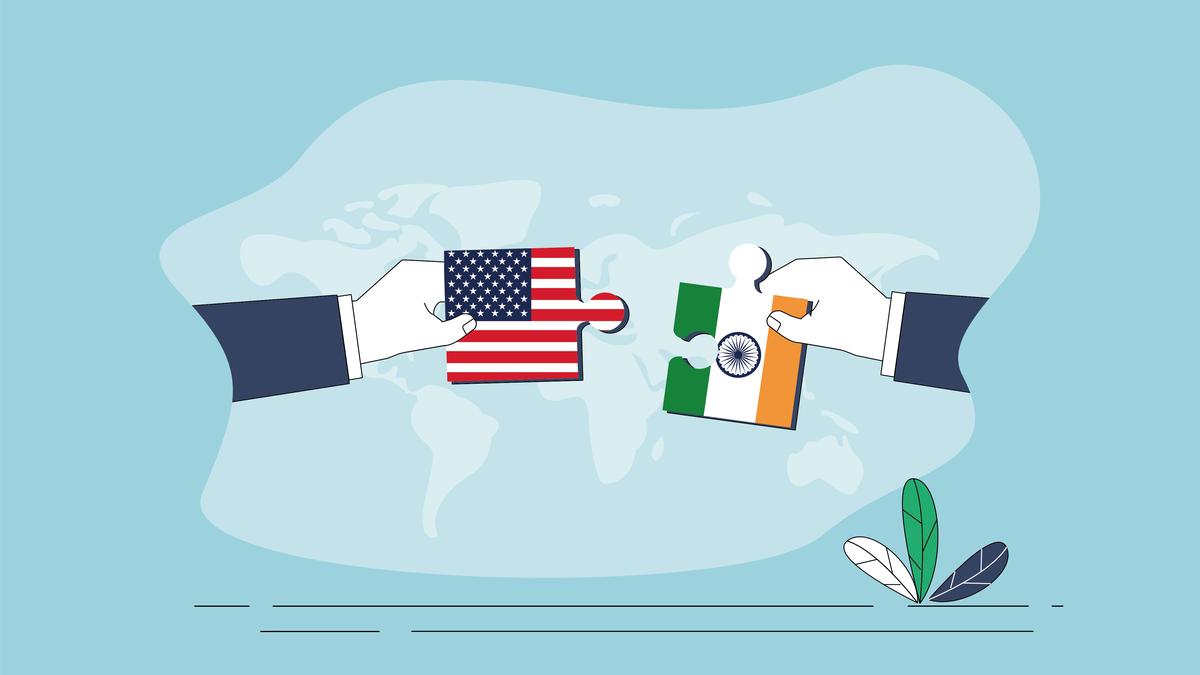
Finance Minister Nirmala Sitharaman said on Monday that India-U.S. trade talks have reached a “plateau” and further concessions from either side might be difficult. To begin with, those celebrating India extracting a great trade deal from the U.S. miss the point. While a deal with some relaxations may be better than no deal, we have to compare the situation against the status quo, i.e., what it was before the Trump tariff was imposed. This piece attempts to discuss the importance of the trade surplus that India runs with the U.S. in this context.

What makes the situation difficult is that India runs a trade deficit with China (red bars in Chart 1) but a surplus with the U.S. (blue bars in Chart 1). And it is not just that. India buys goods from China that are not easily substitutable, at least not in the short run; i.e., it is a structural deficit that is not easy to reverse. On the other hand, the heavy tariff on Indian goods that Donald Trump has threatened to impose, and the development of artificial intelligence (AI), could reverse its surplus with the U.S. Combine these two factors, and India faces a serious problem on the trade front.

India is caught between the devil and the deep blue sea.

Forex market and the rupee’s value

Like many other markets, the price of a currency is determined by its demand and supply. In India’s case, let us consider the value of the Indian rupee (INR). As a proxy for a global currency, we take the U.S. dollar. How many rupees a dollar can buy is India’s exchange rate vis-à-vis the U.S. dollar. A rise in the number of rupees a dollar can buy means a rise in the value (price) of the dollar and a fall in the value of the rupee.

India’s demand for dollars consists of its imports and capital outflows (outward Foreign Direct Investment (FDI) + Foreign Portfolio Investment (FPI)). A rise in the price of the U.S. dollar (a depreciation of the INR) means imports become more expensive for Indians because they have to shell out more INR to buy the same goods they were buying earlier. So, it is often assumed that demand for dollars falls with a rise in the price of the dollar. The supply of dollars to India comes from exporters, capital inflows (inward FDI + FPI), transfers, Net Factor Income from Abroad (NFIA), and external borrowing and deposits. In contrast to imports, exports are assumed to vary positively with the price of the dollar. If a dollar can buy more rupees, then the cost of employing a computer coder sitting in India becomes cheaper for an American firm. Once you bring the demand and supply together (in Diagram 1 (a)), the equilibrium value of the rupee is determined.

A caveat is in order. This is a simplified representation of reality. Firstly, India’s exchange rate is not fully market-determined. The central bank manages the value of the rupee by intervening in the market to keep the exchange rate within a range of its preference (between the levels in Diagram 1). India has what is called a managed float system. How does the central bank intervene? If the demand for dollars outpaces its supply by so much that the rupee threatens to depreciate below the level preferable to the central bank, it releases forex to the markets (thereby inflating the supply of forex available) and keeps the rupee within the range. It adds to its reserves if the opposite happens, i.e., the rupee appreciates outside that range.

Secondly, the demand and the supply curves are not as neat as they are presented here. For example, beyond a certain range of depreciation of the rupee, capital outflows (for fear of loss in its dollar value) may far outpace the fall in imports, making the demand curve vary positively with the exchange rate, i.e., a C-shaped demand curve. But we leave those complications aside for this piece.

Trump tariff and the Iran crisis

Diagram 1 (b) is a schematic representation of the state that India is/likely to be in. Faced with a rising dollar price of crude imports, the demand curve for India would go up significantly. This threatens a depreciation of the rupee (which is what has worried India so much). Since this threatens to push the exchange rate beyond its range, the central bank would have to run down its reserves to manage the rupee’s value, as it has done in the last two years.

The role of a Trump tariff (added to the potential loss of exports that AI may bring in) needs to be seen in this context. Such a tariff, if implemented, will push the supply curve of dollars (due to a fall in exports to the U.S.) to the left and add to India’s current woes on the external front. The extent of depreciation resulting from this is far beyond what India is facing currently. And to maintain prevent the currency from depreciating beyond the upper bound may require a significant loss of reserves, an intervention which may set off a vicious cycle of capital outflow and depreciation.

Chart 2 plots these demand and supply values for the last nine quarters to show that the demand for dollars has outpaced the supply for four out of the last nine quarters. And there has been a sharp rise in demand in the aftermath of the closure of the Strait of Hormuz.

Criticality of the U.S. markets

Let us look at the trade surplus that India has with the U.S., which is the bone of contention for President Trump. If we divide the trade surplus into goods and services, we get a disaggregated picture of the current account surplus that India runs with the U.S. (see Chart 3). India’s surplus in goods (Chart 3(a)) is much higher than it runs in services (Chart 3(b)) vis-a-vis the U.S.

The aim of Trump tariff is to reverse this goods balance in favour of the U.S. to the extent possible. If the U.S. continues to arm-twist India, it makes better economic sense for us to gradually diversify away from the U.S. economy. What will be lost in the U.S. market could, at least potentially, be compensated within the Global South provided the right trade and industrial policy architecture is in place.

India should, accordingly, treat the Trump tariff as a wake-up call and use this opportunity to focus on export growth by diversifying the exportable product mix and regional development.

(The authors are a part of the DevMac (Development Macroeconomics) network, which seeks pluralism in Economics)

Published – October 08, 2026 08:30 am IST


Source link

Business

Post navigation

Previous Post: Five ‘terrorist associates’ held, hideout busted in Kashmir: police
Next Post: Nepal moves to amend laws to facilitate death registration of 5,285 still missing after August 26 floods

Related Posts

  • Access Denied Business
  • Intel outlines details of first PC chip made on its new manufacturing tech
    Intel outlines details of first PC chip made on its new manufacturing tech Business
  • CM’s marathon meeting discusses budget discrimination, caste survey and SC categorisation reports
    CM’s marathon meeting discusses budget discrimination, caste survey and SC categorisation reports Business
  • Lokpal calls SEBI chief, complainants for ‘oral hearing’ over corruption charges
    Lokpal calls SEBI chief, complainants for ‘oral hearing’ over corruption charges Business
  • India to host Asia Pacific aircraft accident investigators meet from October 28-31
    India to host Asia Pacific aircraft accident investigators meet from October 28-31 Business
  • Budget 2023 | Finance Minister proposes amendments to banking laws
    Budget 2023 | Finance Minister proposes amendments to banking laws Business

More Related Articles

Access Denied Business
Sloganeering does not change the world, says Rajiv Bajaj Sloganeering does not change the world, says Rajiv Bajaj Business
Access Denied Business
Rupee falls 28 paise to close at 88.13 against U.S. dollar Rupee falls 28 paise to close at 88.13 against U.S. dollar Business
Access Denied Access Denied Business
SiteLock

Archives

  • October 2026
  • September 2026
  • August 2026
  • July 2026
  • June 2026
  • May 2026
  • April 2026
  • March 2026
  • February 2026
  • January 2026
  • December 2025
  • November 2025
  • October 2025
  • September 2025
  • August 2025
  • July 2025
  • June 2025
  • May 2025
  • April 2025
  • March 2025
  • February 2025
  • January 2025
  • December 2024
  • November 2024
  • October 2024
  • September 2024
  • August 2024
  • July 2024
  • June 2024
  • May 2024
  • April 2024
  • March 2024
  • February 2024
  • January 2024
  • December 2023
  • November 2023
  • October 2023
  • September 2023
  • August 2023
  • July 2023
  • June 2023
  • May 2023
  • April 2023
  • March 2023
  • February 2023
  • January 2023
  • December 2022
  • November 2022
  • October 2022
  • September 2022
  • August 2022
  • July 2022
  • June 2022
  • May 2022

Categories

  • Business
  • Nation
  • Science
  • Sports
  • World

Recent Posts

  • Govt. move to de-notify Jantar Mantar follows SC suggestion that protest sites need more space, open air
  • Coal stocks at thermal plants hold above 18 MT as supply deficit narrows
  • Coal stocks at thermal plants hold above 18 MT as supply deficit narrows
  • Caste discrimination during SC man’s burial: Protest in Erode seeks action against officials
  • World’s top climate body deadlocked over inclusivity concerns

Recent Comments

  1. Michaeldoown on UP Teacher Who Asked Students To Slap Muslim Classmate
  2. Roberthek on UP Teacher Who Asked Students To Slap Muslim Classmate
  3. Wesleysiz on UP Teacher Who Asked Students To Slap Muslim Classmate
  4. HectorTOk on UP Teacher Who Asked Students To Slap Muslim Classmate
  5. StevenVoips on UP Teacher Who Asked Students To Slap Muslim Classmate
  • Amid NEET Row, Close Watch On Another Medical Exam Being Held Today
    Amid NEET Row, Close Watch On Another Medical Exam Being Held Today Nation
  • U.S. House rejects war powers resolution, backs Trump on Iran war
    U.S. House rejects war powers resolution, backs Trump on Iran war World
  • Access Denied Sports
  • Himanta Sarma Rips Into Bengal, Jharkhand
    Himanta Sarma Rips Into Bengal, Jharkhand Nation
  • Who Is Pakistan’s Iftikhar Ahmed Talking To? Viral Video Leaves Social Media Baffled
    Who Is Pakistan’s Iftikhar Ahmed Talking To? Viral Video Leaves Social Media Baffled Sports
  • What is extracellular RNA? – The Hindu
    What is extracellular RNA? – The Hindu Science
  • Afghans Return To Taliban Rule As Pakistan Moves To Expel 1 Million Migrants
    Afghans Return To Taliban Rule As Pakistan Moves To Expel 1 Million Migrants World
  • US On India’s New Citizenship Law CAA
    US On India’s New Citizenship Law CAA Nation

Editor-in-Chief:
Mohammad Ariff,
MSW, MAJMC, BSW, DTL, CTS, CNM, CCR, CAL, RSL, ASOC.
editor@artifex.news

Associate Editors:
1. Zenellis R. Tuba,
zenelis@artifex.news
2. Haris Daniyel
daniyel@artifex.news

Photograher:
Rohan Das
rohan@artifex.news

Artifex.News offers Online Paid Internships to college students from India and Abroad. Interns will get a PRESS CARD and other online offers.
Send your CV (Subjectline: Paid Internship) to internship@artifex.news

Links:
Associate Journalism
About Us
Privacy Policy

News Links:
Breaking News
World
Nation
Sports
Business
Entertainment
Lifestyle

Registered Office:
72/A, Elliot Road, Kolkata - 700016
Tel: 033-22277777, 033-22172217
Email: office@artifex.news

Editorial Office / News Desk:
No. 13, Mezzanine Floor, Esplanade Metro Rail Station,
12 J. L. Nehru Road, Kolkata - 700069.
(Entry from Gate No. 5)
Tel: 033-46011099, 033-46046046
Email: editor@artifex.news

Copyright © 2023 Artifex.News Newsportal designed by Artifex Infotech.